Contents
The short-horned Baronia, Baronia brevicornis, is a small swallowtail endemic to Mexico, with a patchy, restricted distribution in tropical dry forest. It belongs to the family Papilionidae, but it stands apart from every other living member: a comprehensive 2018 molecular phylogeny places it as the sister group to the rest of the Papilionidae, making it the most primitive extant papilionid and the sole member of its own subfamily, Baroniinae. It even shares some features with Praepapilio, a fossil genus, underlining its ancient lineage. Two subspecies are recognised, the nominate form and B. brevicornis rufodiscalis, reflecting how the species varies across its fragmented Mexican range.
Identification
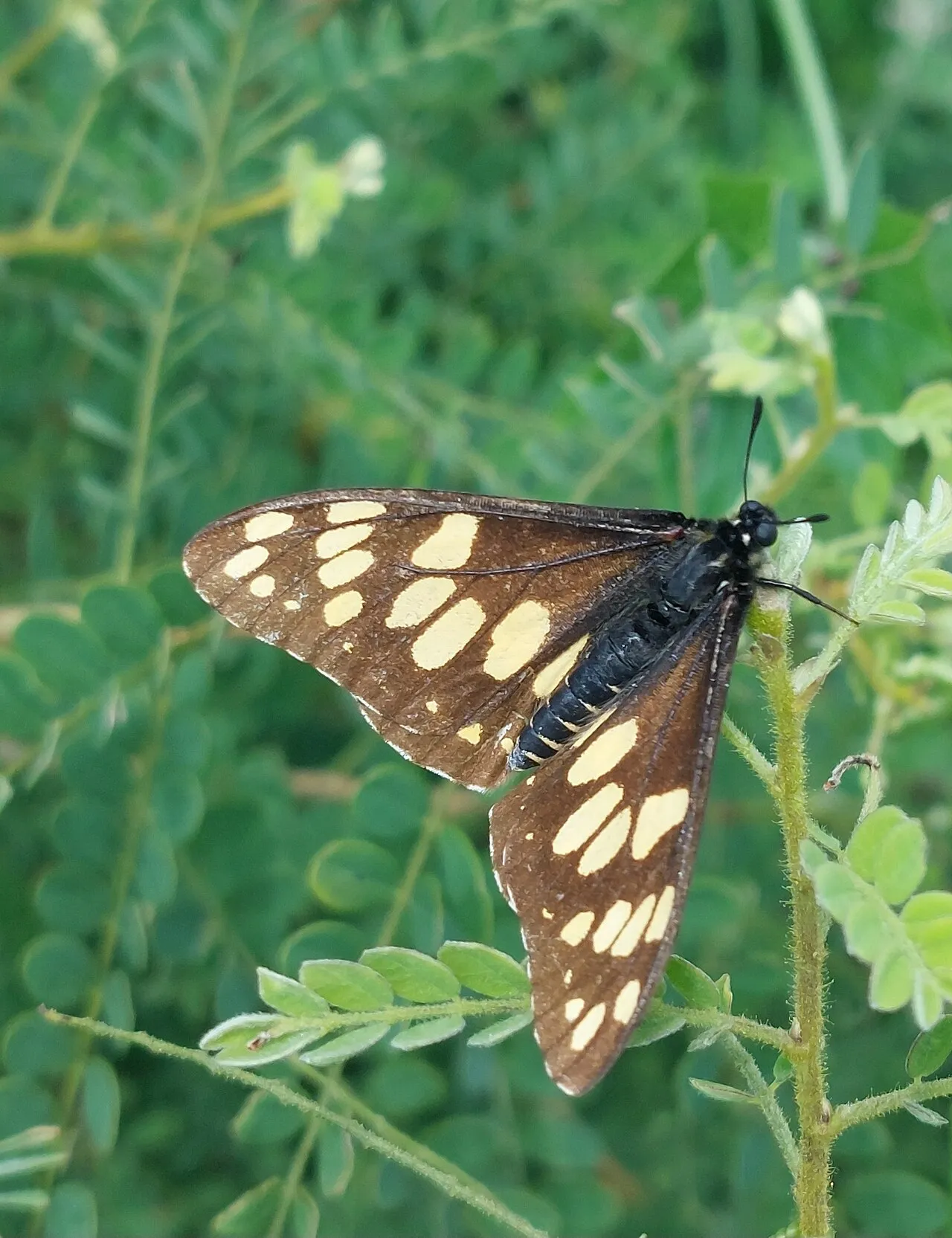
The species shows unusually varied colouring for its size. Males come in three colour morphs told apart by their background shade: light brown, dark brown and yellow, and all three carry three parallel bands of yellowish spots crossing the forewing’s upperside from the submarginal area to the base, though these bands are barely visible on the yellow morph. Females also come in three forms: a brown morph that resembles the males but without the parallel bands, showing instead two or three nonparallel bands of spots with more elongated spots near the base; a melanic morph with dark brown wings carrying small white spots; and an orange morph with large orange spots that almost cover the wing. Females also run larger than males, with a forewing length of about 32 mm against 27 mm in males, and a wider thorax.
Range and habitat
The butterfly lives only in tropical dry forest, in small patches that contain its host tree, Vachellia campechiana, within secondary vegetation (acahuales) that also supplies flowers for the adults to feed on. That patchy range follows the host tree and disturbed dry-forest vegetation, not one continuous block of habitat.
Life cycle and host plants
Caterpillars feed mainly on Vachellia campechiana, and rarely on Vachellia pennatula. Eggs hatch about 5 days after they are laid, and the caterpillars pass through 5 instars over roughly a month before pupating on the ground. The chrysalis then rests through most of the year: the adult emerges only after about 10.5 to 11 months, the following summer. Adults need more than the host tree to breed, since they feed on flowers of Bursera copallifera, Lysiloma, Pithecellobium dulce, Guazuma ulmifolia and Tournefortia densiflora. A usable patch of habitat has to supply both the host tree and these nectar plants.
Behaviour and flight period
This is a butterfly of one brief moment each year. It flies for a single short season of about 2 to 3 weeks in June, triggered by the first summer rains, producing just one generation a year. Outside that window the species exists only as a resting chrysalis, waiting for the next year’s rains.
Conservation
The species is listed by the IUCN under the category shown in the facts box, taken from its Wikidata record. It depends on a single host tree within small, scattered patches of tropical dry forest, and flies for only a few weeks each year.
Similar species
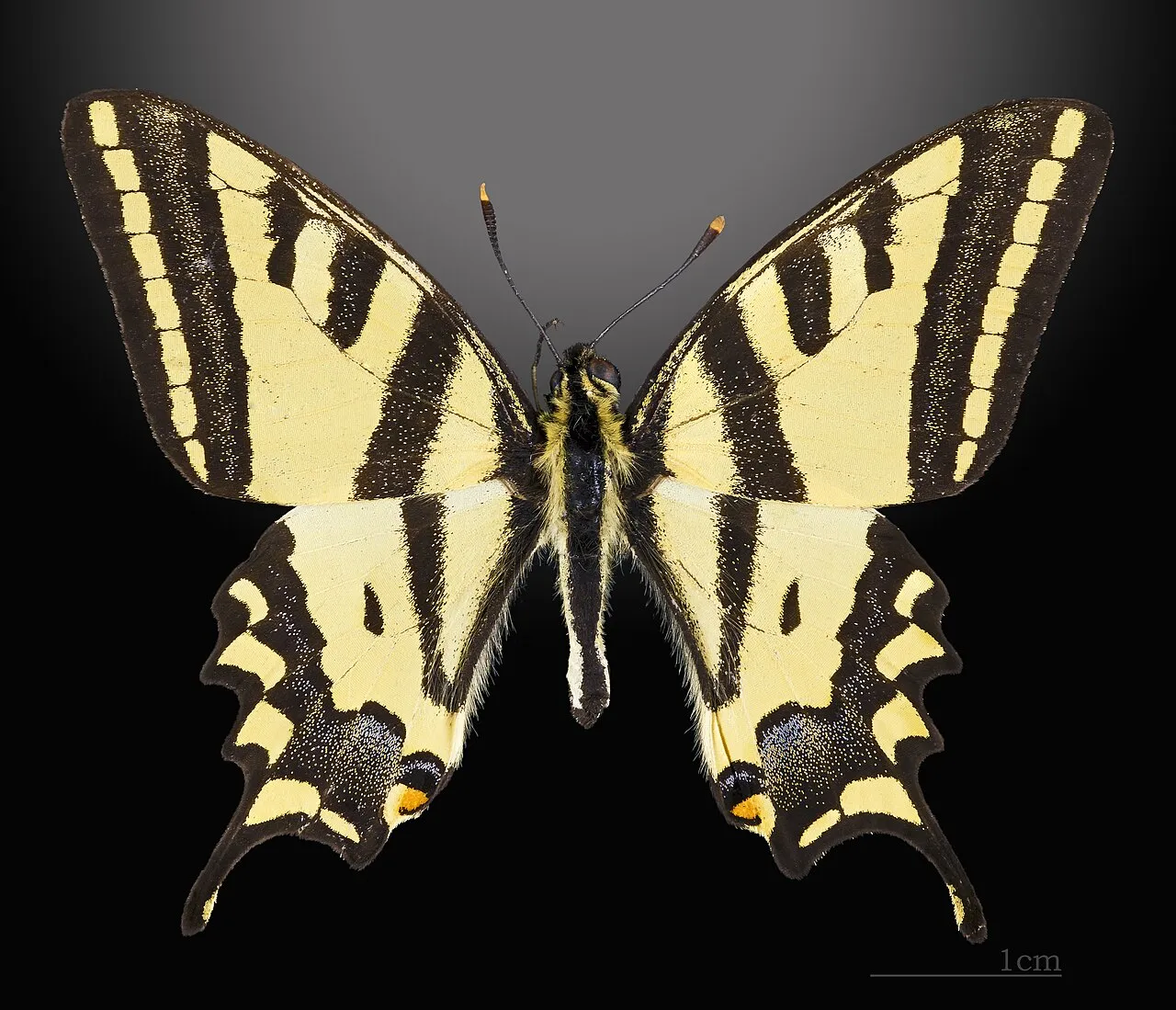
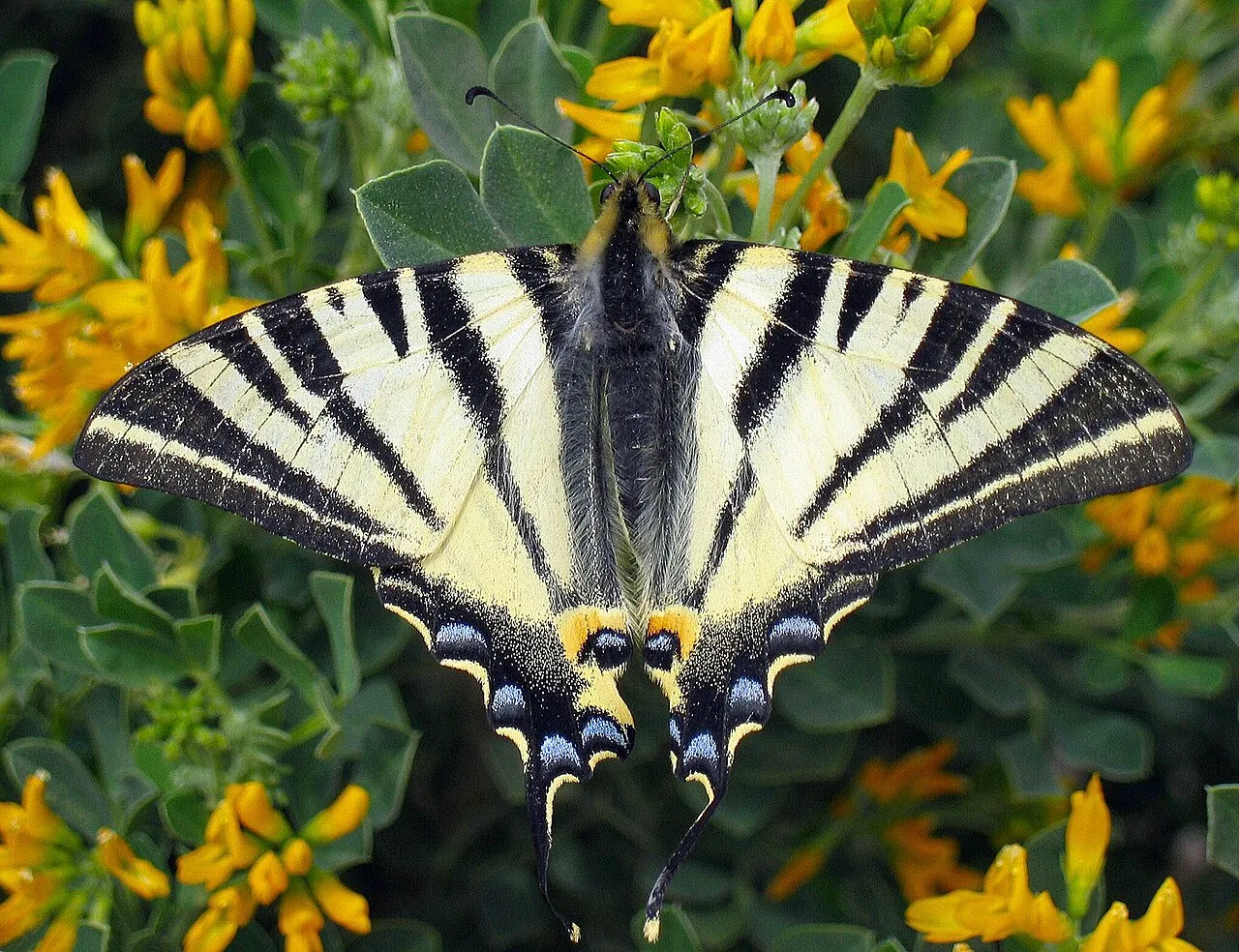
- Old World swallowtail (Papilio machaon): a far more typical member of the family Papilionidae, with the tailed hindwings and yellow-and-black pattern most people associate with swallowtails. Where the short-horned Baronia is tailless and varies between brown, yellow and orange morphs, the Old World swallowtail keeps the same bold black, yellow and blue pattern across its range, making the two easy to tell apart even though they share a family.
- Praepapilio: not a living species but a fossil genus with which Baronia brevicornis shares some features, reflecting its position at the very base of the swallowtail family tree. It is the closest living butterfly to the ancestral swallowtail body plan, which draws research interest despite its small, dull-coloured appearance.
_(6-25-2016)_denali_highway__mile_p13_pass__near_paxson__alaska_(7)_(28788418100)_9KfLF.webp)
_(Apollo)_-_(imago)__Triglavski_narodni_park_NP__Slovenia_Z1ilv4V.webp)
_13MRxF.webp)