Contents
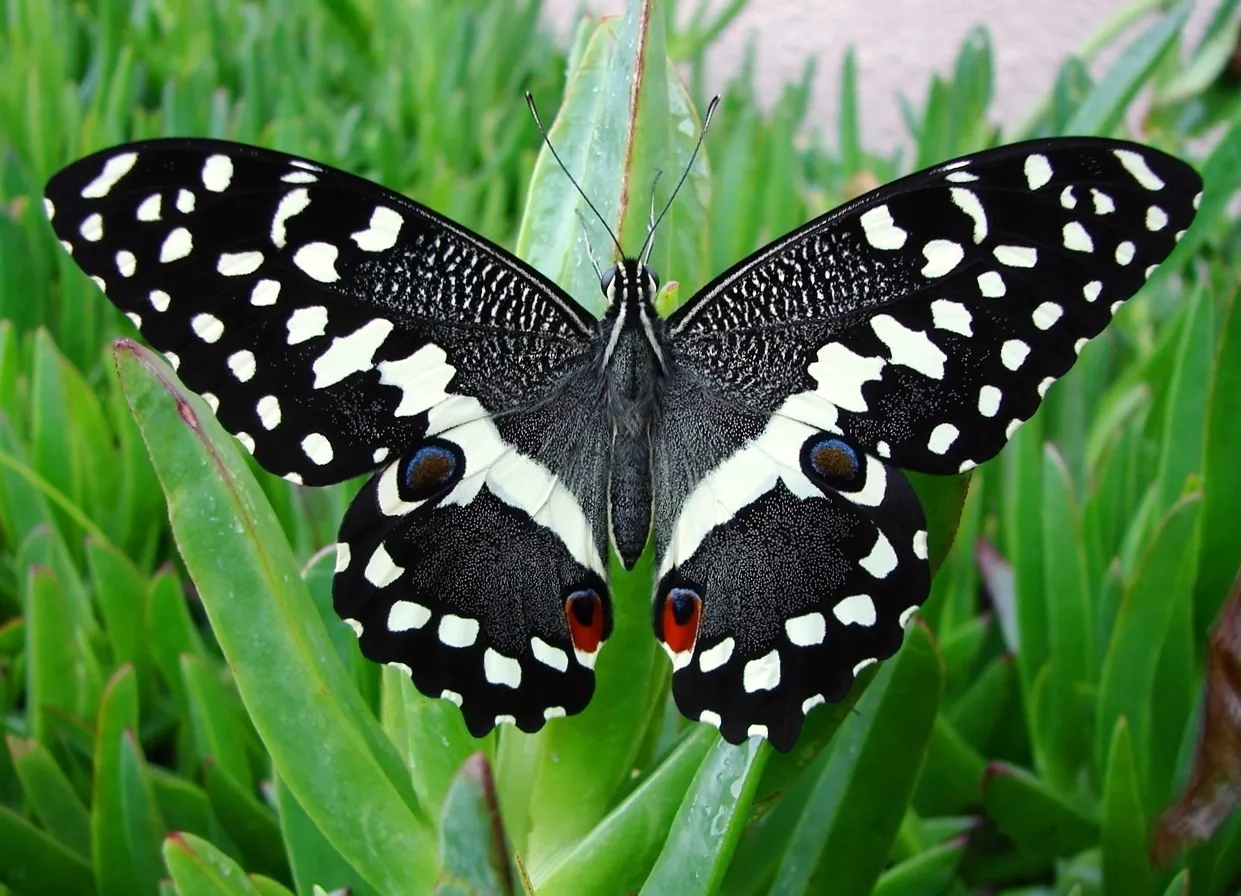
The citrus swallowtail, Papilio demodocus, is a large black and pale yellow swallowtail of the family Papilionidae, also known in parts of its range as the Christmas butterfly. It commonly occurs over the entirety of sub-Saharan Africa, including Madagascar, besides the southern Arabian Peninsula, and is also recorded on the Cape Verde Islands and Mauritius. Its caterpillars’ taste for citrus leaves, and the orange-scented defensive organ they rear up when disturbed, make it one of the most familiar swallowtails of African gardens.
Identification
Adults are described as the common, large black and pale yellow butterfly, with black and yellow markings with red and blue eyespots on the hindwings. The sexes differ in both size and in the colour of those hindwing markings: the female is larger than the male, and the anterior blue spots of her hindwings have orange on the outer side, as opposed to yellow in the male. No adult wingspan measurement was found on an open source during this run; the fully grown caterpillar, by contrast, reaches about 45 mm. The newly hatched caterpillar is smaller and differently patterned, black, yellow and white with spikes that make it resemble a bird dropping, about 10 to 15 mm long before its first moults, before it grows into the green, eyespotted late-stage form.
Range and habitat
Beyond its broad African distribution, the species occurs in open, often disturbed habitats throughout Africa south of the Sahara, and is a common sight in gardens as well as in more natural vegetation. That tolerance for disturbed ground, shared with its close relative the lime butterfly, helps explain why it is so often seen around houses and citrus plantings rather than only in wild habitat. Two subspecies are recognised: the nominate form across sub-Saharan Africa and Madagascar, and Papilio demodocus bennetti on the island of Socotra, off the southern Arabian Peninsula. In gardens and nurseries its caterpillars sometimes feed heavily enough on young citrus saplings to be considered a minor pest, though on established, mature citrus trees the damage is rarely serious enough to warrant control measures.
Life cycle and host plants
Caterpillars feed on various native plants of especially the family Rutaceae, but have also taken to the leaves of cultivated citrus trees. Besides wild Rutaceae such as Cape chestnut and various Zanthoxylum and Teclea species, the caterpillars are also recorded on Apiaceae, including fennel and Peucedanum species, as well as on Ptaeroxylaceae, Anacardiaceae and Sapindaceae.
Females lay their eggs singly on citrus leaves, which hatch after about six days under warm conditions. The young caterpillar camouflages itself to look like a bird dropping before growing, over roughly a month and four to five instars, into a mature larva, green with white or pink markings and eyespots, about 45 mm long. When threatened at any stage, it rears up a forked, orange-coloured organ known as an osmeterium, which emits a strong defensive odour. Fully grown caterpillars spin silk to attach themselves to a branch before pupating, and pupation usually lasts two to three weeks, but the species overwinters as a chrysalis, with dormancy lasting about four months from May to August before the adult emerges in September.
Behaviour and flight period
The citrus swallowtail passes through about three generations during spring, summer and autumn, with occasional adults still seen on the wing during winter outside the main dormant pupal period, which is usually spent hibernating as a pupa. Courtship follows a lek system, with males aggregating on small mating territories that females visit; at these leks, a receptive female performs a long and conspicuous circular flight before pairing with a male. The arrangement is polygynous, a single male being able to mate with several females in one breeding season, while copulation itself lasts from about half an hour to two hours. Afterwards the male deposits a sphragis, a mating plug that stops other males from mating with the same female.
Conservation
The species is assessed under the category shown in the facts box, taken from its Wikidata record.
Similar species
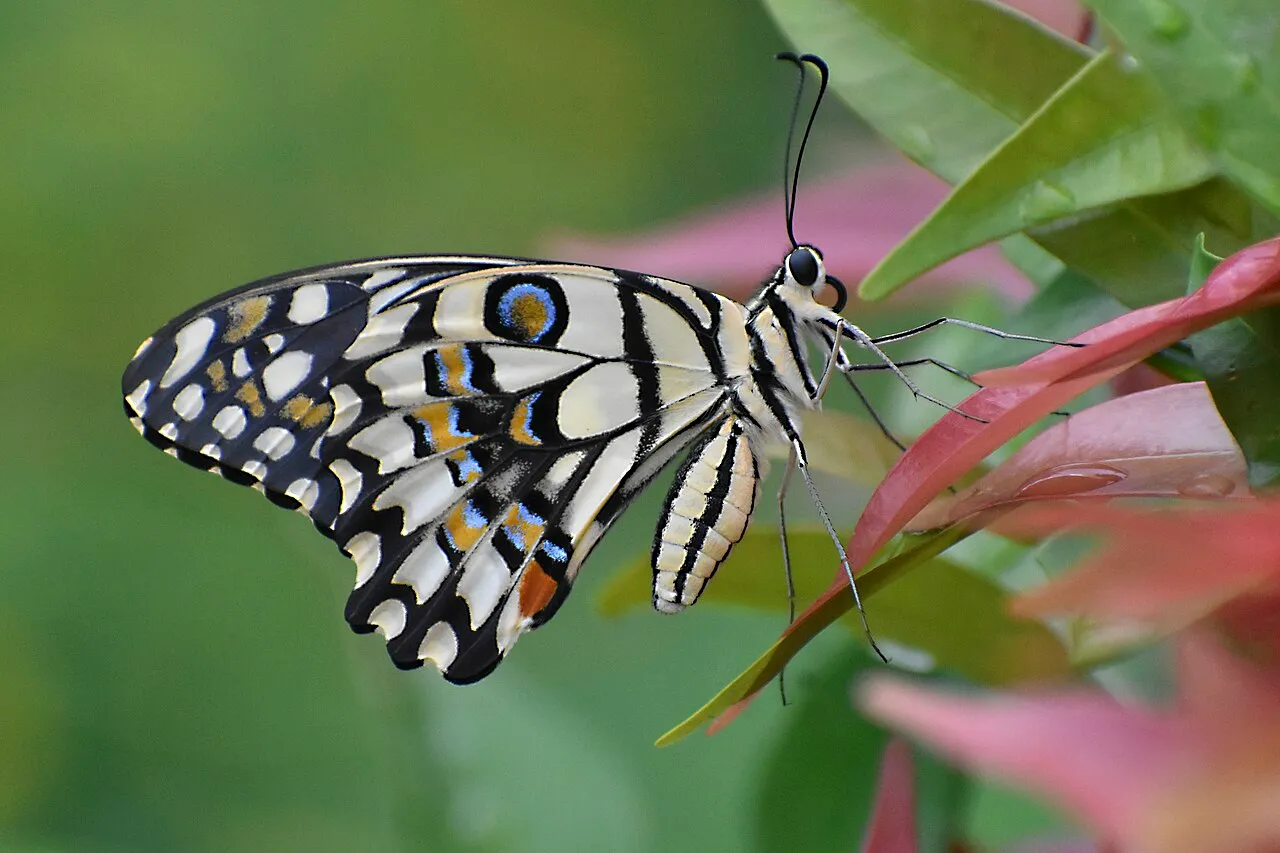
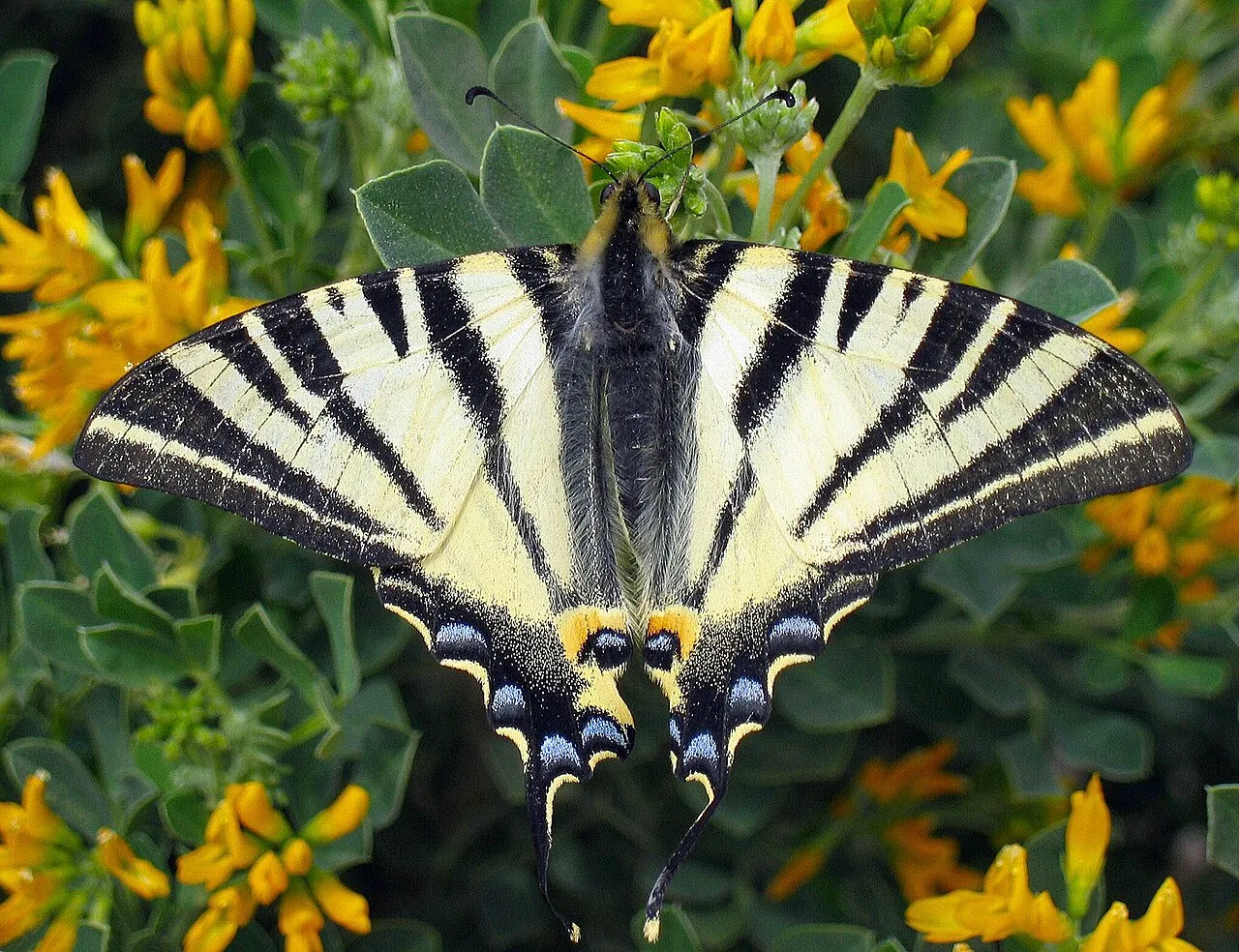
- Lime butterfly (Papilio demoleus): another swallowtail that breeds on citrus and other Rutaceae, but ranges across Asia and Australia rather than Africa, and lacks tails on the hindwings.
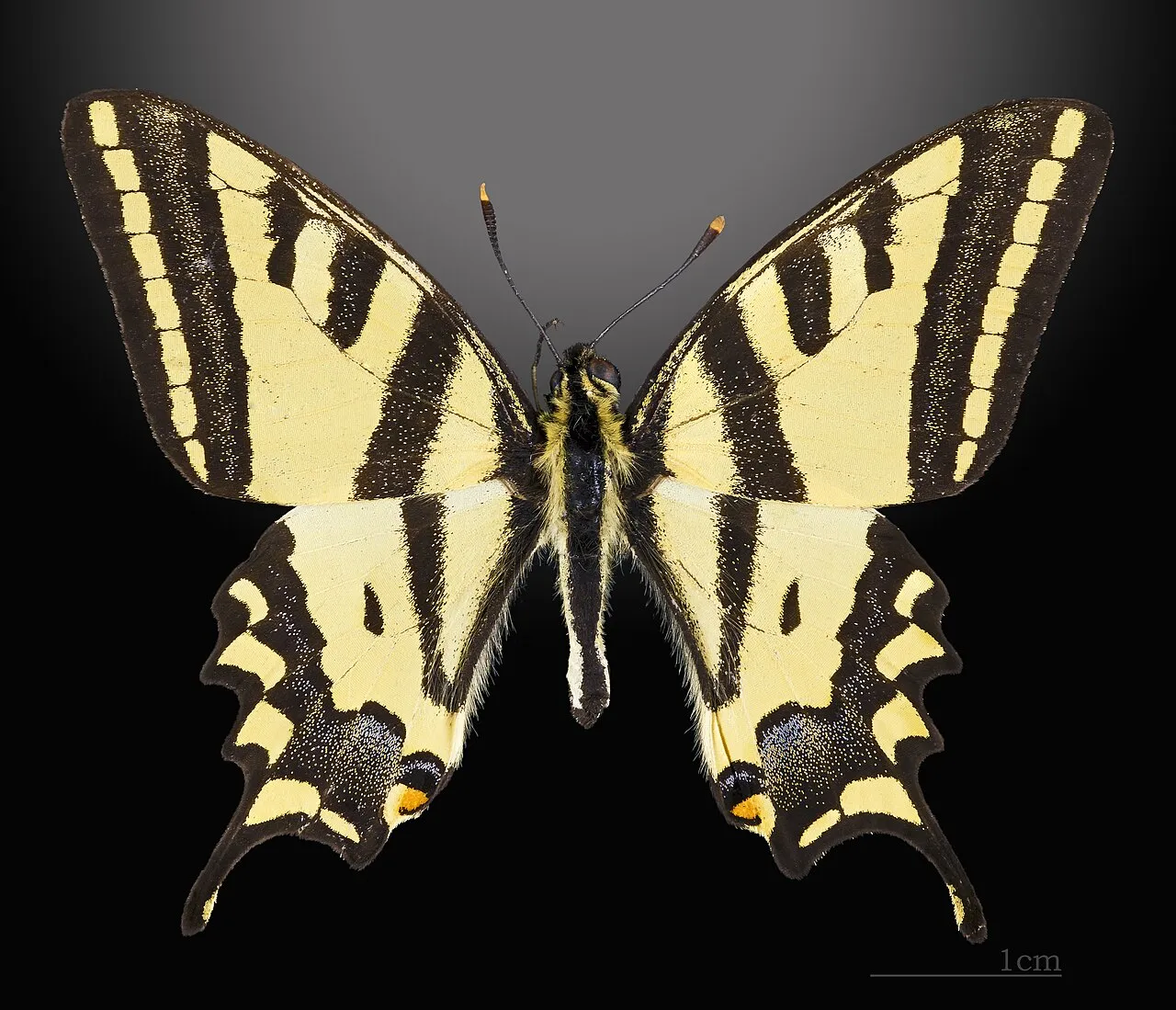
- Common yellow swallowtail (Papilio machaon): a related swallowtail with a broadly Eurasian and North African range, told apart by its different wing pattern and host plants.
_(6-25-2016)_denali_highway__mile_p13_pass__near_paxson__alaska_(7)_(28788418100)_9KfLF.webp)
_(Apollo)_-_(imago)__Triglavski_narodni_park_NP__Slovenia_Z1ilv4V.webp)
_13MRxF.webp)