Contents
The lime butterfly, Papilio demoleus, is a swallowtail of the family Papilionidae, named for its habit of breeding on cultivated lime and other citrus trees. It is one of the most widely distributed swallowtails, ranging across Asia from China to the Arabian Peninsula, through Australia and the Pacific islands, and has recently become established in the Caribbean, on Hispaniola, Jamaica, Cuba and Puerto Rico, as well as on the Seychelles.
Identification
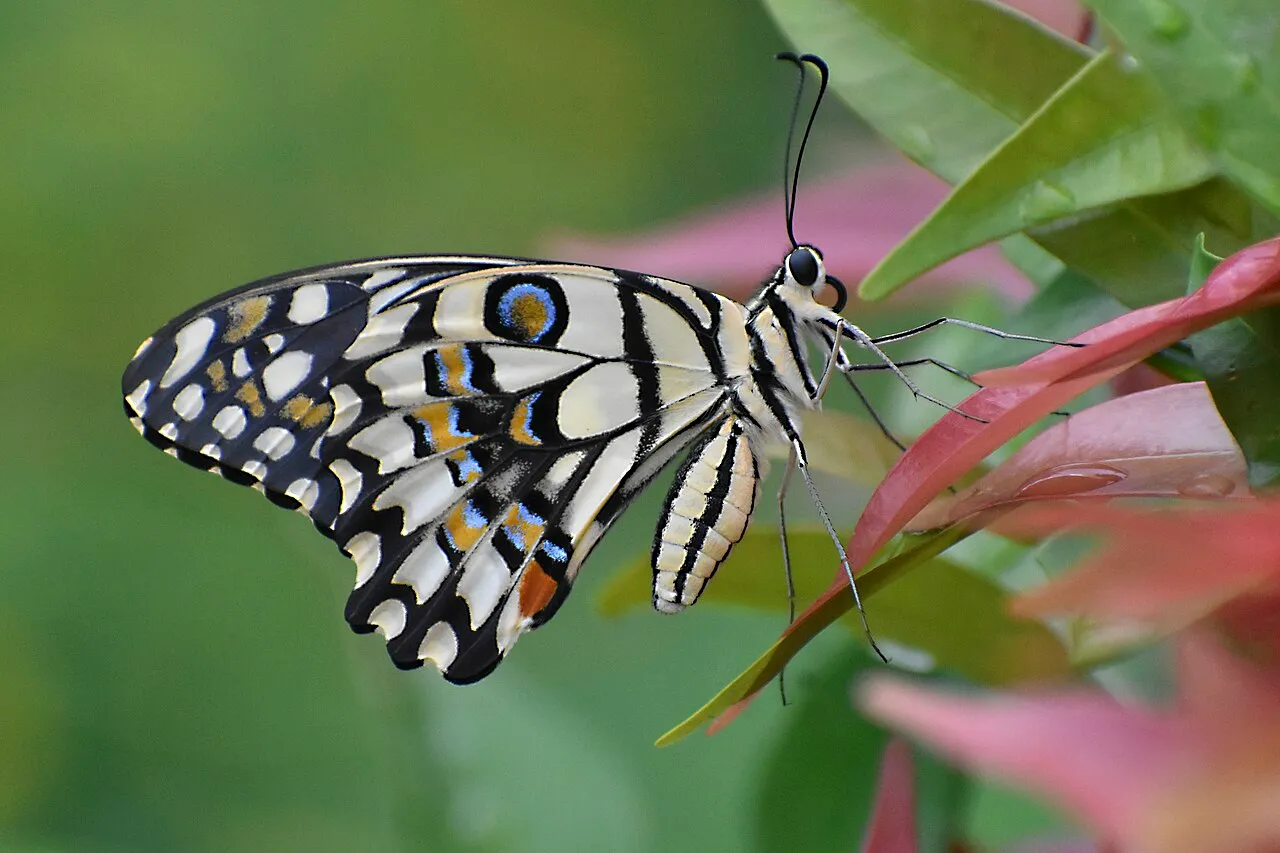
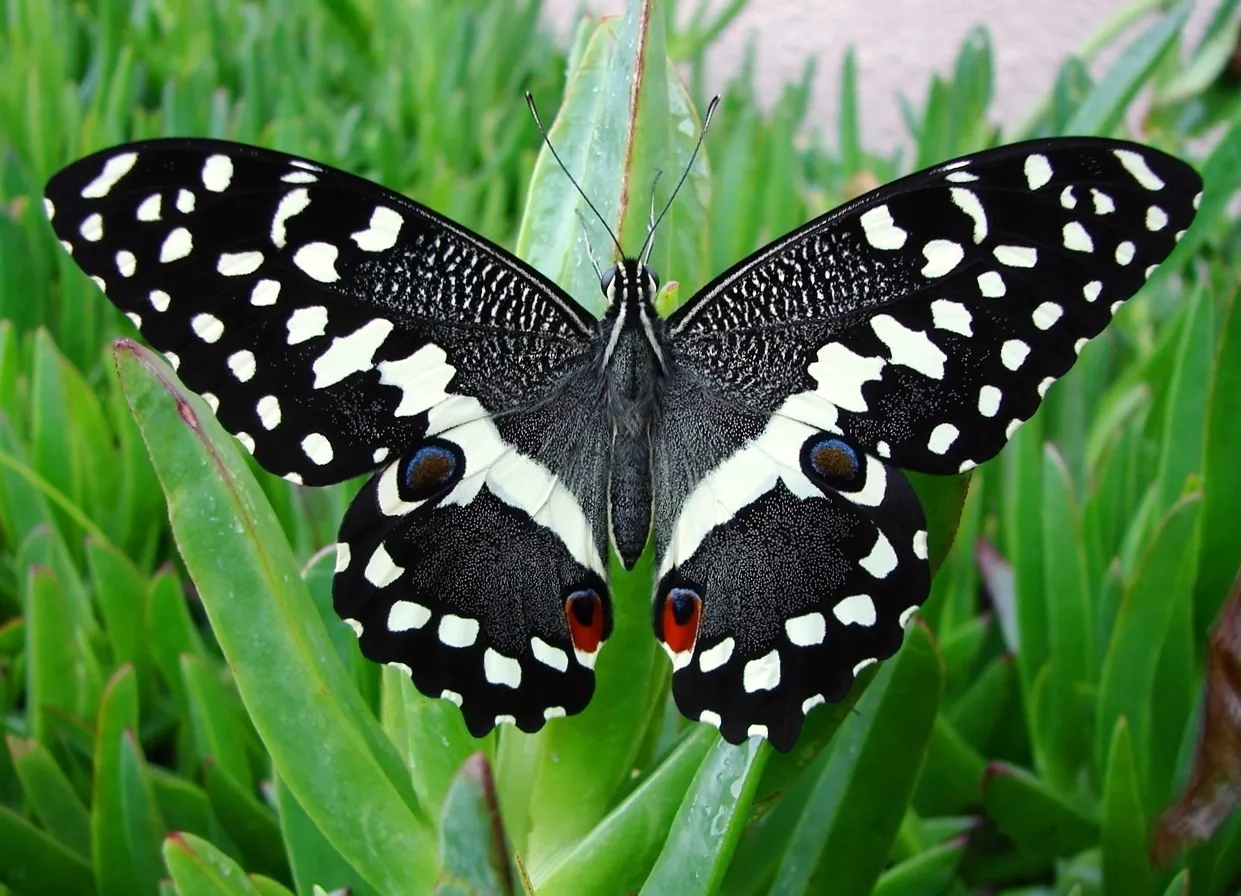
The lime butterfly has a wingspan of about 80 to 100 mm and, unlike many of its relatives, has no tails on the hindwings. The upperside is black crossed by a broad, irregular yellow band, broken on the forewing, with a red spot edged in blue near the inner corner of the hindwing. The underside repeats the pattern in paler, larger, cream-coloured markings. The sexes are close in pattern, though the red spot on the hindwing is notched on its inner edge in the female.
Range and habitat
The species tolerates a wide range of open and semi-open habitats, including savannahs, fallow land, gardens, and evergreen and semi-evergreen forest, often near streams and riverbeds. It is common in urban gardens and in woodland up to about 7,000 feet in the Himalayas, a tolerance for disturbed and cultivated ground that has helped it spread far beyond its original range.
Life cycle and host plants
Caterpillars feed mainly on Rutaceae such as cultivated lime, lemon, orange, curry tree and bael, the citrus relatives that give the butterfly its common name. They also use Ziziphus mauritiana, known as ber, in the family Rhamnaceae, and, in Australia and Papua New Guinea, species of Cullen in the pea family Fabaceae.
The egg is round, pale yellow, flattened at the base, smooth-surfaced and about 1.5 mm tall. The caterpillar changes dramatically as it grows. The first instar is black, with a black head and two rows of fleshy spines along its back, and middle instars carry white markings on the eighth and ninth segments that mimic a bird’s dropping. The final instar loses that disguise, becoming cylindrical, tapered toward the rear and uniformly pale green with a white band along the side. The chrysalis is wrinkled, stout and about 30 mm long, with two projections at the front of the head and one on the thorax, and comes in two colour forms: a light green morph and a brown morph marked with cryptic dark brown and black streaks. In the colder parts of its range the species overwinters as a chrysalis. Breeding continues almost without pause elsewhere: the butterfly can complete up to about 9 generations a year near the equator, against around 5 in warm temperate China.
Because its caterpillars feed readily on young plants, the species is a recognised citrus pest: caterpillars can completely defoliate young citrus trees under 2 feet tall and devastate citrus nurseries.
Behaviour and flight period
Most swallowtails fly only in a defined season; the lime butterfly’s adults are on the wing in every month of the year, though they are most abundant during and after the monsoon. Its flight speed tracks the temperature: slow on cool mornings, but fast, straight and low once the day warms. Like other swallowtails it basks with its wings held wide open, often on tufts of grass and herbs, and freshly emerged adults show a built-in preference for feeding at blue and purple flowers.
Similar species
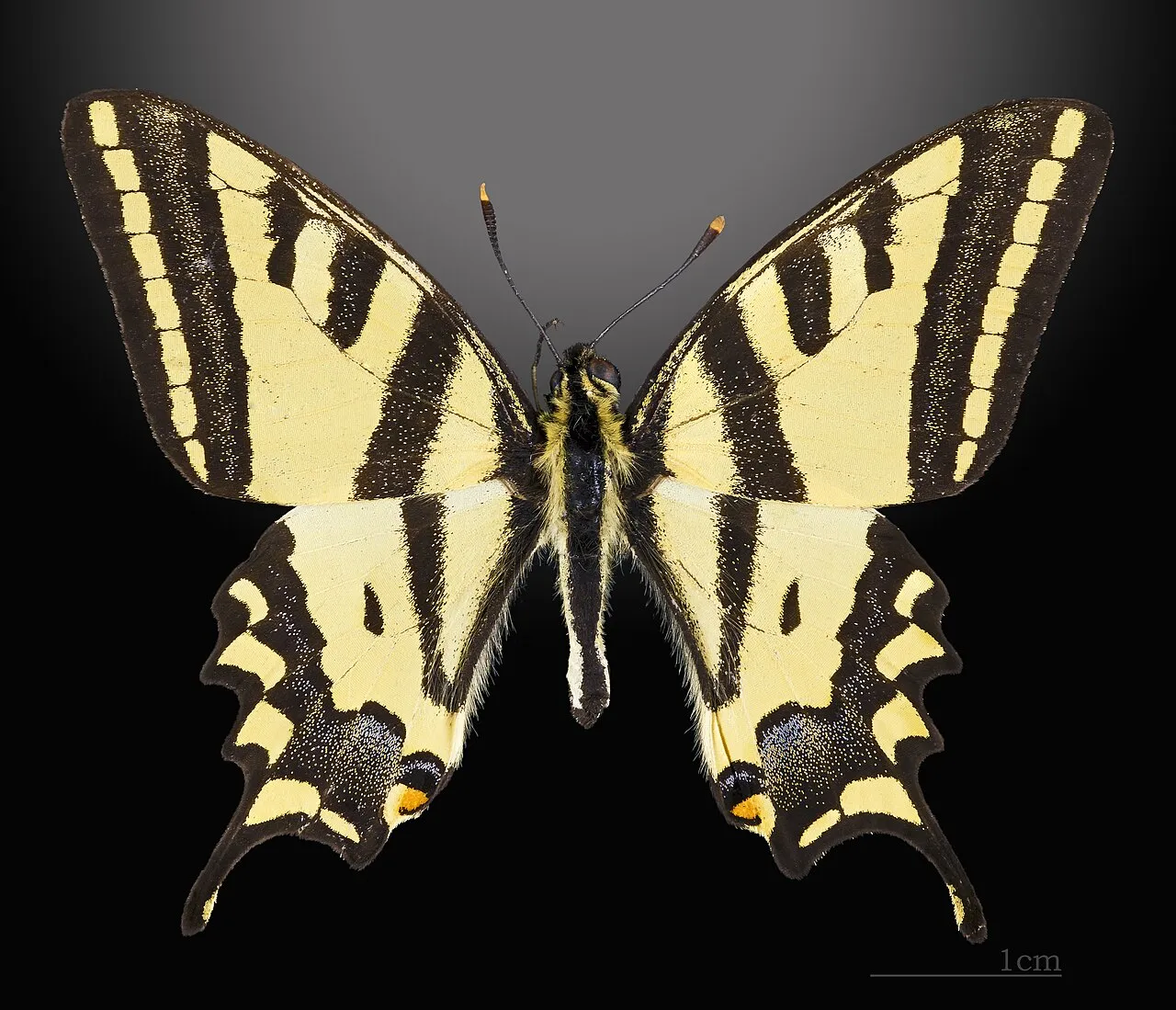
- Common yellow swallowtail (Papilio machaon): a related swallowtail with a broadly Eurasian range; the two can be told apart by wing pattern and host plant.
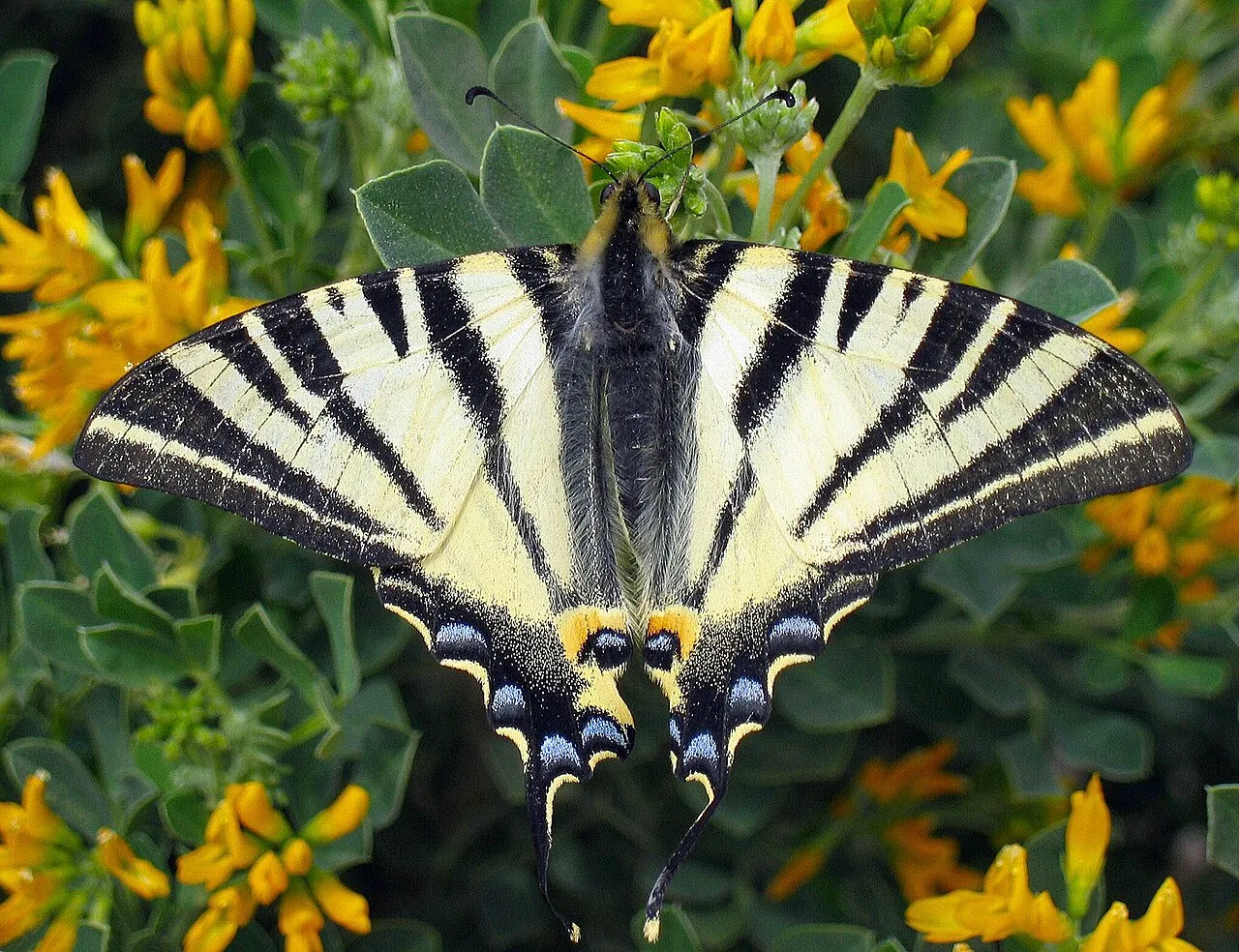
- Scarce swallowtail (Iphiclides podalirius): another swallowtail sharing parts of the lime butterfly’s range further west, distinguished by its longer tails and paler ground colour.
_(6-25-2016)_denali_highway__mile_p13_pass__near_paxson__alaska_(7)_(28788418100)_9KfLF.webp)
_(Apollo)_-_(imago)__Triglavski_narodni_park_NP__Slovenia_Z1ilv4V.webp)
_13MRxF.webp)