Contents
The eastern giant swallowtail, Papilio cresphontes, is the largest butterfly in North America1, a swallowtail of the family Papilionidae found throughout eastern North America west to the Rocky Mountains. Its caterpillars, the “orange dogs”, are occasional pests of citrus2.
Identification
The wingspan runs from 4 to 6 1/4 inches (10.2–16 cm)2. Larger figures are also published: females average 5.5 in (14 cm) and up to 6.9 in (18 cm)1, while males average 5.8 in (15 cm) and up to 7.4 in (19 cm).
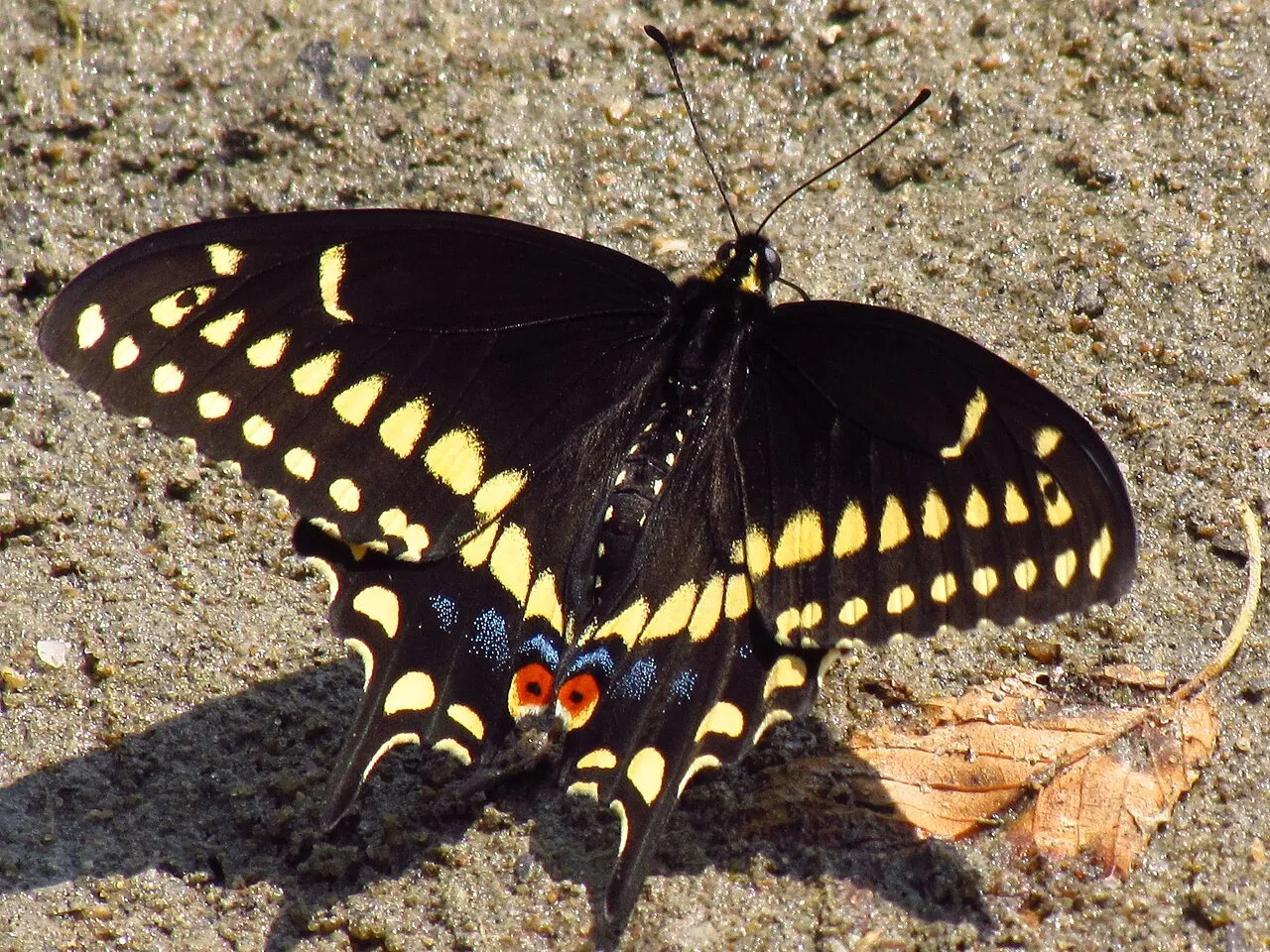
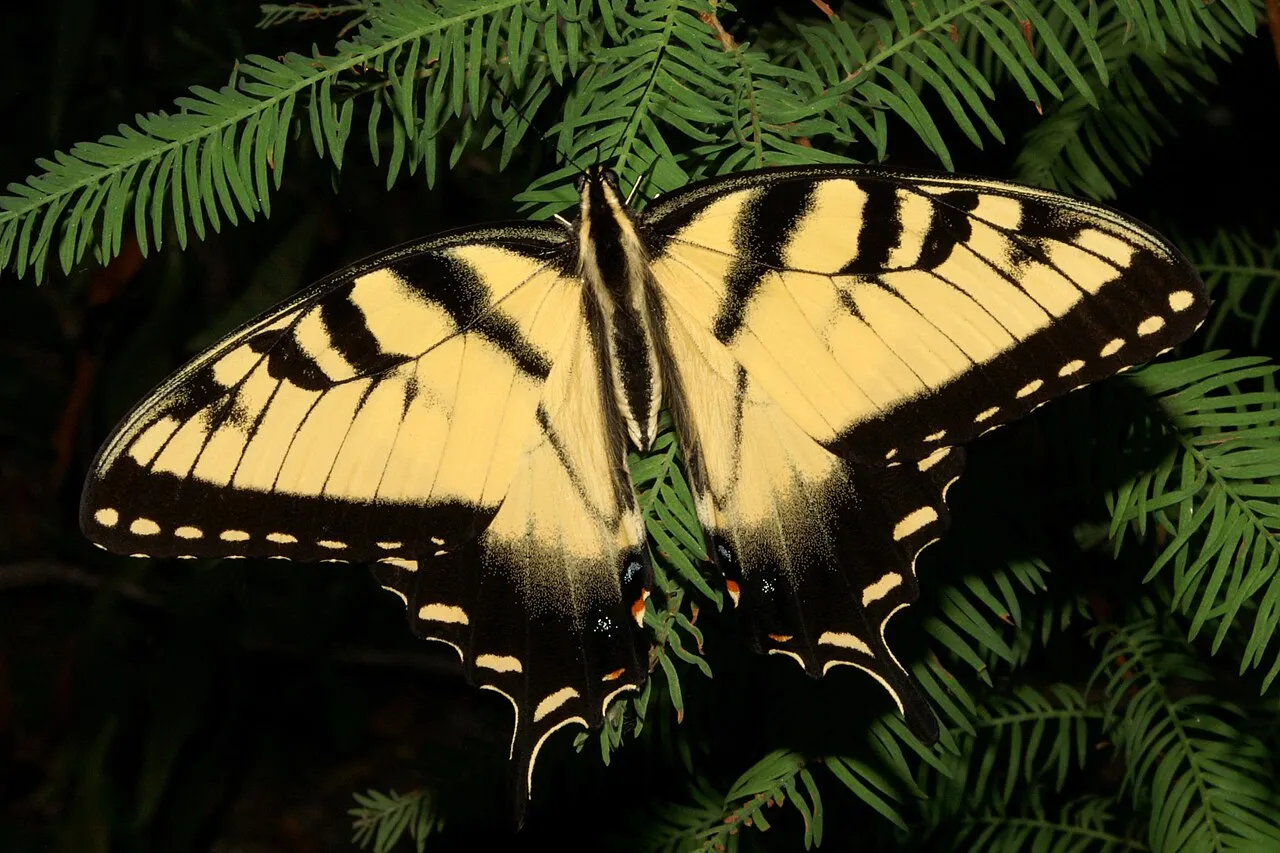
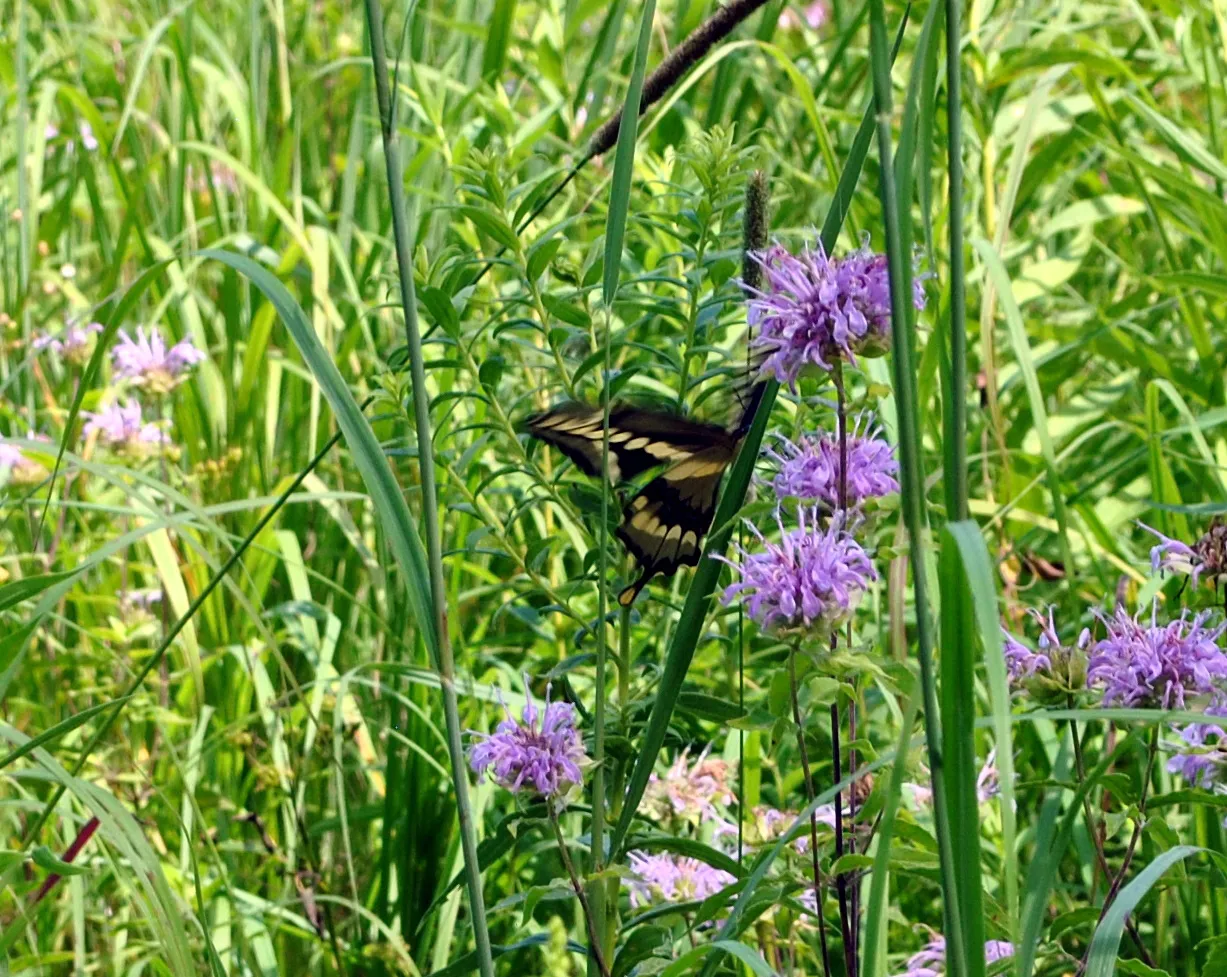
The upperside is black, with a horizontal yellow line across the forewings and a diagonal yellow line across the hindwing. The forewing carries a diagonal band of yellow spots, and the tails are edged with black and filled with yellow2. The underside is yellow with accents of black1. Most specimens can be told from its western sister species by spots rather than stripes on the neck3.
Eggs are small, 1–1.5 mm, brownish, but look more orange because of an orange secretion. The caterpillars resemble bird droppings2. The chrysalis is brown and mottled, resembling a bit of dead twig1.
Range and habitat
Its range runs throughout eastern North America west to the Rocky Mountains2, south through the desert Southwest to South America, with rare strays to Quebec, North Dakota and Bermuda. A 2014 study of DNA barcodes from 200 specimens from Canada to Panama found two groups, eastern and southwestern, with a 3% difference between them; the southwestern one, from California to central Texas and south to Panama, was described as a new species. The two are mostly allopatric3, and central plus southeastern Texas is the only region where the authors found both.
Under the narrower definition, the eastern giant swallowtail reaches as far north as southern New England and southern Canada1, and south of the United States it is found in parts of Mexico, Jamaica and Cuba. The 2014 study disputes Jamaica: there, the records are either possible human imports or misidentifications3.
It uses rocky and sandy hillsides near streams or gullies2 in the north, and pine flats, towns and citrus groves in the south. In the United States it mostly lives in deciduous forest and citrus orchards1.
The range has spread north in recent years, an expansion linked to increasingly warm temperatures and particularly to a lack of September frosts in the expansion regions from 2001 onwards. Larvae there could withstand a few frosts1 before they pupated.
Life cycle and host plants
Caterpillars feed on trees and herbs of the citrus family (Rutaceae)2, including Citrus species, prickly ash (Zanthoxylum americanum), hop tree (Ptelea trifoliata) and common rue (Ruta graveolens). They also take some exotic Rutaceae introduced to North America1, such as gasplant, rue and sapote.
Females lay single eggs on host leaves and twigs. The caterpillars eat leaves and young shoots, pass through five larval instars and grow to about 2 inches before pupating. They are mostly nocturnal, feeding at night. Threatened caterpillars push out the osmeterium, an organ behind the head that inflates into an orange/red Y-shaped growth. The adult emerges after approximately 10–12 days1 in the chrysalis, and the chrysalids hibernate2.
Adults take nectar from lantana, azalea, bougainvillea2, bouncing Bet, dame’s rocket, goldenrod, Japanese honeysuckle and swamp milkweed. Besides nectar, adults can also take liquid from animal waste1.
Behaviour and flight period
There are two broods in the north, flying May to September; in Florida and the Deep South adults fly all year. Males patrol for receptive females2, searching along set flight paths and near host plants, and mate in the afternoon. With their large wings they are very strong fliers1, able to glide long distances with very few wing beats.
Conservation
In the IUCN Red List’s 2022.2 edition, the eastern giant swallowtail is listed as Least Concern4. Its NatureServe5 global rank is G5, demonstrably secure globally2, though it may be quite rare in parts of its range, especially at the periphery.
Similar species
- Western giant swallowtail (Papilio rumiko, described as Heraclides rumiko): the southwestern sister species, considered separate as of 20141. Southwestern specimens have continuous yellow stripes instead of spots on the head and thorax, and generally narrower wings with longer, more slender hindwing tails; male genitalia, stripes on the neck and DNA barcodes3 are the most reliable characters.
- Schaus’ swallowtail (Papilio aristodemus): its tails are edged with yellow and filled with black, the reverse of the eastern giant swallowtail’s, and the forewing upperside has a narrow central yellow band. Its range runs from North Key Largo and the larger Keys6 in Biscayne National Monument south to the Greater Antilles.