Contents
The holly blue, Celastrina argiolus, is a butterfly of the lycaenids or blues family, native to the Palearctic and found throughout Eurasia1. In Europe it is missing only from the extreme north, and it also occurs in North Africa2. In the British Isles it is primarily found in the southern half and is a frequent visitor to gardens3.
Identification
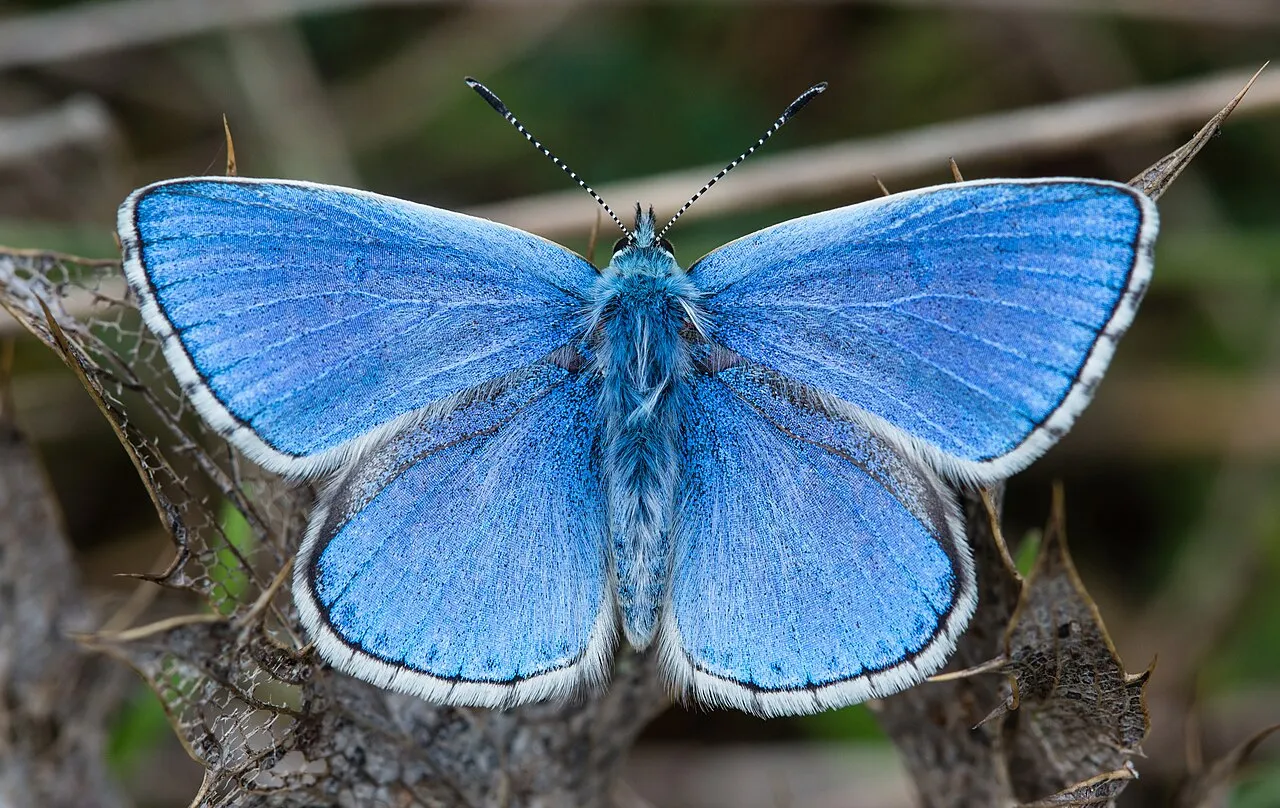
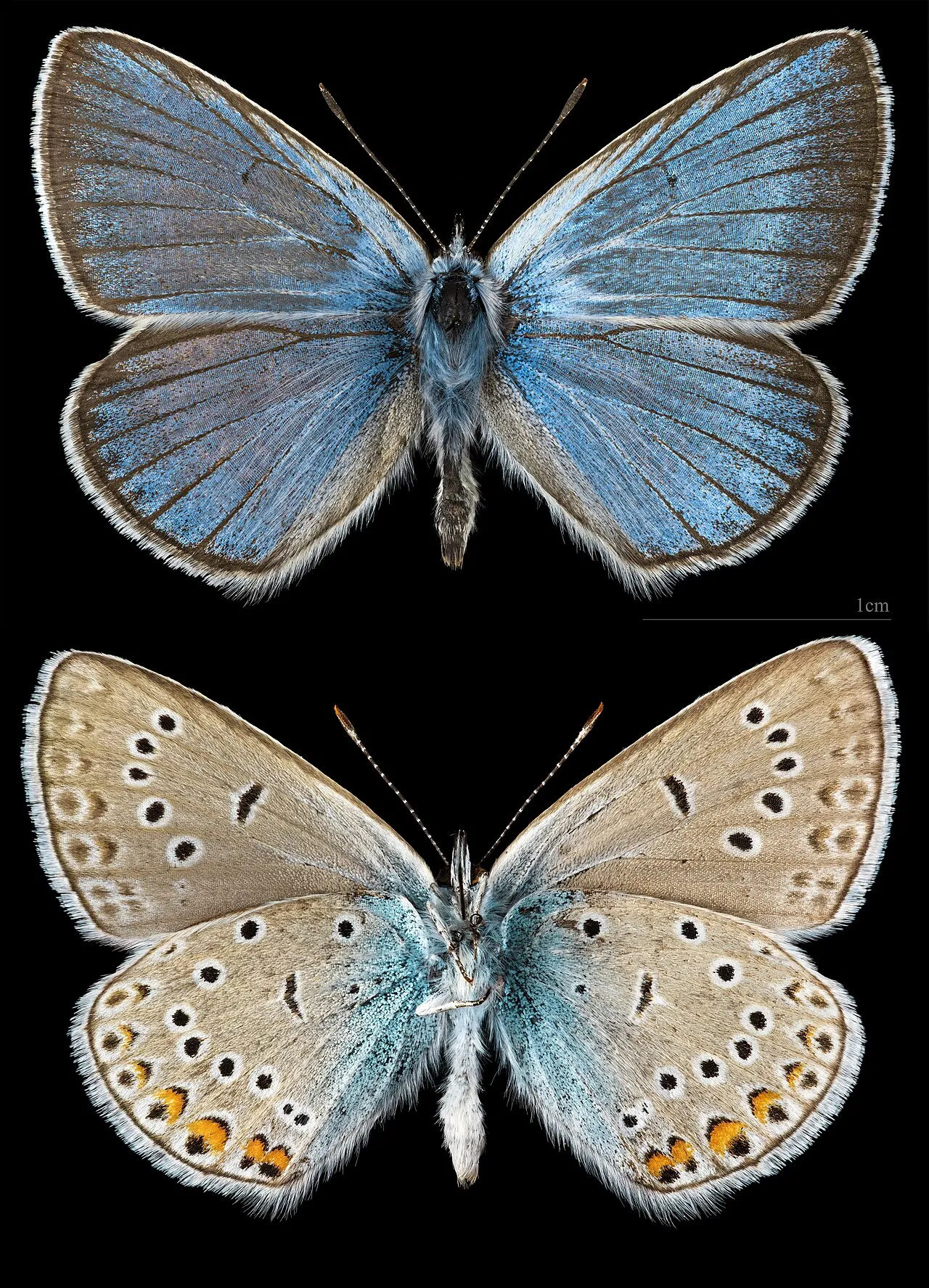
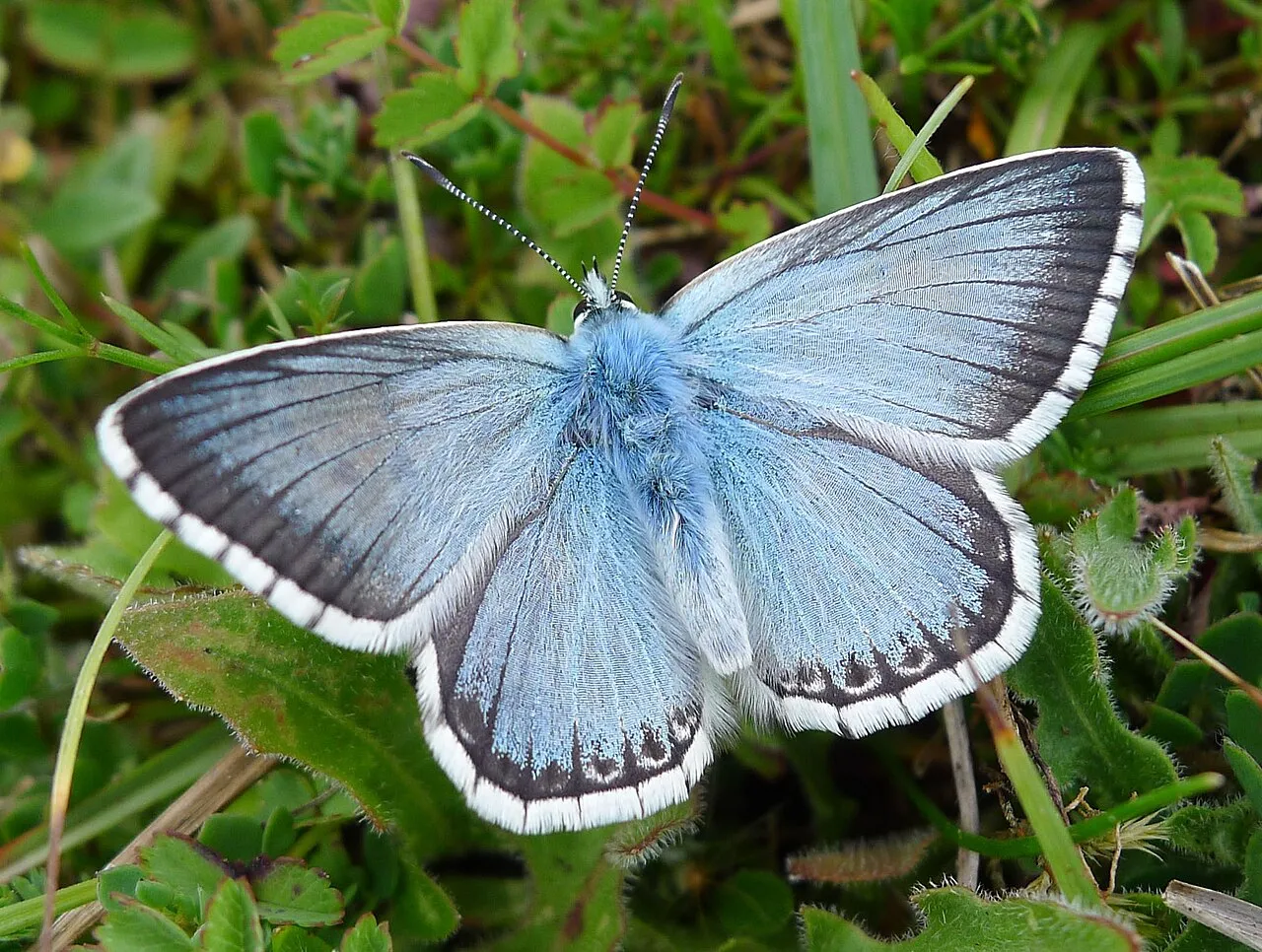
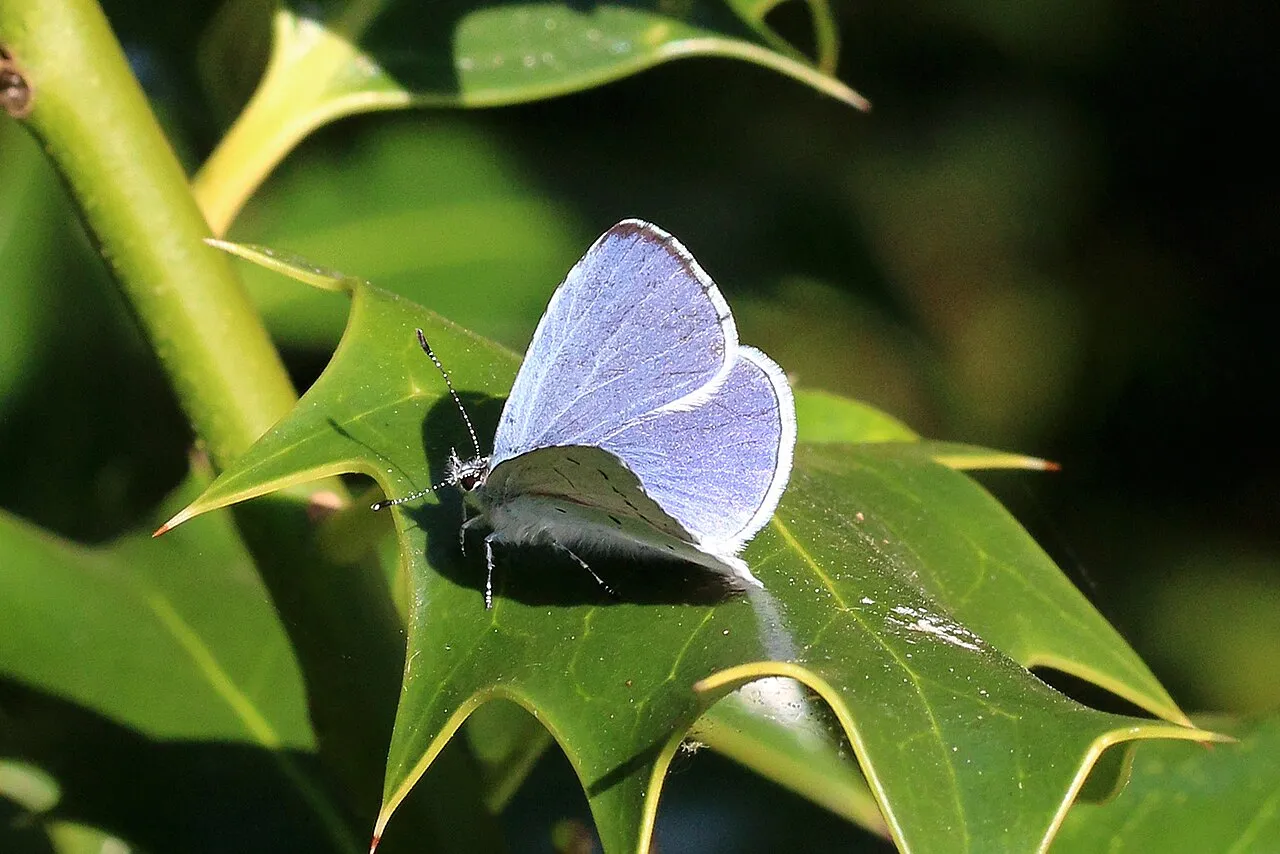
The holly blue has a wingspan of 26–34 mm. Seitz described the male as shining violet blue above, with only the tip of the forewing’s leading edge minutely edged in white. The female has both wings broadly bordered with dark, and the margin of her hindwing bears vestiges of eye-spots1. Those broad black forewing borders are absent in the male, and summer-brood females have a much broader dark band3 on the forewing upperside than spring-brood females.
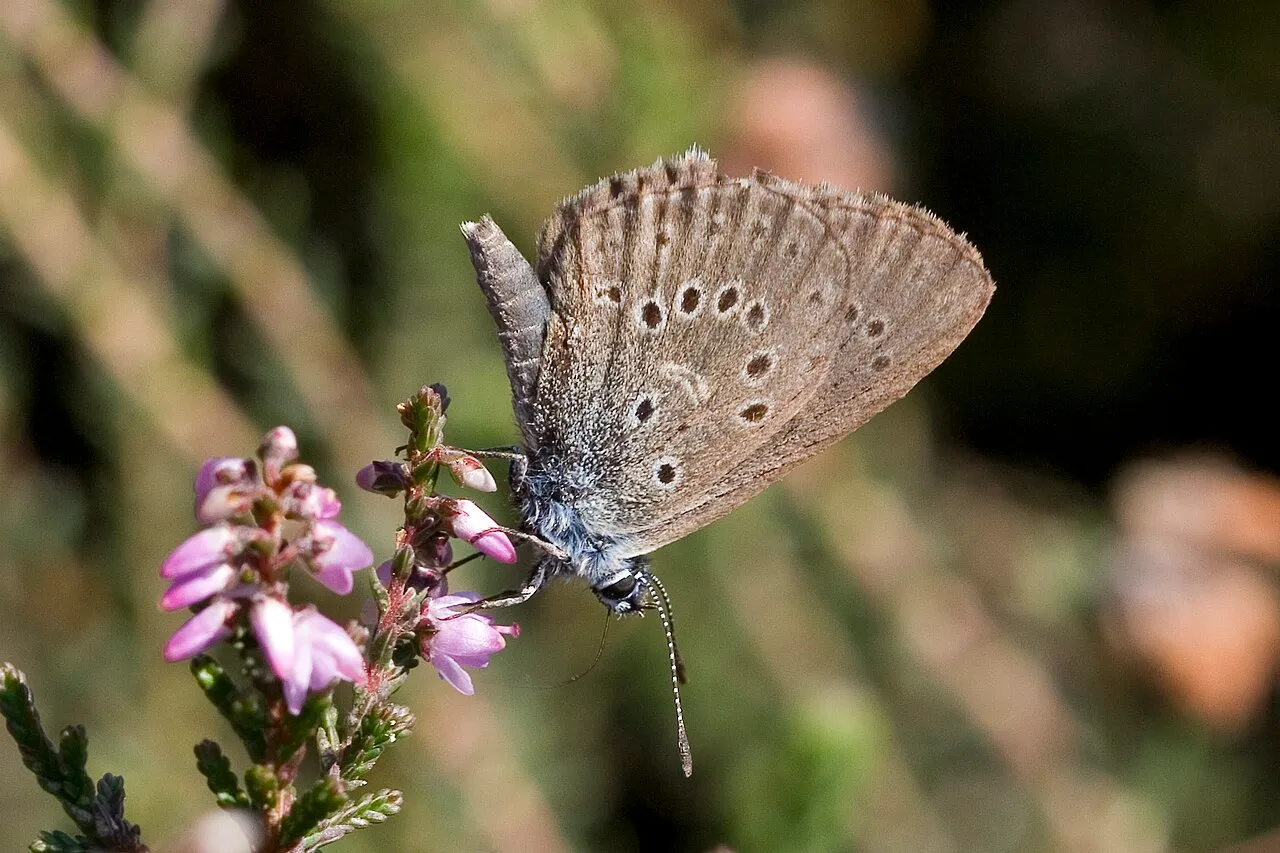
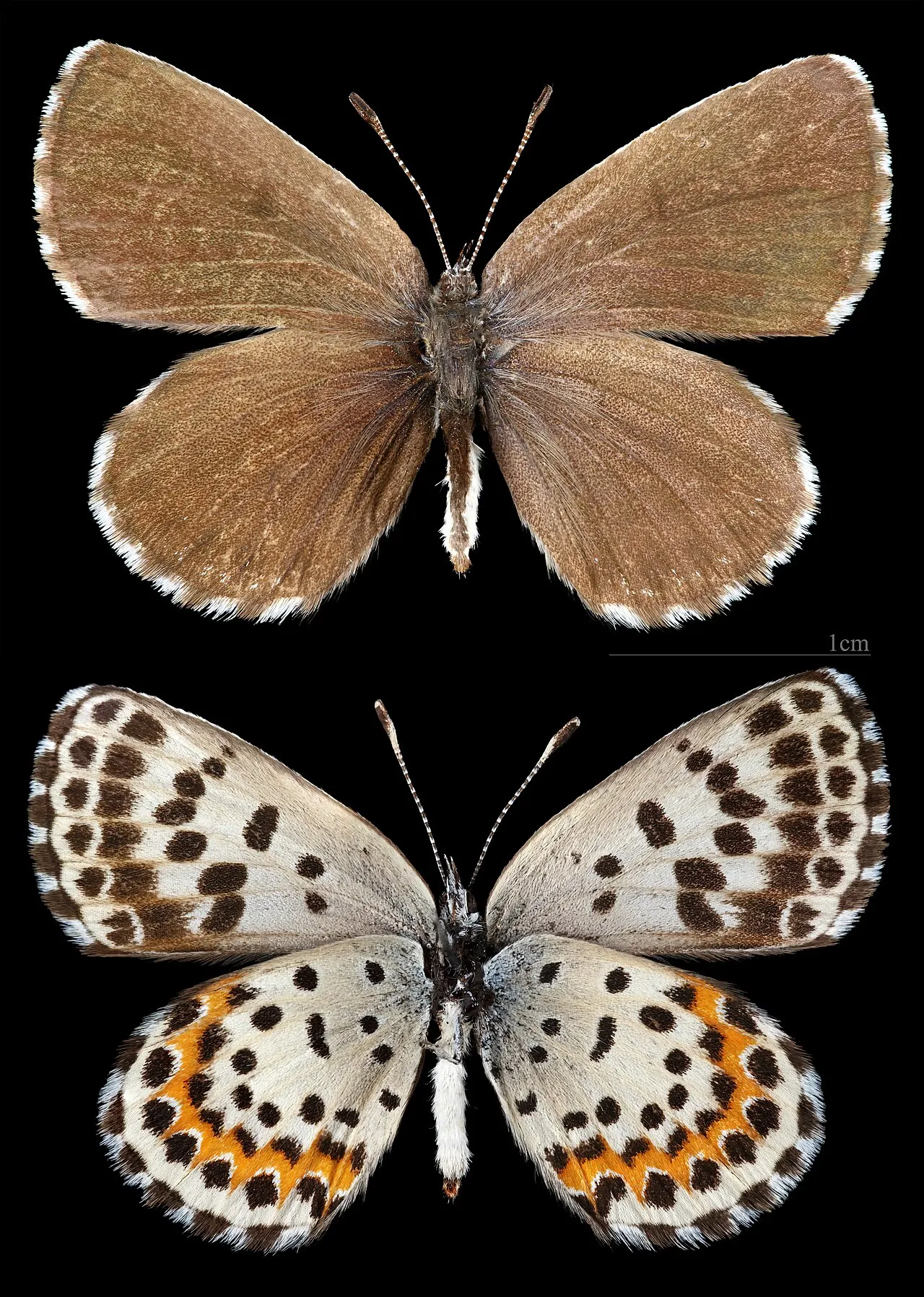
The underside is silver-white, with a row of black dots in the disc of the wing and blackish shadowy dots before the margin. Among the blues of the British Isles this underside is distinctive, with the possible exception of the Small Blue. The adults are most easily identified at rest, and they tend to open their wings only in weak sunshine3. The holly blue usually perches with its wings almost closed or at around 90 degrees1.
Range and habitat
Beyond Europe, the holly blue occurs in South Asia from Chitral in Pakistan to Kumaon in India, where it is known as the hill hedge blue1. In the Alps it is restricted to the valleys2.
In Europe it lives in shrub-rich areas, from woodland edges and riparian forests to clearings and gardens. Adults are usually seen singly but spread widely, as they are little sedentary2. In the British Isles it uses gardens, churchyards, woodland and parks, and anywhere its foodplants and nectar sources can be found3.
In England and Wales it is widespread and common south of a line from Cumberland to County Durham. It is also found on the Isle of Man and throughout Ireland, but is absent from Scotland except as a scarce vagrant. Its UK abundance rose by 109% between 1976 and 2019, and it has also spread northward. On that record it is not considered a species of conservation concern3. For continental Europe, dark forest management and a more uniform landscape are named as threats, even though the butterfly has low requirements concerning habitat quality2.
Life cycle and host plants
The primary larval foodplants are holly (Ilex spp.) and ivy (Hedera spp.), with bramble, buckthorns, dogwood, gorse, snowberries and spindle also used. In the British Isles the holly blue is unique in that its broods use different foodplants: spring eggs are typically laid on holly, summer eggs on ivy3. Across Europe the spring-generation larvae feed mainly on Ilex aquifolium, eating its flower buds, berries and leaves, while the summer generation uses a range of plants including spindle, dogwoods, ivy and bramble1. Another European account names Frangula alnus, Calluna, Lythrum and some Fabaceae2 as more important hosts.
The white eggs are laid singly at the base of unopened flower buds and hatch in around 2 weeks. The caterpillar is extremely well camouflaged and usually plain green; Seitz described larvae that are green or brown, with chain-like stripes on the back1. It bores a hole in the side of a flower bud and scoops out the contents, and it has 4 instars in total3.
When fully grown, the larva leaves the foodplant to pupate on or near the ground, held by a very fine silken girdle. Spring-generation pupae emerge in 2 to 3 weeks, while those formed in late summer overwinter3.
Numbers fluctuate wildly in a predictable cycle over a few years, a pattern believed to be caused by the wasp Listrodromus nycthemerus, whose sole host is the holly blue3. This parasitoid inserts an egg into the caterpillar’s body, and the adult wasp emerges from the chrysalis, killing it. When butterflies are scarce the wasp population falls, which allows the butterfly population to increase; as more caterpillars are parasitised, the butterfly population crashes1.
Behaviour and flight period
There are typically two broods each year, although some northern sites produce a single brood and some southern sites a third in favourable years. In Britain, adults from overwintering pupae emerge as early as the first week of April, and the next generation at the end of July and early August3. In continental Europe there are most often two generations, flying from April to June and again from mid-July to early September2.
The holly blue will fly high off the ground, which sets it apart from other blues and makes its behaviour more similar to a hairstreak. Adults seem to prefer honeydew to nectar but also visit flowers such as bramble, holly and forget-me-not. Males come down to damp mud and animal waste3 to take salts and minerals.
Similar species
- Common blue (Polyommatus icarus): the holly blue flies high off the ground, unlike other blues, and its underside is distinctive among the blues3 of the British Isles.
- Small blue (Cupido minimus): the one blue whose underside may be confused with the holly blue’s, but it is much scarcer and much smaller3.