Contents
The Chalkhill blue, Lysandra coridon, is a small butterfly of the family Lycaenidae, named for its pale, silvery-blue male and its fondness for chalk downland. The species ranges across the Palearctic, from western, southern and central Europe (England and Pomerania south to Spain and Italy) through Asia Minor to the southern Urals and northwest Turan, but is absent from Ireland, Scotland, Scandinavia, the Netherlands and most of the Iberian Peninsula.
Identification
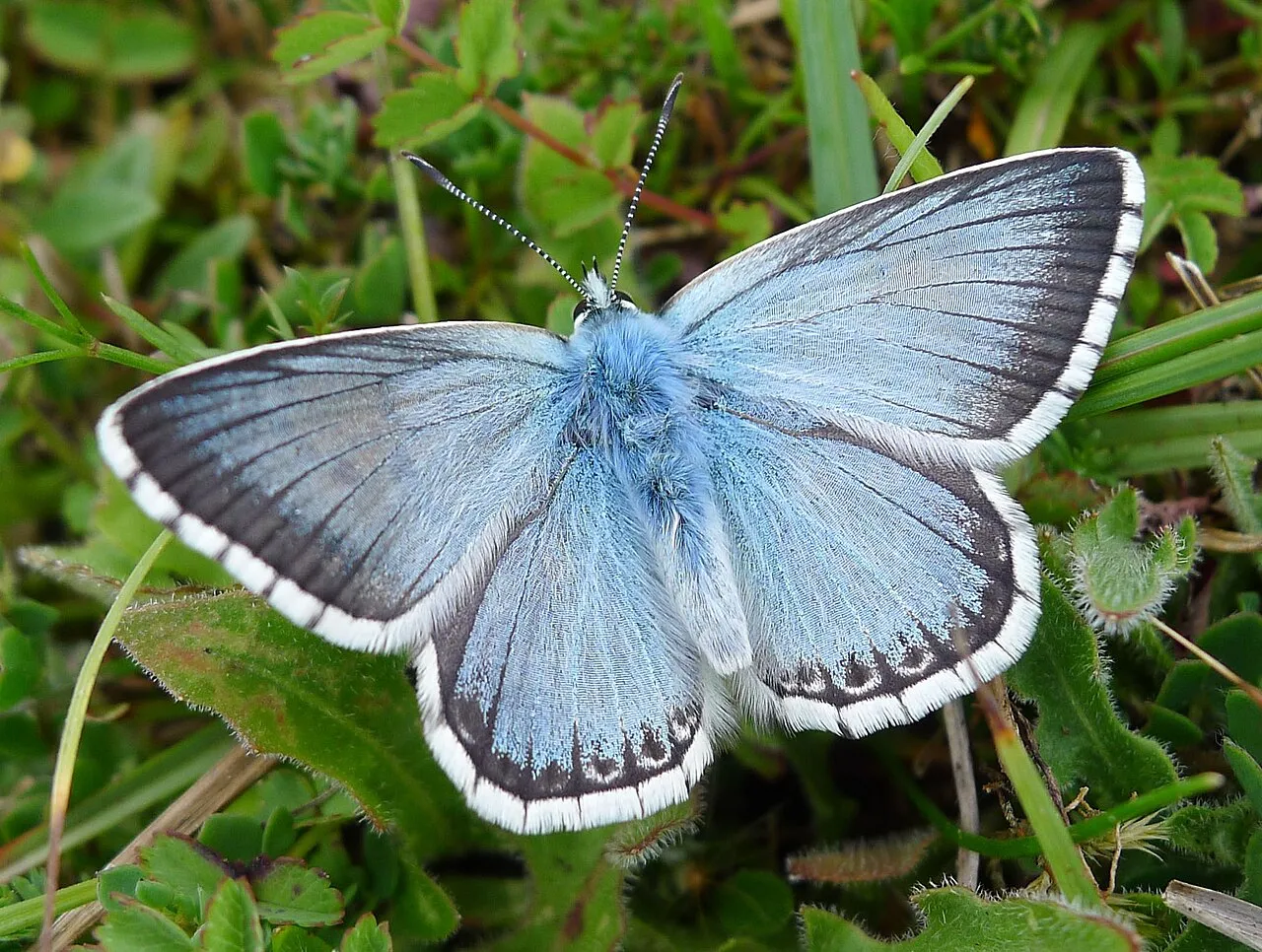
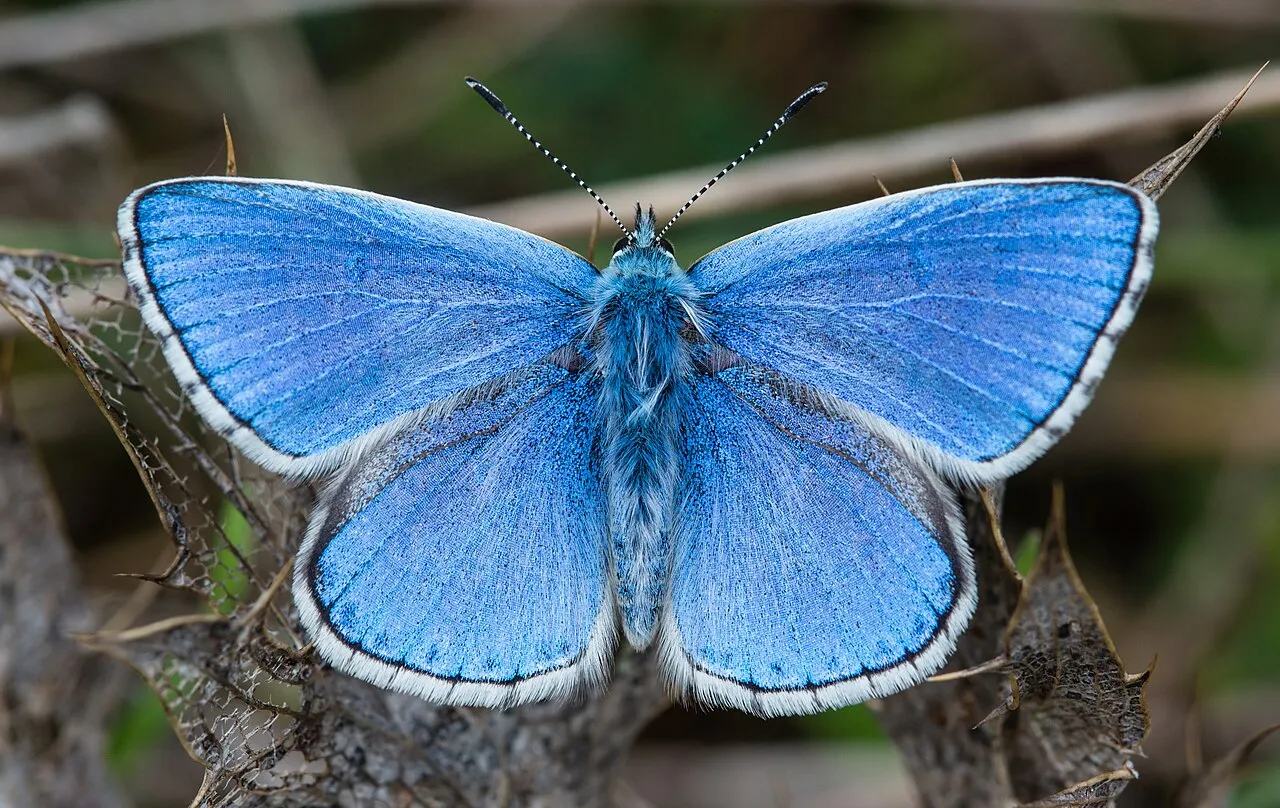
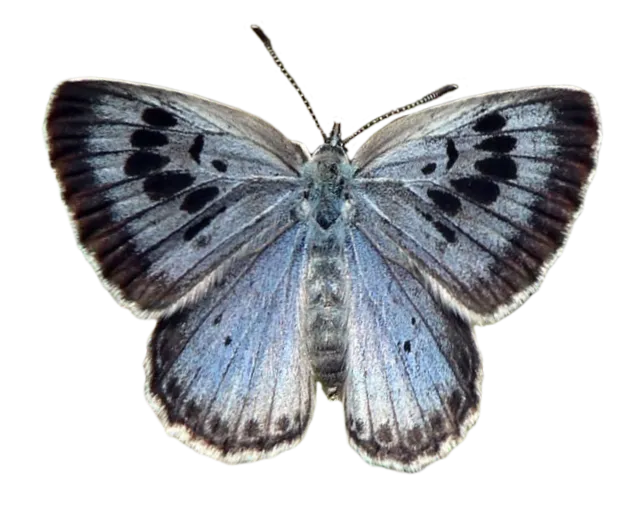
Wingspan runs to 33–40 mm. The sexes look quite different above. A male has a pale, silvery-blue upperside with a row of grey spots near the hindwing margin and a thin, chequered brown-and-white fringe, far less vivid than the electric blue of the Adonis blue. A female is dark brown above, with orange spots along the margin and the same chequered fringe as the male. The underside is shared more closely between the sexes: a light ochre ground colour with dark, white-ringed spots, a row of black marks near the margin, orange spots along the hindwing edge and a dusting of blue scales close to the body.
Range and habitat
This is a butterfly of dry calcareous grassland, chalk and limestone downland with short turf and abundant flowers, from about 100 to 2,000 m elevation. In Britain it keeps to sheltered, south-facing hillsides, the warm microclimate its host plant and its caterpillars both need.
Life cycle and host plants
The main larval foodplant is horseshoe vetch (Hippocrepis comosa), the same low-growing legume the Adonis blue depends on, which explains why the two species so often share a hillside. Caterpillars have also been recorded on other legumes such as Coronilla, Astragalus and Vicia, though within any one population they stay monophagous, feeding on a single plant species. The caterpillar itself is bright blue-green, paler beneath, with a dark line down its back and chains of yellow spots along each side. It pupates on the ground, often tucked under a stone, in a slender, smooth chrysalis of dirty yellowish brown with a dark line down the back and pale smears on the wing cases.
The species overwinters as an egg, with a fully formed larva already curled inside it for about eight months before hatching. There is one generation a year, a single summer brood rather than the repeated broods seen in some other blues. Across its range the species splits into three recognised subspecies: the nominate form, borussia from around the southern Urals, and asturiensis from Spain.
Behaviour and flight period
Adults are on the wing from June to October across the species’ range, with the peak varying by location between June and August. In Britain the flight period is shorter and later, running from mid-July to early August, when the chalk downland that holds this species is at its warmest and the horseshoe vetch is well established. Unlike many butterflies that fly into dusk, this species turns in early, settling for the night with closed wings on a grass stalk or a flower head while it is still broad daylight.
Conservation
The species as a whole is listed by the IUCN under the category shown in the facts box, taken from its Wikidata record. In the United Kingdom it went through a marked decline in numbers during the 1950s, before recovering between 1981 and 2000 as targeted management of its chalk grassland habitat took hold.
Similar species
- Adonis blue (Lysandra bellargus): the closest look-alike, sharing the same horseshoe vetch host plant and chalk downland habitat, though its male is a far brighter electric blue with chequered black-and-white fringes.
- Common blue (Polyommatus icarus): similar in size and in the brown, orange-spotted female, but found on a much wider range of grassland and not tied to chalk or horseshoe vetch.
_male_Turna_Ewa2f.webp)
_07-05-2006_1_ZJyP4Y.webp)