Contents
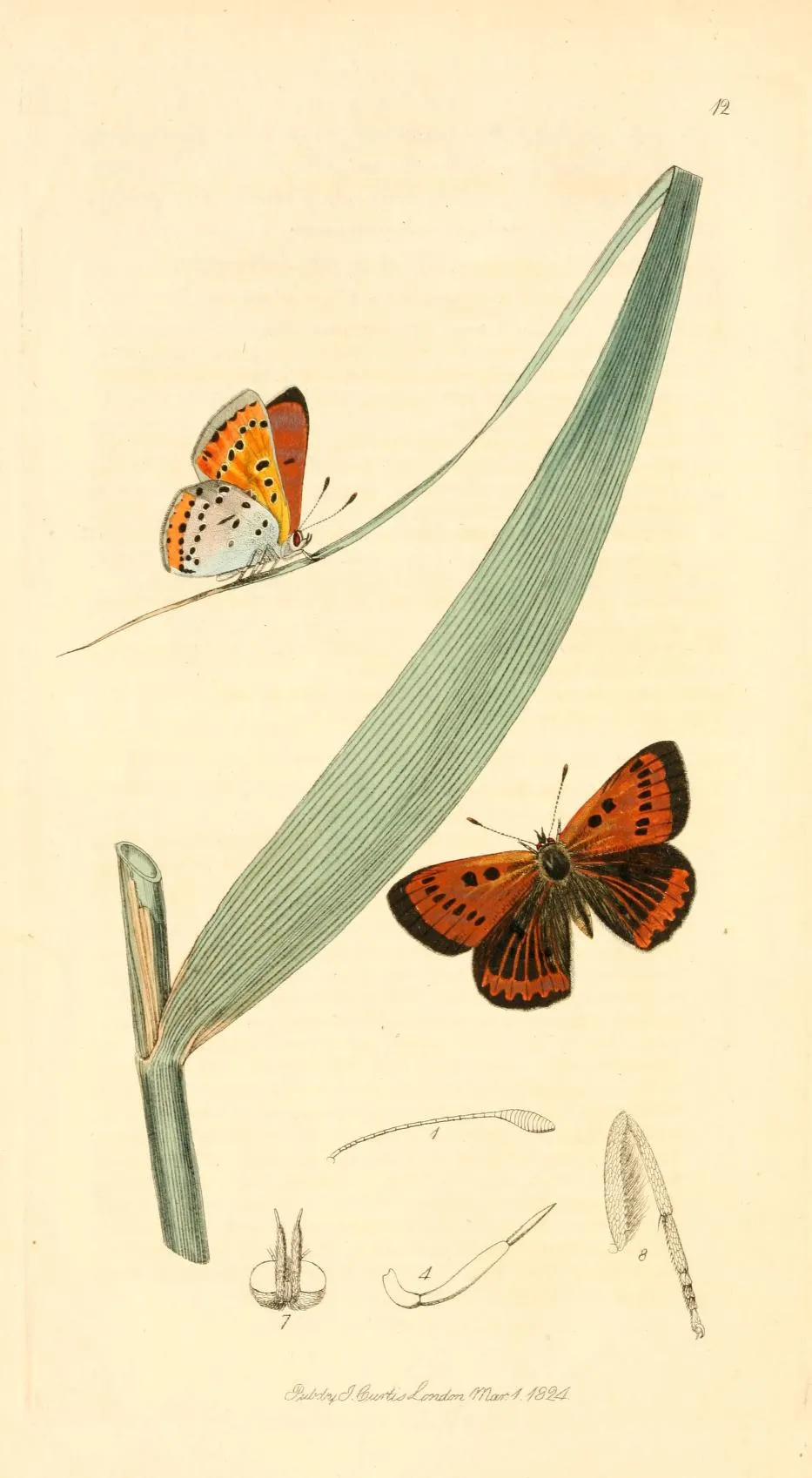
The Large blue, Phengaris arion, is a blue butterfly of the family Lycaenidae, found across Europe, the Caucasus and Armenia, east through western Siberia and the Altai to north-western Kazakhstan and Sichuan in China. It is most widespread from France to China, while in Britain it survives only as isolated, reintroduced colonies in the south. The species owes both its name and its precarious conservation history to an extraordinary life cycle: for most of its time as a caterpillar it lives not on a plant but underground, inside the nest of a single ant species, where it feeds on the ant brood until the following spring.
Identification
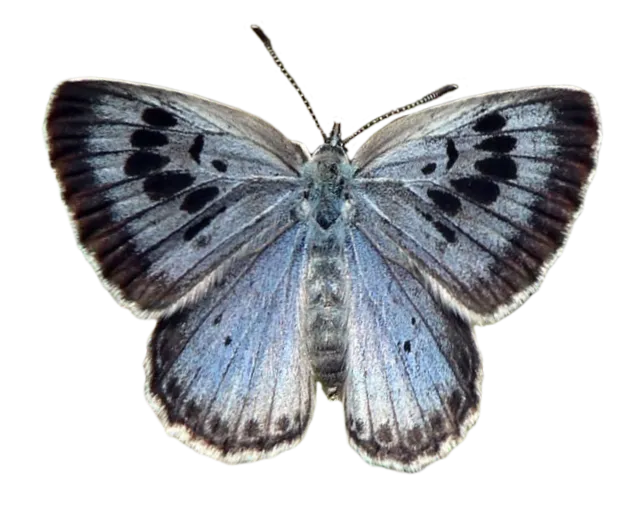
The Large blue has a wingspan of 38 to 52 mm, with males running 38 to 48 mm and the somewhat larger females 42 to 52 mm. As the common name suggests, the upperside is blue, marked with a row of black spots and a dark border, as shown in the image in the facts box. The pattern of spots, together with the underside markings, is the detail most field guides use to separate this species from the many other small blue butterflies that share its grassland habitat.
Range and habitat
The butterfly depends on a narrow and specific habitat: closely-grazed, warm calcareous grassland and pasture with abundant wild thyme and short turf, where the ant Myrmica sabuleti is common. That combination, a warm south-facing slope, thyme in flower and a thriving colony of exactly the right ant, is rarer than it sounds, and it makes the species a good indicator of grassland in excellent condition. The dependence also makes the butterfly vulnerable to changes most people would not notice. Once a site is abandoned or allowed to grow over, the turf cools and the Myrmica sabuleti population declines, and the site becomes unsuitable for the butterfly, even though the thyme the adults need may still be flowering there.
Life cycle and host plants
For its first three instars the caterpillar behaves like an ordinary Lycaenid, feeding on flowers, chiefly wild thyme (Thymus polytrichus, T. drucei, T. praecox), with wild marjoram (Origanum vulgare) used at some sites. From the fourth instar its diet, and its whole way of life, changes completely: it stops eating plants altogether and instead feeds on the brood of Myrmica ants inside their nest. It overwinters as a fourth-instar caterpillar inside the ant nest, pupating there months later before the adult finally emerges above ground. The species has a single generation a year, so an individual caterpillar spends far longer underground among ants than it ever spends as an egg, a free-living larva or an adult butterfly.
Behaviour and flight period
Adults fly in one short brood: late May to early July, peaking in mid-June, in Britain, while further east and south in continental Europe the flight period runs from the end of June into August. Because every stage after the third instar depends on a healthy Myrmica sabuleti colony, the adults are confined to the same closely-grazed grassland the ants and the thyme both need, rather than ranging freely across the wider countryside.
Conservation
The species is listed by the IUCN under the category shown in the facts box, taken from its Wikidata record. Its narrow dependence on grazed, thyme-rich turf and on a single ant species leaves it exposed to any change in land management, which is why its British colonies today are all isolated and reintroduced rather than the remnants of a continuous older population.
Similar species
- Common blue (Polyommatus icarus): a smaller, unrelated blue found in similar open grassland, without the Large blue’s black-spotted upperside pattern or its ant-dependent life cycle.
- Alcon blue (Phengaris alcon): a close relative in the same genus.
_Z2vsEF2.webp)
_Phengaris_nausithous_nausithous_-_Mokra_Poland_-_male_11VJ8p.webp)
_male_Turna_Ewa2f.webp)
_07-05-2006_1_ZJyP4Y.webp)