Contents
The Dusky large blue, Phengaris nausithous, is a blue butterfly of the family Lycaenidae, found in Europe and western Asia1, including Armenia, Austria, Azerbaijan, Belarus, Bulgaria, the Czech Republic, France, Georgia, Germany, Hungary, Kazakhstan, Moldova, Montenegro, the Netherlands, Poland, Romania, Russia, Slovenia, Spain, Switzerland and Ukraine; pyrgus.de2 traces the same range from northern Spain across central Europe to the Altai, with rare outlying populations in Romania and Bulgaria. It belongs to the same small genus as the Alcon blue and the Large blue.
Identification
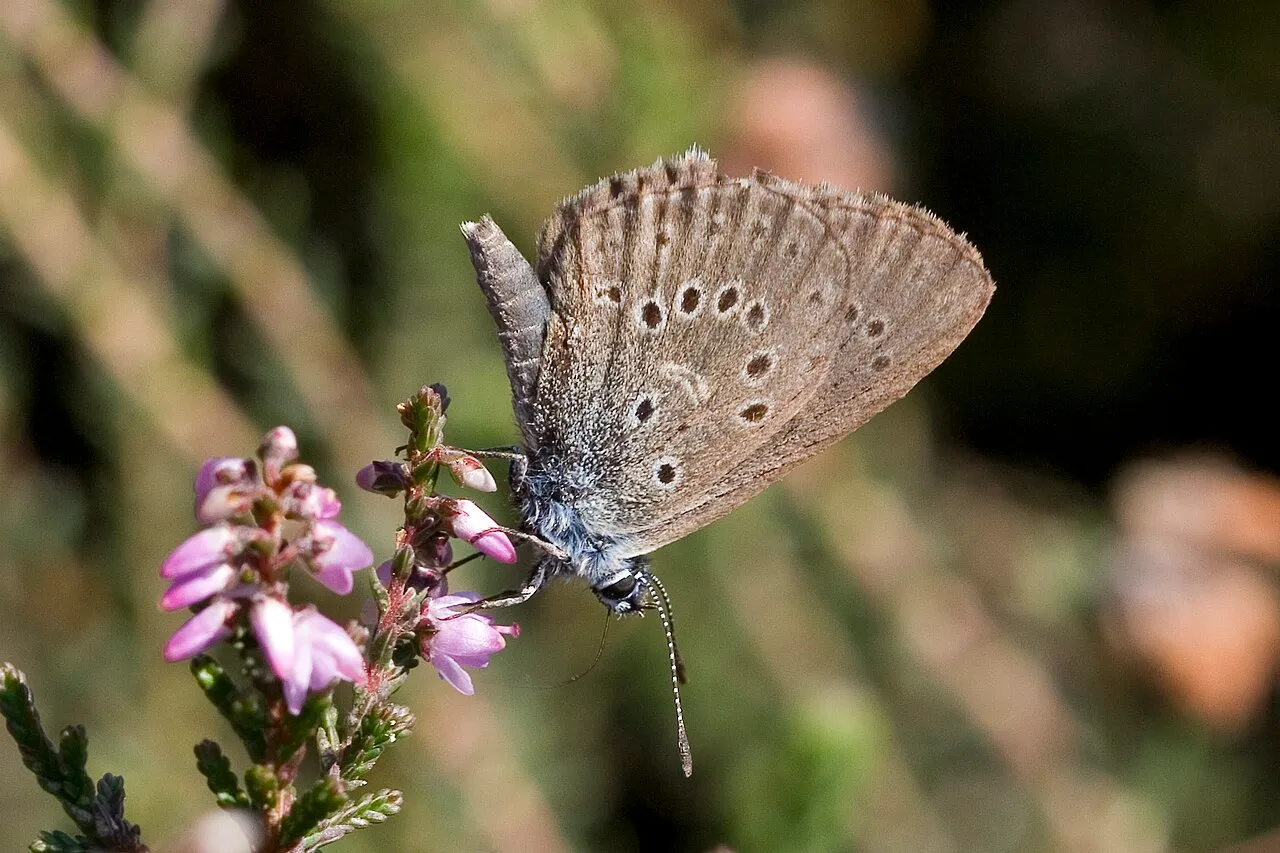
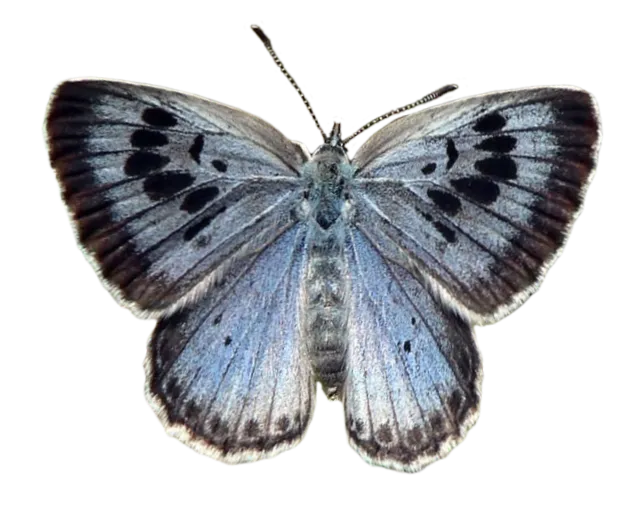
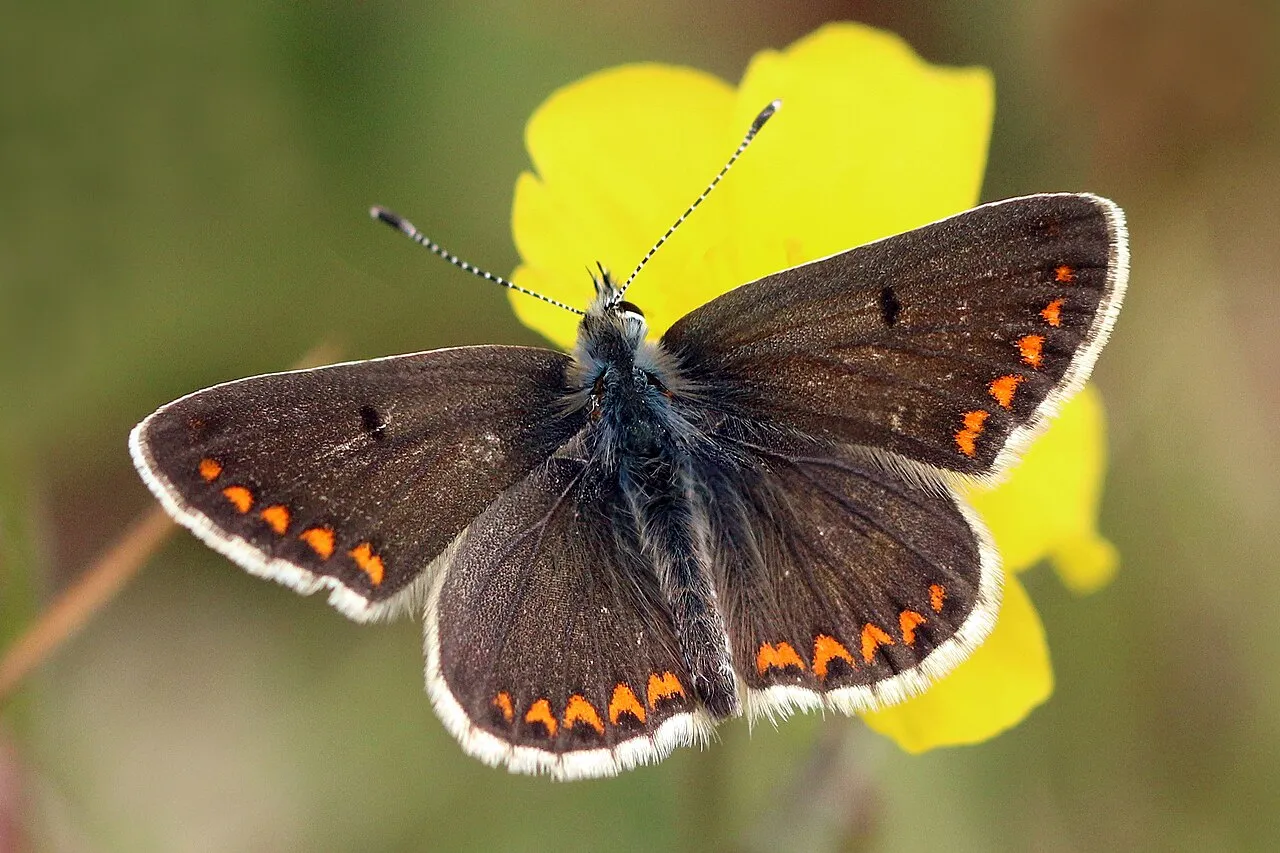
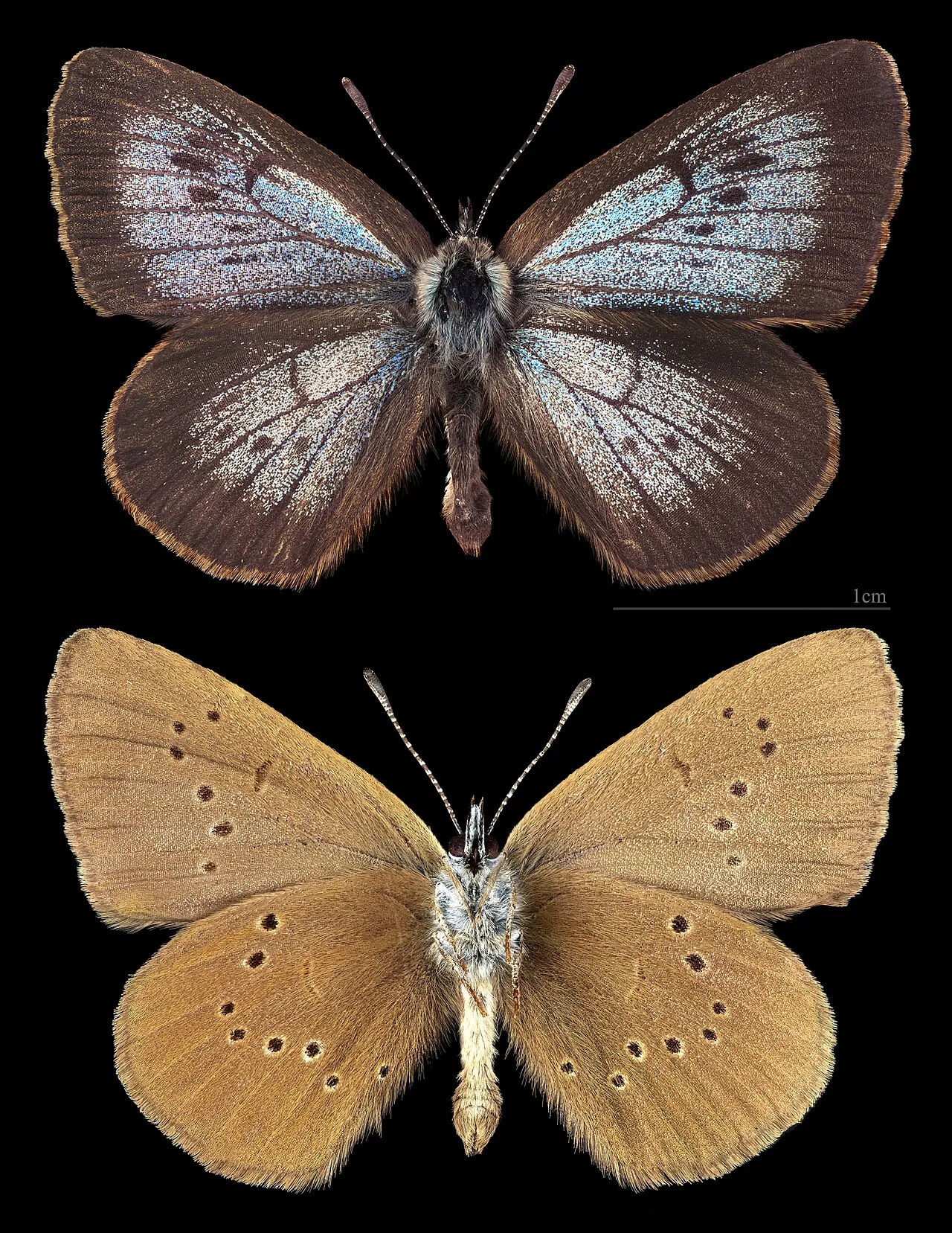
The wingspan runs 34–38 mm3. On the upperside, males resemble the Scarce large blue, though butterfliesoffrance.com4 describes the male as “decidedly dusky in appearance”, with broad black borders subduing the blue scales so that the colour shows mainly once the butterfly takes flight; the female is quite black-brown above, with no blue scales at all. The underside is coffee-brown and bears only a single row of eyespots1.
Range and habitat
The species lives in damp meadows, the same wetland grassland habitat that supports its host plant; lepidoptera.eu3 narrows this to carbonate bogs, fens, marshes and peaty meadows, and pyrgus.de adds that these sites must stay unmown from early summer to early autumn for the flowering host plant to survive. In the eastern part of its French range, butterfliesoffrance.com records colonies at medium altitudes of around 1000 m. Its life cycle is strongly tied to the herbaceous plant great burnet1 (Sanguisorba officinalis), so a meadow without that plant, however damp, cannot hold the butterfly; in France, butterfliesoffrance.com4 calls it “quite rare and highly localised”, often confined to a single small area, and able to persist on a patch of habitat under 100 square metres according to pyrgus.de2.
Life cycle and host plants
Eggs are laid on great burnet, as with the related Scarce large blue, specifically onto flowers that have already turned reddish2. The young caterpillar is pale at first, later turning purple-brown and finally probably yellowish-brown, and it feeds first on the flowers of great burnet, later on the leaves1. By late summer it leaves the host plant for the ants’ nest.
After three moults on the host plant, the caterpillar is taken into an ants’ nest, where workers of the ant genus Myrmica, primarily the red ant Myrmica rubra, feed it on their own ant larvae rather than on any plant; pyrgus.de notes that the caterpillar also carries glands that produce a sugary secretion, and that it then lives in the ant nest until the butterfly emerges. It overwinters there as a caterpillar, and pyrgus.de reports hints that some individuals overwinter a second time before pupating, so one generation can sometimes take more than a year to complete inside the ants’ colony even though the species itself is single-brooded4, producing one generation a year2.
Behaviour and flight period
Adults emerge in late June and fly until August, a window butterfliesoffrance.com notes can vary substantially between colonies that are not far apart. The Dusky large blue shares the same habits and meadows as the Scarce large blue1, and is usually the more plentiful of the two where both occur. Because each colony is highly sedentary and often confined to one small patch of meadow, the species rarely strays far even within a single flight season. Both sexes spend most of their time on the flower heads of great burnet, even while roosting, and rarely open their wings; on the wing, the pair is told apart by the male’s apparent blue4, a colour the female lacks entirely.
Conservation
An assessment from 19961 rates the species Near Threatened5, a category still carried in the Red List’s 2022.2 edition. pyrgus.de2 names grassland intensification as the main threat, alongside overbuilding, drainage and succession.
Similar species
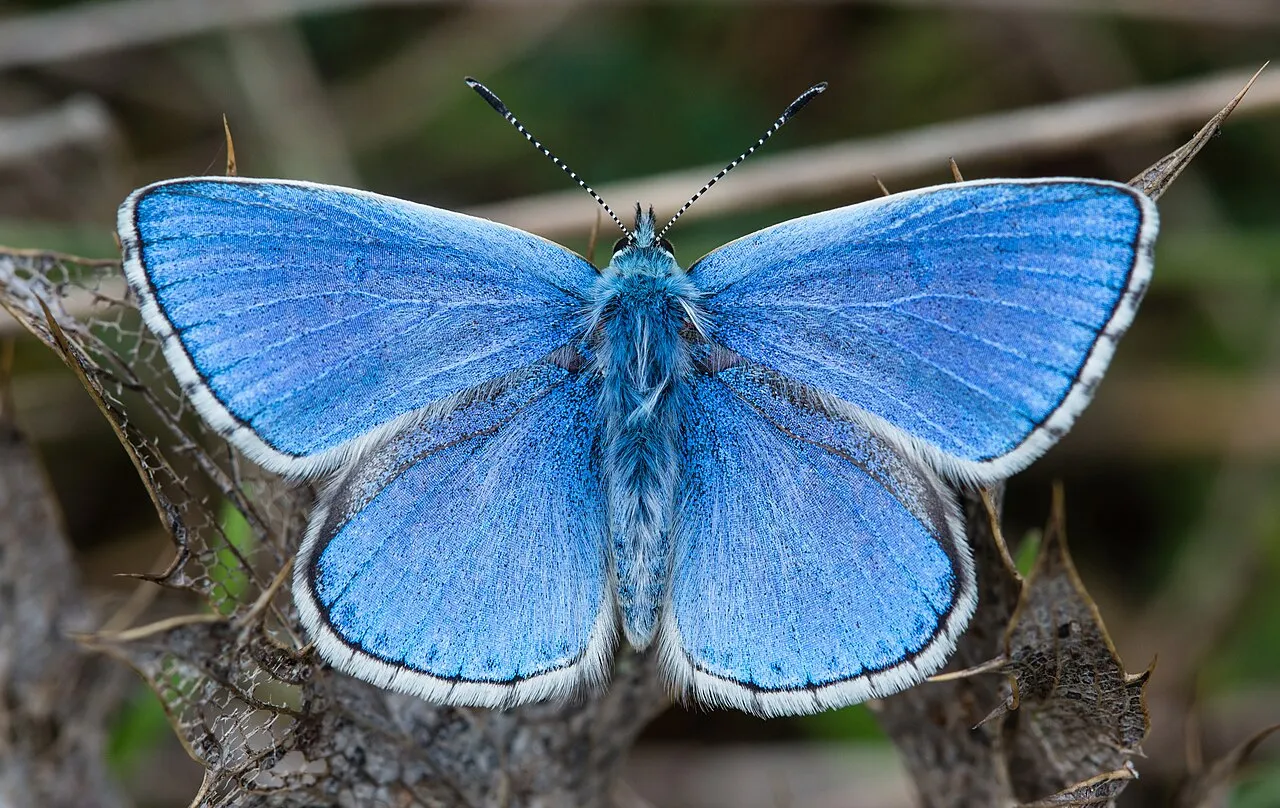
- Alcon blue (Phengaris alcon): a close relative whose caterpillar is likewise raised in the nest of a Myrmica ant6, but on marsh gentian7 (Gentiana pneumonanthe), not great burnet.
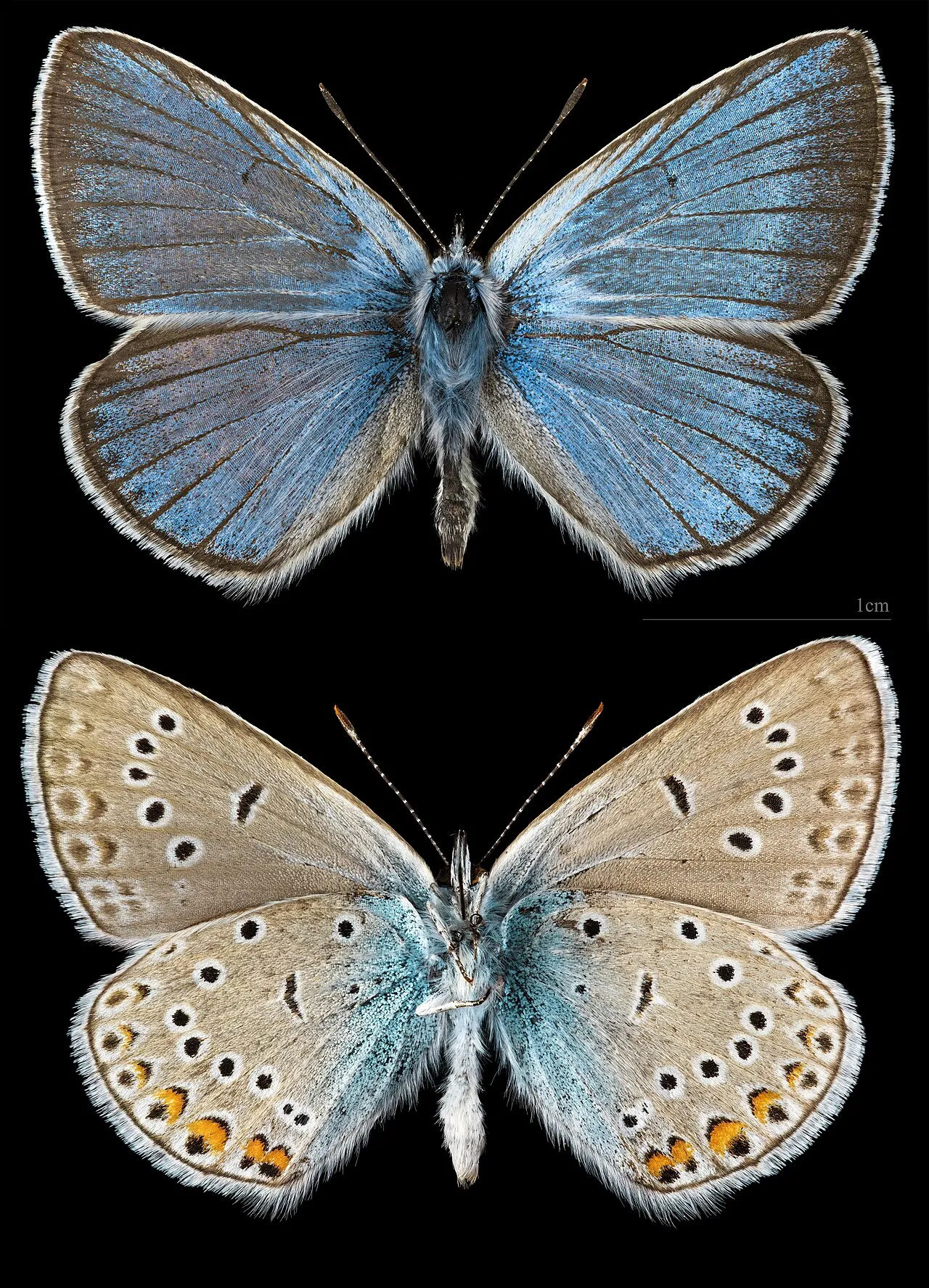
- Large blue (Phengaris arion): another relative in the genus, its caterpillar entirely dependent on ants of the genus Myrmica8 but raised on various thyme species instead of great burnet.
- Scarce large blue (Phengaris teleius): the species it most resembles and most often flies alongside, sharing the same habits in the same damp meadows1; the male Dusky large blue is told apart on the upperside by its darker, duskier blue, subdued by broader black borders4.
- Mountain Alcon blue (Phengaris rebeli): a subspecies-level form of the Alcon blue told apart mainly by altitude, occupying higher ground than Alcon blue populations7 of the same area.