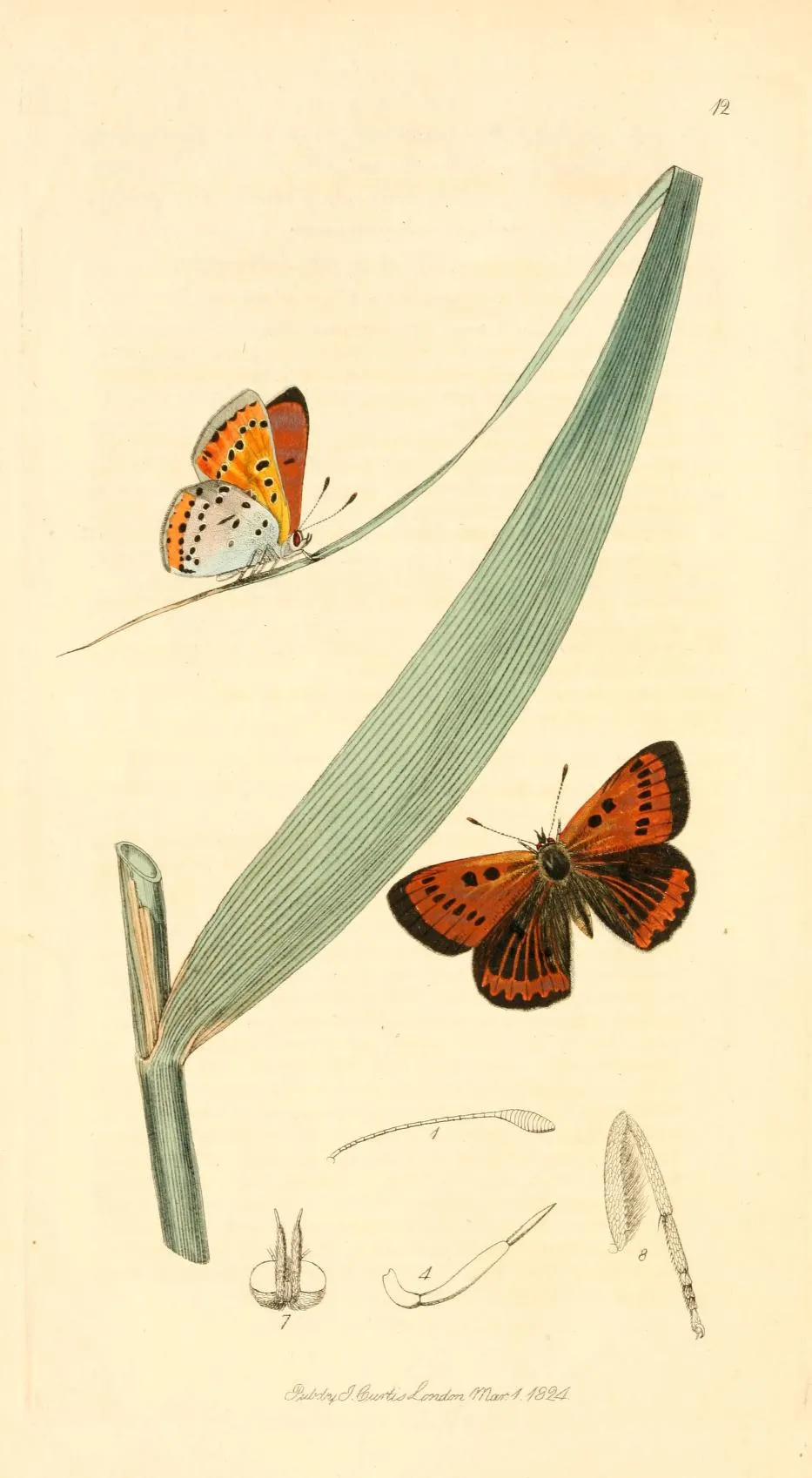
_alcetas_27l4fb.webp)
Contents
The Provencal short-tailed blue, Cupido alcetas, is a small butterfly of the family Lycaenidae, close kin to the short-tailed blue and the small blue. It has gone by other scientific names over the years, including Everes alcetas and Papilio coretas, a history of reshuffling shared by many of the small blues. It occurs locally across southern and central Europe, Turkey, the Urals, southern Siberia and northern Kazakhstan, favouring open, flowery ground over most of that range.
Identification
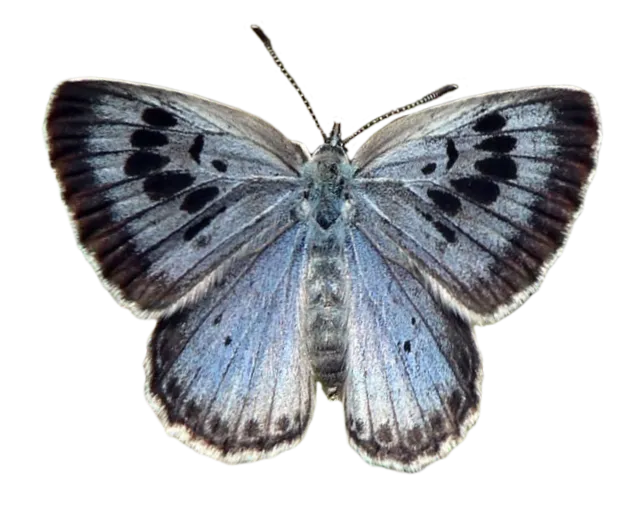
This is a small butterfly, with a wingspan of 26 to 32 millimetres, in the same size range as its two closest relatives on this site. The sexes differ on the upperside: males show blue-purple wings, while females are brown, and both have black wing edges with white fringes. The upperside alone is not always enough to place the species with confidence, since several related blues show a broadly similar combination of blue or brown ground colour with a dark border.
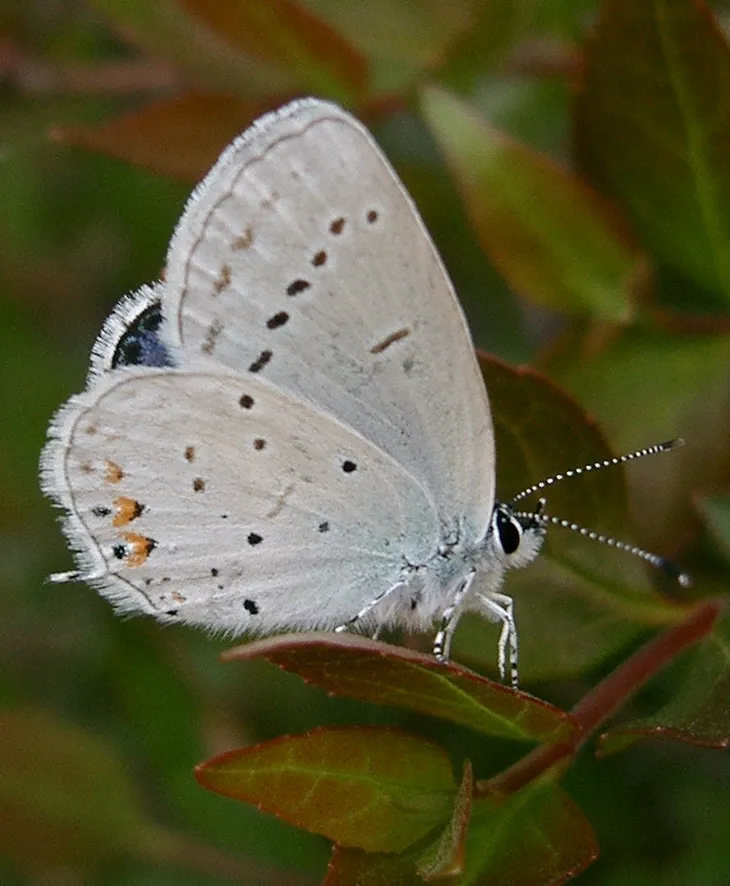
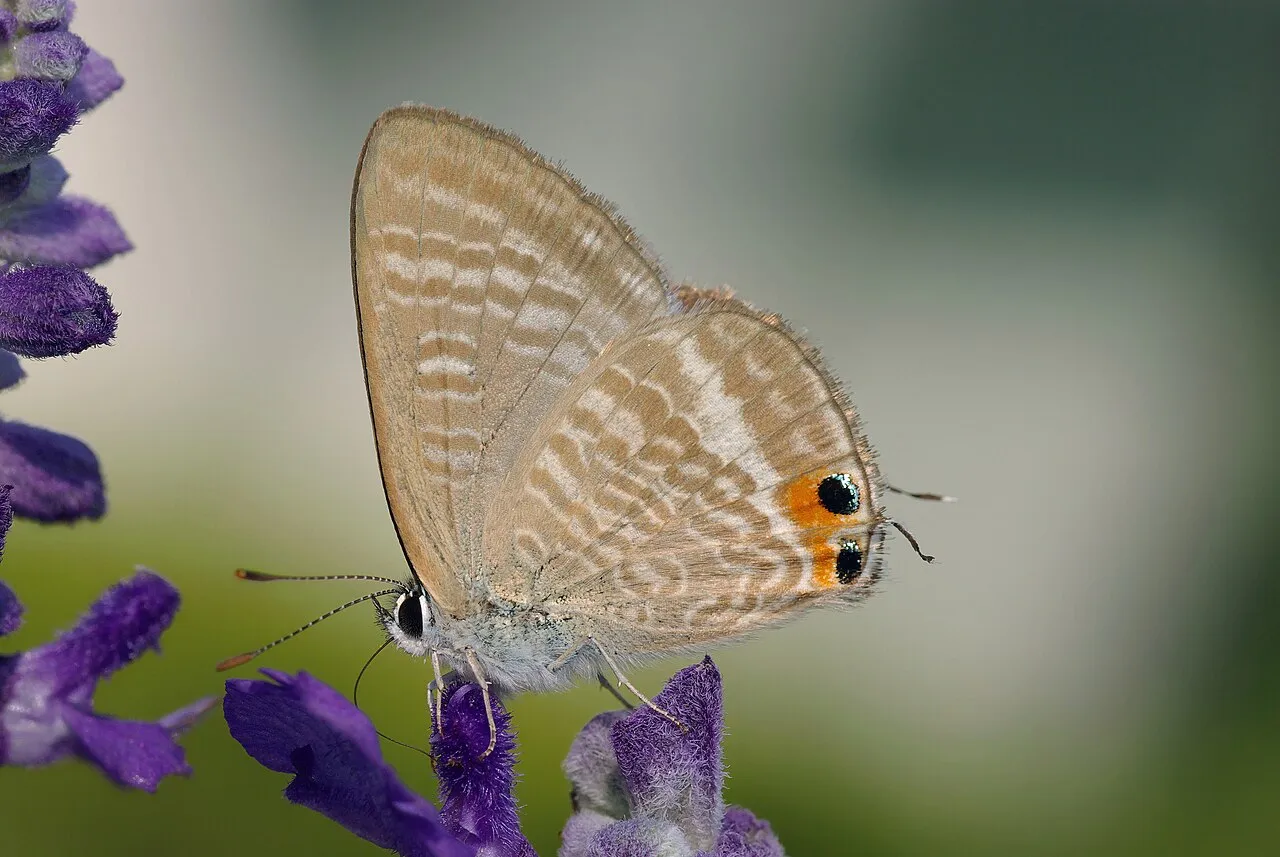
The underside is the more useful field mark, pale blue-grey with a series of small black spots ringed in a clearer blue. Unlike many of its relatives, the hindwing underside usually lacks orange marking, though a single orange anal spot can occasionally appear without reaching the black spot at the wing margin; a thin, very short tail sits near that anal angle, giving the species its common name.
Range and habitat
Within its broad Palearctic range the species keeps to dry calcareous and mesophile grasslands, humid grasslands, mixed and deciduous woodland, woodland clearings and edges, and stream banks. Butterflies of Europe describes the same ground in more concrete terms, as woodland clearings, the edges of woods, grassy vegetation near bushes, and the banks of streams. Wikipedia gives a similar picture, describing flowery grassy places, bushy and damp areas and woodland clearings between 50 and 1,200 metres elevation. The two sources agree on a butterfly of warm, open or semi-open ground rather than dense forest or high mountain.
Life cycle and host plants
Caterpillars feed on legumes (Fabaceae). The main host plants are goat’s-rue (Galega officinalis) and crown vetch (Coronilla varia), with common bird’s-foot trefoil, common vetch and lucerne also used. Wikipedia lists a slightly wider set of legume genera, including Trifolium, Vicia, Medicago lupulina and Securigera varia. As in other small blues, the caterpillars are myrmecophiles, living in association with ants of the genus Formica; Butterflies of Europe adds that they feed mostly on the flowers of their host plants, but also on the leaves, and are attended by ants while doing so. The butterfly spends the winter as a caterpillar, resuming feeding and development the following spring.
Behaviour and flight period
Adults are on the wing from May to September, in two to three broods depending on the region. Wikipedia breaks this down further, placing the broods in May–June and July–August, with a third generation flying into late September in warmer parts of the range. This matches the two to three generations a year reported by Butterflies of Europe, which also notes that the species hibernates as a caterpillar rather than as an egg, chrysalis or adult.
Similar species
Wikipedia singles out two look-alikes: the species is similar to the short-tailed blue and, less so, to the holly blue.
- Short-tailed blue (Cupido argiades): the closest look-alike according to Wikipedia; both are small, tailed blues of open ground, so the pale blue-grey underside spotting of C. alcetas is the safer feature to check.
- Holly blue (Celastrina argiolus): a less exact match, generally a more wooded-garden species than the grassland-loving C. alcetas.
- Small blue (Cupido minimus): smaller still and tailless, with a sooty dark-brown upperside rather than the blue-grey underside pattern of C. alcetas.
_male_Turna_Ewa2f.webp)
_07-05-2006_1_ZJyP4Y.webp)