Contents
The short-tailed blue, Cupido argiades, is a small butterfly of the family Lycaenidae, named for the short, thread-like tails on its hindwings. It has gone by other scientific names over the years, including Everes argiades, Papilio argiades and Elkalyce argiades, reflecting a history of shuffling between genera that is common among the small blues. It is found across the Palearctic, from northern Spain through Central, Southern and Eastern Europe east to Central Asia and Japan, with an isolated population in southern Armenia, and it also reaches India.
Identification
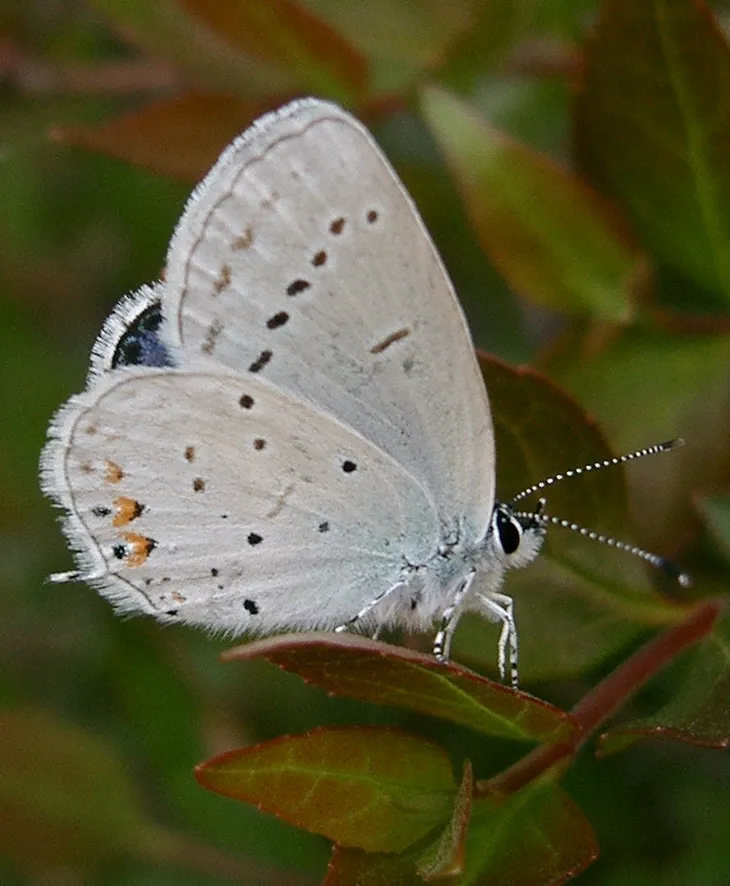
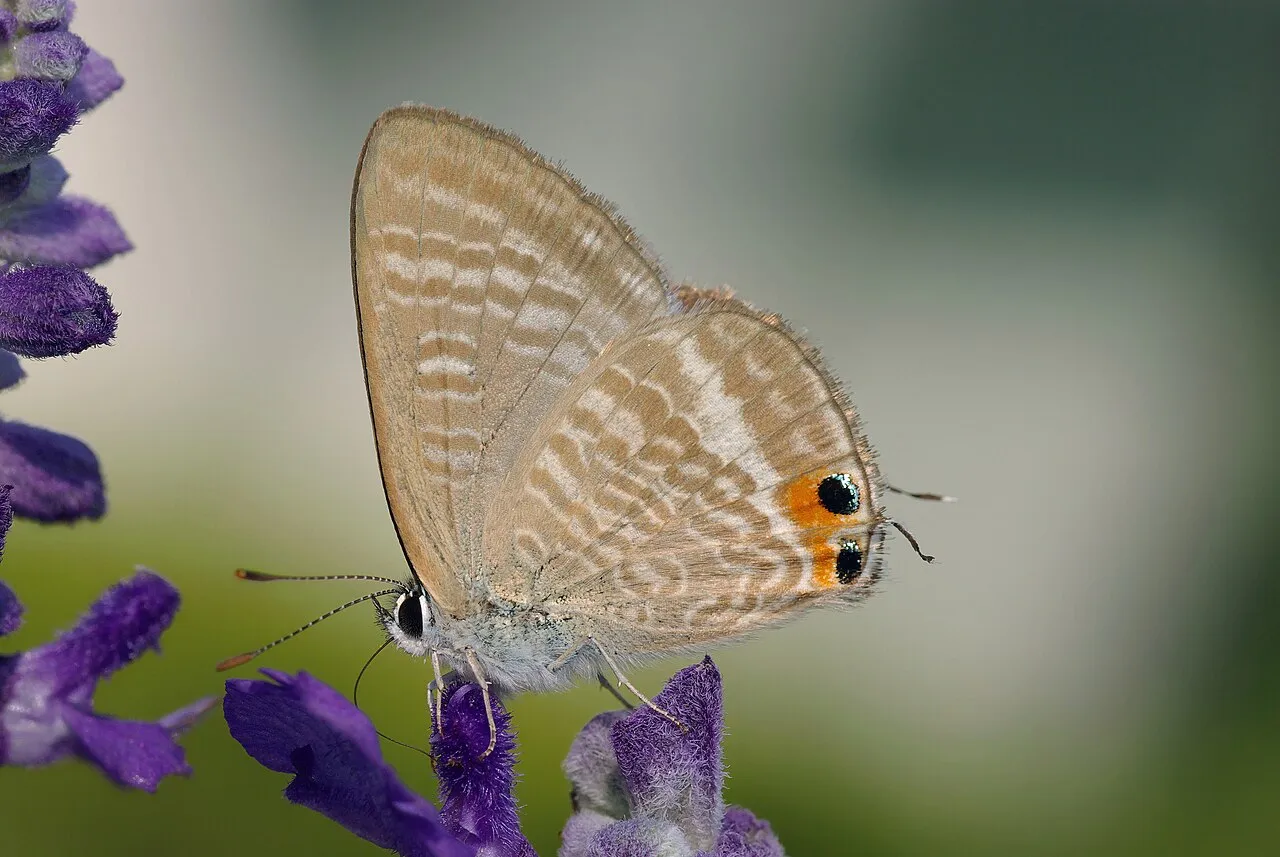
This is a small butterfly, with a wingspan of 20–30 mm. The sexes look different from above. The male has a violet upperside, with a violet forewing edged in brown and a violet hindwing with a brown edging of varying length; the female’s upperside is a darker grey-blue, with more black and a broader dark edging. Both sexes show a small black spot near the tails, edged with white, and a pair of fine black tails tipped white at the base of each hindwing. On the underside, the male’s wings are white or brownish-grey with markings that can be prominent or very faint, while the female’s underside carries starker, bolder markings.
Range and habitat
The species favours open, flowery ground: meadows, forest-edge habitats, woodland clearings and glades with good flower cover, from sea level up to about 1,500 m. It is a rare and celebrated visitor further north: every British record of the short-tailed blue has come as an immigrant rather than a resident, with specimens thought to originate from heathland in Brittany, northern France, carried across the Channel rather than bred on British soil.
Life cycle and host plants
A female lays minute eggs, about 0.40 mm across, pale greenish-blue and patterned like frosted glass, on the leaves and flower buds of its legume host plants. Caterpillars feed on legumes, among them greater bird’s-foot trefoil (Lotus uliginosus), common bird’s-foot trefoil (Lotus corniculatus), alfalfa (Medicago sativa), red clover (Trifolium pratense) and gorse (Ulex europaeus). A caterpillar is light green with a dark stripe along its back, and the early instars can be cannibalistic toward each other. The chrysalis is small, around 8.5 mm, pale green, and carries a line of black marks down its back, with the adult emerging after a pupal period of 10 to 14 days.
The species overwinters as a caterpillar, hibernating in rolled dead leaves or low on the stems of its host plant, as noted in the facts box. Ahead of winter, an overwintering caterpillar takes on an ochreous-fulvous colour that helps it blend in with dead foliage.
Behaviour and flight period
Across most of its range the short-tailed blue is on the wing from May to September, depending on location, with the isolated southern Armenian population flying from late April. In Britain, where it appears only as a scarce migrant, every record has fallen between July and September, and the species remains one of the country’s rarest immigrant butterflies, with only 17 documented records in total.
Similar species
- Long-tailed blue (Lampides boeticus): another small Lycaenidae with tailed hindwings and a false-head pattern, but a wider wanderer across warmer parts of the Old World.
- Holly blue (Celastrina argiolus): a similarly small Eurasian blue, but without tails on the hindwing and with a more even, unmarked violet-blue underside.
- Southern short-tailed blue (Cupido alcetas): a close relative found around the Mediterranean, very similar in pattern but with a more southerly range.
_alcetas_27l4fb.webp)
_male_Turna_Ewa2f.webp)
_07-05-2006_1_ZJyP4Y.webp)