Contents
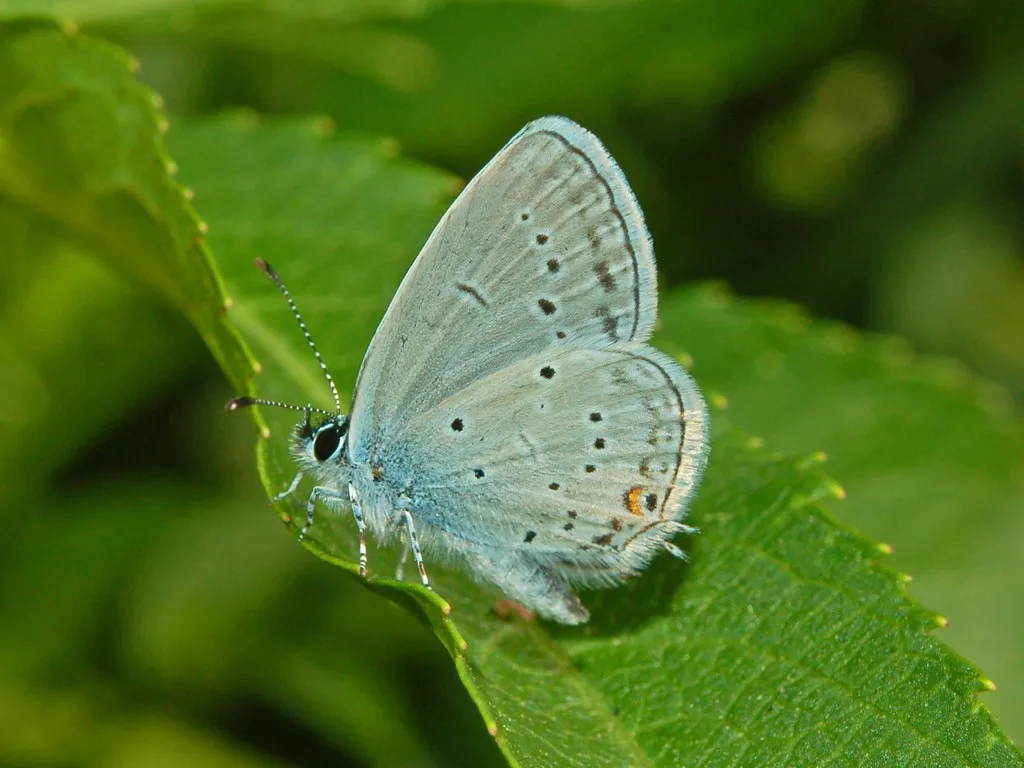
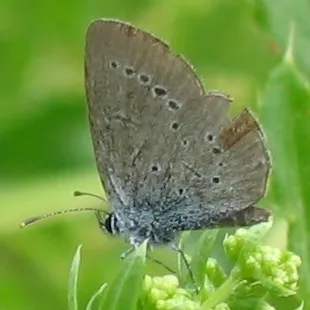
The small blue, Cupido minimus, is a Palearctic butterfly in the family Lycaenidae. In Britain it is the smallest resident butterfly2. It is found in Europe, Asia Minor, Transcaucasia and the Tian Shan, and east through Siberia and the Russian Far East to Mongolia and Kamchatka1. In Britain and Ireland it occurs throughout but is rare and localised, mainly in south-central England3.
Identification
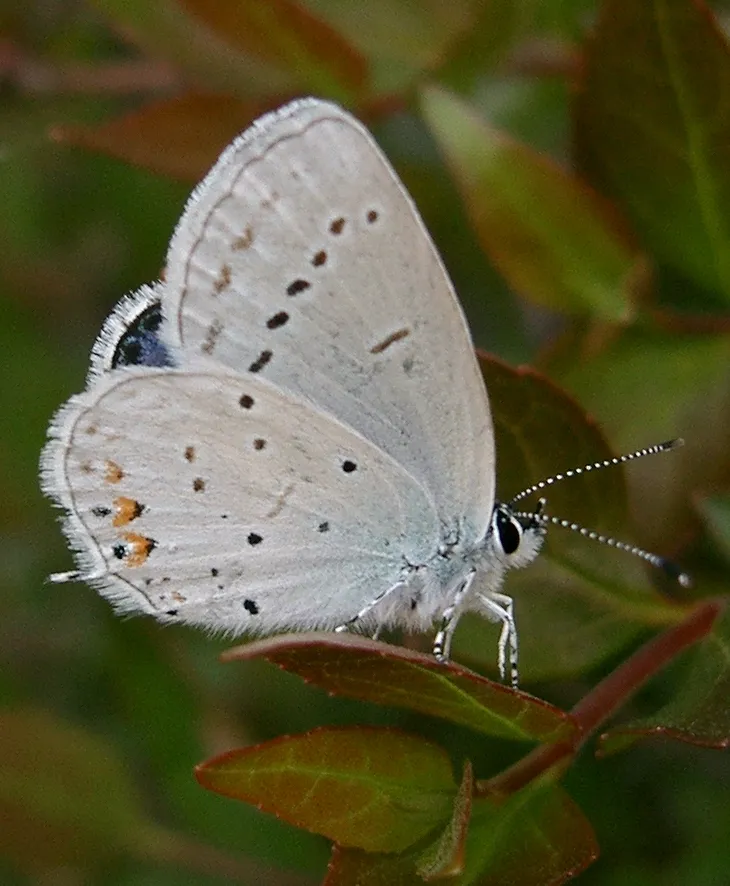
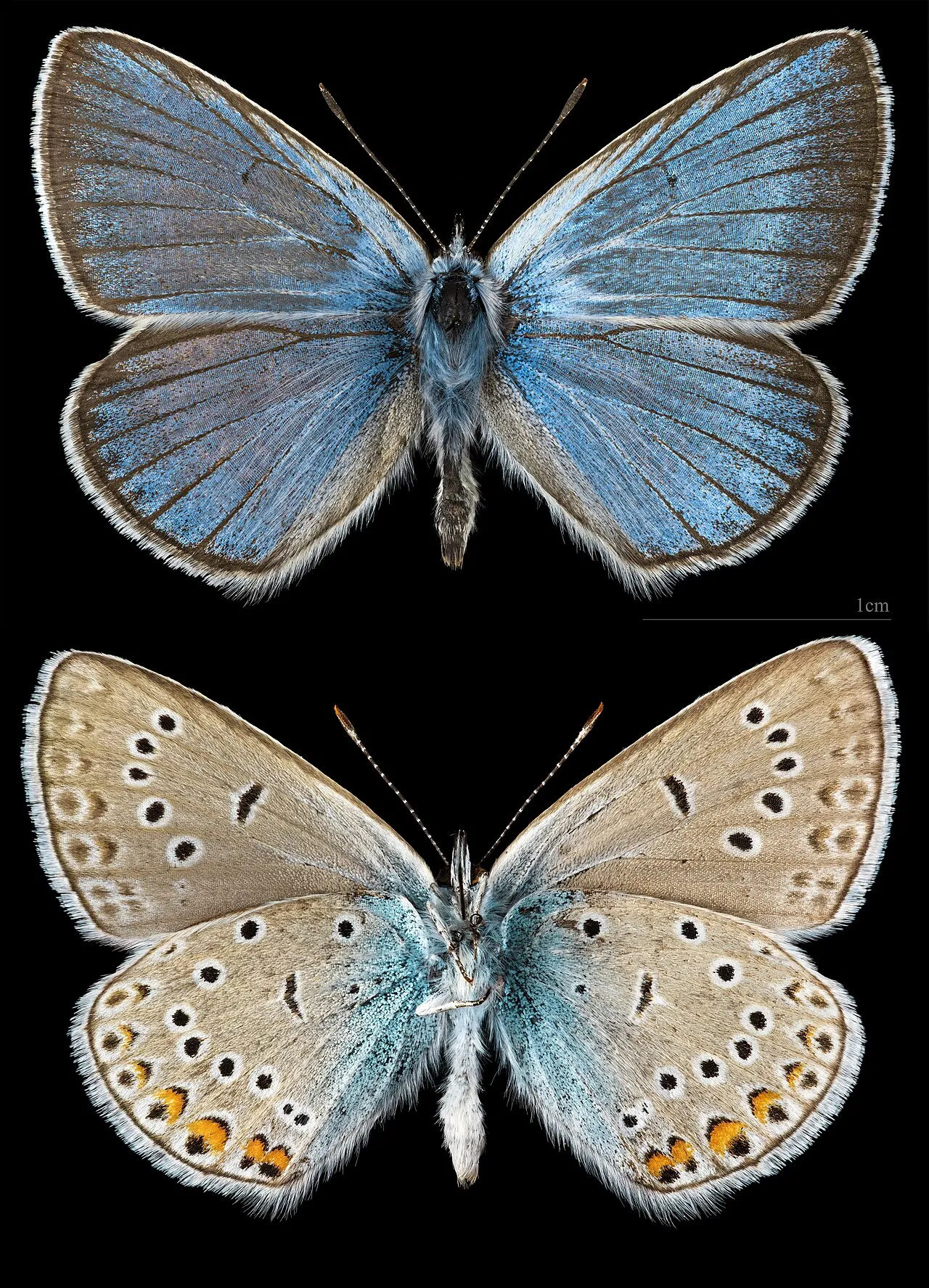
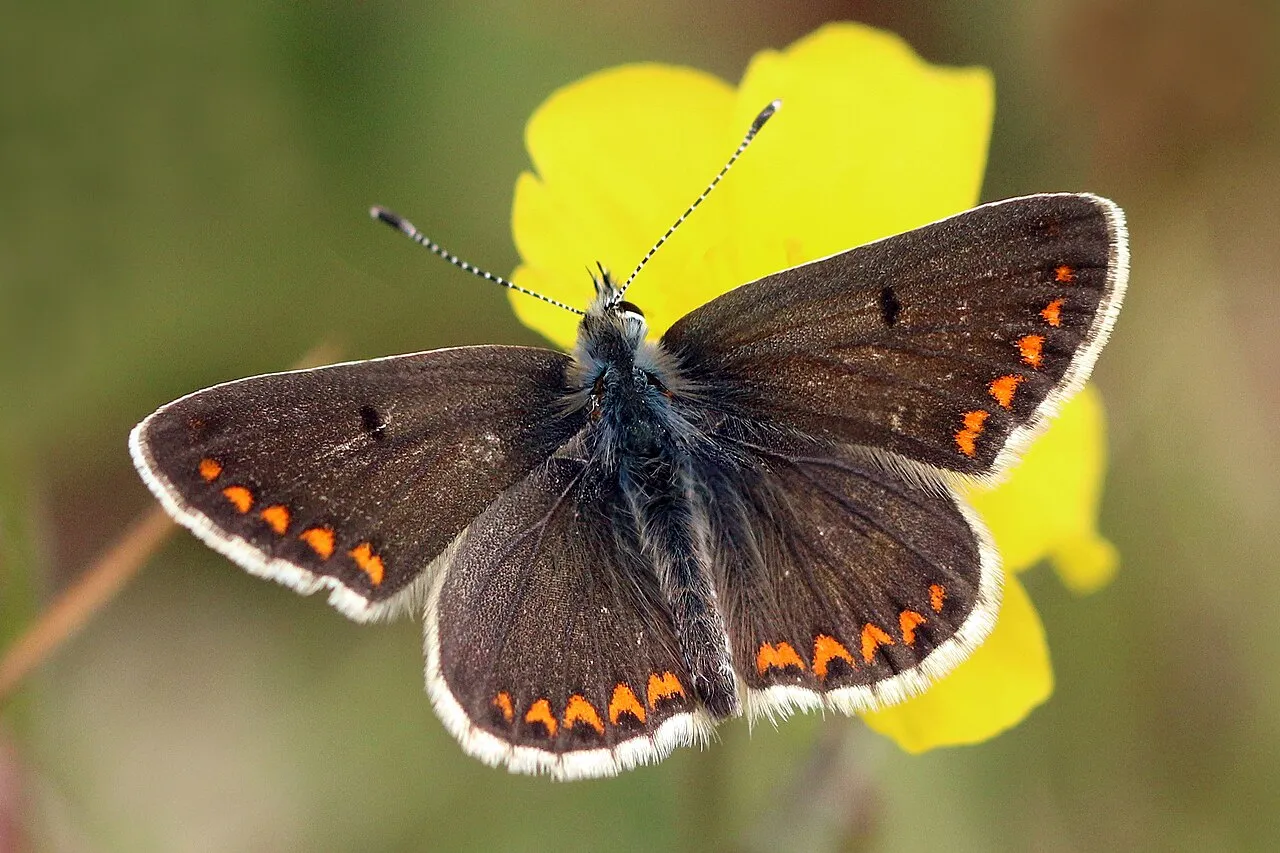
The wingspan is 16–27 mm, and males tend to be the smaller sex. Despite the name, the butterfly is not particularly blue. The male upperside is almost black with a dusting of blue scales, whereas the female is more dark brown in colour and lacks the blue speckling1. Both sexes have an underside that is silvery-grey, not unlike that of the holly blue2.
The egg is tiny, only 0.40 mm in diameter and 0.20 mm high, and light green with white reticulations. The newly hatched caterpillar is less than 1 mm long. By the fourth instar it is about 1 cm long1, pale green to pale yellow with a dorsal stripe. The pupa is attached to a grass blade or leaf by a silk girdle and the cremaster2.
Range and habitat
UK Butterflies lists a wide variety of habitats: unimproved chalk and limestone grassland, abandoned quarries, road and railway embankments, and woodland rides and clearings. Suitable sites are sheltered and contain a good amount of kidney vetch2, together with grasses and shrubs used for perching and roosting. Butterfly Conservation describes sheltered, warm grassland habitats which have kidney vetch, and adds coastal grasslands and dunes and gravel pits3 to the list.
In the UK the strongholds are in the chalk and limestone grasslands of southern England1, such as the Cotswolds and Salisbury Plain. Outside them, colonies are often isolated pockets, typically in coastal locations. Most colonies consist of less than 30 adults, although a few consist of thousands. The species is absent from the western and northern Scottish isles2, the Isle of Man and the Channel Islands.
Life cycle and host plants
The recorded larval food plants are all legumes, among them Anthyllis vulneraria, Lotus corniculatus and Astragalus alpinus, along with Melilotus, Coronilla and Medicago. In the UK the caterpillars feed exclusively on kidney vetch1, and the larvae live only in the flower heads3, where they feed on developing anthers and seed.
Once mated, the female searches out suitable plants and lays a single egg between florets on the flower head. She then rubs her abdomen over the flower head, which is believed to deter other females from laying on the same plant, since the larvae are cannibalistic in their first instar. Several eggs are occasionally found on the same inflorescence, generally laid by different females. The eggs hatch in 1 to 3 weeks depending on temperature2.
The newly hatched larva burrows into a floret to feed on the developing seed. There are 4 instars in total. The larva hibernates on the ground, often under moss or in a crevice in the soil. In spring the larvae emerge and, without feeding further, wander off to find a suitable pupation site. The pupal stage lasts between 1 and 3 weeks, depending on temperature2.
Behaviour and flight period
Butterfly Conservation calls it easily overlooked, partly because of its size and dusky colouring. Both sexes spend a large amount of time basking or resting. Males perch on small shrubs or grass stems, which they leave when investigating passing insects or searching out nectar sources. Adults feed primarily on bird’s-foot trefoil, horseshoe vetch and kidney vetch. Males also take salts and minerals from damp mud2, animal droppings and carrion. From late afternoon onwards both sexes may be found in communal roosts3, facing head down in long grass.
In the southern UK there are two broods each summer. The first emerges in June and the second in August, and the second brood is smaller. In the north of the UK only the June brood is present1.
Conservation
Globally the species is assessed as least concern4. In Britain it is Near Threatened on the GB Red List (2022). Butterfly Conservation gives an abundance trend of 5% (1978-2019) but a distribution trend of -43% (1983-2019). UK Butterflies says the population trend is considered relatively stable, whereas the distribution trend shows a distinct decline. The species is considered extinct in Northern Ireland, with the last sighting in 20012. In England it is a Section 41 species of principal importance3 under the NERC Act.
Similar species
- Short-tailed blue (Cupido argiades): it carries a tail that is black with a white tip5, and its wingspan is 20–30 mm6.
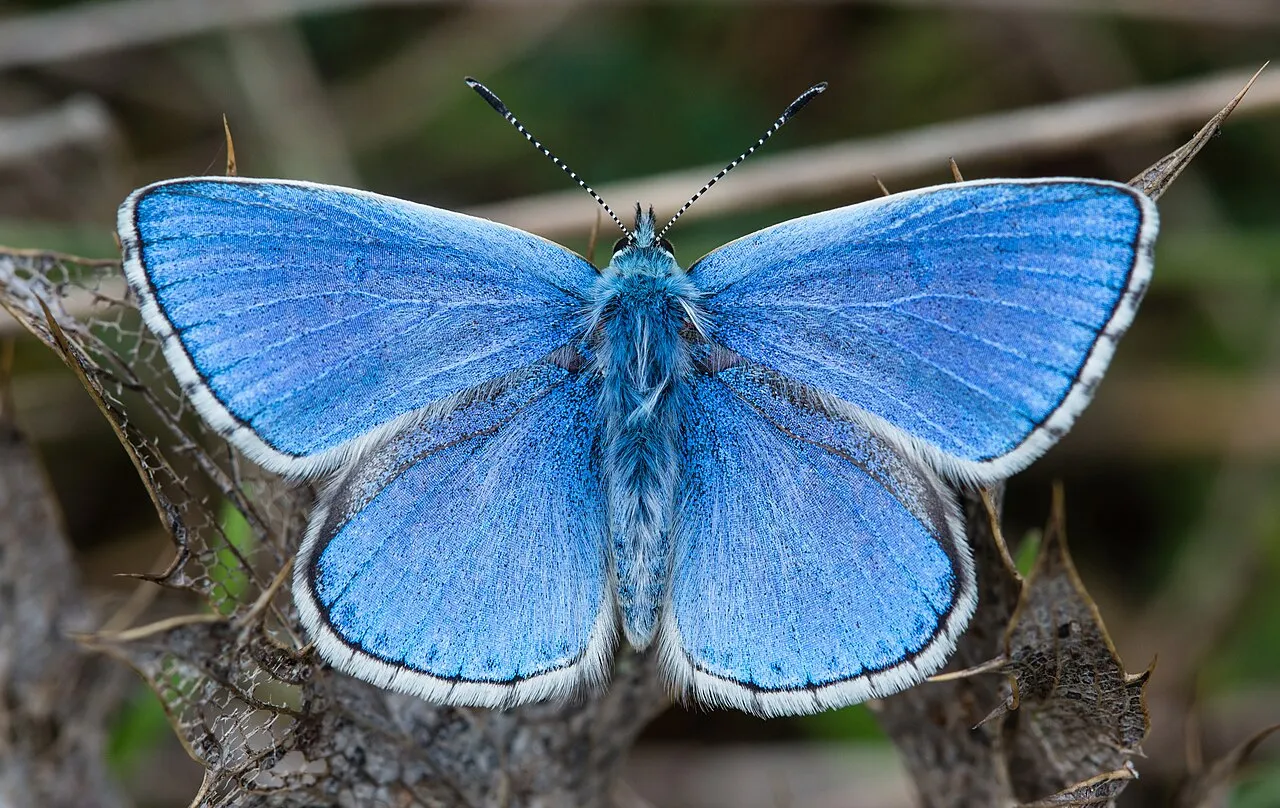
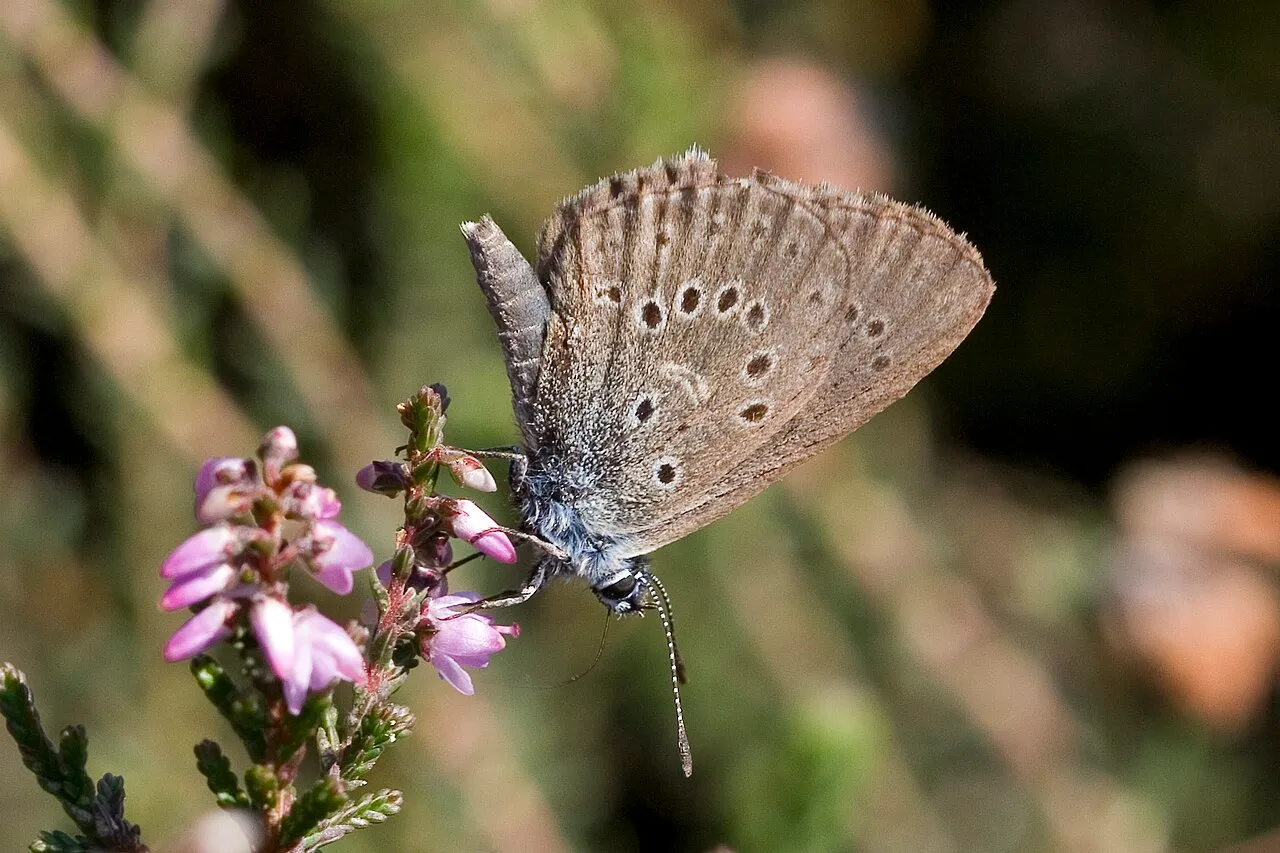
- Silver-studded blue (Plebejus argus): its males are blue, and most adults show light blue reflective scales7 on the underside.
- Holly blue (Celastrina argiolus): the underside is similar, but the male is shining violet blue above8, and the wingspan is 26–34 mm9.