Contents
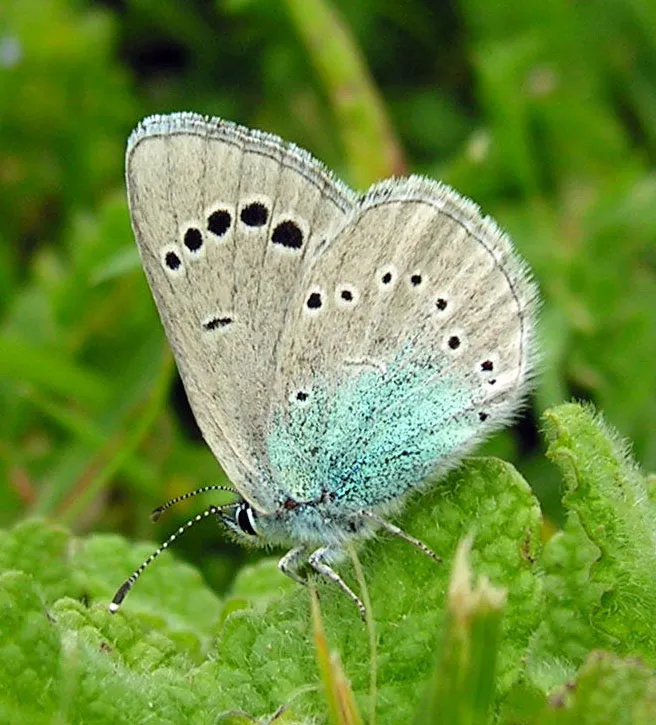
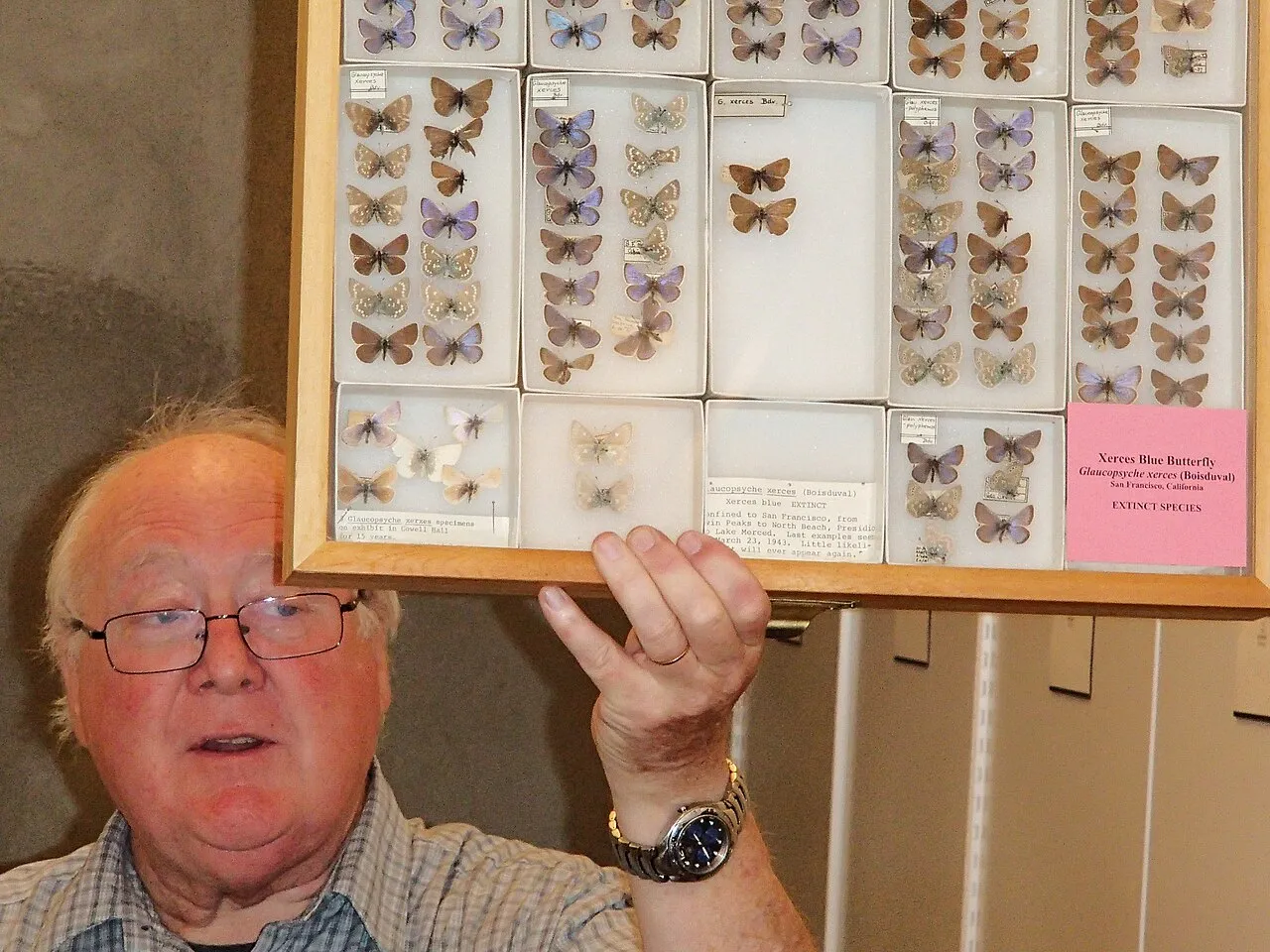
The Xerces blue, Glaucopsyche xerces, was a butterfly of the gossamer-winged family Lycaenidae1 that lived only in the coastal sand dunes of the upper San Francisco Peninsula in California. It was originally described in 18522 and was once locally common, but it was last seen in the 1940s. It was the first North American butterfly species known to disappear because of human activity, and the Xerces Society for Invertebrate Conservation3 carries its name.
Identification
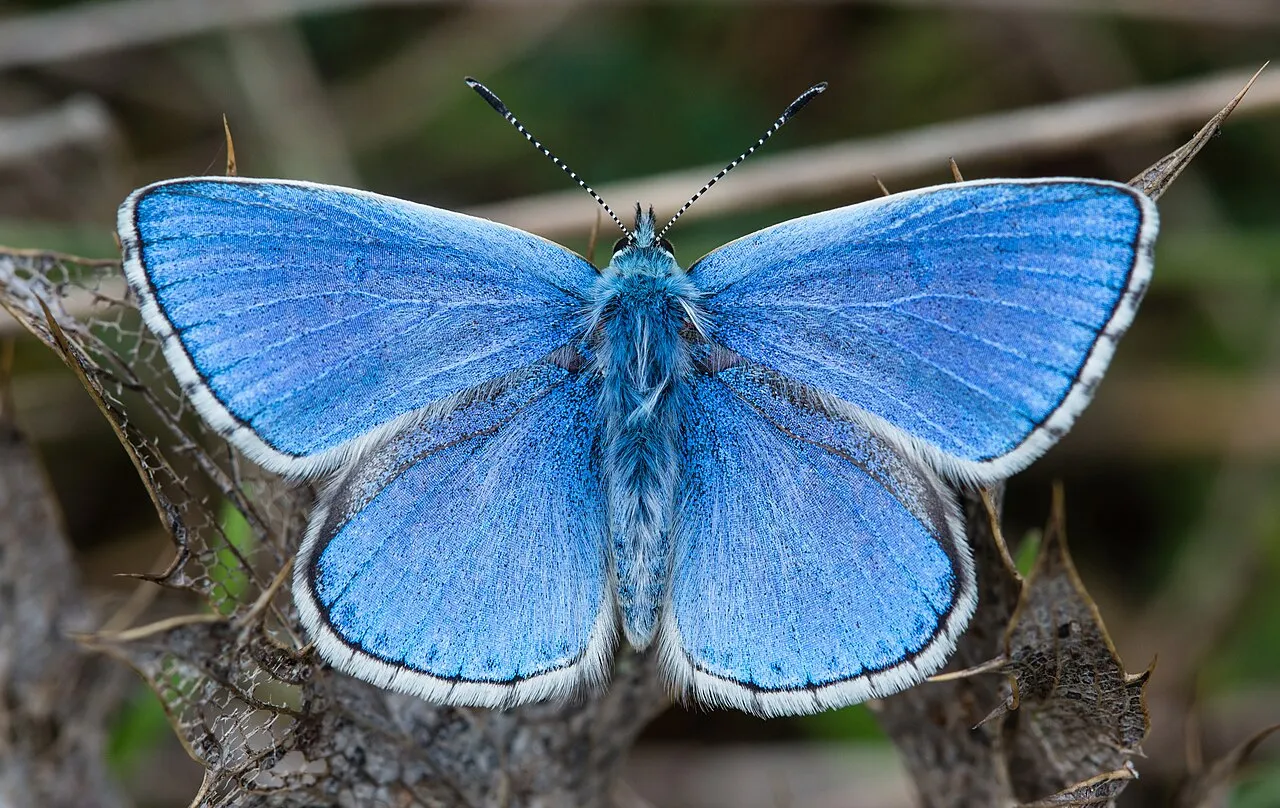
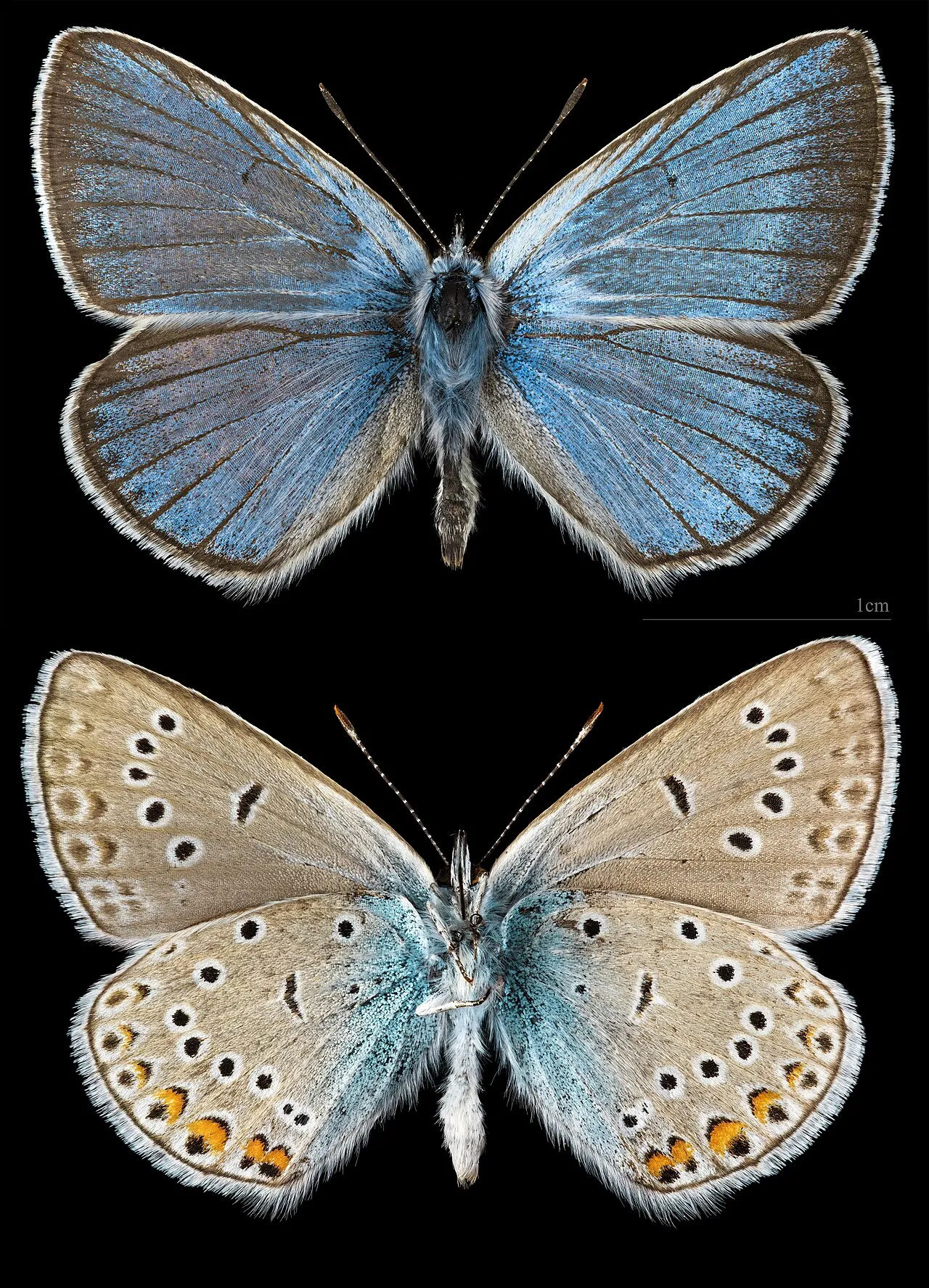
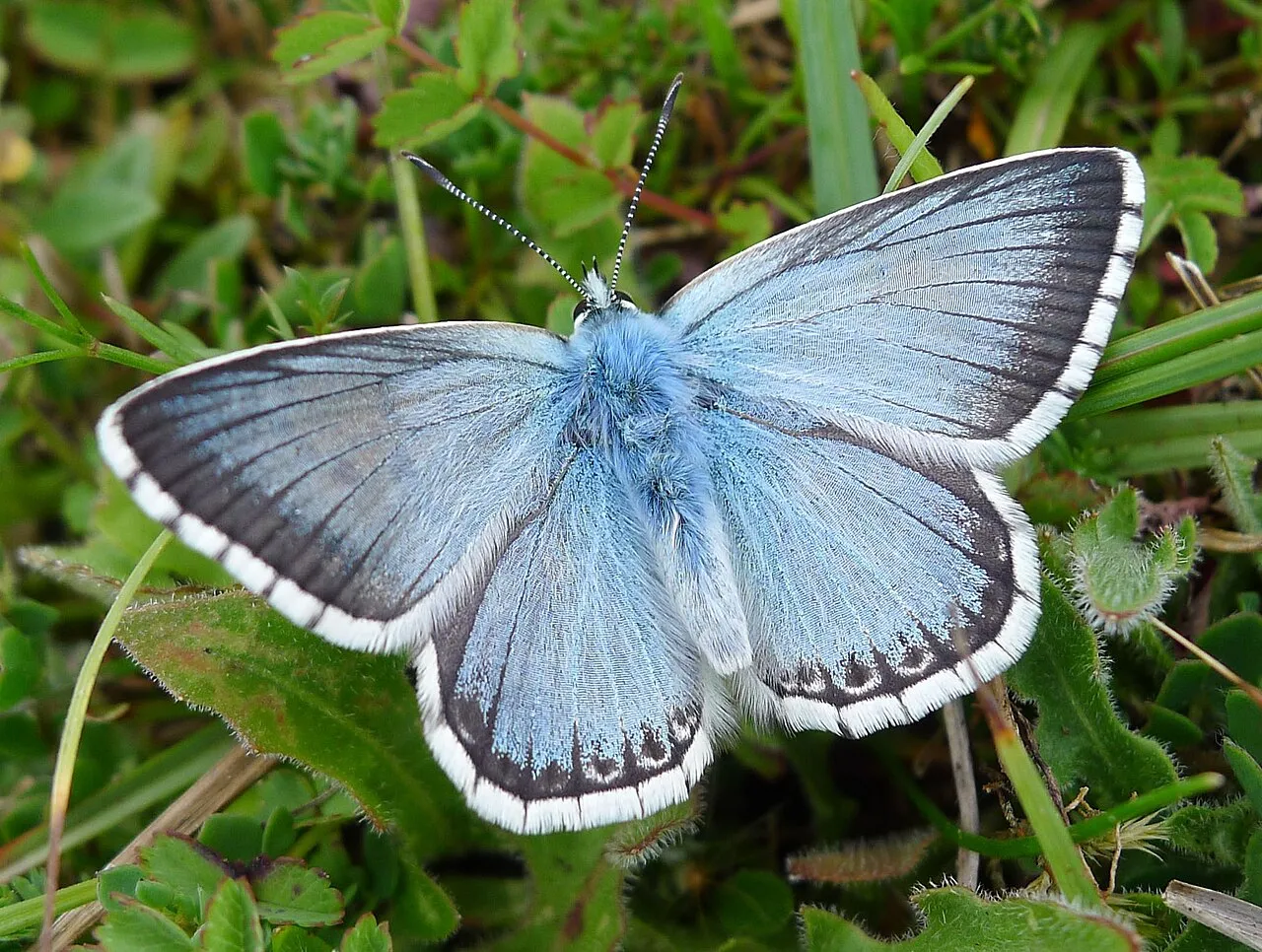
The wingspan was 27 to 30 mm3, about 1.1 to 1.2 inches. Males had iridescent blue on the upper wing surfaces, with pale spots below. Its populations showed extensive variation in their wing patterns2, resulting in several named forms, which made the butterfly of particular interest to lepidopterists. A 2021 study of a museum specimen also notes that the species showed an unusual degree of variability in wing patterning4.
Whether the Xerces blue was a species of its own was long debated. Some questioned whether it was truly a distinct species or simply an isolated population of another living species, and it was once thought to be a subspecies of the silvery blue5. The male genitalia are very similar to those of G. lygdamus, but earlier authors found differences in the larval stages, the adult wing markings and the ecology. To settle the question, researchers sequenced DNA from a specimen collected in 1928, now held at the Field Museum of Natural History. The DNA was highly degraded, yet they recovered 210 182 214 nucleotides of its genome and concluded that the Xerces blue was a distinct species driven to extinction. Its closest relatives in their trees were G. australis and G. pseudoxerces4, with the silvery blue as sister to that group.
Range and habitat
It lived in the coastal sand dunes of the Sunset District1 of the San Francisco Peninsula. As of 2023 some of its former sites lay within the Golden Gate National Recreation Area. It preferred stabilized, sandy sites where its low-growing larval host plant occurred2. Much of San Francisco was once covered in sand dunes with low shrubs, wildflowers and lots of insects3.
Life cycle and host plants
The butterflies fed on plants of the genera Lotus and Lupinus, but Lupinus was not suitable for the larval stages1. The preferred larval host plant was deerweed, Lotus scoparius. One proposal holds that the invasive Argentine ant, Linepithema humile, may have contributed to the species’ loss by outcompeting native ants that tended and protected the caterpillars, though the same study notes that this ant is known to tend lycaenid larvae in other cases4.
Extinction
As San Francisco grew and new neighbourhoods were built, the sand dunes began to disappear3. Urban development and disturbance of sandy soils caused the local loss of several species of Lupinus and Lotus, and that habitat change is thought to have brought about the extinction. The deerweed could not survive in the disturbed soils. The last Xerces blue was seen in 1941 or 19431. It became one of the first and most well-known butterflies in the United States lost2 due to human impact, and it remains a North American icon for insect conservation4.
Specimens survive in a handful of collections, among them the California Academy of Sciences, the Bohart Museum and the Harvard Museum of Natural History1. The Florida Museum of Natural History’s McGuire Center is one of only a few U.S. institutions holding specimens; its own come from San Francisco County, collected between 1929 and 19402.
Conservation
On the 2022.2 IUCN Red List the species is listed as Extinct6. Its extinction inspired the foundation of the Xerces Society for Invertebrate Conservation in 19712. Its programmes include monitoring insects such as monarch butterflies and bumblebees3.
Reviving the species would take more than its genes: it would also need the reestablishment of the host plants it feeds on4, and possibly the reintroduction of the ants that guarded its larvae. Efforts are ongoing to reestablish related butterflies in its former habitat (2026). In a 2024 collaboration between the Presidio Land Trust, the National Park Service and the California Academy of Sciences, silvery blues were reintroduced to the former habitat, and offspring were documented in the Lobos Creek Valley Dunes in 20251.
Similar species
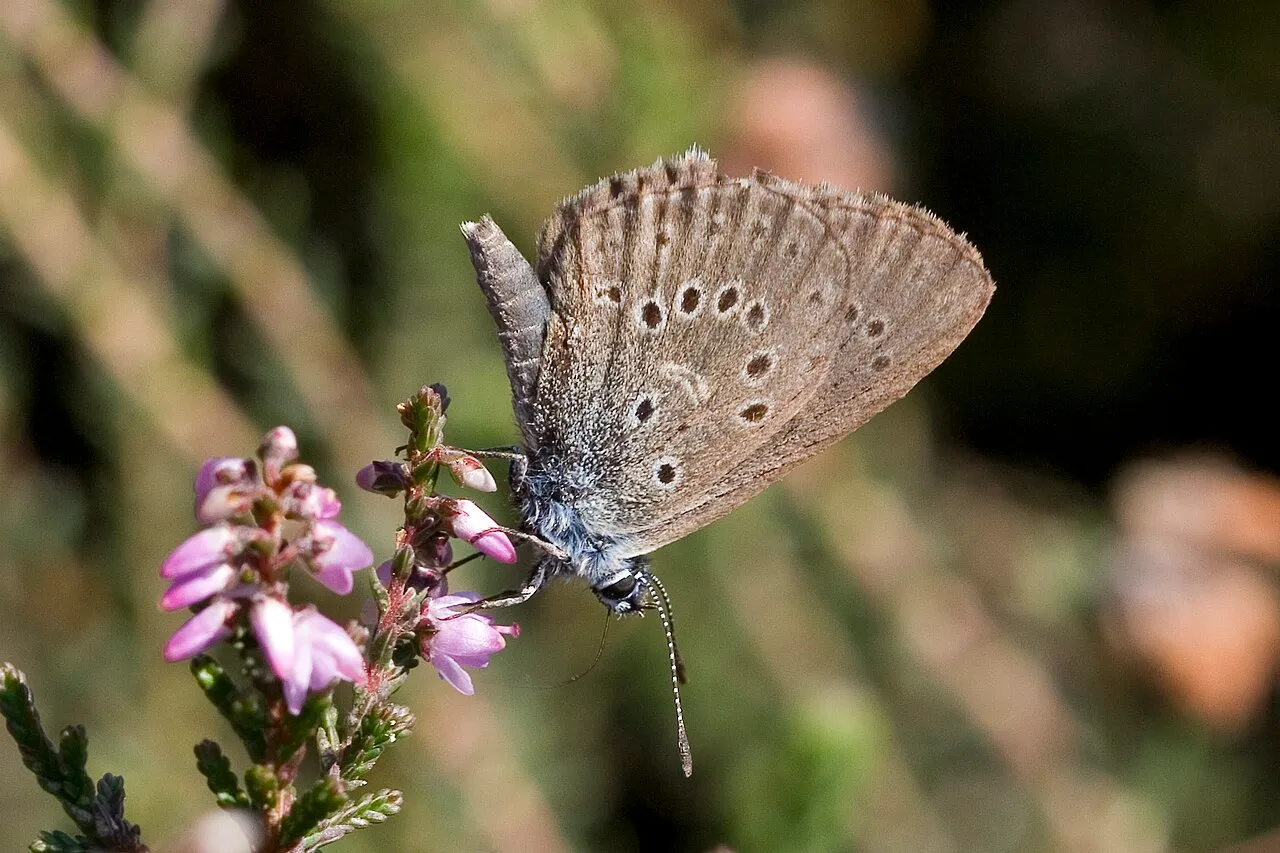
- Silvery blue (Glaucopsyche lygdamus): a living relative found over much of the western United States and most of Canada, where the Xerces blue lived only on the San Francisco dunes. Its larvae feed on Lupinus, and its underside is gray with a single row of round spots5. The two differ in larval stages, adult wing markings and ecology4, and no hybrids have been found where both occurred.
- Palos Verdes blue (Glaucopsyche lygdamus palosverdesensis): an endangered subspecies of the silvery blue known only from the Palos Verdes Peninsula in Los Angeles County. It is considered a Los Angeles cousin of the Xerces blue1. It flies from late January to early May, and its caterpillars use locoweed (Astragalus trichopodus lonchus) or, in the population rediscovered in 1994, common deerweed7.