_07-05-2006_1_ZJyP4Y.webp)
Contents
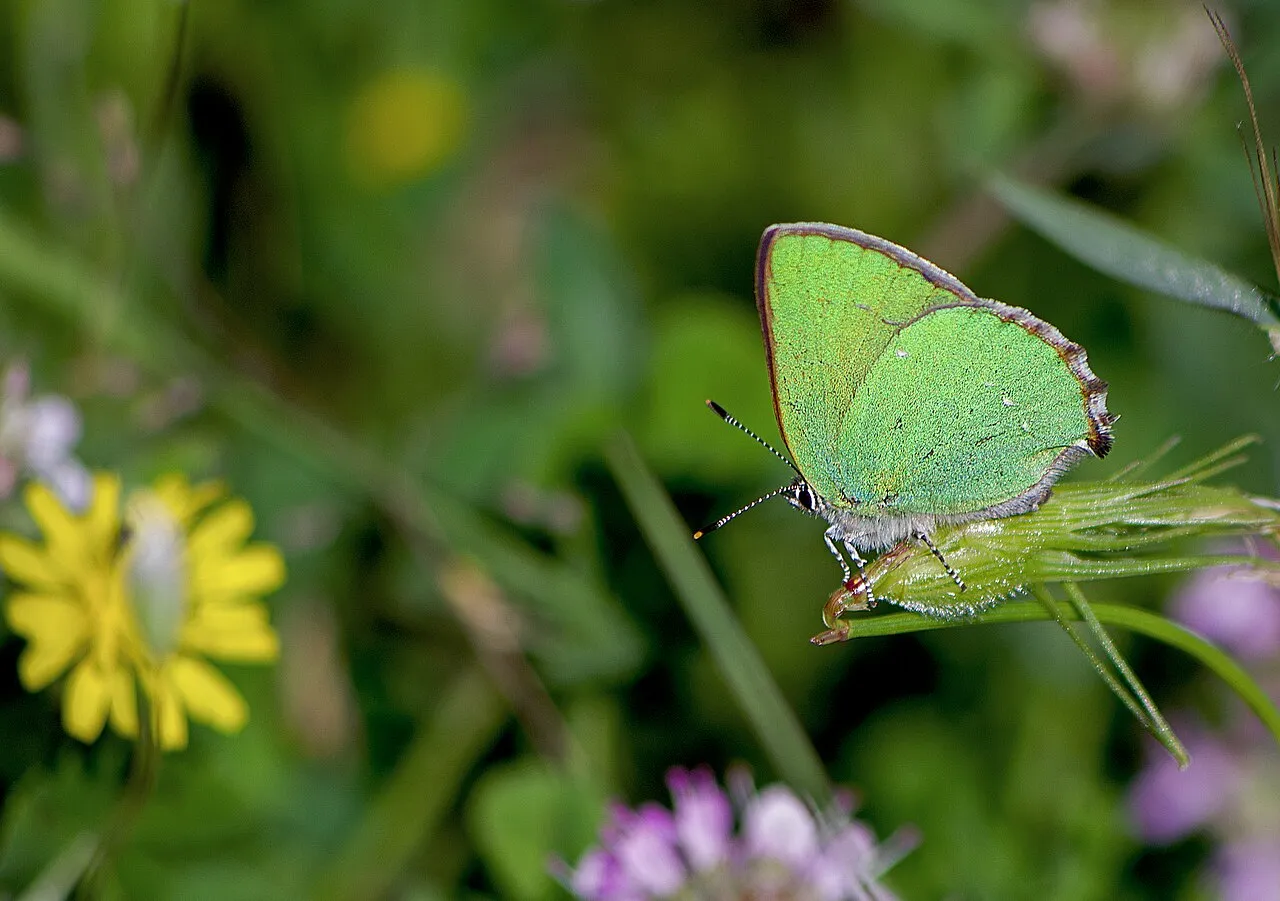
The Green-underside Blue, Glaucopsyche alexis, is a small butterfly of the family Lycaenidae, named for the metallic green-blue dusting at the base of its hindwing underside. It ranges across the Palearctic: central and southern Europe, North Africa and north Asia as far as the Amur, but it is absent from England and Japan. The species’ epithet recalls Alexis, the shepherd-poet of Virgil’s and Horace’s pastoral poetry. Four subspecies are recognised across this range: G. a. alexis in southern and central Europe and Siberia, blachieri in the Carpathians, lugens in the Caucasus, and melanoposmater in Algeria and Tunisia. The caterpillars feed on broom, vetch and related legumes.
Identification
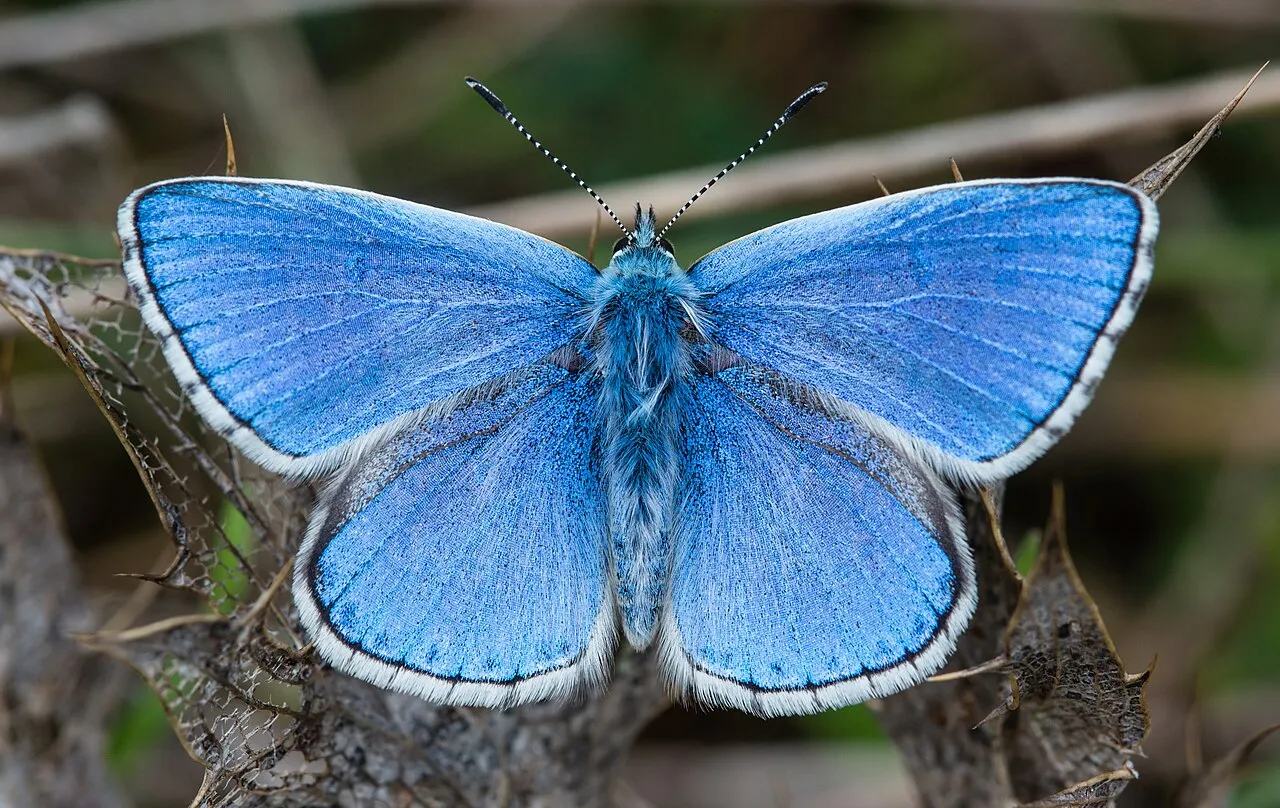
Males are light cyaneous blue above, with a violet sheen and a narrow black border, while females are darker blue with the black border shading gradually outward until it covers nearly the whole outer half of the wing; some female forms are entirely black-brown above, with no blue at all. The underside gives the species its name: it is silver-grey in the male and ashy grey in the female, with five or six large rounded black spots on the forewing and small eyespots on the hindwing, whose basal half carries the metallic blue-green dusting that sets the species apart from other small blues. The subspecies vary in these markings: blachieri is a small form with only four forewing spots, lugens lacks hindwing eyespots altogether and its females run almost black-brown, and named forms elsewhere in its range vary from a reduced four-spot form to one with enlarged, darker-blue eyespots. A reliable figure for wingspan in millimetres could not be confirmed from the sources open to this page.
Range and habitat
Within its Palearctic range the species favours a wide mix of open ground: xerophytic meadows along river valleys, meadows of various other kinds, dry woodlands, parks, wasteland, glades and stony outcrops. Further south it keeps to sunny dry pine-forest meadows and, in the southernmost populations, chalk steppes and steppe gullies, while Caucasus populations also reach subalpine flowering meadows. It is not known to stray far from this kind of ground, and Wikipedia lists it as absent from England; against that background, a single record of one male, caught in Devon in September 1936, stands out. UK Butterflies treats the find as unresolved rather than confirmed: the species is not known to migrate, and while it could conceivably have been carried across the Channel by the wind, its normal flight period runs from May to June, whereas this specimen turned up in September — a mismatch the source itself flags, without settling on how the butterfly actually got there.
Life cycle and host plants
Caterpillars feed on Cytisus and Genista brooms, Astragalus, Melilotus and vetch (Vicia). The larva itself is green or brownish, marked with a reddish-brown line down the back flanked by dark, closely spaced oblique stripes, and a black head, and it pupates into a greyish-brown chrysalis. North of the Alps the species passes the winter as a caterpillar. How many broods a population raises depends on latitude: one generation in northern populations against two further south.
Behaviour and flight period
Adults are on the wing from April to July depending on location: a single generation in late May and June in the north, and two broods, one in spring and one from July onwards, further south. In flight it is unhurried, with a slow, straight, flapping flight kept usually one to two metres above the ground, and it favours timber clearings and wide forest roads. Adults tend to turn up singly rather than in groups, though the species is generally common wherever its host plants grow thickly in warm, lush meadows.
Conservation
The species’ IUCN status is shown in the facts box, drawn from its Wikidata record.
Similar species
- Holly Blue (Celastrina argiolus): a similarly small, pale blue lycaenid found across much of the same range, but it lacks the green-blue dusting at the base of the Green-underside Blue’s hindwing underside and its black spotting is finer and more scattered.
- Common Blue (Polyommatus icarus): overlaps broadly in range and habitat and shares a blue male upperside, but its underside ground colour runs to buff-brown rather than silver-grey, and it never shows the green basal dusting that names the Green-underside Blue.
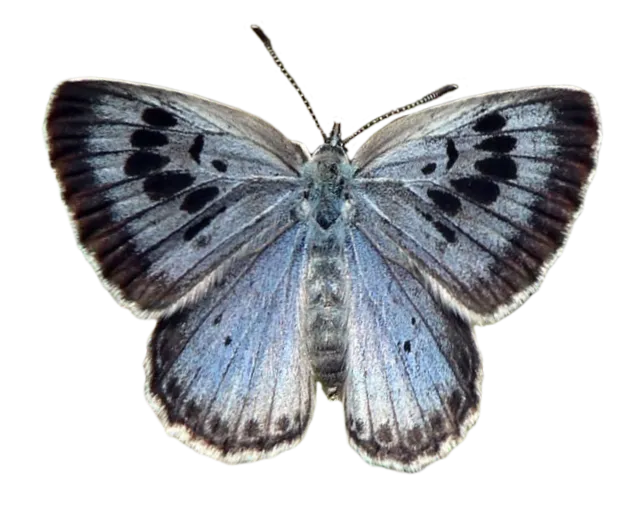
- Large Blue (Phengaris arion): a bulkier relative of open grassland with bold black upperside spots on a brighter blue ground, clearly heavier-spotted above than the finer-marked Green-underside Blue.
_male_Turna_Ewa2f.webp)
_Lycaena_virgaureae_-_Radawa_Poland_-_male_Z25L2d2.webp)