Contents
The small white, Pieris rapae, is a common white butterfly found across much of the world, its caterpillars a familiar pest of cabbages and other brassicas. It belongs to the family Pieridae, the same family as its larger relative the large white, Pieris brassicae. The species occurs worldwide in temperate climates and is native to Europe, including Britain; it was introduced to Montreal in the 1860s and is now widespread across North America, and was also introduced to Melbourne, Australia, in 1939, after which it spread across the continent. In North America the species is widely known as the cabbage white or cabbage butterfly.
Identification
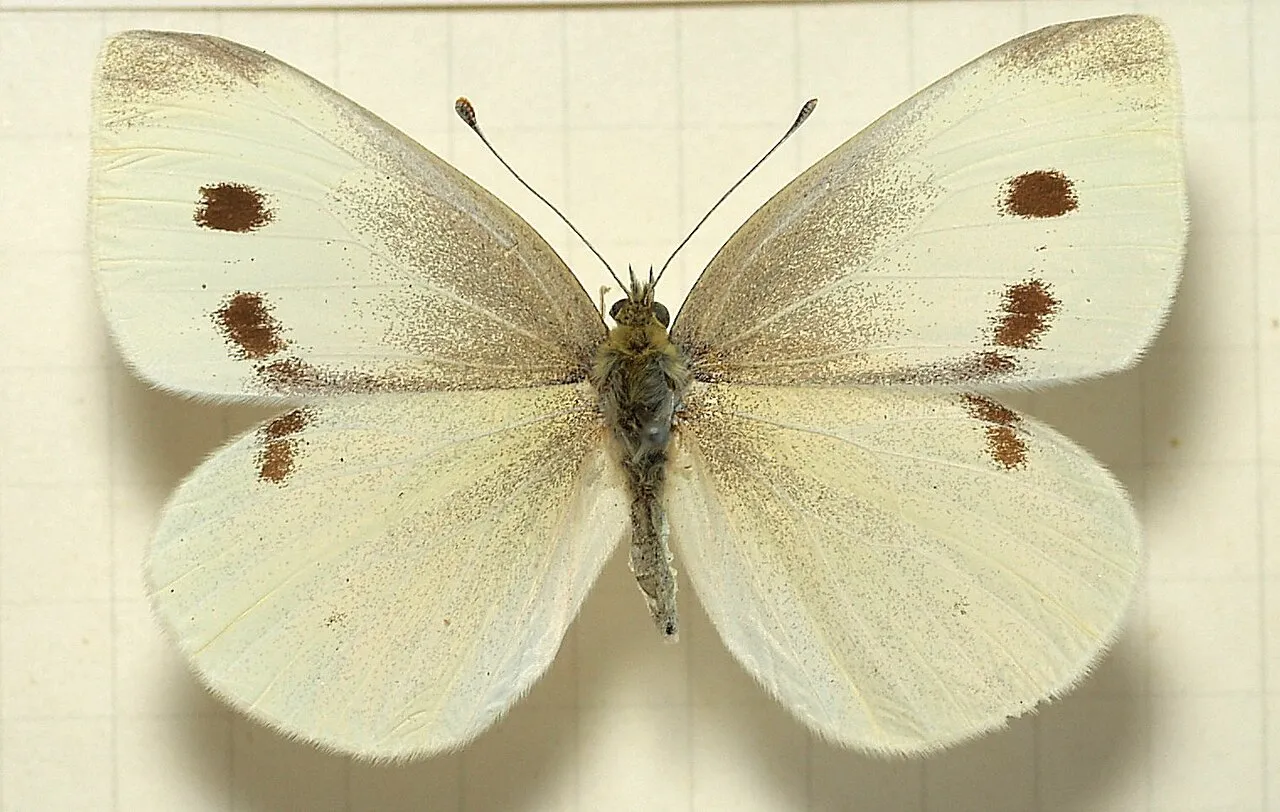
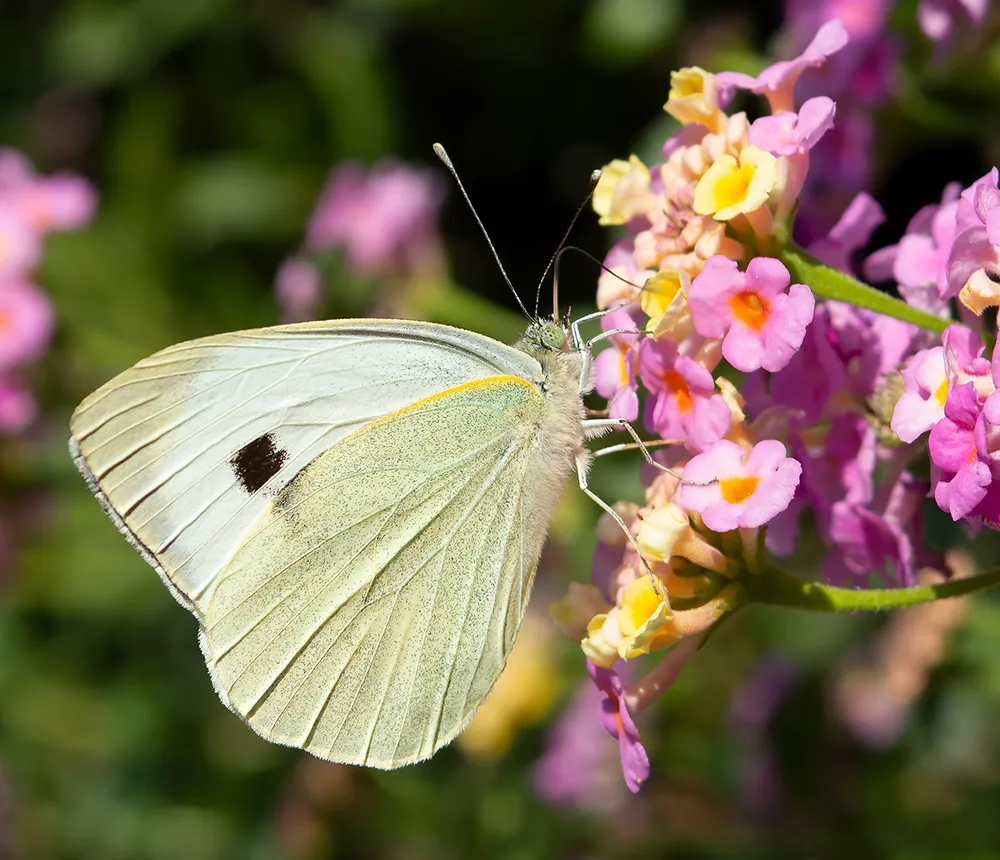
Adults are white with black-tipped forewings and one black spot on the upperside of each hindwing. In Britain, wingspan runs from 38 to 57 mm; Animal Diversity Web gives a wider range of 45 to 65 mm for the species overall. The sexes can be told apart. A female carries two black dots in the middle of her forewings and dense white hair on her body, while a male shows a single black dot and dense yellowish hair on his body. Markings also shift with the season: adults of the spring brood generally have lighter markings than those of the summer brood.
Range and habitat
The butterfly favours open spaces such as meadows, grasslands, marshes, forests, gardens, allotments, parks and hedgerows, a mix of habitats confirmed by UK Butterflies for Britain. It is found worldwide in temperate climates and is native to Europe, including Britain; it reached North America after being introduced to Montreal in the 1860s and is now found almost everywhere brassica crops or wild mustards grow, and it reached Australia after being introduced to Melbourne in 1939.
Life cycle and host plants
Caterpillars feed on plants in the cabbage family (Brassicaceae), including cabbage, broccoli, kale, Brussels sprouts and cauliflower, as well as sea-kale, wild mignonette and nasturtium; horseradish is also used. A female lays 300 to 400 eggs singly on the undersides of leaves, and the caterpillars pass through five instars over about 15 days before pupating. The caterpillar has a green, velvety appearance, and the final four instars carry a yellow stripe running down the centre of the back; a full-grown caterpillar reaches up to 35 mm. The chrysalis is grey, green, yellow or brown, 19 to 20 mm long, built on the food plant or nearby debris, and metamorphosis can take from 11 days up to a few weeks. The species overwinters as a chrysalis.
Adults drink nectar from a wide range of flowers, including mustards, dandelions, broccoli, cabbage, Brussels sprouts, cauliflower, collards, horseradish, kale, red clover, asters and mints; mustard-oil-bearing plants appear to be a particular favourite.
In Britain there are typically two generations a year, with a third in good years. Across its North American range, Animal Diversity Web reports 2 to 3 generations in Colorado, 3 in New England, 3 to 5 in California, and 6 to 8 near the southernmost part of the range. A female mates only once as a young adult, with breeding running from spring through early autumn.
Behaviour and flight period
In Britain, adults of the first brood appear from late April and peak between mid-May and June; a stronger second brood flies from early July, with a third brood possible in favourable years. More broadly across its range, adults are active by day and fly from spring until September, with the length of the flight season shrinking toward the northern edge of the range and stretching longer in the south. Caterpillars face a long list of natural enemies, including shield bugs, ambush bugs, wasps and parasitic species that attack the larvae. Because caterpillars also feed heavily on brassica crops, the species is a familiar garden pest across much of its range, and gardeners often see far more of the summer brood than the spring one.
Similar species
- Large white (Pieris brassicae): the species most often confused with it, larger and with more black on the forewing tips; in North America the name “cabbage white” refers to the small white rather than this species.
- Green-veined white (Pieris napi): a similar pale butterfly sharing the same open, flower-rich habitats across much of the shared range.
_Pieris_napi_napi_-_Foret_de_Bouconne__France_-_male_Z19U1qT.webp)
_Anthocharis_cardamines_-_Foret_de_Bouconne__France_-_male_2lyp2N.webp)
_Aporia_crataegi-_Foret_de_Soreze_Tarn_France_-_male_25HPdB.webp)
_Gonepteryx_rhamni_-_Pr%C3%A9serville_France_-_male_KFu9N.webp)
_Colias_croceus_-_Durfort_Tarn_France_-_male_ZvAIWE.webp)