_Aporia_crataegi-_Foret_de_Soreze_Tarn_France_-_male_25HPdB.webp)
Contents
The black-veined white, Aporia crataegi, is a large white butterfly of the family Pieridae, named for the bold black veins that cross its translucent white wings. It is found across Europe, northwest Africa and the Palearctic east to Transcaucasia, Siberia and Japan, including Turkey, Cyprus, Israel, Lebanon and Syria, though it is extinct in Britain and Ireland and absent from the far north of Scandinavia. In Britain it was first recorded in 1667 and was always considered rare, with its last stronghold in southeastern England, including around 40 colonies in Kent and others in Hampshire, Gloucestershire and Sussex, before it died out around 1925. The ultimate cause of that disappearance is still unclear, though disease fostered by poor autumn weather, relatively mild winters and increased predation by birds have all been proposed; a later reintroduction attempt in Fife, Scotland, only succeeded once the caterpillars were given protection from birds.
Identification
The species has a wingspan of 51 to 70 mm. On both the forewings and hindwings, the upperside is a translucent white boldly veined with black. The sexes differ underneath: males keep the black veining on the underside, while females show brown veining there instead. Females are also consistently larger than males, and over their lives they rub scales from their wings in a way that is not fully explained, giving older females an almost transparent look next to the solidly white males.
Range and habitat
Within this wide range the butterfly favours open forest, grazing land, orchards, lanes, gardens, meadows and thickets wherever its Rosaceae food plants grow in quantity. It lives in discrete colonies whose numbers can swing wildly from one year to the next, with population booms followed by long quiet spells.
Life cycle and host plants
Caterpillars feed on Rosaceae, including apple, pear, hawthorn (Crataegus), rowan, cherry plum and blackthorn (Prunus spinosa), with blackthorn and hawthorn the main host plants. Females lay batches of 100 to 200 eggs on the leaves of these host plants, most often hawthorn and apple; the eggs are a bright, rich primrose-yellow when first laid, darkening before they hatch two to three weeks later. The caterpillars are greenish-grey with transverse banding and live gregariously, feeding in relays side by side in a row and marching out of their nest together. The species overwinters as a caterpillar, with the colony spending the winter together in a communal webbing tent of entwined leaves, through to their third instar. In spring they resume feeding and, once fully grown at 32 to 35 mm, disperse individually before pupating: the creamy-white pupa is marked with black and attached by a silken girdle to a twig, averaging around 25 mm and taking about three weeks to complete its development.
Behaviour and flight period
Adults fly from April to July in one generation a year across Europe and temperate Asia; in Britain, where the species once flew, adults emerged in late June, peaked in July and lingered into August. Overall the species is a highly social insect, sociable as both caterpillar and, in its colony life, as an adult.
Similar species
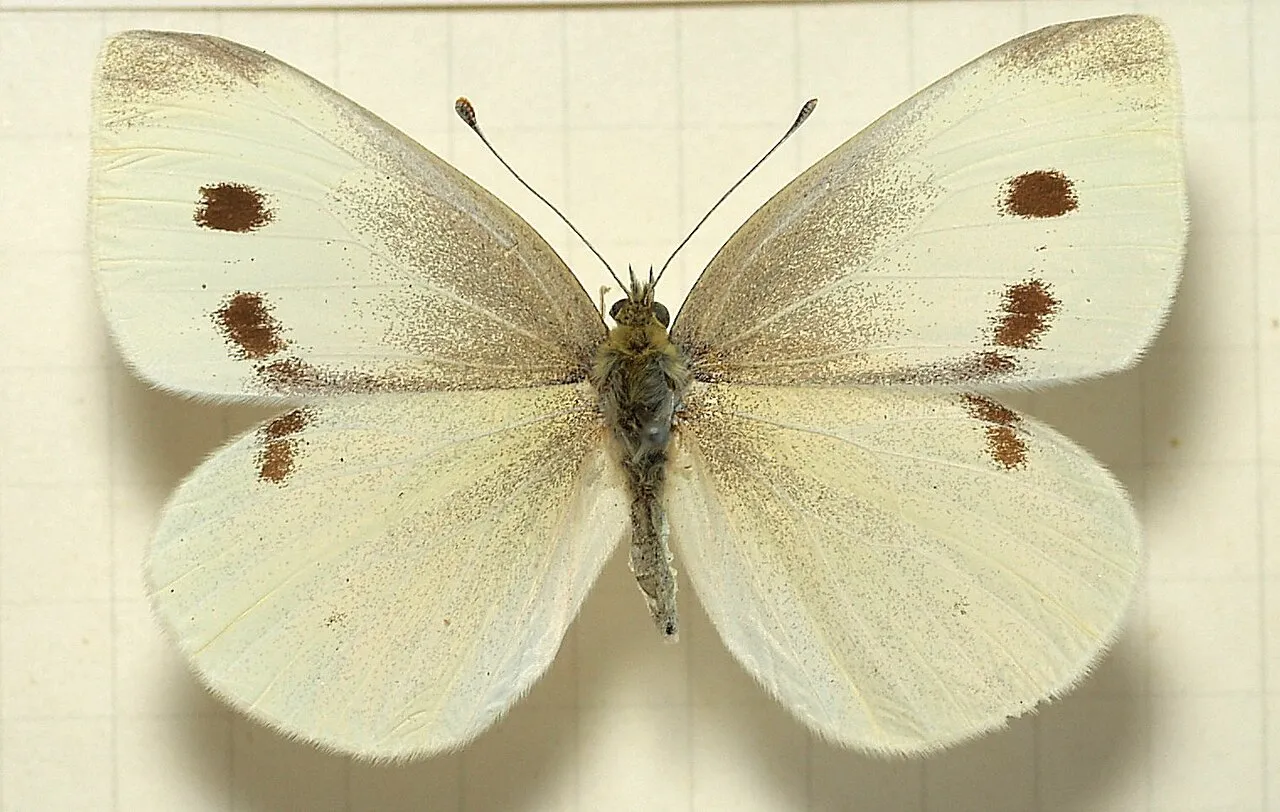
- Large white (Pieris brassicae): also a large white Pieridae of Europe, but with black wingtips rather than black veins, and caterpillars that feed on brassicas instead of Rosaceae.
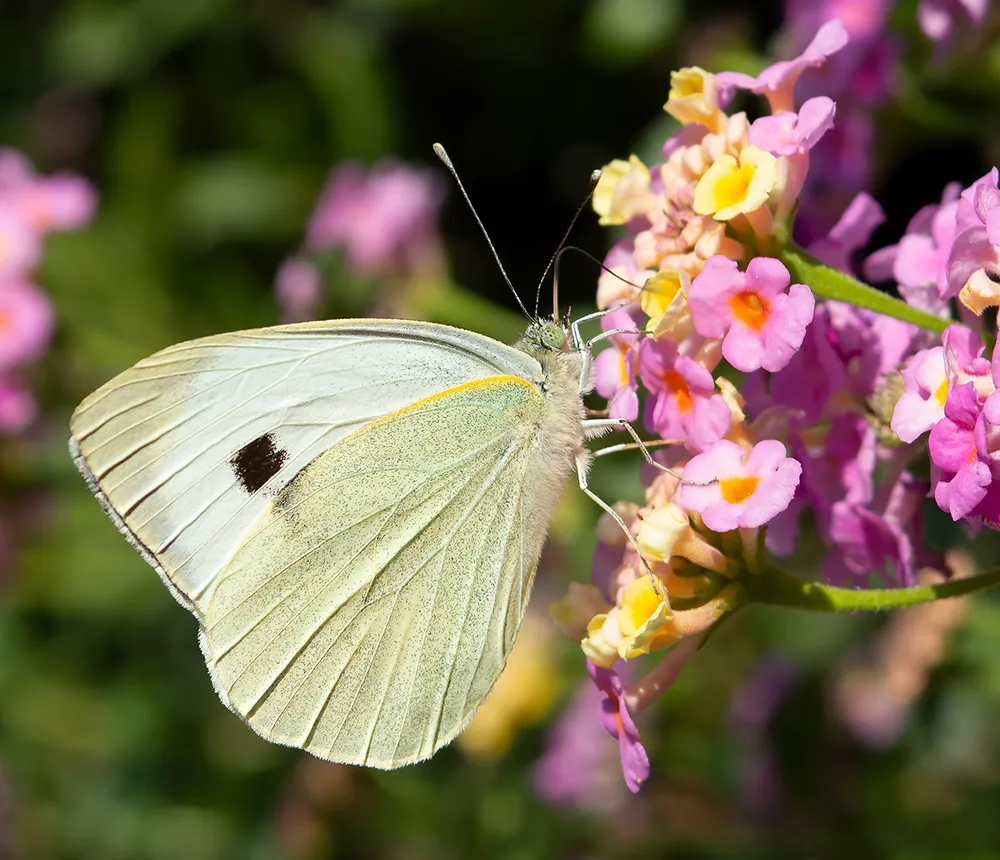
- Small white (Pieris rapae): smaller and plainer, with black wingtips and no black veining, and caterpillars that are solitary rather than communal, feeding alone rather than in a shared web.
No other European butterfly combines the translucent, black-veined wings of Aporia crataegi with its habit of overwintering as a colony of caterpillars in a shared silk tent, which together make it hard to mistake for any of the plainer whites it flies alongside.
_Anthocharis_cardamines_-_Foret_de_Bouconne__France_-_male_2lyp2N.webp)
_Gonepteryx_rhamni_-_Pr%C3%A9serville_France_-_male_KFu9N.webp)
_Pieris_napi_napi_-_Foret_de_Bouconne__France_-_male_Z19U1qT.webp)
_Colias_croceus_-_Durfort_Tarn_France_-_male_ZvAIWE.webp)