_Colias_croceus_-_Durfort_Tarn_France_-_male_ZvAIWE.webp)
Contents
The clouded yellow, Colias croceus, is a fast-flying orange-yellow butterfly of the family Pieridae, built for distance rather than a settled life in one place. It is resident across North Africa, southern Europe, Turkey and the Middle East, ranging north to central Siberia and south into India, but it is also a strongly migratory species that reaches northern Europe, including the British Isles, in immigration years. Few butterflies cover as much ground each season.
Identification
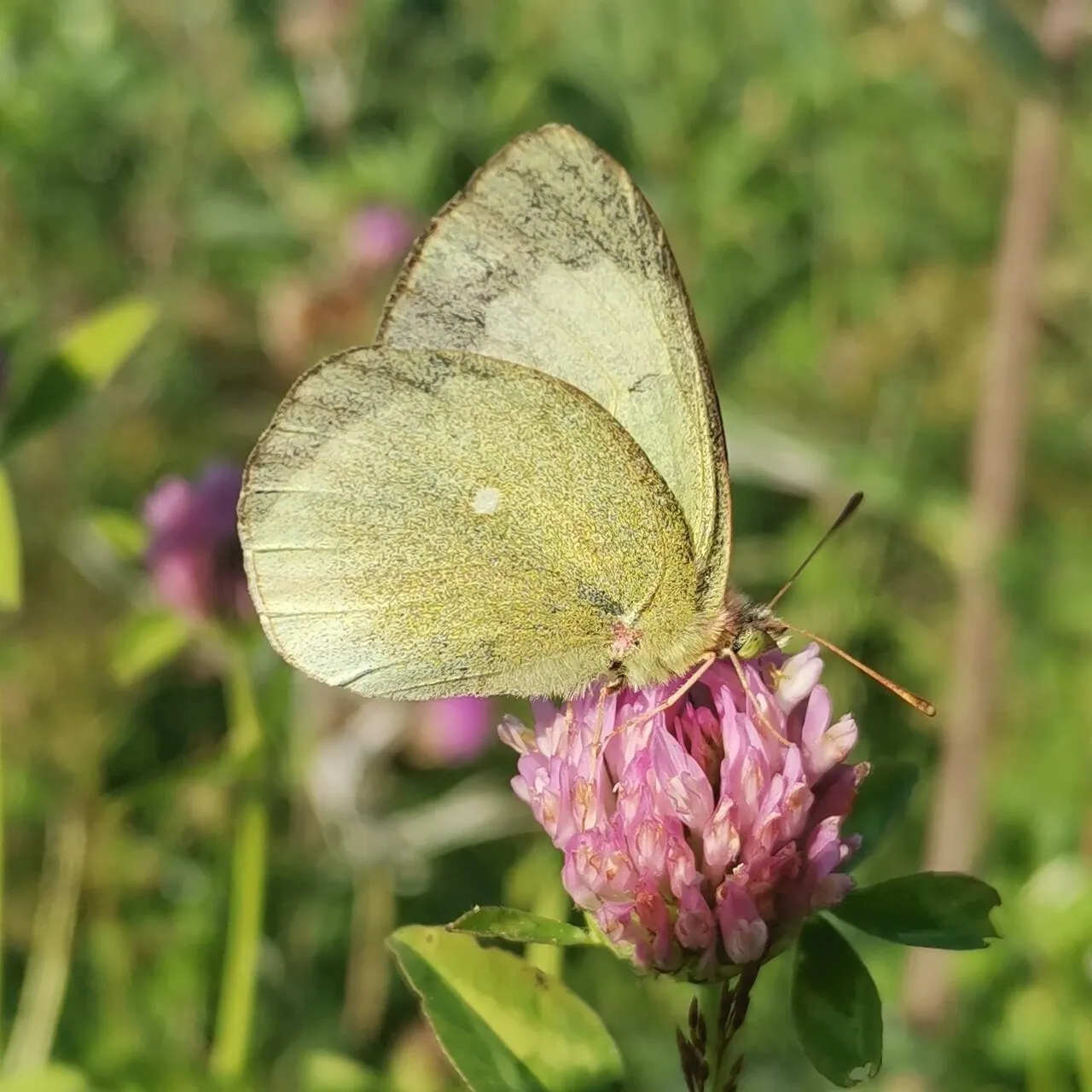
The butterfly always settles with its wings closed, so the pattern most often seen is the underside: lighter than the upperside and tinged greenish, especially on the forewing, with a pale-centred spot repeated from the upperside and a white spot on the hindwing, sometimes with a smaller dot above it, plus black dots along the outer margins. In flight, the upperside shows its golden to orange-yellow ground colour with a broad black margin on all four wings and a black spot near the centre of the forewing. The wingspan runs 52–62 mm, with males at the narrower end (52–58 mm) and females slightly larger (54–62 mm).
The sexes differ on the upperside: females carry yellow spots set into the black border, which males lack. Females also come in two colour forms. Most are coloured like the male, but about 5% are a pale cream rather than golden-yellow, a form called helice, thought to result from drier conditions during development; UK Butterflies records both the yellow and the helice form turning up across the British Isles. Pale helice females can be mistaken for Berger’s clouded yellow or the pale clouded yellow, but C. croceus keeps more black on the hindwing than either.
Range and habitat
Outside its migrations the clouded yellow favours open ground such as downland, coastal cliffs and fields carrying its caterpillars’ food plants, from sea level up to about 1,600 m. In the British Isles it behaves differently: almost every individual seen there has flown in from the south rather than bred locally the year before, so sightings cluster on the coast and on open flowery ground wherever the migration happens to land.
Life cycle and host plants
Caterpillars feed on legumes, including clovers (Trifolium), alfalfa (Medicago sativa), bird’s-foot trefoil (Lotus corniculatus) and vetches (Vicia). The species normally overwinters as a pupa, though larvae can also survive the winter at coastal sites, with lower success. Breeding runs fast where the climate allows: the species manages up to three generations a year in favourable conditions.
Behaviour and flight period
Across its resident range the clouded yellow is on the wing from March to October. In the British Isles the pattern is set by immigration: butterflies mainly arrive from late May or June, with numbers peaking in July and August as successive waves cross the Channel and breed locally for the rest of the season. Its colour is part of the giveaway in flight: observers note that the orange-yellow is distinctive even on the wing and unlike any other species sharing its habitat, a useful clue since the black-bordered upperside is otherwise hidden once the butterfly lands.
Similar species
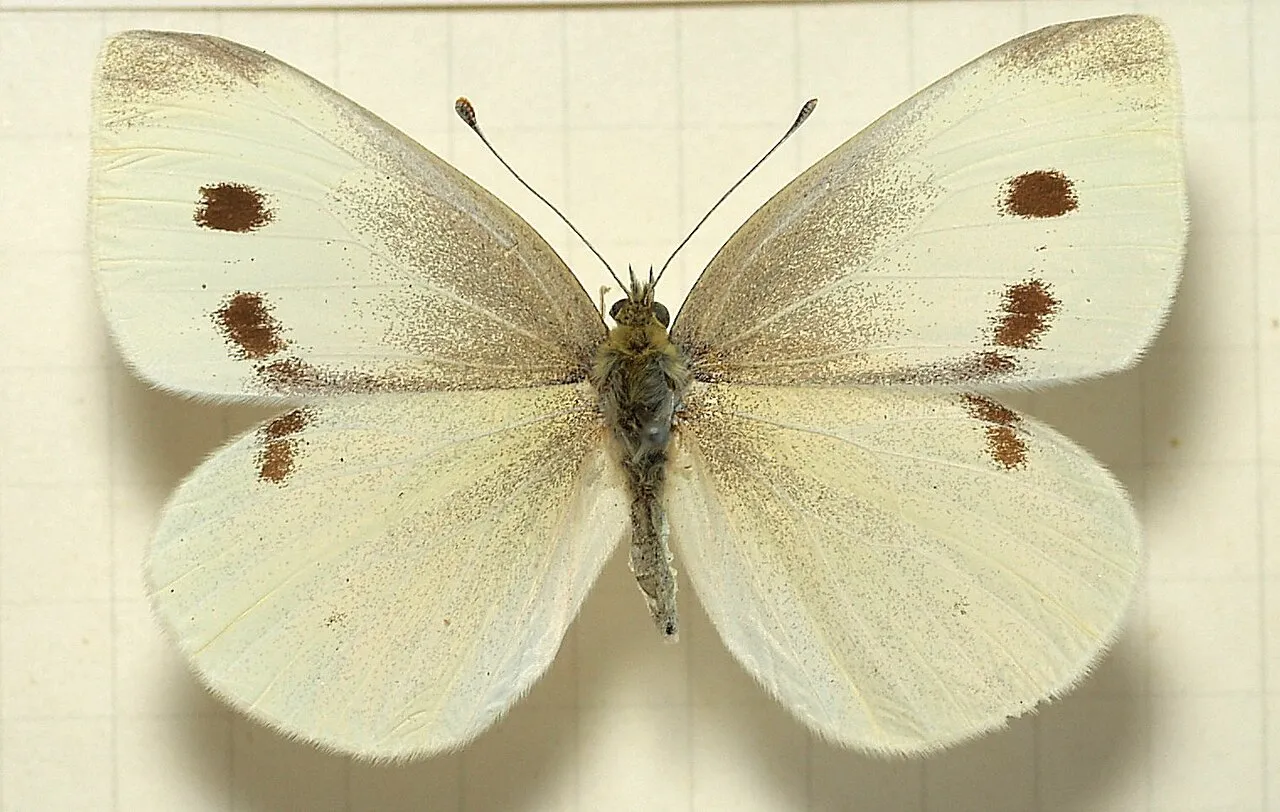
- Pale clouded yellow (Colias hyale): a close relative that overlaps in range and is one of the species a pale helice female clouded yellow can be confused with, though C. croceus keeps more black on the hindwing.
- Berger’s clouded yellow (Colias alfacariensis): another look-alike raised by the same pale-form confusion, separable in the field mainly by the amount of black retained on the hindwing.
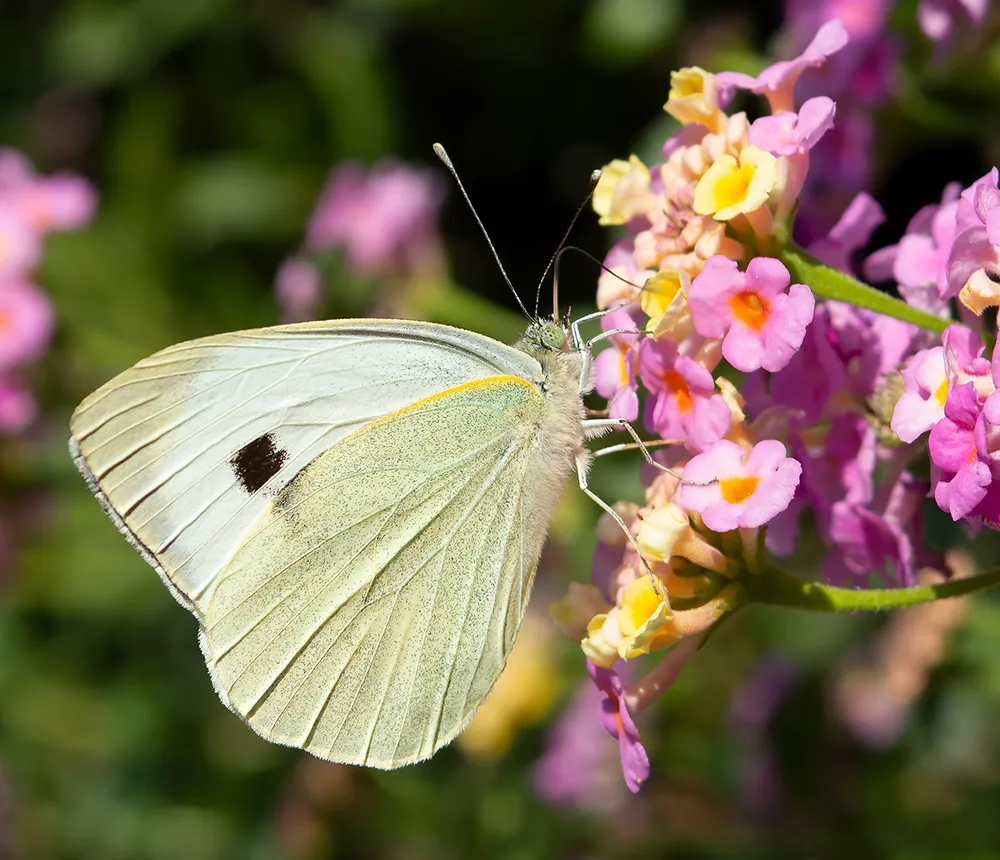
- Brimstone (Gonepteryx rhamni): a paler, more lemon-yellow butterfly that shares open flowery habitat with the clouded yellow but lacks its black-bordered upperside and migratory habit.
_Colias_hyale_-_Novy_Jicin_Moravie_Czech_Republic_-_male_Z1RdClK.webp)
_Colias_alfacariensis_-_Novy_Jicin__Moravie_Tch%C3%A9quie_-_female_Zgm502.webp)
_Colias_myrmidone_myrmidone_-_Star%C3%A1_Tur%C3%A1_Slovaquie_-_male_ZJNmUp.webp)
_Anthocharis_cardamines_-_Foret_de_Bouconne__France_-_male_2lyp2N.webp)
_Aporia_crataegi-_Foret_de_Soreze_Tarn_France_-_male_25HPdB.webp)