_Gonepteryx_rhamni_-_Pr%C3%A9serville_France_-_male_KFu9N.webp)
Contents
The common brimstone, Gonepteryx rhamni, is a large yellow butterfly of the family Pieridae, familiar across much of Europe and Asia as one of the first butterflies seen on the wing each spring. Its English name is old: brimstone is an old word for sulphur, the colour of the male’s wings, and the species is sometimes credited as the origin of the word “butterfly” itself, from an early name, the “butter-coloured fly”. It ranges across the Palearctic: through Europe, North Africa and temperate Asia east to Mongolia and Siberia, with its distribution limited by the presence of its buckthorn host plants. Its caterpillars feed only on buckthorns, and the leaf-shaped wings of the resting adult give the species its camouflage.
Identification
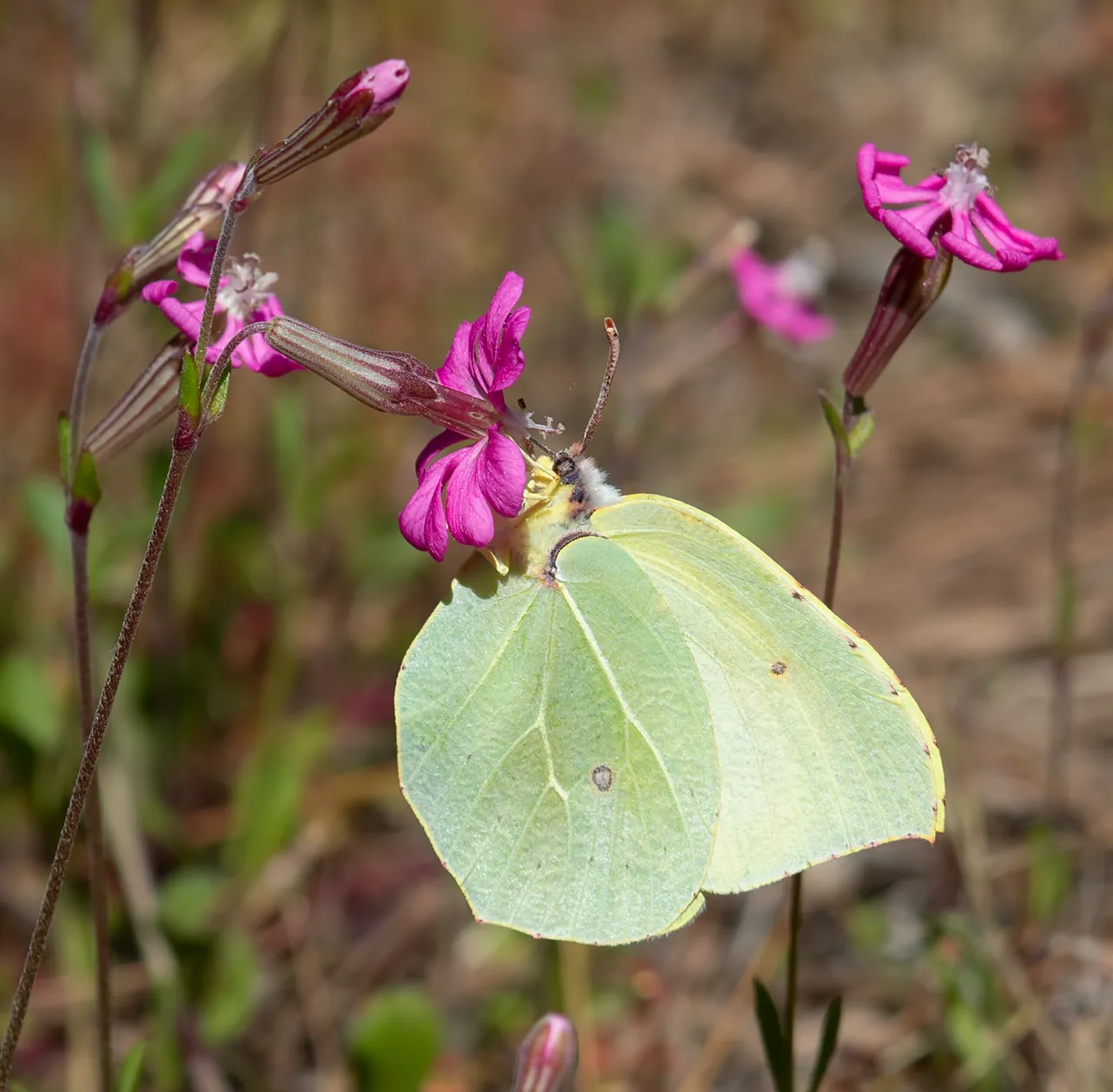
The brimstone is a sizeable butterfly, with a wingspan of 60 to 74 mm. The wings are distinctively angled, each with a small orange spot at the centre, and the shape recalls a leaf when the butterfly is at rest with its wings closed; both sexes also show a pink head and antennae, and a thorax covered in white hair. The sexes differ sharply in colour: the male is a strong sulphur yellow, while the female is much paler, close to white with a faint greenish tinge. This difference is visible on both the upperside and underside of the wings, and it is the easiest way to tell the two apart in the field. In Britain the nominate subspecies flies south of a line from Cheshire to South-East Yorkshire, while Ireland has its own subspecies, gravesi, in which the male is slightly paler with greener hindwings and the female shows a stronger greenish-yellow suffusion.
Range and habitat
The species breeds across open and wetland habitats where its buckthorn host plants grow: hedgerows, woodland rides, scrub and gardens, reflecting its wide Palearctic range from western Europe to Siberia and Mongolia; in Britain it can turn up in almost any habitat, from chalk downland to woodland rides to gardens. Outside the breeding season it seeks evergreen woodland and dense hedge cover, where it hibernates among foliage such as ivy and holly. This dependence on buckthorn shapes its distribution closely: where the host plants are scarce, the butterfly is scarce too, and adults are known to shift between hibernation sites and breeding wetlands over the course of the year as the two needs, shelter and host plants, pull them in different directions.
Life cycle and host plants
Caterpillars feed exclusively on two related shrubs: alder buckthorn (Frangula alnus) and common or purging buckthorn (Rhamnus cathartica). Females lay their spindle-shaped eggs singly on the underside of young leaves, favouring isolated, undamaged plants in full sun. From egg to adult takes around 50 days: roughly one to two weeks as an egg, about four weeks of caterpillar growth through five instars, and some two weeks as a leaf-shaped chrysalis. The brimstone completes a single generation each year, one brood (univoltine). New adults emerge in summer and then enter a long hibernation before breeding the following spring, so most of the butterfly’s year is spent as a dormant adult rather than as an egg, caterpillar or chrysalis; this makes it the longest-lived butterfly in Britain, with adults living for up to about ten months.
Behaviour and flight period
The brimstone’s flight period is unusually stretched for a single-brooded butterfly. New adults fly from June to September, then hibernate for about seven months and re-emerge to breed in April; as a result, adults can be seen on the wing in almost any month of the year in Britain and Ireland, with peaks in April-May as hibernators emerge and again in August as the new generation appears. It overwinters as an adult, tucked into evergreen cover, and its leaf-like wing shape and colour make it inconspicuous while at rest; handled butterflies tend to go rigid and tuck their legs out of sight, adding to the leaf disguise. Early spring sightings, often on the first warm days of the year, mark the end of hibernation rather than a fresh emergence, and males tend to emerge from hibernation before females and patrol in search of mates, with pairs staying together for up to forty-eight hours after mating. Once active, adults feed on nectar from a wide range of flowers, including thistles, knapweeds, scabious and bluebell in Britain, and both caterpillars and adults face predation, chiefly from birds and from wasps, including two braconid wasps that parasitise only this species.
Similar species
- Large white (Pieris brassicae): another common white-winged Pieridae, but without the brimstone’s yellow colour or angled wing shape.
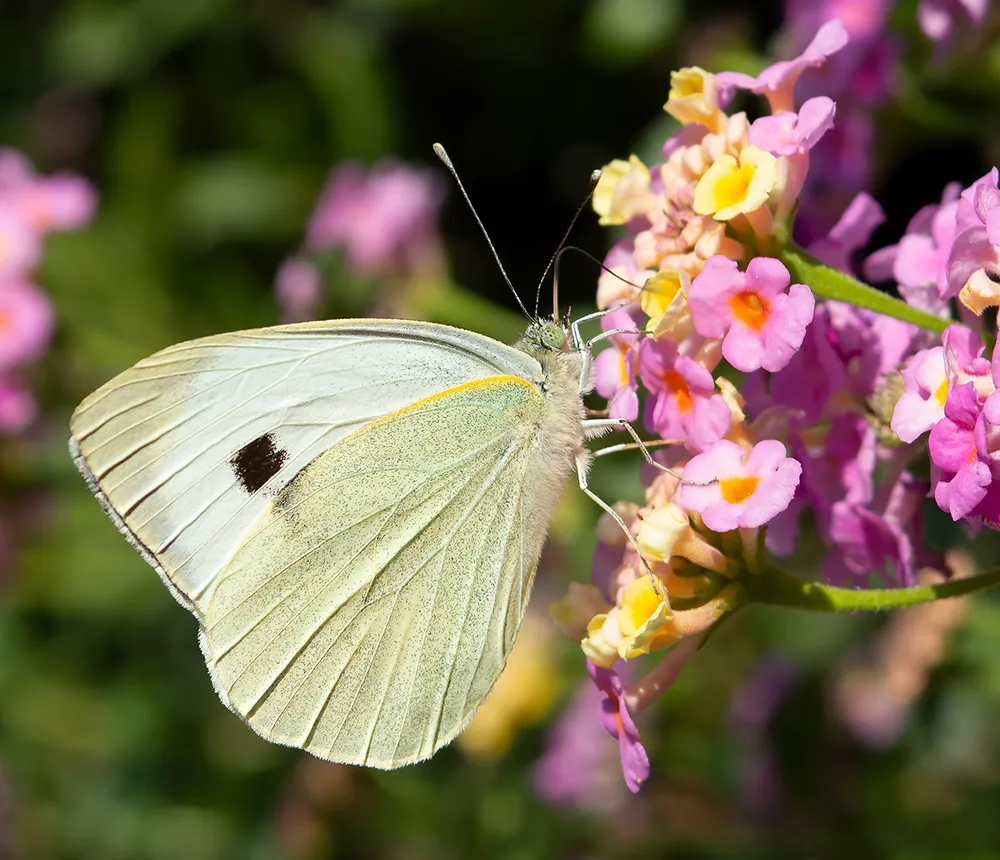
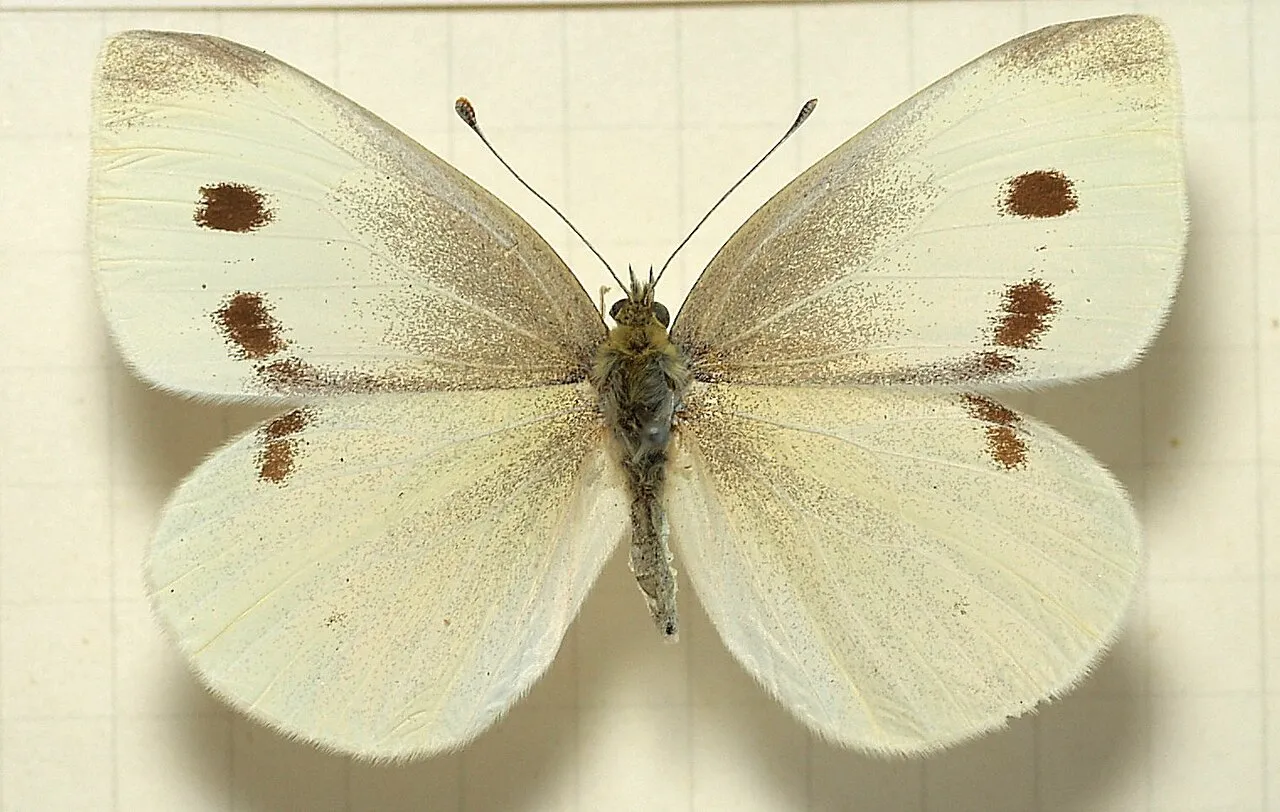
- Small white (Pieris rapae): smaller and plainer white, lacking the orange wing spot and strong sexual colour difference of the brimstone.
- Black-veined white (Aporia crataegi): shares open, scrubby habitat and a buckthorn-rich landscape in places, but is white with bold black veins rather than yellow.
_Anthocharis_cardamines_-_Foret_de_Bouconne__France_-_male_2lyp2N.webp)
_Aporia_crataegi-_Foret_de_Soreze_Tarn_France_-_male_25HPdB.webp)
_Pieris_napi_napi_-_Foret_de_Bouconne__France_-_male_Z19U1qT.webp)
_Colias_croceus_-_Durfort_Tarn_France_-_male_ZvAIWE.webp)