_Colias_myrmidone_myrmidone_-_Star%C3%A1_Tur%C3%A1_Slovaquie_-_male_ZJNmUp.webp)
Contents
The Danube clouded yellow, Colias myrmidone, is a butterfly of the family Pieridae tied closely to poor, unimproved grassland. It is found from Western Asia through southern Russia, Ukraine, Romania, Hungary and Austria, with an isolated outpost in the Jura Mountains near Regensburg, Germany, though it has already died out in several parts of this range in the west, with recent assessments pointing to likely extinction in Austria, the Czech Republic, Germany, Hungary and Slovenia. Its story in Central Europe is one of steady contraction rather than stability: a butterfly once spread thinly across the continent’s eastern grasslands, now squeezed back towards its core range further east.
Identification
The wingspan runs 44–50 mm. Males show a bright orange-yellow upperside with a narrow, unbroken dark border on the hindwings. Females are more variable, ranging from orange-yellow to a greenish-white form (called alba), with duskier, less sharply defined dark borders than the males. On the underside of the hindwing both sexes carry a red spot in the cell, with faint black spots in the postdiscal area of the forewing, and in females the submarginal spots on the hindwing often run together into a continuous band. Butterflies of the second generation tend to be slightly larger than those of the first.
Range and habitat
The species depends on nutrient-poor grassland, the kind of ground that has escaped fertiliser and heavy grazing. Its dwarf broom host plants explain why: they favour nutrient-poor grassland in the first place, since richer, fertilised soil lets taller, faster-growing plants crowd them out. That dependence runs through to the caterpillar itself, not just the plant it sits on: it cannot tolerate host plants that have taken up excess nitrogen from fertiliser or intensive grazing, and dies if the nitrogen load is too high. The result is a butterfly that needs two things to line up at once — the broom has to survive on the ground available, and the ground has to stay poor enough that the broom’s tissue itself stays low in nitrogen. As farming has intensified across its Central and Eastern European range, with fertiliser and more frequent grazing reaching grassland that once escaped both, suitable patches have become scarcer and more scattered. That squeeze matches the species’ retreat from its western outposts and the likely loss of entire national populations noted above: a habitat generalist could shift to a neighbouring field; a species this tied to unimproved ground has nowhere to go once its grassland is improved.
Life cycle and host plants
Caterpillars feed on brooms in the genus Chamaecytisus, specifically Chamaecytisus ratisbonensis, Chamaecytisus ruthenicus and Chamaecytisus supinus, all low, spreading shrubs of dry and semi-dry grassland rather than the taller brooms of hedgerows and waste ground. The species completes two generations a year, reflected in the two separate windows for adults on the wing (see Behaviour and flight period, below). Because the caterpillars can only survive on broom growing in nutrient-poor soil, a female’s choice of where to lay matters as much to the population as the weather does in a given year; a patch of broom on fertilised ground is, in effect, invisible to the species even if the plant itself looks healthy.
Behaviour and flight period
Adults appear in May, and again from July to August, across its Central and Eastern European range, the gap between the two broods matching the time the caterpillars need to develop on their broom host plants. The second generation’s butterflies tend to be slightly larger than the first generation’s, the one noted difference between the two broods on the wing. The orange-yellow males’ resemblance to the far commoner clouded yellow, Colias croceus (see Similar species, below), means a Danube clouded yellow on the wing is easy to pass over as its more widespread relative wherever the two overlap.
Similar species
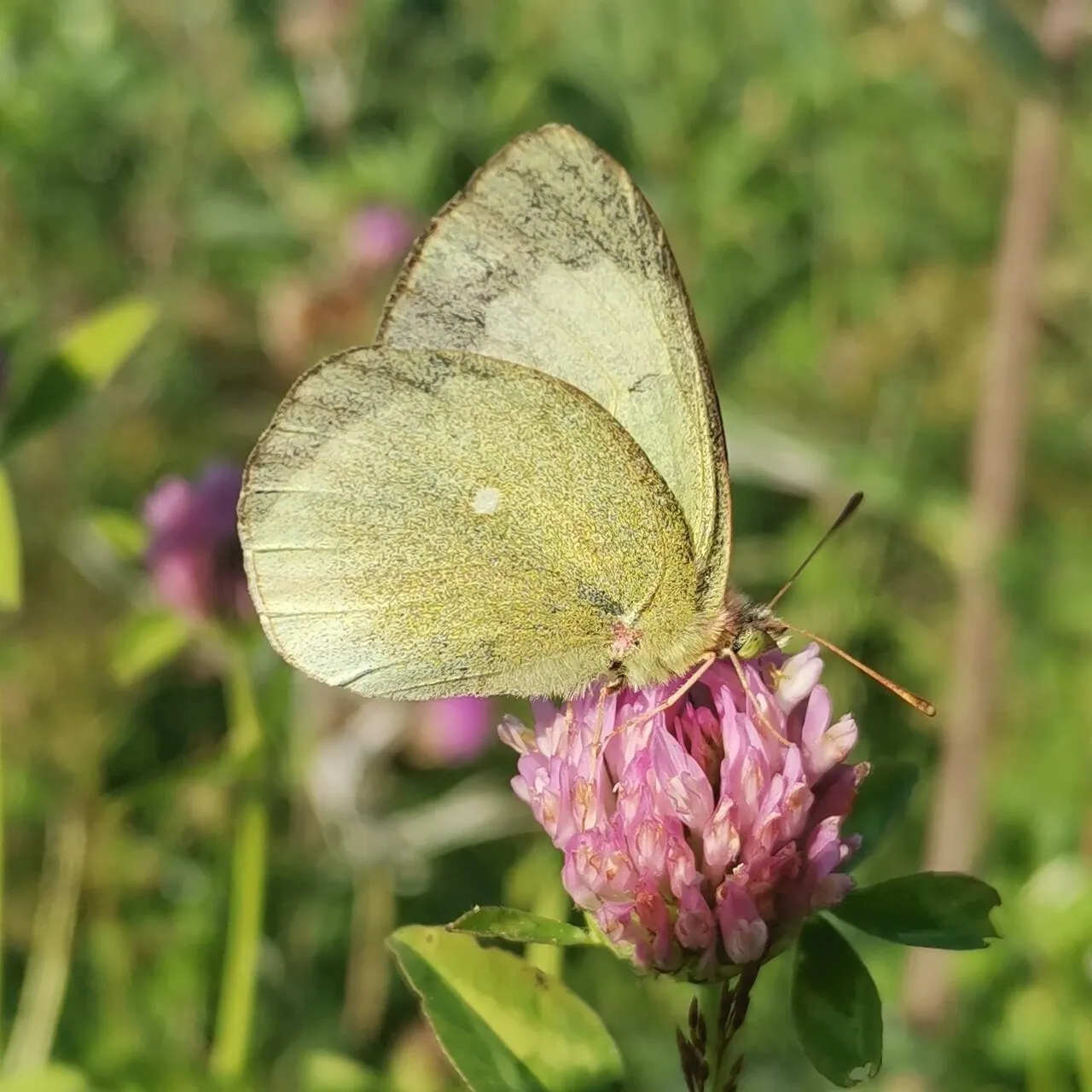
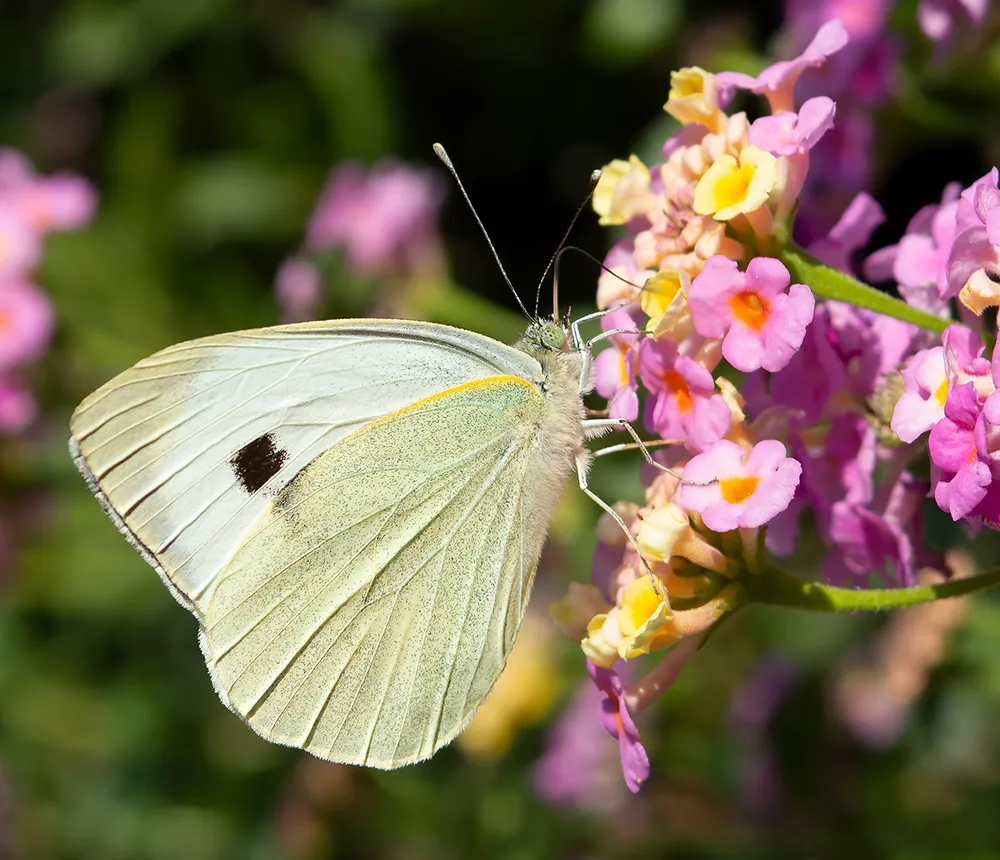
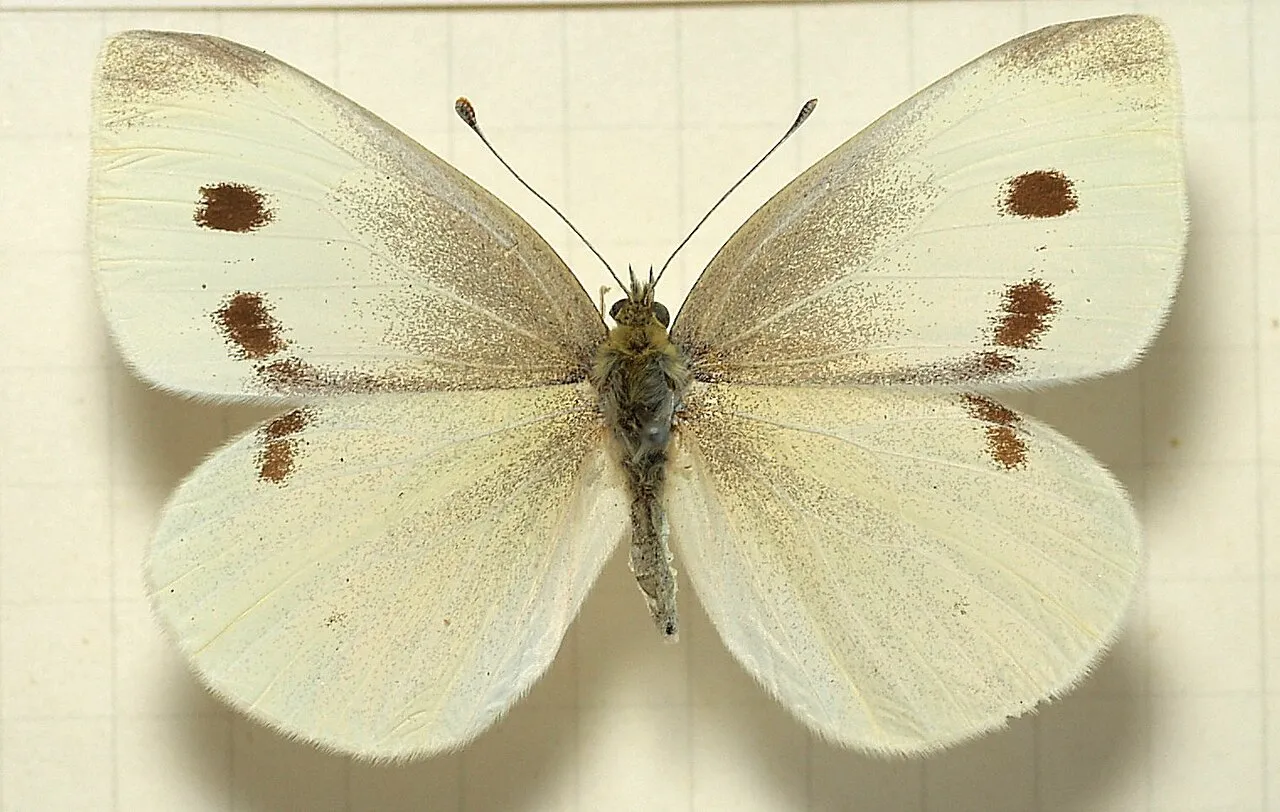
- Clouded yellow (Colias croceus): a far more widespread and migratory relative with a similar orange-yellow ground colour, but it keeps more black on the hindwing border than the Danube clouded yellow’s males show.
- Pale clouded yellow (Colias hyale): overlaps part of the Danube clouded yellow’s Central European range and can show a similarly pale female form, though it lacks the red cell-spot pattern on the hindwing underside.
- Moorland clouded yellow (Colias palaeno): another pale-form relative that can share grassland and heathland edges with the Danube clouded yellow in parts of Central Europe, though its caterpillars feed on bilberry rather than broom.
- Berger’s clouded yellow (Colias alfacariensis): a pale species of similarly dry, unimproved grassland further west and south; its females can show the same greenish-white colouring as the Danube clouded yellow’s alba form, but its caterpillars feed on horseshoe vetch rather than the brooms the Danube clouded yellow depends on.
_Colias_croceus_-_Durfort_Tarn_France_-_male_ZvAIWE.webp)
_Colias_hyale_-_Novy_Jicin_Moravie_Czech_Republic_-_male_Z1RdClK.webp)
_Colias_alfacariensis_-_Novy_Jicin__Moravie_Tch%C3%A9quie_-_female_Zgm502.webp)
_Anthocharis_cardamines_-_Foret_de_Bouconne__France_-_male_2lyp2N.webp)
_Aporia_crataegi-_Foret_de_Soreze_Tarn_France_-_male_25HPdB.webp)