_Colias_hyale_-_Novy_Jicin_Moravie_Czech_Republic_-_male_Z1RdClK.webp)
Contents
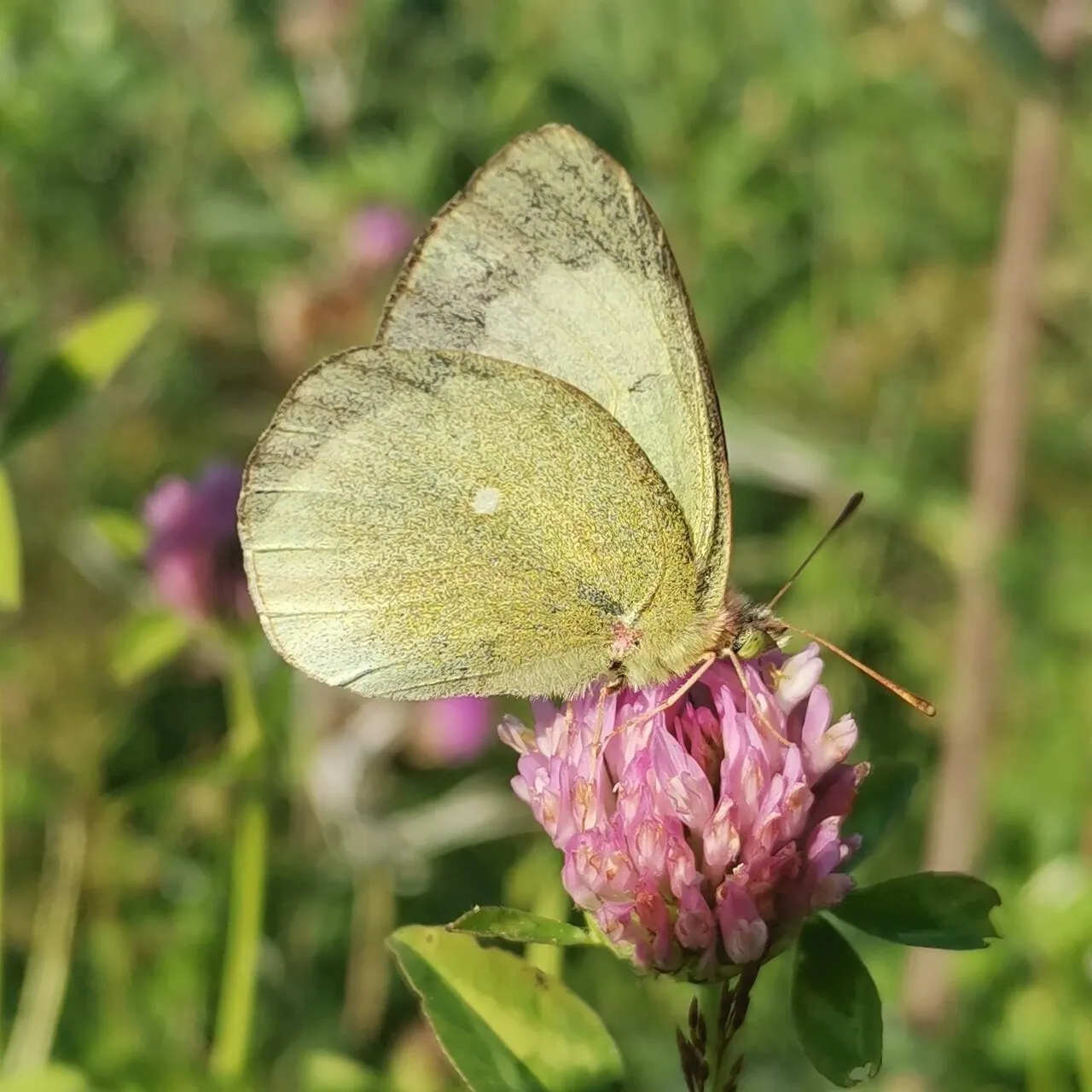
The pale clouded yellow, Colias hyale, is a pale lemon-yellow butterfly of the family Pieridae, closely related to the brighter clouded yellow. It is common across the Palaearctic region, from Europe through temperate Asia, and reaches the British Isles only as a rare migrant, turning up mainly in southern England, southern Ireland and the Channel Islands.
Identification
The pale clouded yellow has a wingspan of 52 to 62 mm, a little smaller than its close relative the clouded yellow. As its name suggests, the ground colour is far paler than that species: a soft lemon or greenish-yellow rather than deep orange. It is easily confused with Berger’s clouded yellow, and the two are best told apart by close examination rather than colour alone, since both share the same washed-out yellow tone that gives the species its common name.
Range and habitat
The species is widespread and common through Europe and temperate Asia, occupying a broad Palaearctic range. It keeps no lasting population in Britain; the individuals seen there are immigrants from the near continent, arriving in numbers that vary sharply from year to year, and their caterpillars cannot survive a British winter. Across its range it favours flower meadows up to 2,000 m above sea level, including coastal cliffs, open downland and fields growing lucerne or clover, the caterpillars’ food plants.
Life cycle and host plants
Caterpillars feed on a range of legumes, including vetches (Vicia), crown vetch (Coronilla), lucerne (Medicago), bird’s-foot trefoils (Lotus), brooms (Cytisus) and clovers (Trifolium). The species overwinters as a caterpillar, resuming growth the following spring. In Britain, where the species breeds from migrants rather than a settled resident population, up to three generations can appear in a good year, as fresh waves of immigrants arrive through the summer and add to any local breeding.
Behaviour and flight period
In Britain, where the caterpillar cannot survive the winter and the population depends on fresh immigration each year, migrants are seen from May to September, with the main arrivals typically in August and early September, a pattern that points to successive continental emergences feeding the influx rather than a single local generation building up through the summer.
Similar species
- Clouded yellow (Colias croceus): the deeper orange relative it is most often confused with on the wing; see its profile for the contrast in colour and range.
- Berger’s clouded yellow (Colias alfacariensis): a near-identical pale species found in similar habitats across much of the same Palaearctic range, separable mainly by close examination rather than colour.
_Colias_croceus_-_Durfort_Tarn_France_-_male_ZvAIWE.webp)
_Colias_alfacariensis_-_Novy_Jicin__Moravie_Tch%C3%A9quie_-_female_Zgm502.webp)
_Colias_myrmidone_myrmidone_-_Star%C3%A1_Tur%C3%A1_Slovaquie_-_male_ZJNmUp.webp)
_Anthocharis_cardamines_-_Foret_de_Bouconne__France_-_male_2lyp2N.webp)
_Aporia_crataegi-_Foret_de_Soreze_Tarn_France_-_male_25HPdB.webp)