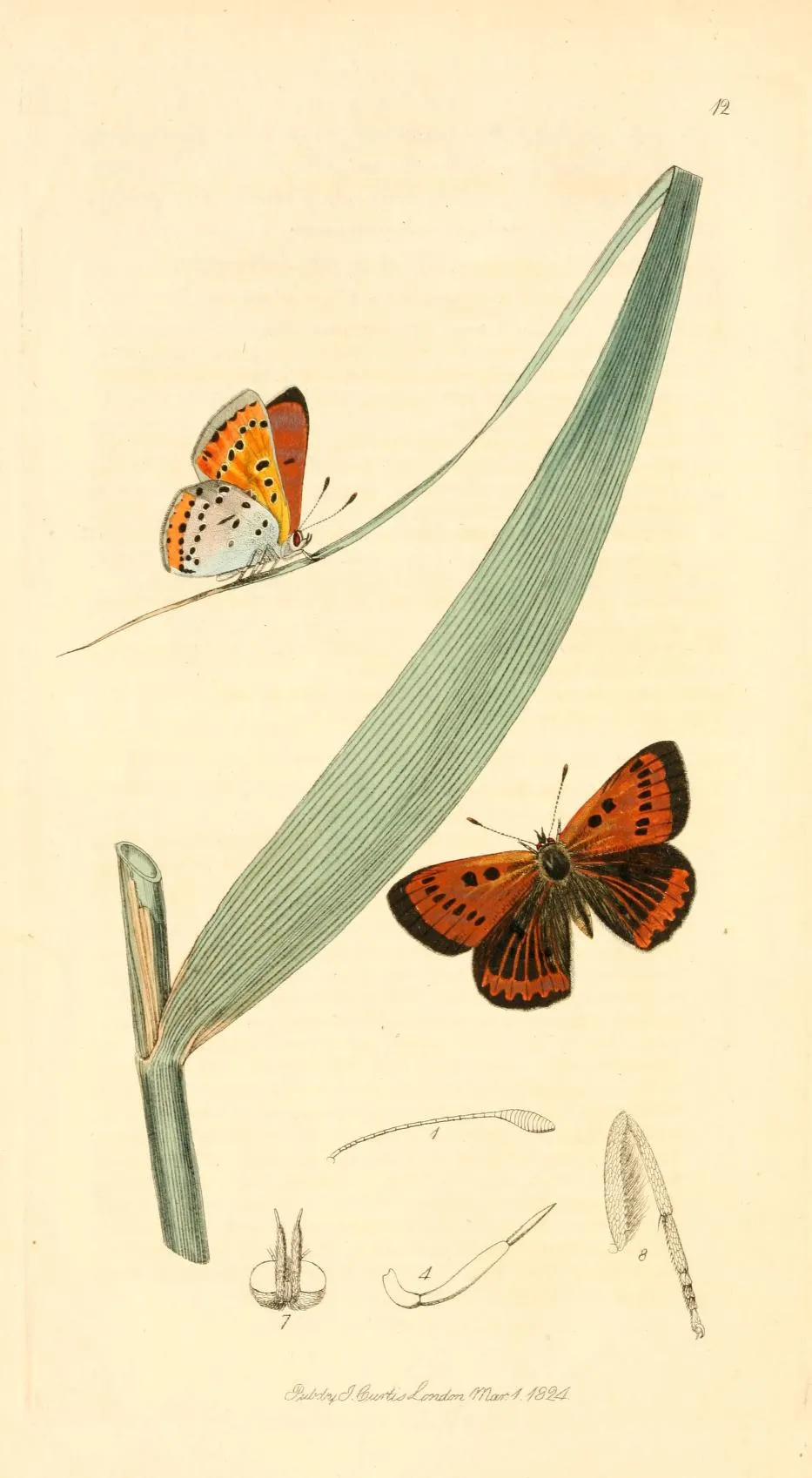
_2fwkHU.webp)
Contents
The northern blue, Plebejus idas, is a small butterfly of the family Lycaenidae, found across much of the Northern Hemisphere. It ranges over most of Europe, though it is absent from parts of Spain, southern Italy and the United Kingdom, continues across the northern Palearctic to Siberia, including the mountains of South Siberia and Yakutia, and also occurs in the Nearctic region of North America. Its name follows Classical tradition: Idas was an Argonaut in Greek mythology. Despite that huge range, it is easy to overlook: it belongs to a cluster of small blues that look alike and that even specialists tell apart by small details. Across that range the species is further split into seventeen recognised subspecies, a sign of just how much a single wide-ranging butterfly can vary from one region to the next.
Identification
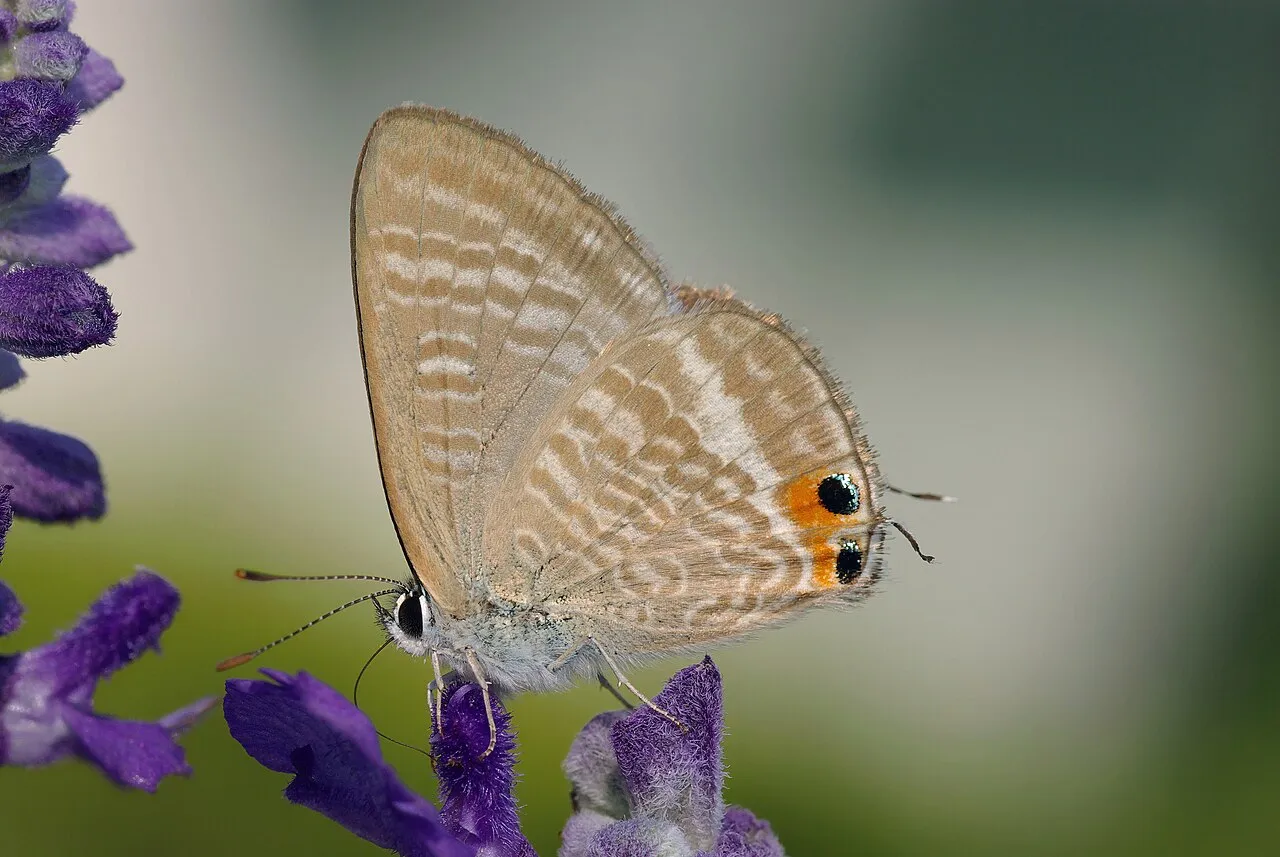
This is a small butterfly, with a wingspan of 17 to 28 mm. The species is quite variable in colours and markings, which complicates identification; the seventeen subspecies spread across its range are one source of that variation, so a northern blue from one region does not always match a field guide illustration drawn from another. The sexes differ sharply above: males show an iridescent blue upperside, while females are brown with orange submarginal spots. The underside is shared by both sexes and is more useful for identification, being greyish with black spots, thin black marginal lines, and a rather large orange band edged with blue spots along the margins.
Two other small blues cause most of the confusion: the silver-studded blue and Reverdin’s blue. The surest way to separate the northern blue from the silver-studded blue is on the front legs rather than the wings: the foreleg of a male northern blue lacks the small hook that is present on a male silver-studded blue, a feature that needs a close look rather than a glance in the field.
Range and habitat
Within that wide range, the northern blue is a butterfly of grassy flowery areas, mixed evergreen forests and wet meadows, up to alpine levels, from about 200 to 2,100 metres of elevation. That elevation span, from lowland meadows up into montane forest and on to open alpine ground, helps explain why a species so variable in appearance also turns up in such different corners of the Northern Hemisphere, from lowland Europe to the mountains of South Siberia.
Life cycle and host plants
Caterpillars feed on a mix of shrubs and legumes, including heather, bilberry and crowberry, as well as legumes such as bird’s-foot trefoil and clover species. As in many Lycaenidae, the relationship does not stop at the plant: the larvae are attended by ants of the genera Lasius and Formica, which likely offer some protection from predators in exchange for secretions the caterpillars produce.
The species overwinters as a caterpillar, in its second instar, rather than as an egg or a chrysalis, and completes one generation a year.
Behaviour and flight period
The northern blue flies in a single brood, on the wing from June to August depending on location: populations further north or at higher elevation emerge later in that window than those in warmer lowland sites. Courtship follows a simple pattern: males patrol among the host plants in search of mates, and once mated, females lay their eggs on the stems of host plants or on nearby plant debris. Outside the flight period the species is present only as an overwintering caterpillar, tucked low among its host plants.
Conservation
The species as a whole is listed by the IUCN under the category shown in the facts box, taken from its Wikidata record. That broad status hides a sharper story at the edge of the range: the lotis blue subspecies, confined to Mendocino County in California, is believed to have gone extinct since 1994, a reminder that a species-wide category can mask the loss of a single isolated population.
Similar species
- Silver-studded blue (Plebejus argus): the closest look-alike, separated reliably only by a detail on the male’s front leg, where the northern blue lacks the small hook present in the silver-studded blue.
- Reverdin’s blue (Plebejus argyrognomon): another small, variable blue that overlaps the northern blue across much of its Palearctic range and is similarly easy to confuse with it.
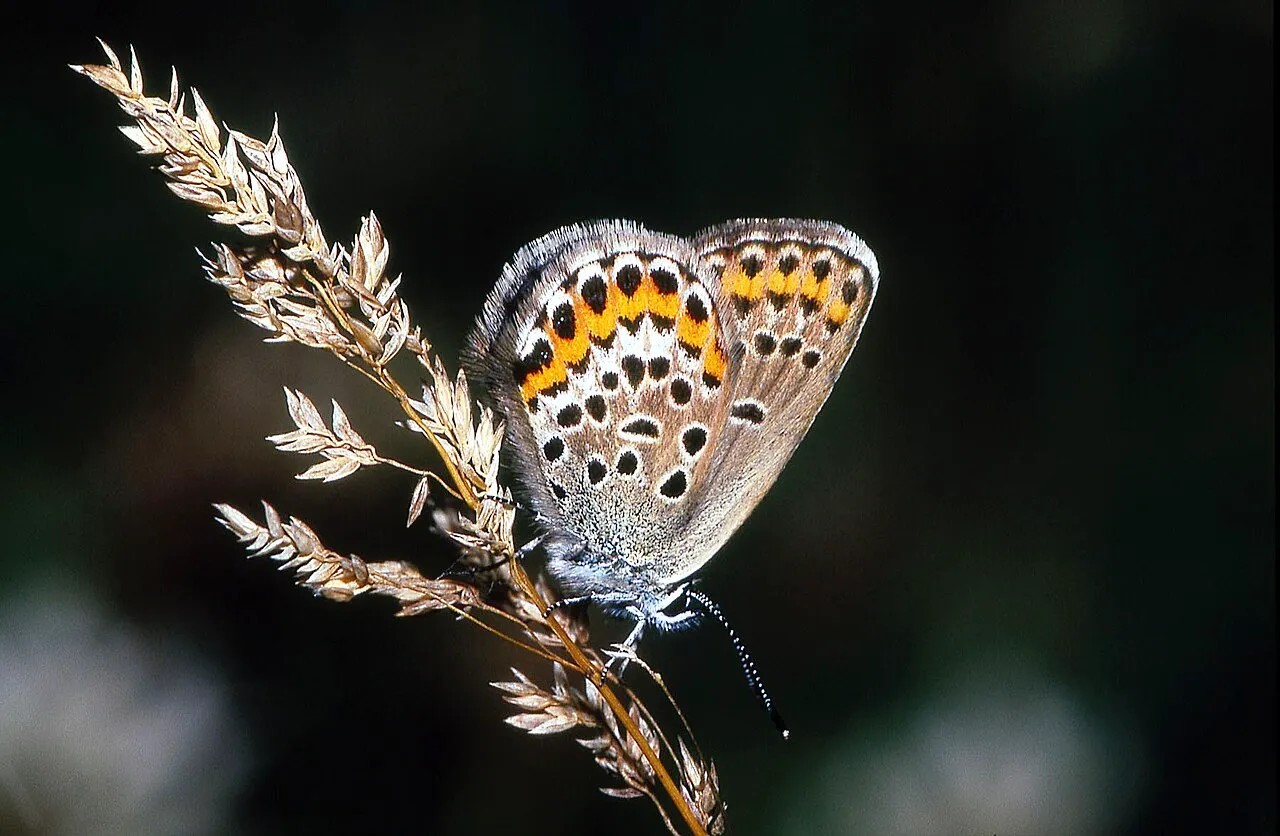
_male_Turna_Ewa2f.webp)
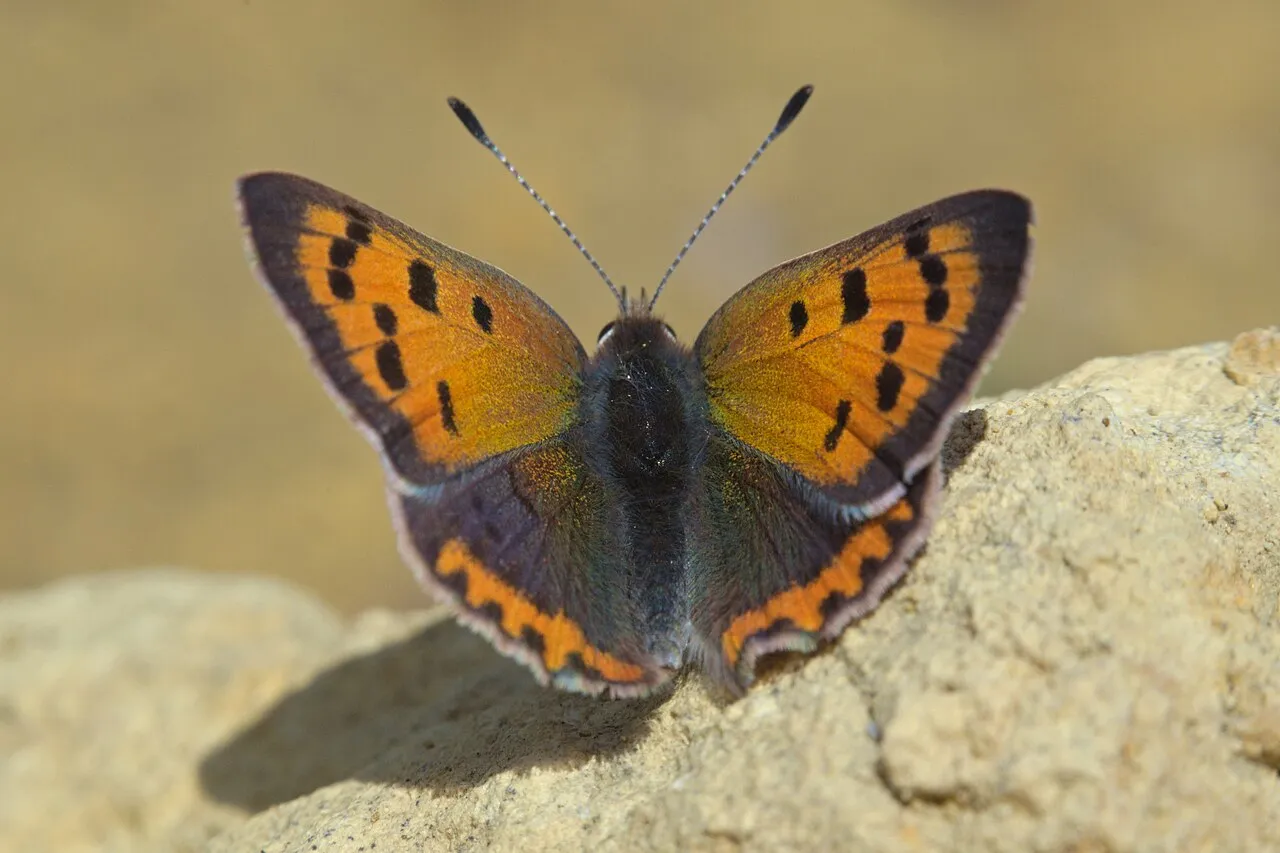
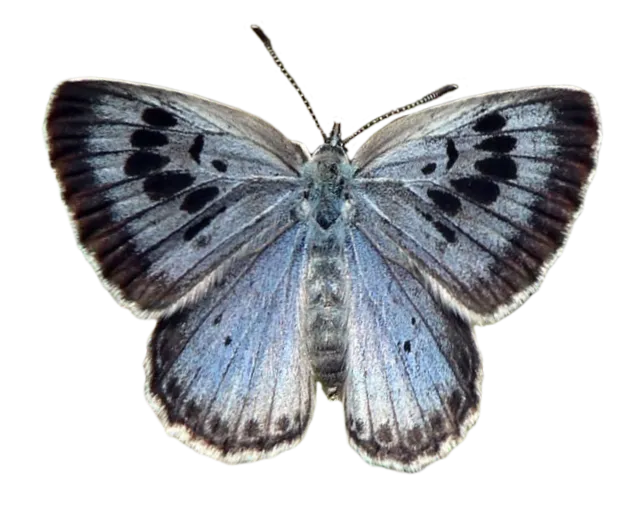
_07-05-2006_1_ZJyP4Y.webp)