Contents
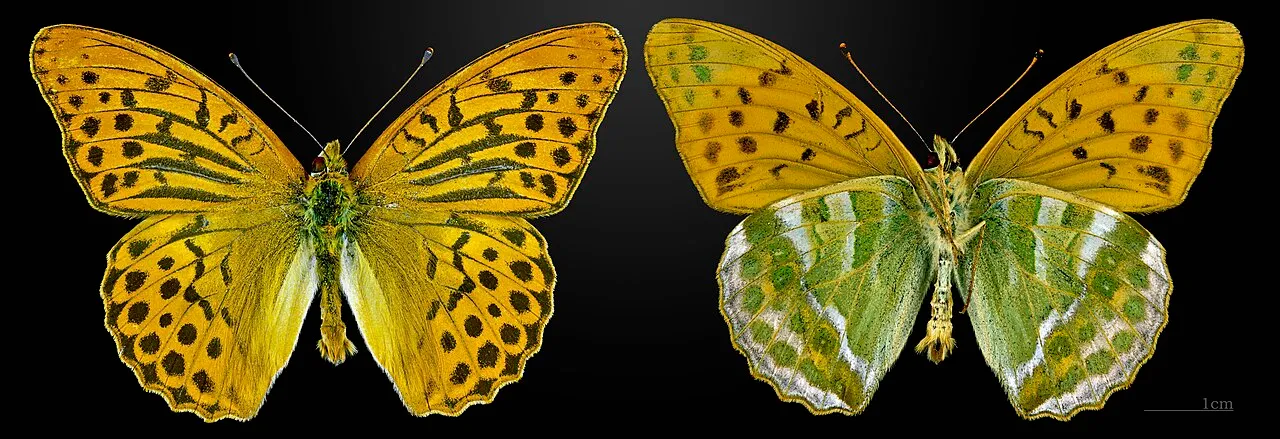
The Cardinal, Argynnis pandora, is a large fritillary of the family Nymphalidae, sometimes placed in its own genus as Pandoriana pandora. UK Butterflies dates the first description to Denis and Schiffermüller in 1775, with Vienna, Austria as the type locality1. Butterflies of Europe calls it a fast and powerful flyer of woodland edges and glades with bushes2, found across southern Europe, North Africa and the Middle East and extending east to the Tian Shan and northwestern India. Its name recalls Pandora of Greek myth3, the woman said to have been created by Hephaestus and to have opened the box that released misfortune upon humanity.
Identification
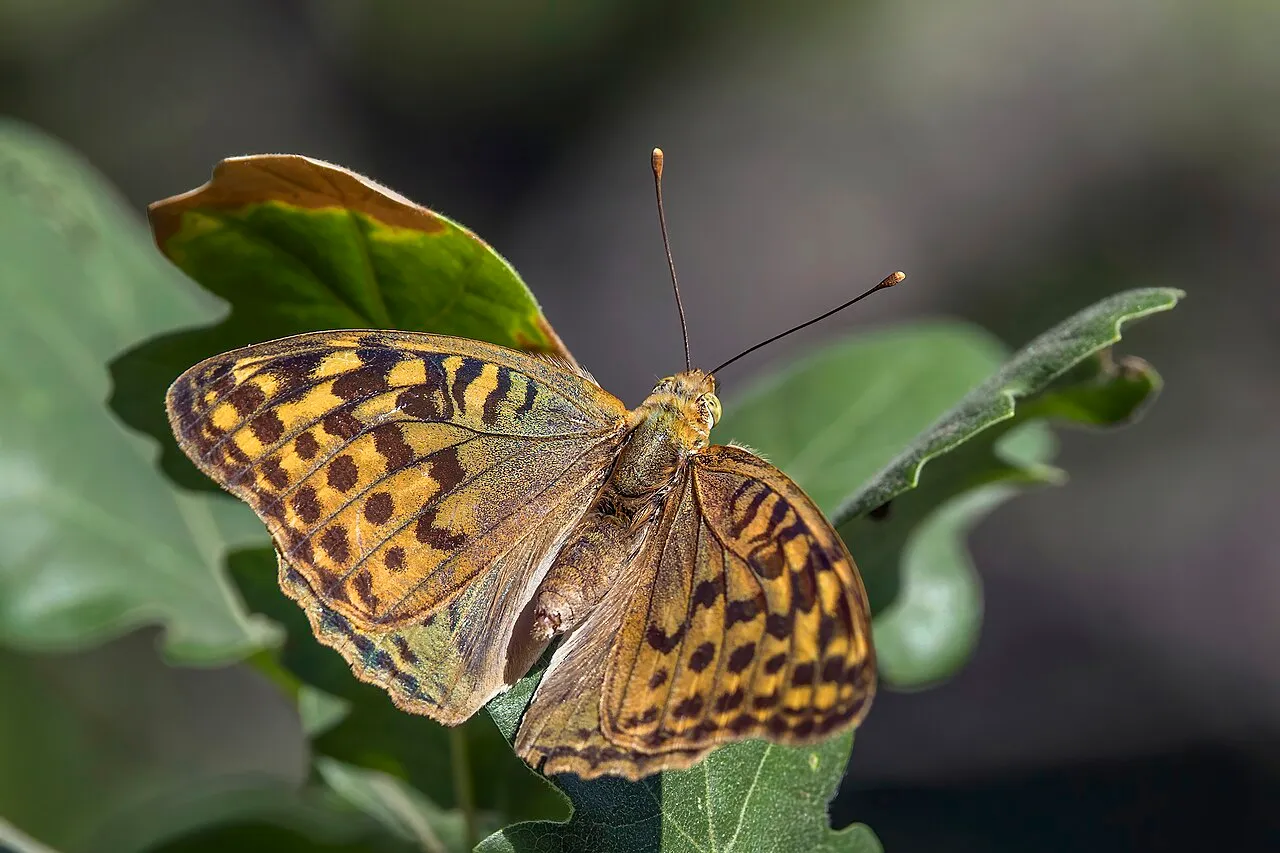
This is one of the larger fritillaries on the wing. An early account in the Seitz survey of European butterflies calls it the largest European Argynnis, giving a wingspan of 64–80 mm; more recent measurements by UK Butterflies run slightly larger, from 72–76 mm in males to 80–84 mm in females. In Britain, where it occurs only as a rare immigrant, UK Butterflies considers it undoubtedly mistaken for a Silver-washed Fritillary and therefore under-recorded1. Above, the Cardinal recalls the dark valesina form of the Silver-washed Fritillary, but is brighter greenish and densely spotted with black — a wash Guy Padfield likewise describes as a reflective olive-green sheen, visible even in flight, especially on the hindwings. The underside forewing carries a fleshy-red disc marked in black3, which Padfield also records as a striking rosy-red flush4 distinctive enough to rule out confusion with the Silver-washed Fritillary.
Range and habitat
The Seitz survey lists Spain, southern France, Italy, the south of Austria-Hungary, Turkey and Asia Minor as part of a wider range that runs from southern Europe, North Africa and the Middle East east to the Tian Shan and northwestern India. The Cardinal lives in dry calcareous grasslands and deciduous forests, and in deciduous and open pine woodland well stocked with nectar-rich plants from the genera Cirsium, Carduus and Centaurea, thistles and knapweeds among them. Like the Silver-washed Fritillary, the Cardinal is often seen where nectar-rich plants such as thistles are plentiful. Butterflies of Europe describes vagrants turning up outside the main distribution, in Switzerland for example2, with a Swiss altitude record of up to 2,600 m3. In the Rhone valley near Martigny, though, Guy Padfield and colleagues have watched cardinals flying there every year since he first found them in August 2013, and research he co-authored proposed a breeding population at that site4 rather than mere vagrancy.
Life cycle and host plants
Caterpillars feed mainly on violets (Viola species), though in Spain the species has also been recorded on Ruta chalepensis5. Females lay their eggs singly on violet leaves. The species hibernates as a small caterpillar and pupates in spring, low on the food plant or on nearby vegetation, before the adult emerges. The Cardinal is single-brooded, producing one generation a year2.
Behaviour and flight period
Adults fly from May to August in Europe, with the overall flight period running from April to September depending on the location3. True to its reputation as a fast and powerful flyer, it is capable of wandering well beyond its breeding grounds. UK Butterflies records only two sightings in Britain1: a female near Tintagel, Cornwall, in August 1911, and another at Durdle Door, Dorset, on 13 August 1969. Butterflies of Europe notes that vagrants also turn up outside the main distribution, in Switzerland for example2 — though, as the Range and habitat section notes, the colony Guy Padfield and colleagues watch in the Rhone valley there has flown every summer since 2013.
Similar species
- Silver-washed fritillary (Argynnis paphia): smaller by UK Butterflies’ measurements, with a wingspan of 69–80 mm against the Cardinal’s 72–84 mm. Males carry four dark sex-brand veins on the forewing, and its underside shows beautiful streaks of silver, quite different from the Cardinal’s greenish upperside sheen and rosy-red forewing underside described above. In Britain it flies from late June to the end of August, later than the Cardinal’s main European flight window of May to August, and unlike the Cardinal — recorded in Britain only as a rare vagrant — it is a resident British species6, found in woodland south of a line between Montgomeryshire and East Kent.
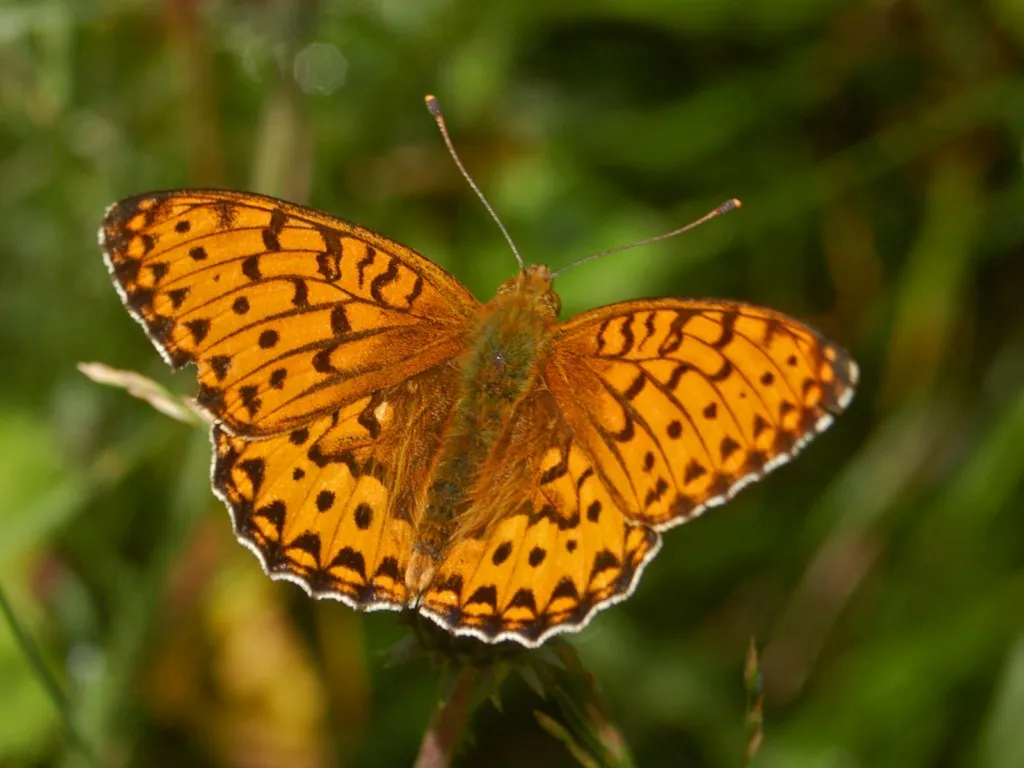
- Dark green fritillary (Speyeria aglaja): smaller again, with a wingspan of 58–68 mm, and its underside hindwing carries a green hue peppered with large silver spots, unlike the Cardinal’s greenish upperside sheen and rosy-red forewing underside described above. It also favours open, windswept calcareous grassland over the Cardinal’s woodland edges and glades, and UK Butterflies calls it the most widespread fritillary in the British Isles7, unlike the Cardinal, recorded in Britain only as a rare vagrant.