Contents
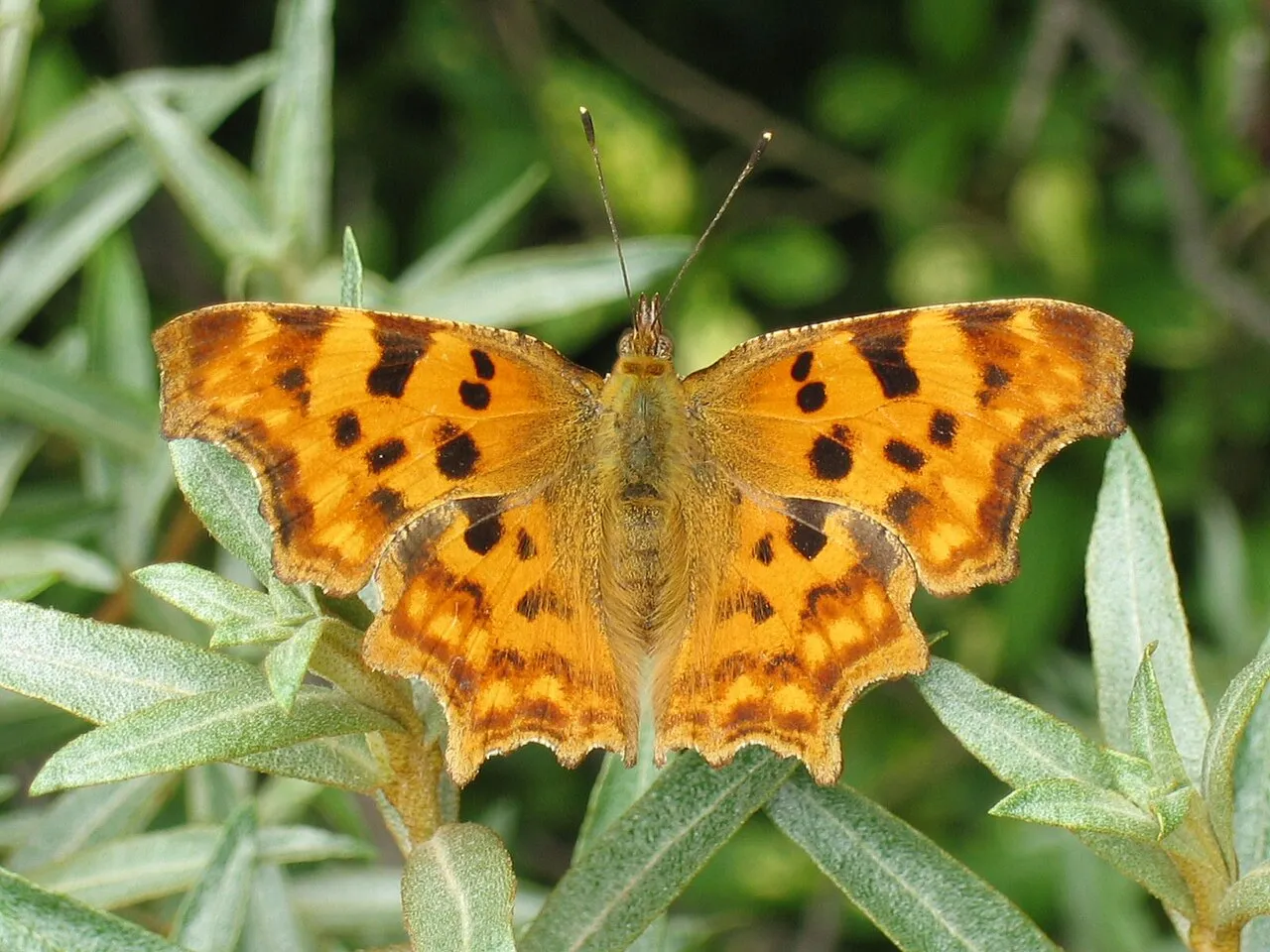
The Comma, Polygonia c-album, is a butterfly of woodland edges and garden borders, named for the small white mark shaped like a comma on the underside of each hindwing. It belongs to the family Nymphalidae, in the genus Polygonia, and is found across Europe, North Africa and temperate Asia. In Britain it is found across England, Wales and the Isle of Man, with recent range expansion into Scotland.
Identification
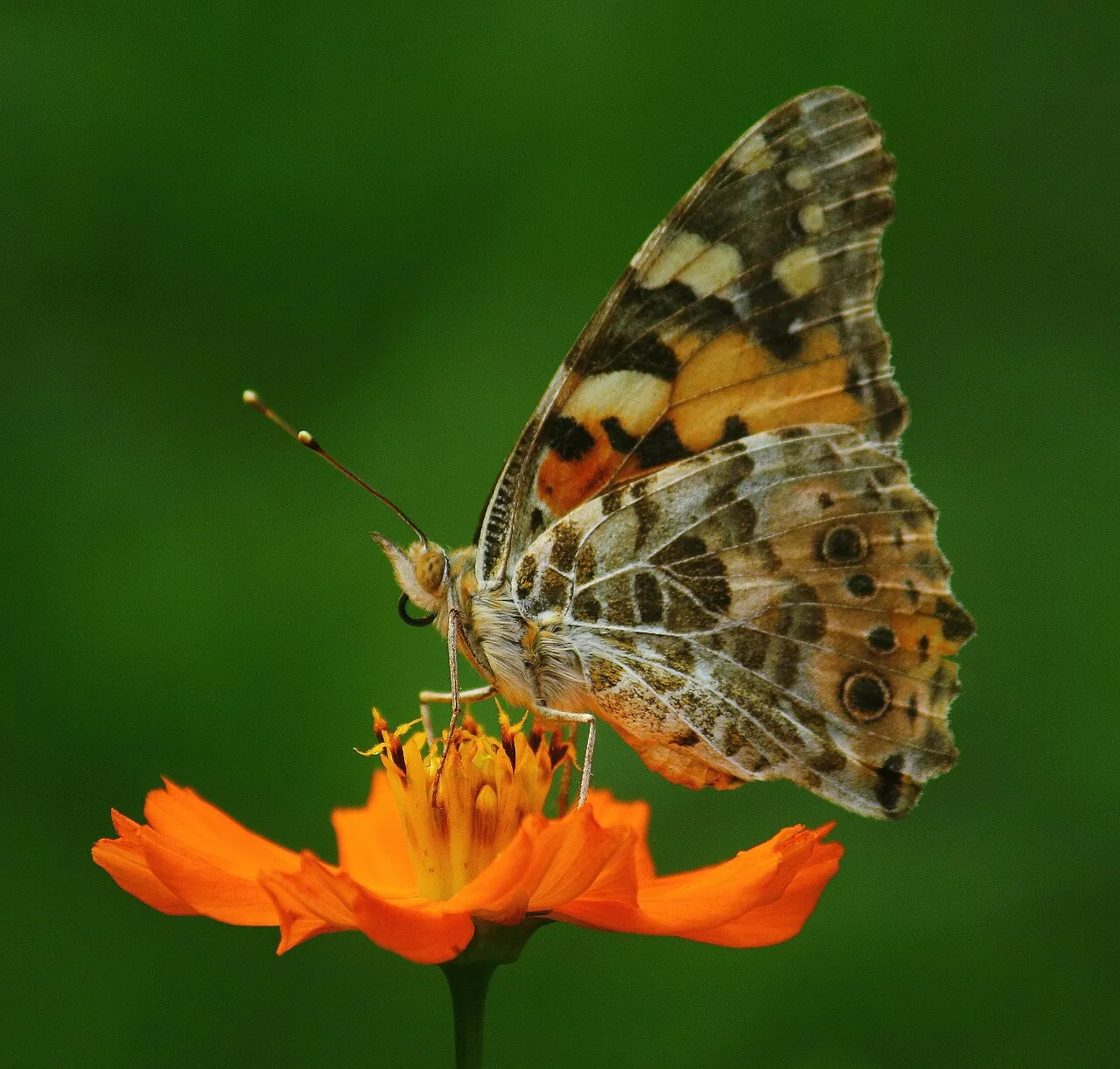
The Comma’s silhouette alone sets it apart from almost every other European butterfly on the wing: its wing margins are deeply scalloped and ragged, not smooth. Its wingspan runs from about 50 to 64 mm. The upperside is a bright orange-brown mottled with dark brown spots, echoing a smaller, raggeder fritillary at first glance. The underside tells a different story: it is a mottled, bark-like brown that camouflages the resting butterfly among dead leaves and tree bark, and it carries the small white “c” or comma-shaped mark on each hindwing that gives the species its name. With wings closed and perched among dead leaves or on a tree trunk, the ragged outline and dull underside make the butterfly remarkably easy to overlook, a useful trick for an insect that spends the winter exposed to predators as an adult rather than tucked away as an egg or chrysalis.
Range and habitat
The Comma favours woodland edges, rides and country lanes with sunshine and moist soil, the kind of sheltered, dappled ground where its host plants and nectar sources both thrive. It also visits gardens, especially in late summer, when adults build up fat reserves for winter. Its range stretches from Western Europe through North Africa and across temperate Asia, and within Britain it has been pushing steadily northward in recent decades, recently expanding into Scotland after a long absence from much of the country.
Life cycle and host plants
The caterpillars feed mainly on common nettle (Urtica dioica), and also on elm, hop, currants and willows, including goat willow. This broad diet, nettle above all, helps explain why the Comma has remained widespread even as other butterflies tied to a single rare plant have declined.
The species overwinters as an adult, tucking into leaf litter, ivy or a woodpile rather than passing the cold months as an egg or chrysalis. In Britain there are two generations a year, with a partial third generation possible in favourable conditions; the exact number of broods in any one place depends heavily on the local climate and the length of the warm season.
Behaviour and flight period
Because it overwinters as an adult, the Comma can in principle be seen flying year-round where conditions allow, including on warm days through winter. In Britain the clearest activity comes in two bursts: a first generation flying from late June into July, and a second brood appearing in late summer, with stragglers from both broods taking advantage of any mild winter spell to bask and feed before returning to shelter. Adults of the late-summer brood are typically the ones that overwinter, emerging the following spring to mate and start the cycle again. That overwintering habit, combined with the broad choice of host plants and the willingness to use garden nettle patches as readily as woodland ones, is likely a large part of why the Comma has remained common and even expanded its range while many habitat-specialist butterflies have contracted theirs.
Similar species
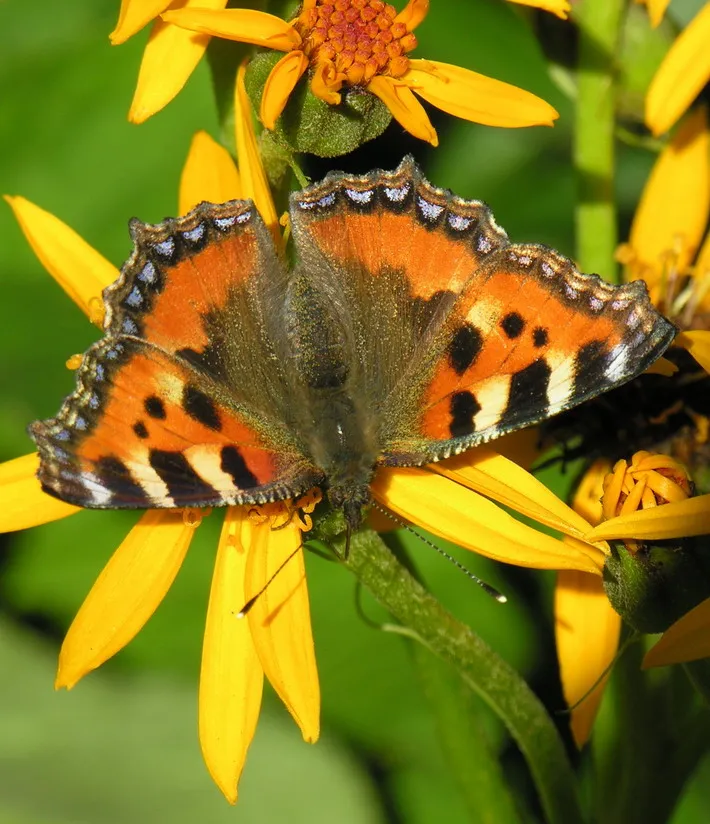
- Small tortoiseshell (Aglais urticae): shares the orange-and-brown colouring and nettle-feeding caterpillars, but its wing margins are smooth rather than ragged, and it lacks the Comma’s scalloped silhouette and white underside mark. See its profile.
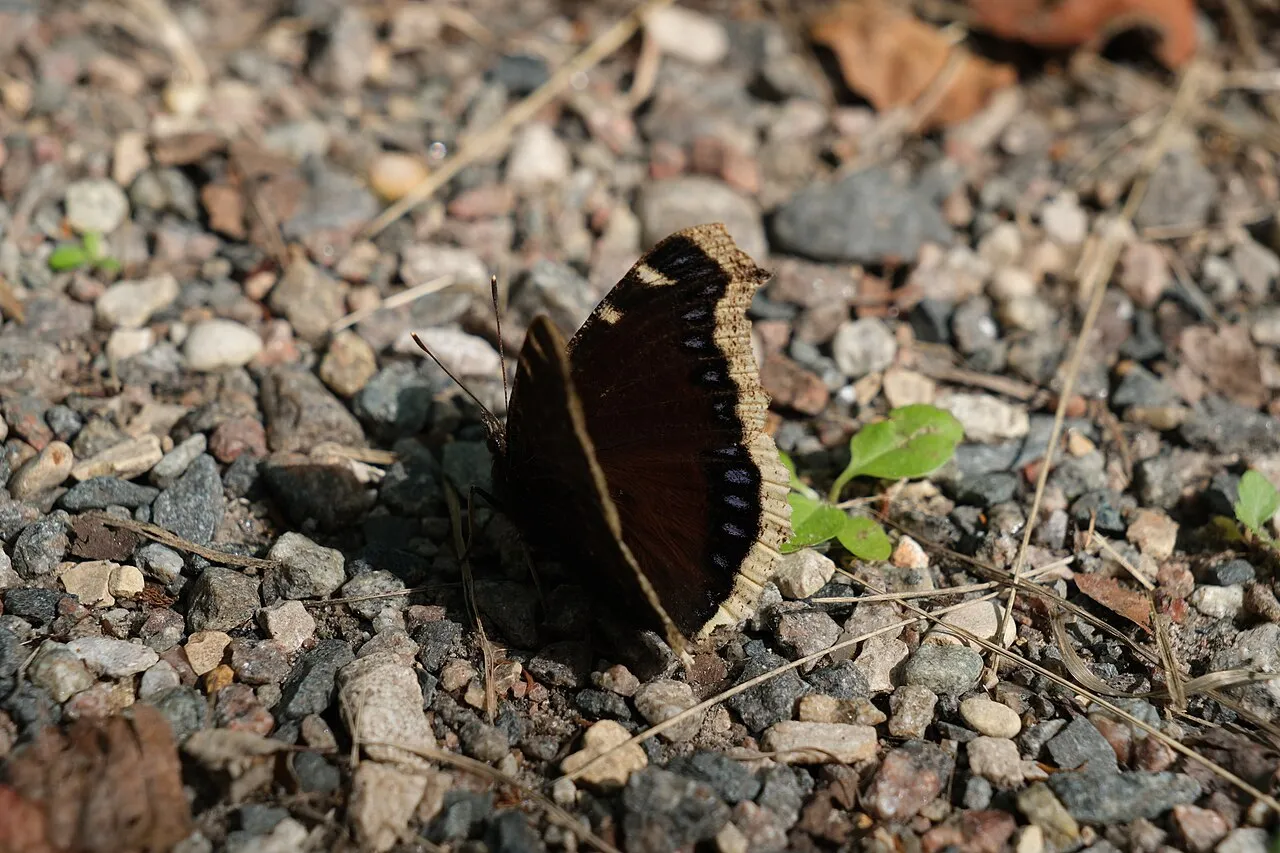
- Mourning cloak / Camberwell beauty (Nymphalis antiopa): a close relative in the same tribe, larger and darker with a pale cream border rather than the Comma’s jagged orange-brown wings, but similarly long-lived as an adult and an early flier in spring. See its profile.
_kkJaX.webp)
_2r3CXC.webp)
_2_rmr34.webp)
_Melanargia_galathea_-_Foret_de_Bouconne__France_-_male_ZVEkr8.webp)