Contents
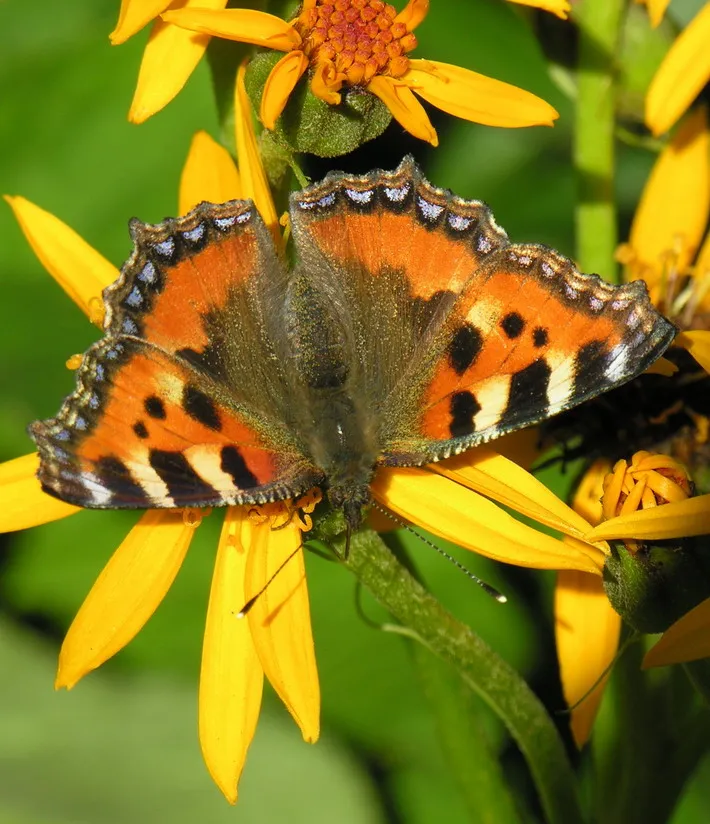
The small tortoiseshell, Aglais urticae, is a common orange, black and yellow butterfly found across much of Eurasia. It belongs to the family Nymphalidae, and its caterpillars feed almost entirely on nettles. The species ranges across temperate Europe, Asia Minor, Central Asia and Siberia, east to China, Nepal, Mongolia, Korea and Japan, with a few introduced records from New York City.
Identification
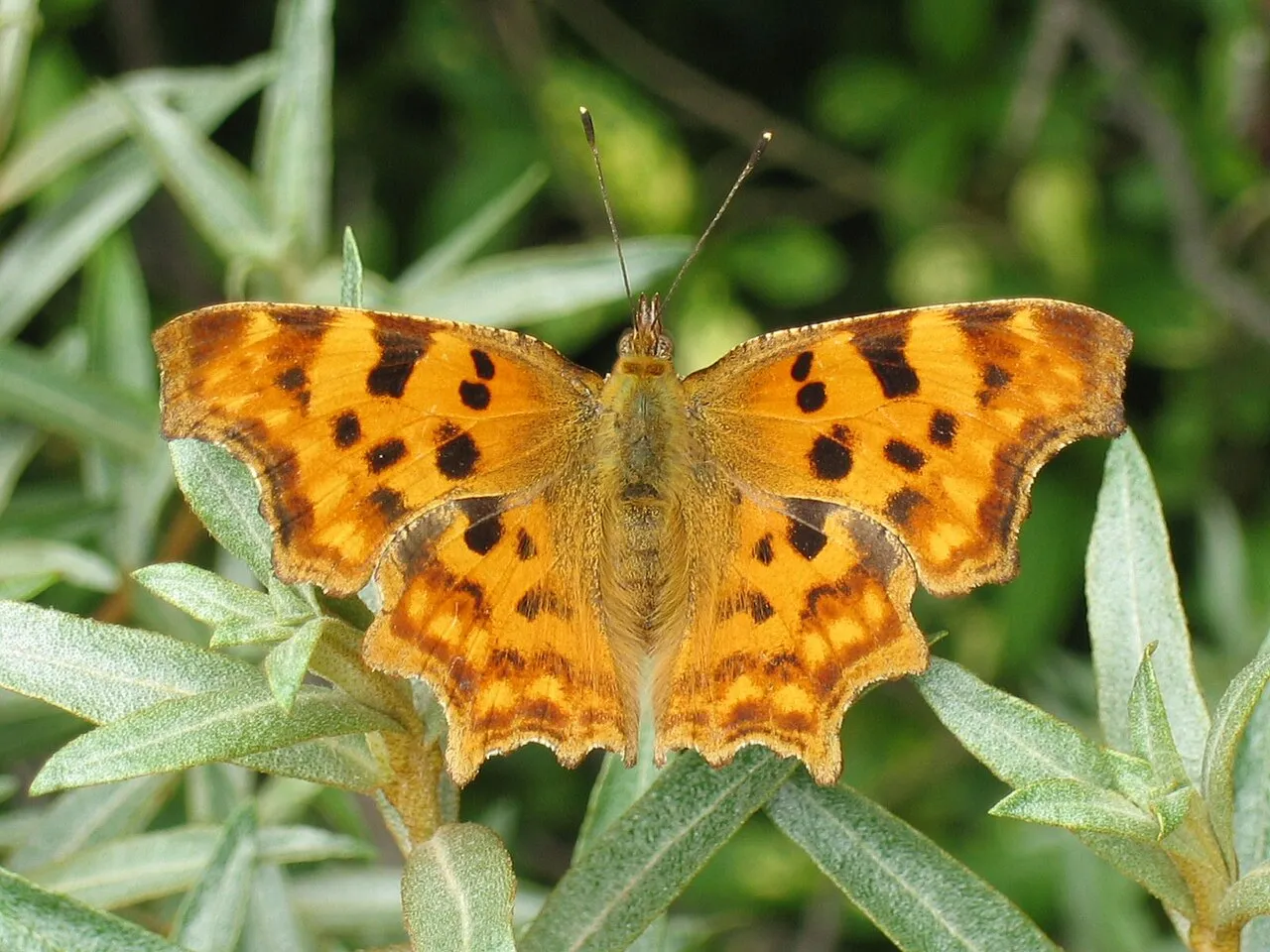
The small tortoiseshell has a wingspan of 45 to 62 mm, noticeably smaller than its relative the peacock. Its upperside combines orange, black and yellow patches with a row of blue spots along the black wing border, a pattern that makes it one of the more instantly recognisable European butterflies. The forewings carry black blotches on an orange ground near the body, shading to yellow patches further out, while the wing margins themselves are black with the line of blue crescents running along them. The underside is drabber, a camouflaged dark brown that helps a resting or hibernating adult blend into bark, leaf litter or a dim shed; a butterfly folded up this way with its wings closed can look like little more than a dead leaf to a passing predator.
Range and habitat
The butterfly is highly adaptable, turning up wherever common nettle grows, from city centres and gardens to mountain tops, and it favours field margins and short thickets within that range. That tolerance for disturbed and cultivated ground is part of why it remains one of the more familiar butterflies to non-specialists: it does not need untouched countryside, only a patch of its host plant and some shelter nearby. Its distribution stretches from temperate Europe, Asia Minor, Central Asia and Siberia, east to China, Nepal, Mongolia, Korea and Japan, making it one of the most widely distributed butterflies on the continent. A few individuals have even been recorded in New York City, almost certainly introduced rather than natural colonists, since the species has no established foothold anywhere in North America.
Life cycle and host plants
Caterpillars feed on common nettle (Urtica dioica) and small nettle (Urtica urens), and occasionally on hop (Humulus lupulus). The close tie to nettles explains why gardeners who leave a nettle patch standing are often rewarded with a crop of small tortoiseshells later in the year.
The species can produce one generation a year in the north of its range and two in the south, a pattern driven by how much of the season is warm enough for caterpillars to develop and adults to mate before winter. It overwinters as an adult, tucking into a shed, hollow tree or similar sheltered crevice rather than surviving the cold as an egg, caterpillar or chrysalis the way many other butterflies do.
Behaviour and flight period
Few Eurasian butterflies are on the wing for as long as the small tortoiseshell. It has one of the longest flight seasons of any Eurasian butterfly, running from early spring to late autumn, and in Britain adults emerge from late March and can be seen year-round during mild spells, since hibernating adults will wake and fly on a sunny winter afternoon before returning to shelter. That long season, combined with its tolerance of gardens, parks and roadsides, makes it one of the most frequently seen butterflies across its range.
Similar species
- Peacock (Aglais io): a close relative in the same genus, also found across much of Eurasia and sharing a liking for nettle patches, but told apart at a glance by the large eyespots on each wing rather than the small tortoiseshell’s blue-spotted black border.
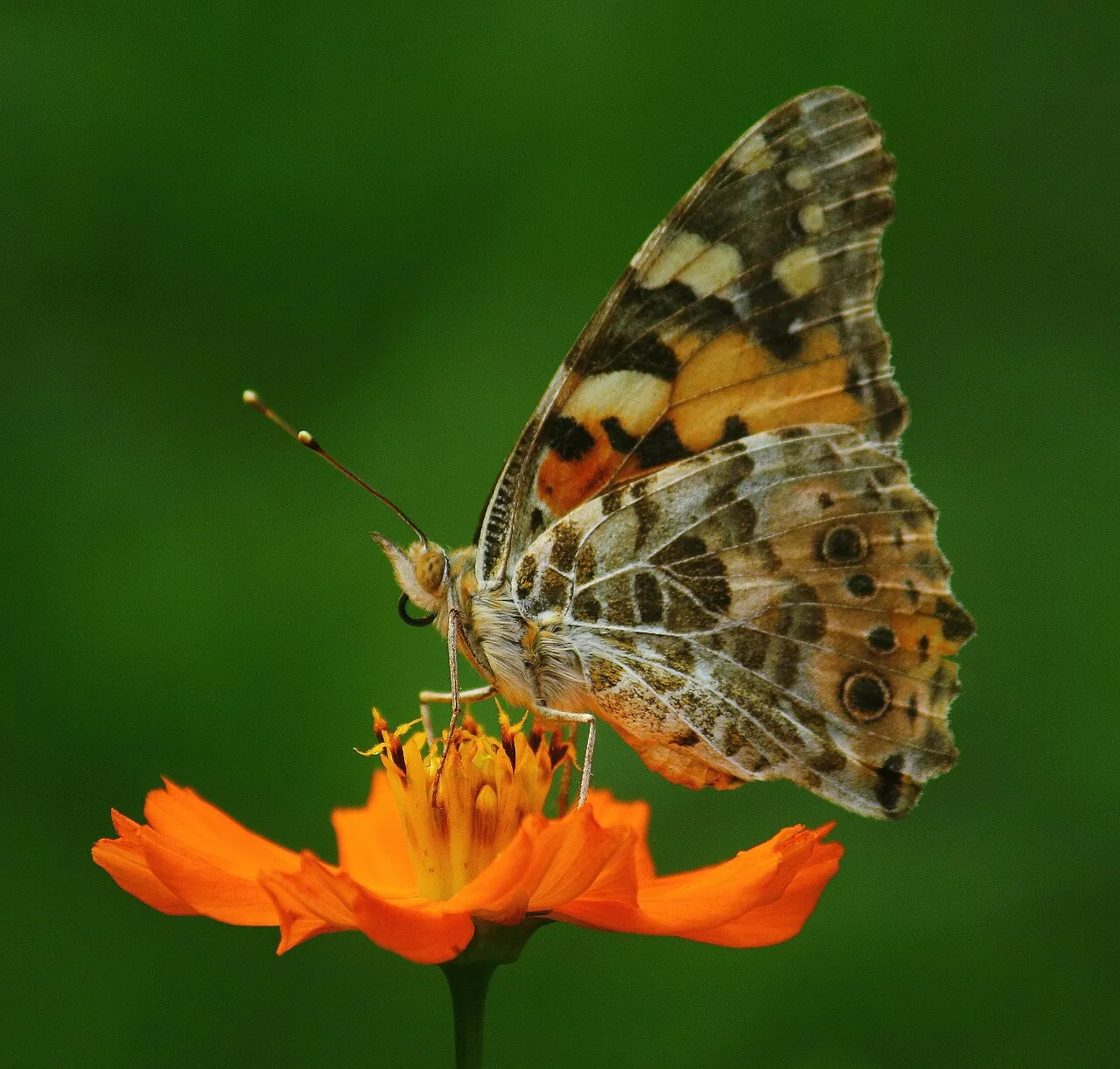
- Red admiral (Vanessa atalanta): another common, wide-ranging nymphalid with orange and black wings, but patterned with bold red-orange bands rather than the small tortoiseshell’s mix of orange, yellow and black patches. See its profile.
_kkJaX.webp)
_2r3CXC.webp)
_2_rmr34.webp)
_Melanargia_galathea_-_Foret_de_Bouconne__France_-_male_ZVEkr8.webp)