Contents
The mourning cloak, Nymphalis antiopa, is a dark butterfly of the family Nymphalidae, named for wings that look dressed for grief until the sun catches their pale border. It is one of the few butterflies that overwinters as an adult, which lets it appear on the wing on the first mild days of late winter, often before anything else is flying. The species ranges across North America from the Alaskan and Canadian tundra line south to central Mexico, and separately across northern Eurasia and temperate Asia east to Japan, but is absent from subtropical regions.
Identification
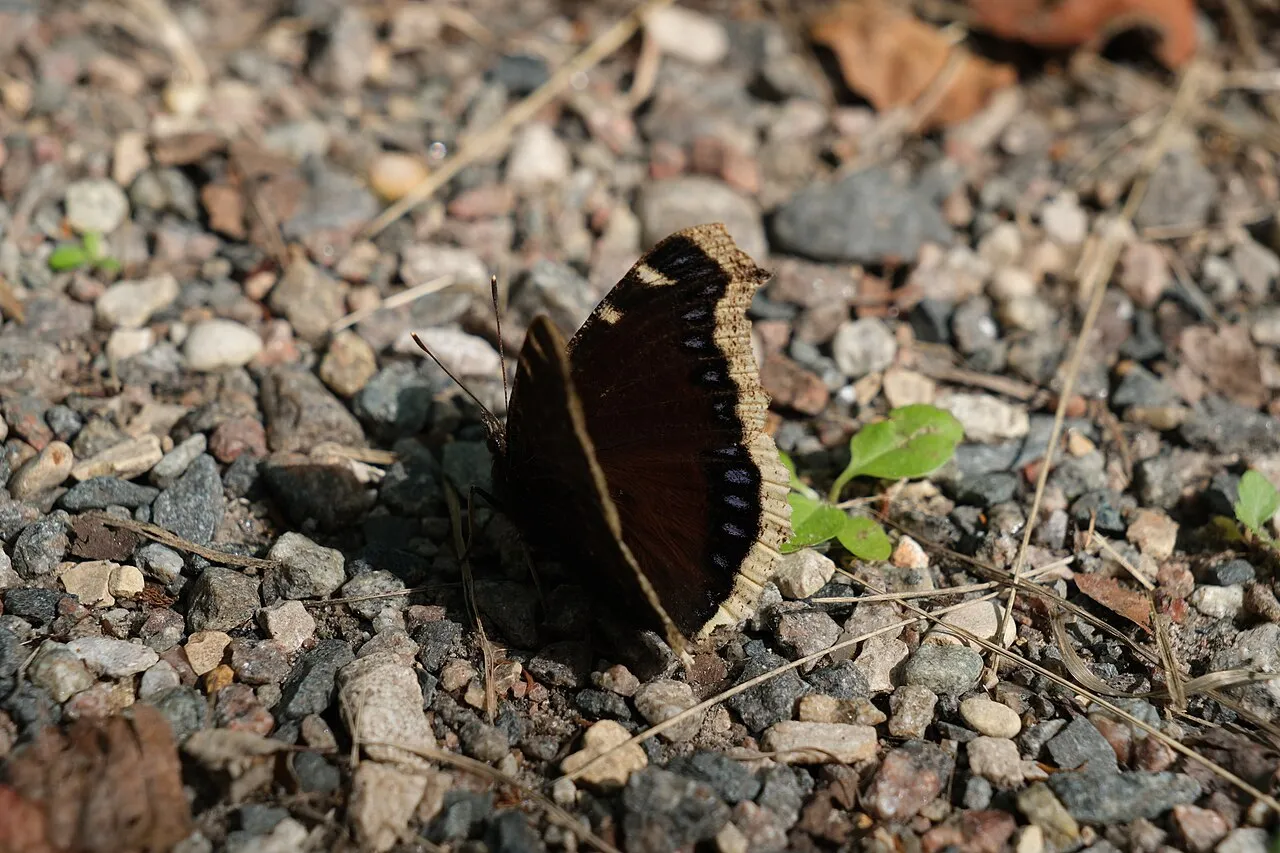
The mourning cloak has a wingspan of 73 to 86 mm, making it one of the larger nymphalids on this site. The upperside is a deep maroon-brown, bordered by a band of cream to pale yellow and, inside that, a row of iridescent blue spots; the underside is a mottled, bark-like dark brown that hides a resting butterfly against tree trunks. The sexes look alike, which is unusual among the showier butterflies on this site, and both share the same hibernating habit as adults.
Range and habitat
The mourning cloak favours watercourses, sunny glades, forest borders, parks, gardens, open woodlands and groves, a mix of open and wooded ground that suits both its willow and elm host plants and its need for sheltered places to pass the winter. For hibernation, adults tuck themselves into sheltered spots such as house eaves and crevices in tree bark, emerging again once temperatures allow.
Life cycle and host plants
Caterpillars feed on a broad range of woody plants, including willow, elm, hackberry, cottonwood, poplar, rose, birch and mulberry, a diet wide enough that the species rarely runs short of food plants across its range. Depending on where a population lives, there are 2 to 3 generations a year, with the number set by the latitude and altitude of the site: populations further north or higher up tend toward fewer broods than those in milder, lower-lying places.
Behaviour and flight period
Unlike butterflies that pass the cold months as an egg, caterpillar or chrysalis, the mourning cloak overwinters as an adult. In North America this makes it active almost all year, chiefly in spring, late summer and early fall, with adults emerging from hibernation before the snow has fully melted and often the first butterfly seen in a season. That early flight gives the species a head start on finding mates and host plants well ahead of butterflies that must first complete a full life cycle from egg.
Conservation
The species is listed by the IUCN under the category shown in the facts box, taken from its Wikidata record.
Similar species
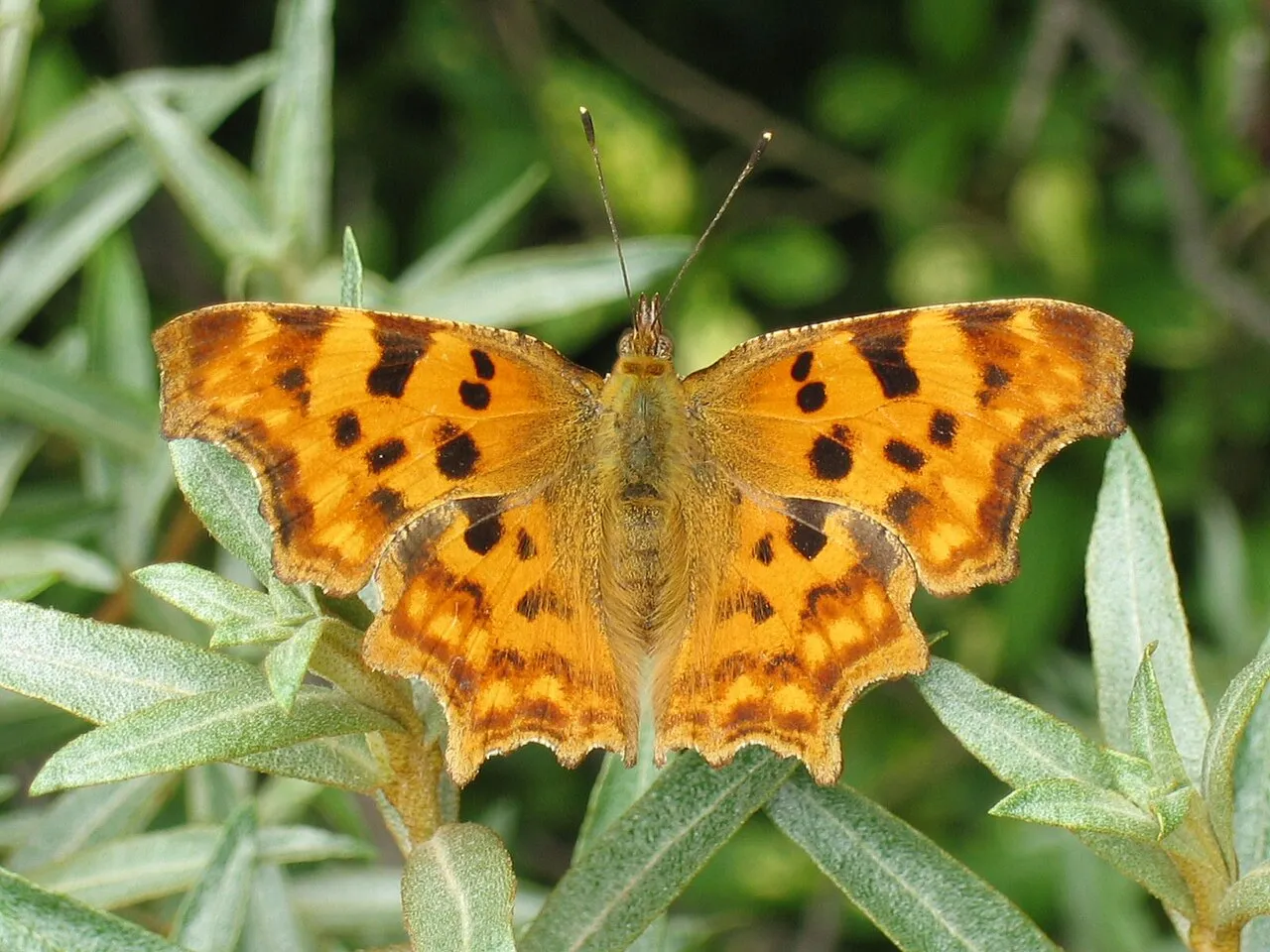
- Compton tortoiseshell (Nymphalis vaualbum): a close relative in the same genus, sharing the ragged wing outline and a similar bark-coloured underside, though its upperside pattern lacks the mourning cloak’s broad cream border.
- Red admiral (Vanessa atalanta): another overwintering nymphalid found across much of the mourning cloak’s range, but distinguished at a glance by its bright red-orange wing bands rather than a pale border.
_1Ylt3R.webp)
_Nymphalis_xanthomelas_anna_-_Pologne_-_male_X5gMY.webp)
_kkJaX.webp)
_2r3CXC.webp)