_dia-001_Z2riDe4.webp)
Contents
The violet fritillary, Boloria dia, is a small orange-and-black fritillary of the family Nymphalidae. It ranges across Europe and the Caucasus east through the Palearctic to Mongolia, from northern Spain, Italy and Greece to Poland, the Balkans and Turkey, but is absent from Britain.
Identification
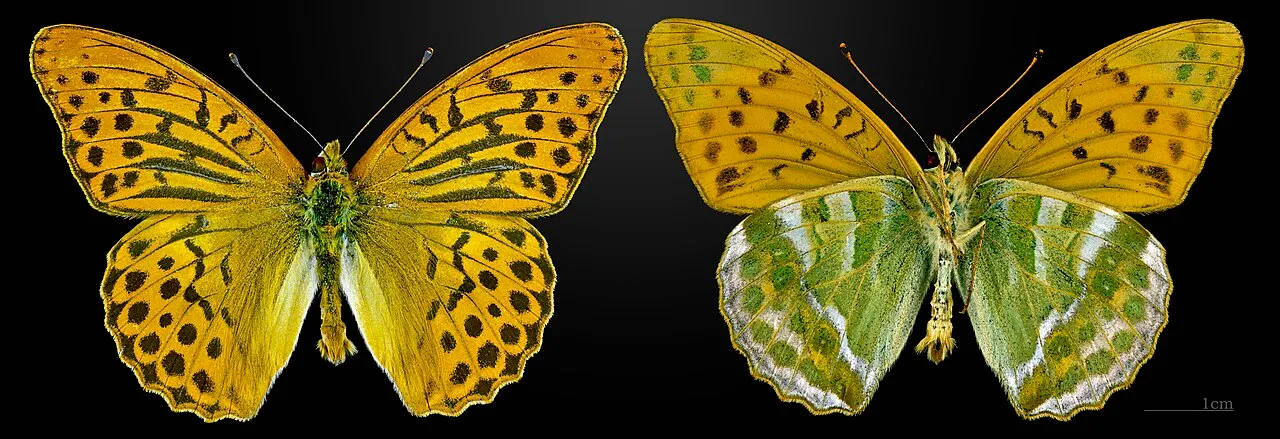
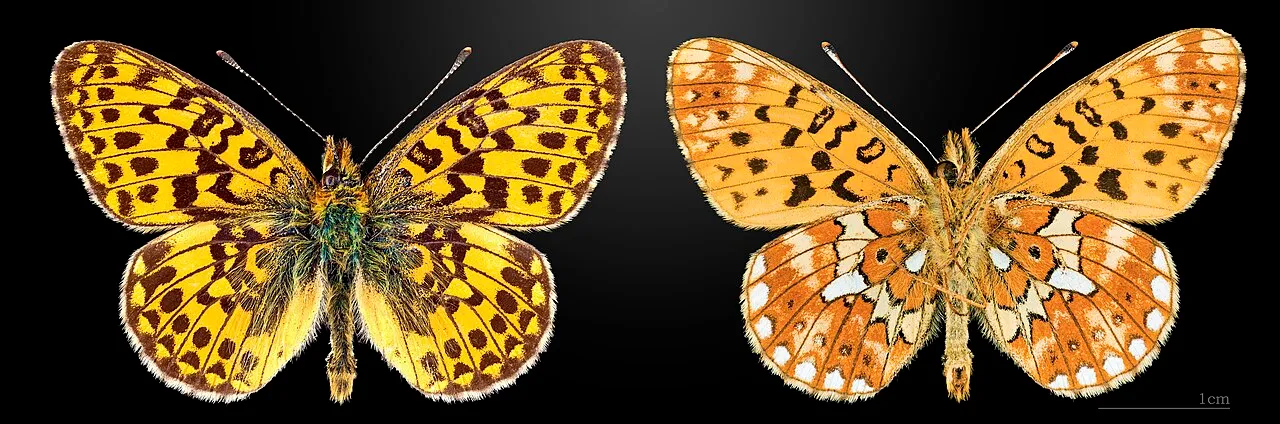
The violet fritillary is among the smaller fritillaries, with a wingspan of about 32–34 mm and a forewing length of 16–17 mm. Like other Boloria species it carries the orange ground colour, black spots and checkered margins typical of the genus, with the underside giving the more reliable mark between the sexes and between similar species.
Range and habitat
Within its wide Palearctic range the species favours open places and clearings in woodland, where it flies low to the ground and visits flowers. This liking for sunny, open ground links its distribution directly to the places where its violet host plants grow.
Life cycle and host plants
Caterpillars feed on violets, chiefly Viola odorata, V. hirta, V. canina and V. reichenbachiana, and also V. tricolor, across Europe. Outside Europe the species has also been recorded feeding on self-heal (Prunella vulgaris) and raspberry (Rubus idaeus), a wider host range than most of its European relatives. The species overwinters as a caterpillar, resuming growth the following spring to pupate and emerge as the first brood of adults.
Behaviour and flight period
The violet fritillary is double-brooded across most of its range, on the wing from April to May and again from August onward in Europe, with two generations produced each year. This gives it a longer season on the wing than single-brooded fritillaries that share its open, flowery habitat.
Similar species
- Pearl-bordered fritillary (Boloria euphrosyne): a close relative in the same genus, best told apart by the underside hindwing pattern.
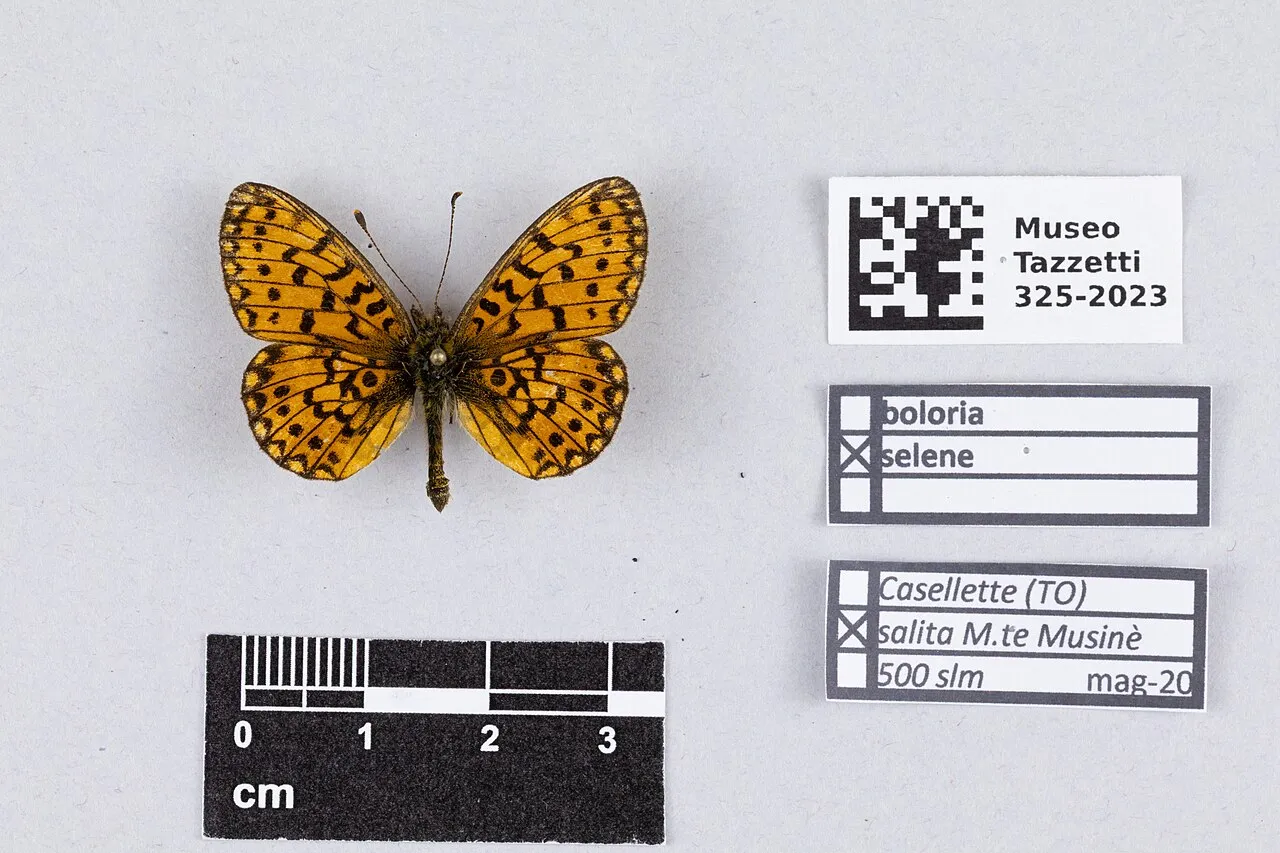
- Small pearl-bordered fritillary (Boloria selene): another similarly sized Boloria found in overlapping open and woodland-edge habitat.
_kkJaX.webp)
_2r3CXC.webp)