Contents
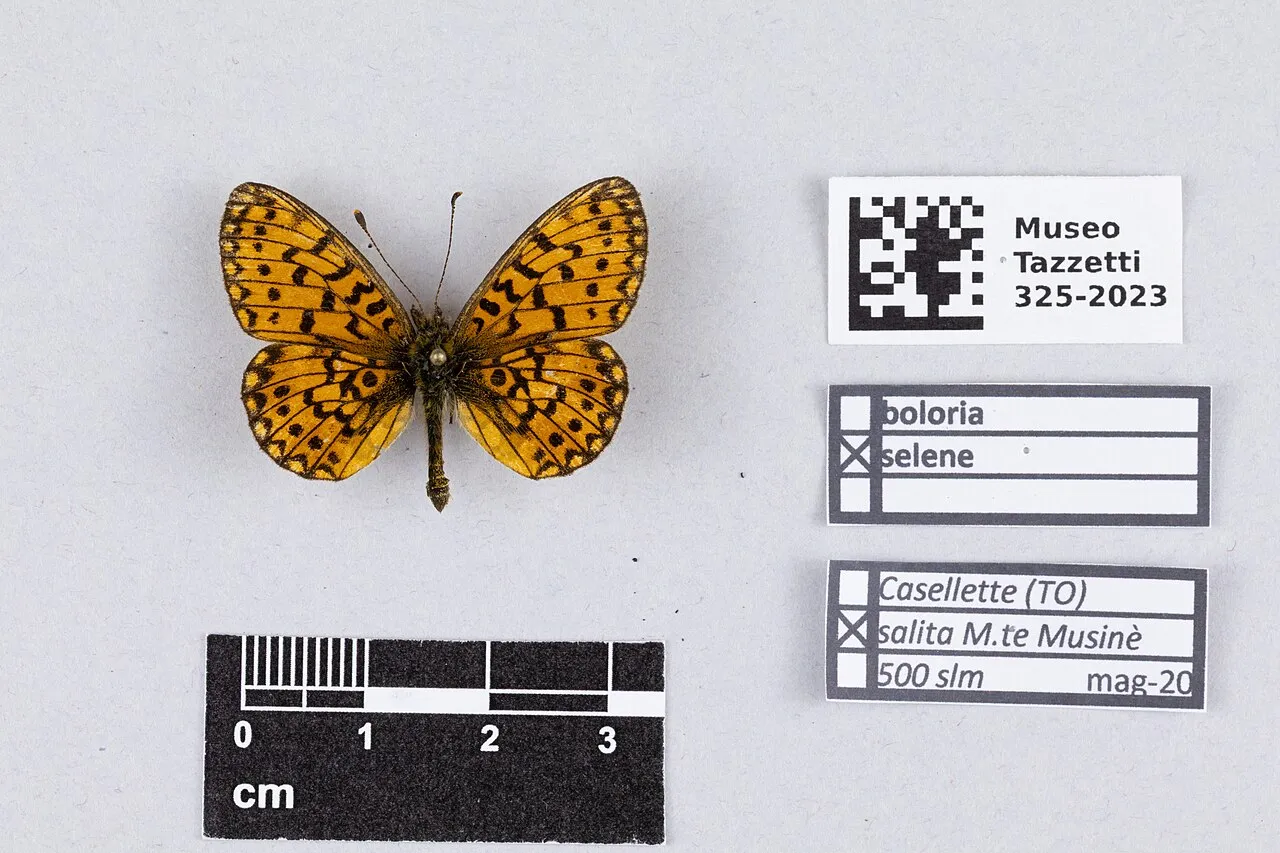
The small pearl-bordered fritillary, Boloria selene, is a small orange-and-black fritillary of damp grassy ground. It belongs to the family Nymphalidae, in the genus Boloria. The species ranges across central and northern Europe and Asia as far as Korea, and also occurs in North America, for instance in Iowa and the Dakotas. In Britain it is widespread across upland and western areas but absent from central and eastern England.
Identification
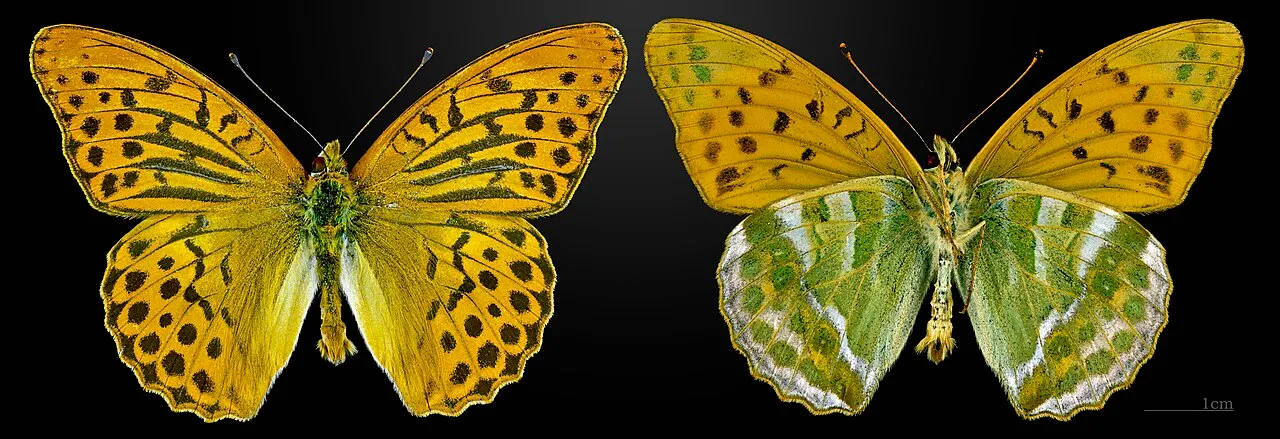
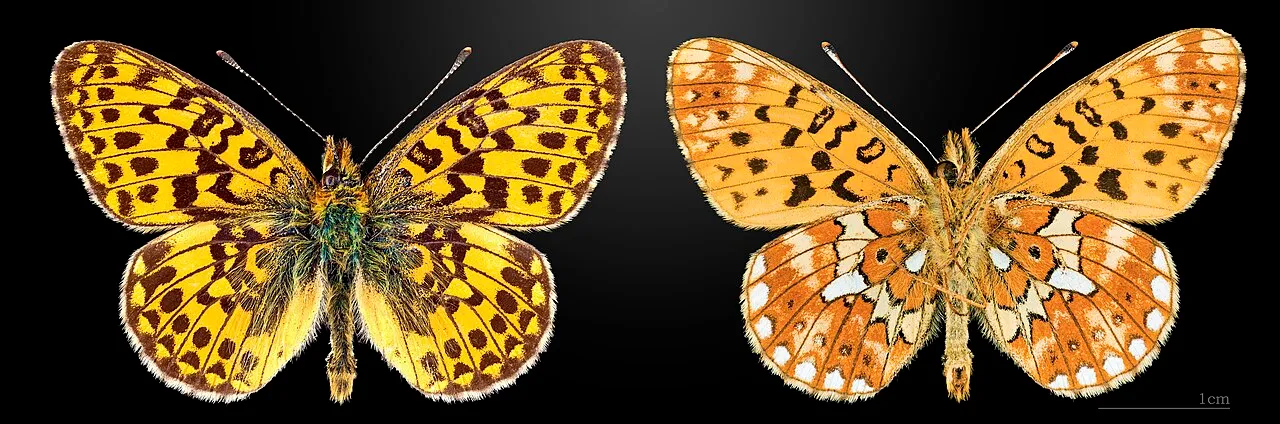
It is a small butterfly, with a wingspan of 35 to 44 mm, males running 35 to 41 mm and females 38 to 44 mm. The name comes from the row of silvery “pearls” along the edge of the hindwing underside, a pattern it shares with its close relatives in the genus. As in other fritillaries, the sexes differ mainly in size, with females the larger of the two.
Range and habitat
The species favours damp, grassy habitats, woodland clearings, moorland, marshland and dune slacks where violets grow. The habitat shifts with latitude: English colonies favour clearings in deciduous woodland, while northern colonies occupy more exposed moorland and marsh.
Life cycle and host plants
Caterpillars feed on violets, chiefly common dog-violet (Viola riviniana) on drier sites and marsh violet (Viola palustris) on wetter ones. The species overwinters as a caterpillar, resuming feeding on violets the following spring before pupating.
Most populations fly as a single generation a year, though south-west England produces a partial second brood in August.
Behaviour and flight period
Timing on the wing varies across Britain: adults emerge from early May in south-west England, mid-to-late May elsewhere in England, and June in Scotland. Where a partial second brood appears in south-west England, it flies in August, while elsewhere the species keeps to its single summer brood. Adults spend their short flight period feeding and mating around the violet-rich clearings and damp ground where their caterpillars will later develop.
Similar species
- Pearl-bordered fritillary (Boloria euphrosyne): the classic confusion species, similar in size and pattern and often flying alongside it in spring; told apart mainly by the arrangement of silver spots on the hindwing underside.
- Marsh fritillary (Euphydryas aurinia): a similarly small fritillary of damp grassland, but with a chequered orange, buff and brown pattern rather than the plain orange-and-black of Boloria selene.
_dia-001_Z2riDe4.webp)
_kkJaX.webp)
_2r3CXC.webp)