Contents
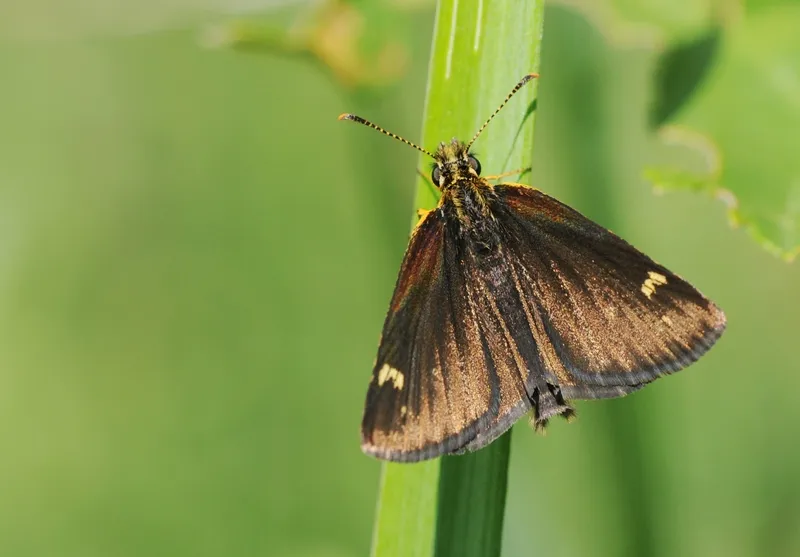
The mallow skipper, Carcharodus alceae, is a small, fast-flying butterfly of the family Hesperiidae, named for the mallow plants its caterpillars eat. It is one of the most widespread skippers of the Old World, ranging across southern and central Europe, north-west Africa from Morocco to Libya, the Middle East, Asia Minor, the Caucasus, northern India, Middle and Central Asia, the western Himalayas and south-western Siberia.
Identification
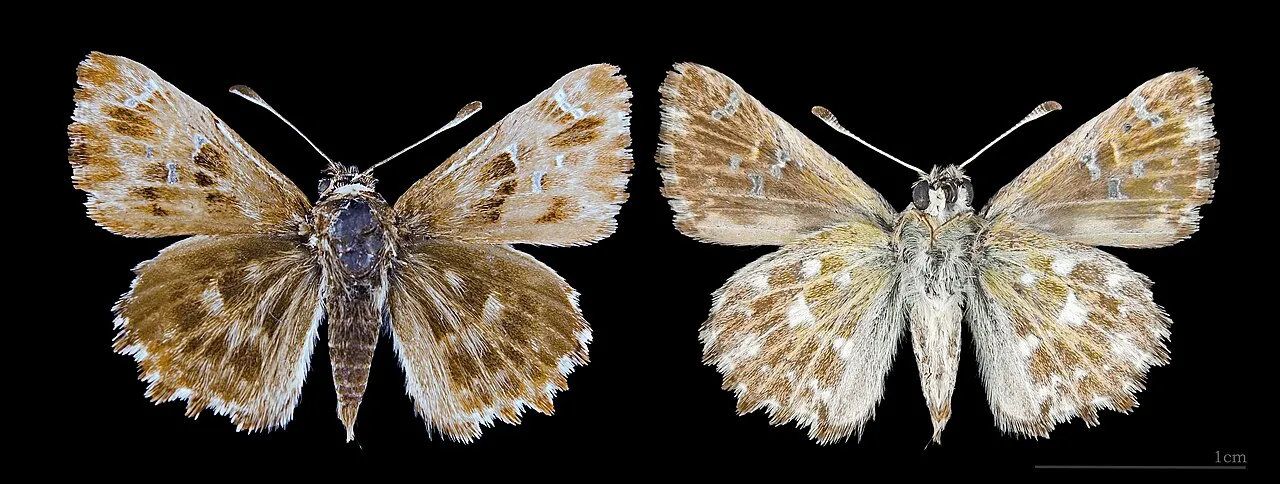
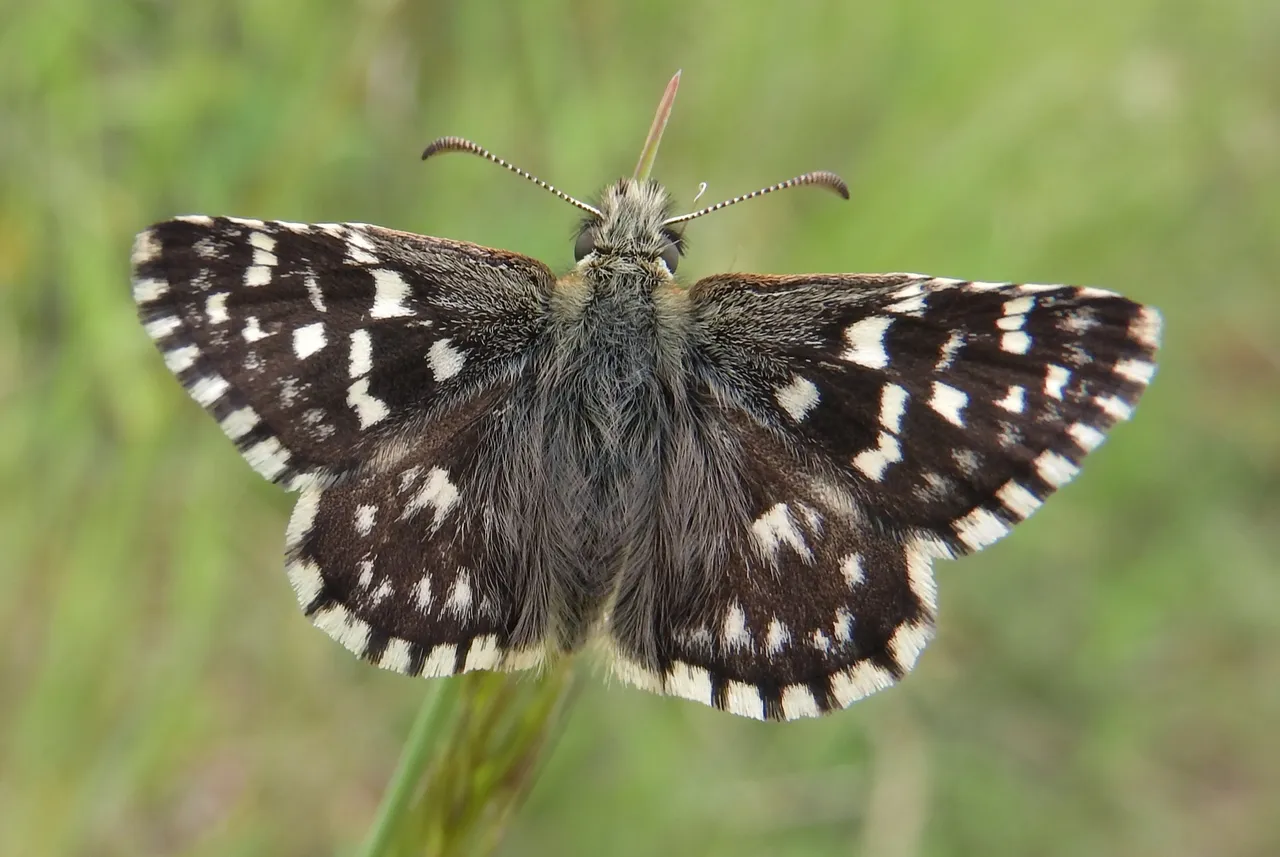
This is a small butterfly, with a wingspan of 28 to 32 mm. The upperside of the forewings is pinkish brown, patterned with roughly square brown markings, short white transverse stripes running in from the edge, and clear patches on the central area of the wing. The hindwings are brownish or grey-brown on the underside, with a few prominent brighter spots, and the hindwing edge is toothed. The forewings also carry small unscaled “glass spots” with dark surrounds, and the antennae end in cherry-brown tips. Males lack the hair tufts on the underside of the forewing that the related Carcharodus flocciferus has, one of the few reliable ways to tell the two apart; the toothed hindwing edge and the dark-ringed glass spots on the forewing are themselves the easiest field marks for the mallow skipper as a whole.
Range and habitat
This is one of the most widely distributed skippers in the Old World, found from the western Mediterranean to south-western Siberia and northern India. Within that broad range the species favours dry, warm, stony ground, wasteland, ruderal areas and gardens, up to about 1,100 m elevation. It is a powerful flier able to colonise new habitat quickly, which helps explain why it turns up in disturbed and man-made ground, such as roadsides and waste lots, as readily as in wilder, stony places.
Life cycle and host plants
As the common name suggests, caterpillars feed on mallows, including Malva alcea, Malva sylvestris, Malva moschata, Althaea officinalis and Lavatera thuringiaca, as well as Hibiscus species. The caterpillar is dark grey, covered with small white dots and short white hairs, with a black head marked by yellow spots separated by black stripes, and it grows to about 23 mm before pupating. A feeding caterpillar is easy to spot even without seeing the animal itself: it folds and spins a leaf into a “leaf bag”, an unmistakable sign of its presence on a host plant. The species overwinters as a fully grown caterpillar and pupates the following spring without feeding again; it leaves the host plant to do so, and exactly where it spends the winter, probably somewhere in the leaf litter, is apparently still unknown. Adults take nectar from herbaceous plants and often gather to drink at damp patches on unpaved roads.
Behaviour and flight period
Adults are on the wing from April to October depending on the region, with usually two generations in Central Europe, in April–May and again in July, and three or more generations further south. The long flight season and the extra generations in warmer parts of its range both track the milder, longer growing seasons toward the south of its distribution. Adults are strong, fast fliers, a trait that lets the species colonise newly disturbed ground soon after it appears.
Similar species
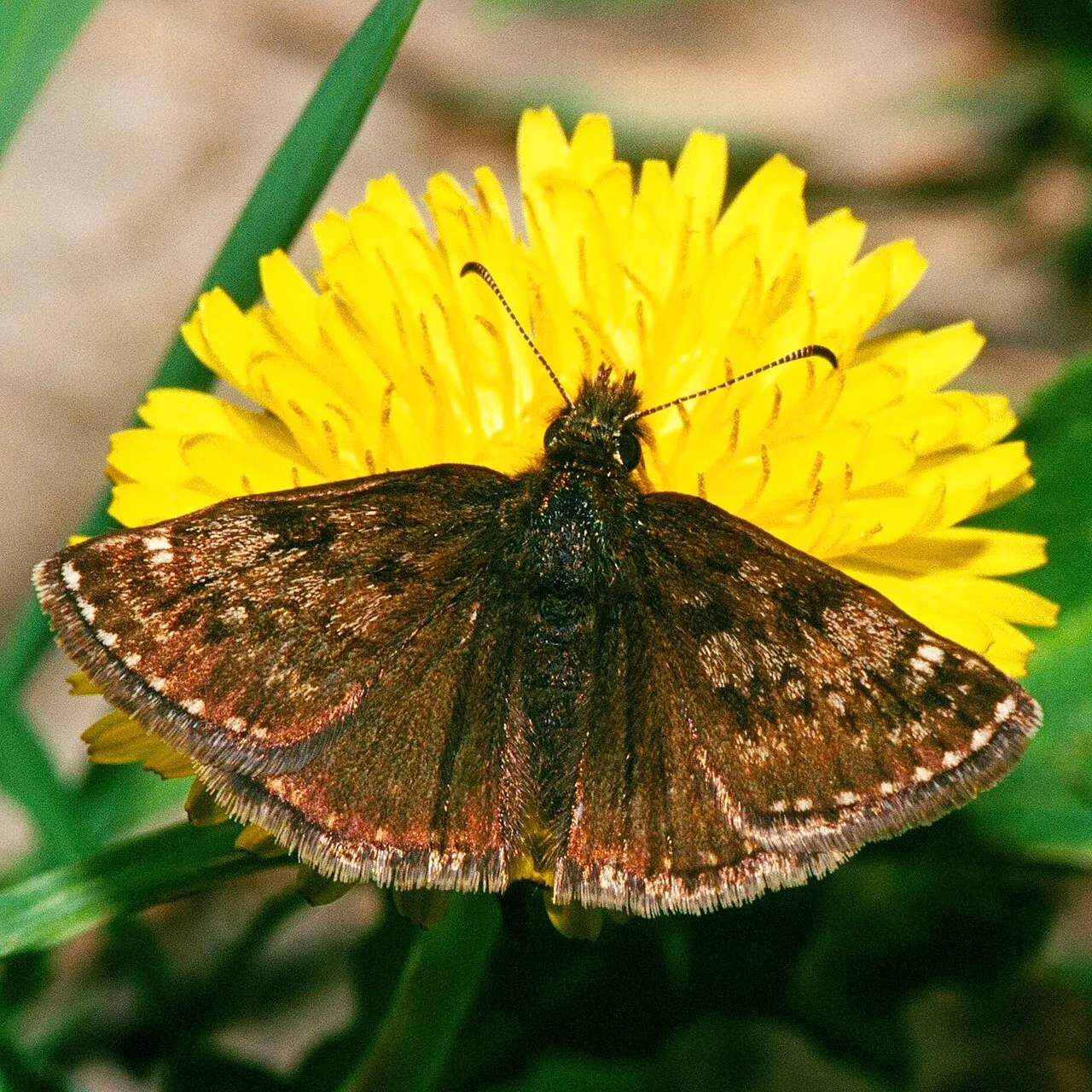
- Dingy skipper (Erynnis tages): a similarly small, mottled brown skipper found across much of the same Western Palearctic range, though its markings are duller and less sharply patterned.
- Grizzled skipper (Pyrgus malvae): another small brown skipper that shares the mallow skipper’s liking for dry, flowery ground, but shows a checkerboard of white spots rather than the mallow skipper’s pinkish-brown ground colour.
- False mallow skipper (Carcharodus tripolinus): despite the name, almost indistinguishable from the mallow skipper in the field.
- Marbled skipper (Carcharodus lavatherae): also very similar to the mallow skipper.
- Carcharodus flocciferus: a close relative without an established English name; males are safely told apart from the mallow skipper by the hair tufts on the forewing underside, which the mallow skipper lacks.
_Z1PwpAL.webp)
_Thymelicus_lineola_-_St_Foy_d'Aigrefeuille_-_France_-_male_ZAC1oH.webp)
_Ochlodes_sylvanus_-_Foret_de_Bouconne__France_-_male_73F1g.webp)
_Thymelicus_sylvestris_-_Foret_de_Bouconne__France_-_male_Z1dCd98.webp)