Contents
Oberthür’s grizzled skipper, Pyrgus armoricanus, is a small butterfly of the family Hesperiidae, one of several chequered, fast-flying skippers that are difficult to separate in the field without a close look. The species ranges from northwest Africa across southern and parts of central Europe to southern Scandinavia, east to southern Russia and across Asia Minor to Iran, though it is absent from the British Isles.
Identification
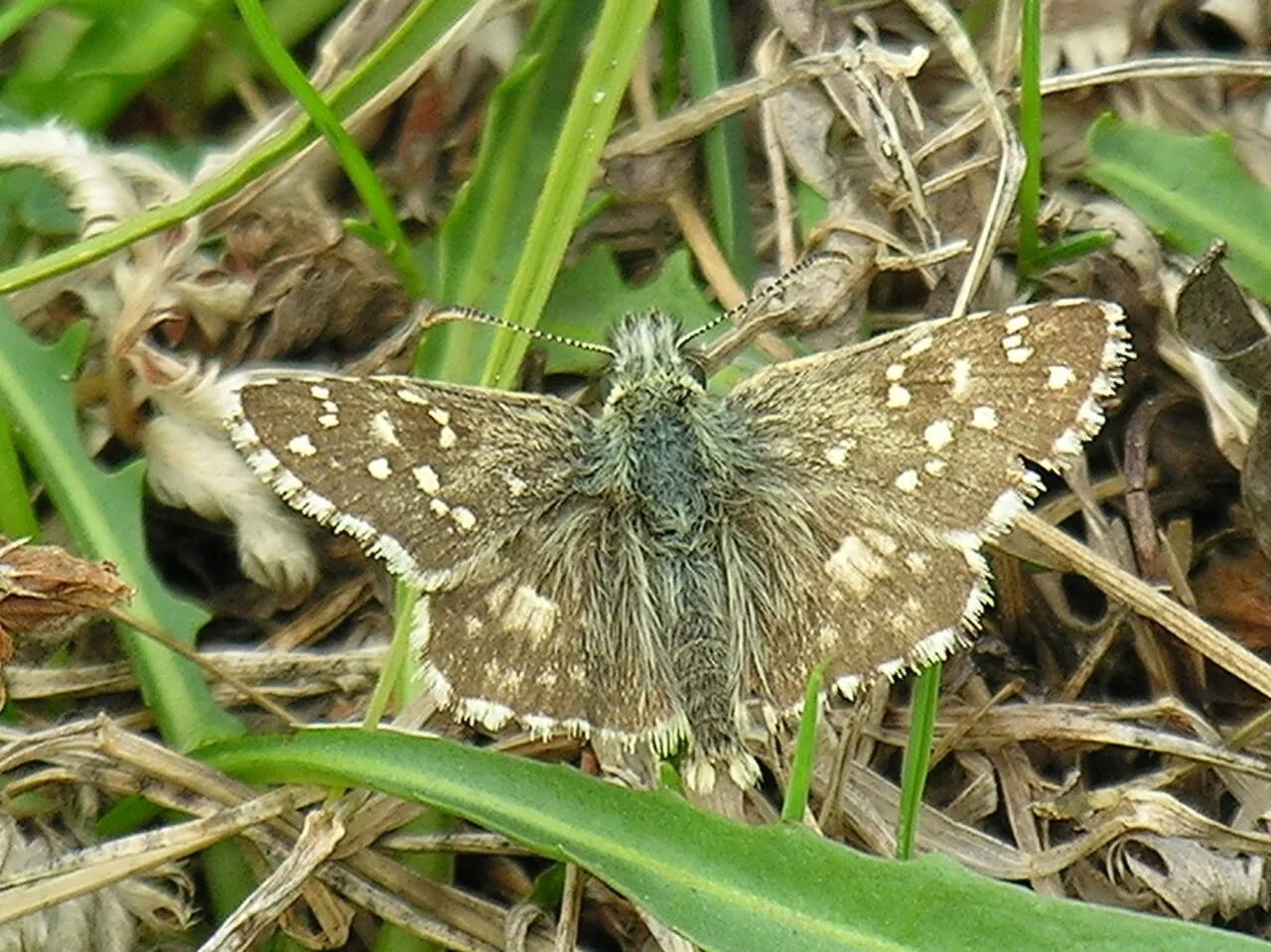
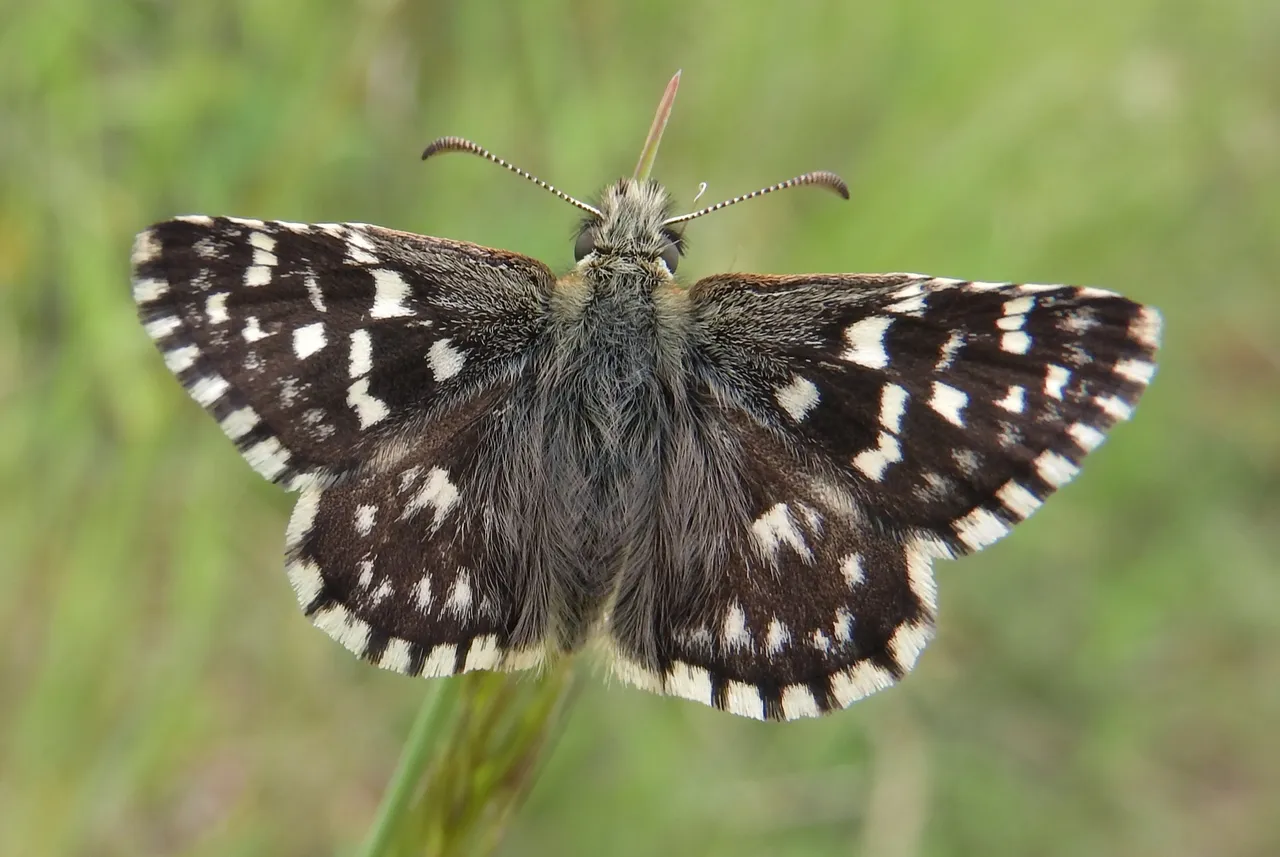
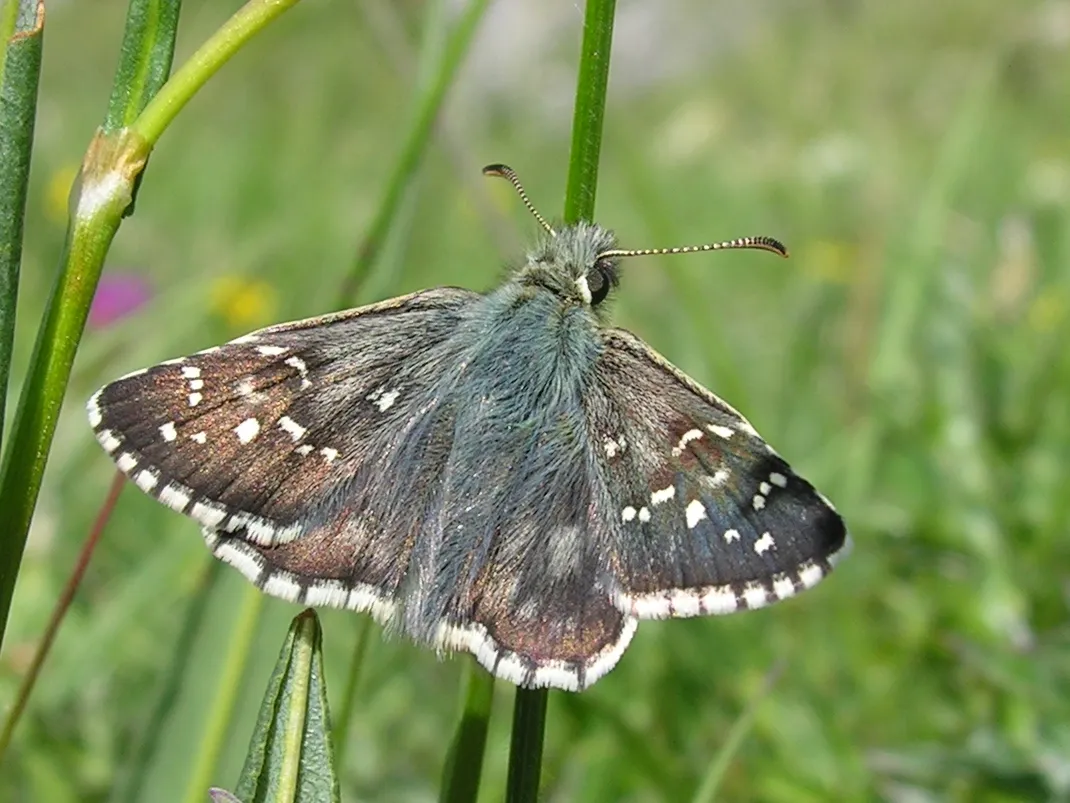
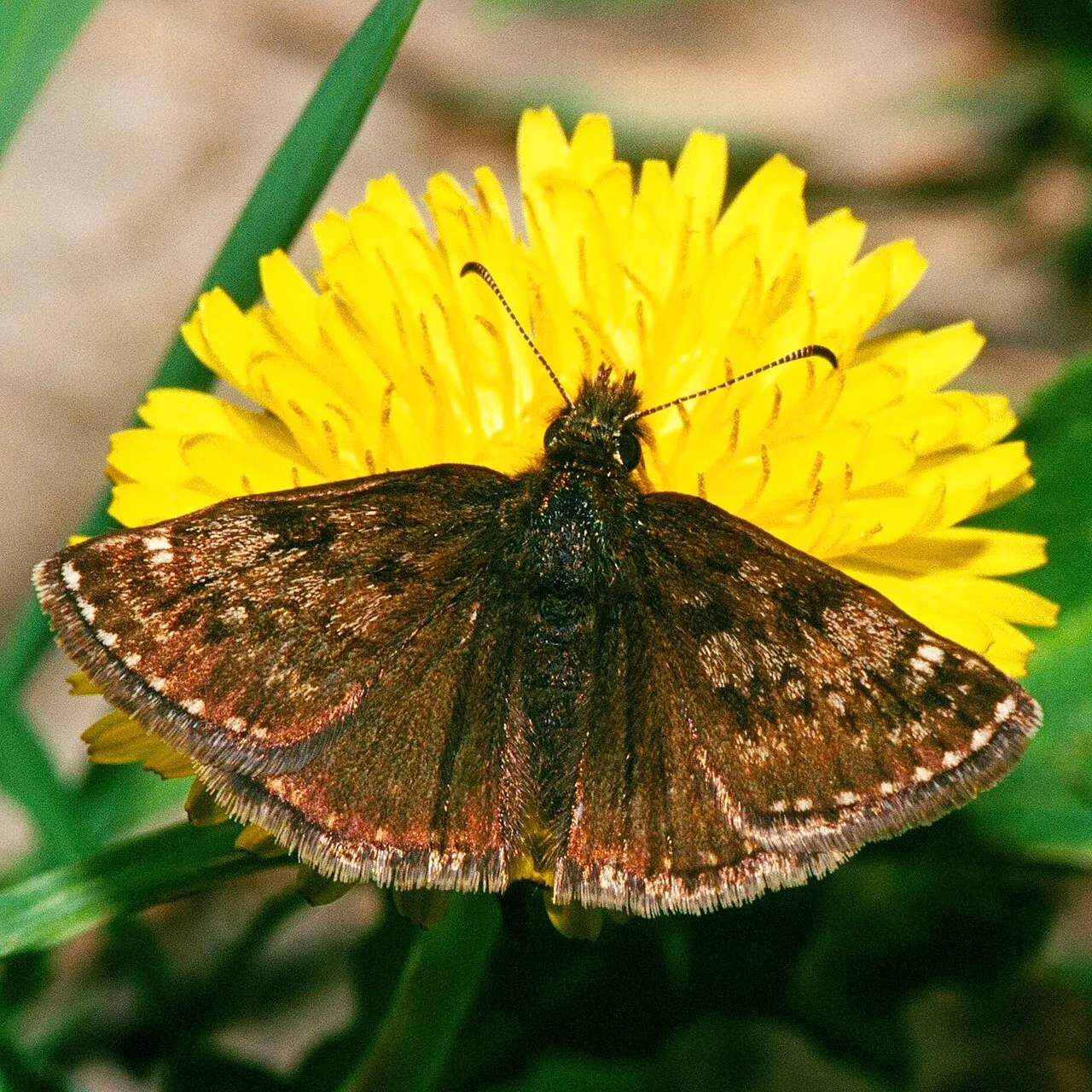
This is a small skipper, with a wingspan of 24–28 mm. The upperside is dark brown with well-developed white markings on the forewings and grayish marks on the hindwings, while the underside of the hindwing shows a pale reddish-brown ground colour with a large pale discal spot and light-coloured veins, and a white fringe borders both wings. The sexes are hard to tell apart: males and females are virtually identical in colour and pattern. The species is easily confused with its relatives, and identification from the large grizzled skipper, the grizzled skipper, the safflower skipper or the olive skipper often rests on examining the genitalia; when fresh, its forewings run noticeably darker brown and its hindwing spots paler than those of the large grizzled skipper.
Range and habitat
Within its wide range the species lives on open land with raw soils, including semi-dry and sandy grasslands, ruderalized ground and footpaths with sparse vegetation and exposed soil. Caterpillars need this same open structure at a finer scale: larval sites require short, gappy vegetation with patches of bare ground. The butterfly flies from sea level up to 1,800 m, though in Bavaria it is found mainly between 190 and 800 m.
Life cycle and host plants
Caterpillars feed mainly on Potentilla species such as P. tabernaemontani, P. reptans and P. arenaria, on woodland strawberry (Fragaria vesca), and, in Scandinavia, on Filipendula vulgaris; rock-rose (Helianthemum nummularium) is also used, and more than fifteen further Potentilla species are recorded as secondary hosts across the range. The species overwinters as a caterpillar.
Behaviour and flight period
The butterfly flies in two generations across most of its range, from May to June and again from August to September; in Bavaria it typically produces two generations a year, with a partial third possible in exceptionally warm years. Both sexes spend much of their time searching visually for the sparsely vegetated patches of ground they need, whether to bask in the sun or to lay eggs. Because it depends on this patchy, disturbed habitat, the species shows strong fluctuations in numbers from year to year, typical of a butterfly living as a metapopulation scattered across many small sites.
Conservation
The IUCN category in the facts box for this skipper comes from its Wikidata record.
Similar species
- Grizzled skipper (Pyrgus malvae): a close relative sharing much of its range and the same chequered pattern, told apart reliably only by close inspection or genital examination.
- Large grizzled skipper (Pyrgus alveus): a slightly larger look-alike whose upperside hindwing spots are noticeably darker than Oberthür’s grizzled skipper’s when both are seen fresh.
_Thymelicus_lineola_-_St_Foy_d'Aigrefeuille_-_France_-_male_ZAC1oH.webp)
_Ochlodes_sylvanus_-_Foret_de_Bouconne__France_-_male_73F1g.webp)