Contents
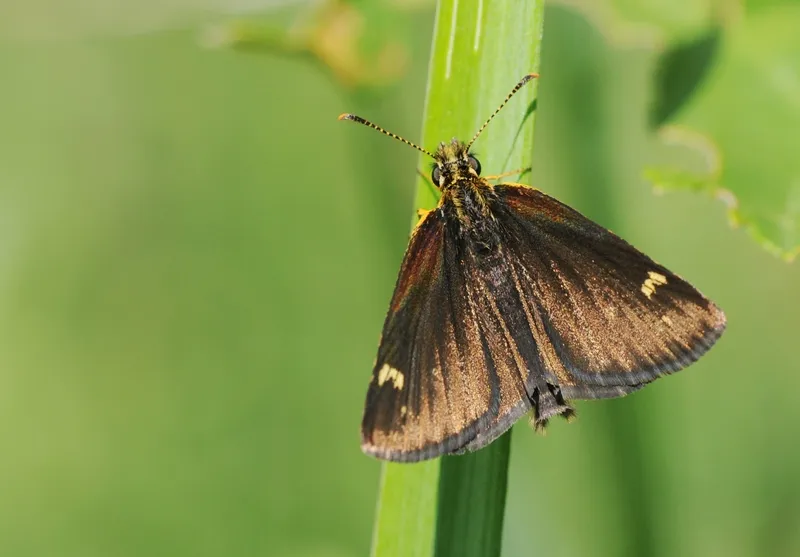
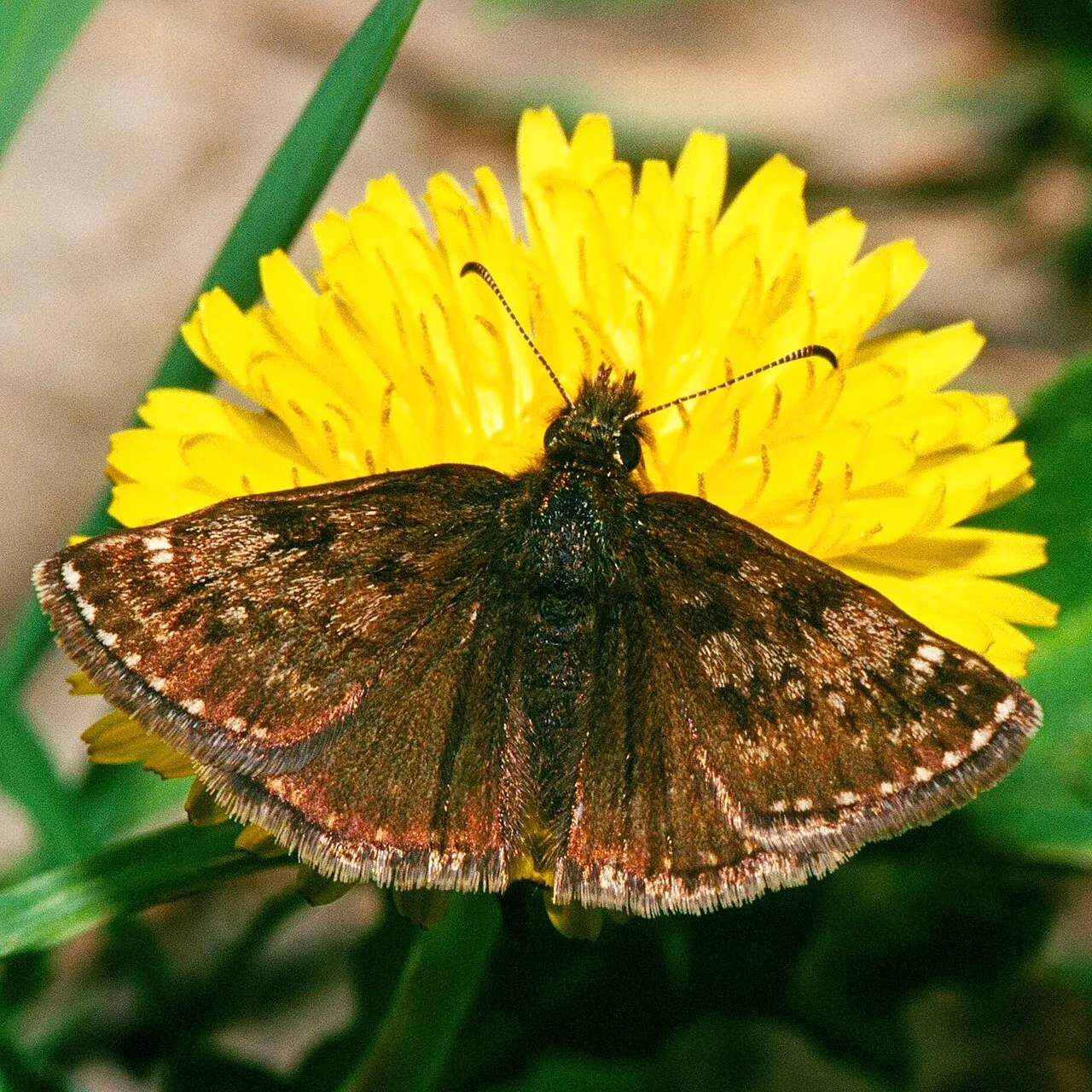
The dingy skipper, Erynnis tages, is a small, drab butterfly of the family Hesperiidae, often mistaken for a moth because of its grey-brown colouring and the tent-like, wings-closed posture it adopts at rest. Its range runs from the Iberian Peninsula and Ireland eastward across the Caucasus to Pakistan and southern China, reaching the Pacific coast of East Asia and following roughly 62°N as its northern limit. Within that range it keeps to open, sun-baked ground rather than lush vegetation, which makes it a butterfly of quarries, downland and waste ground as much as of wild countryside.
Identification
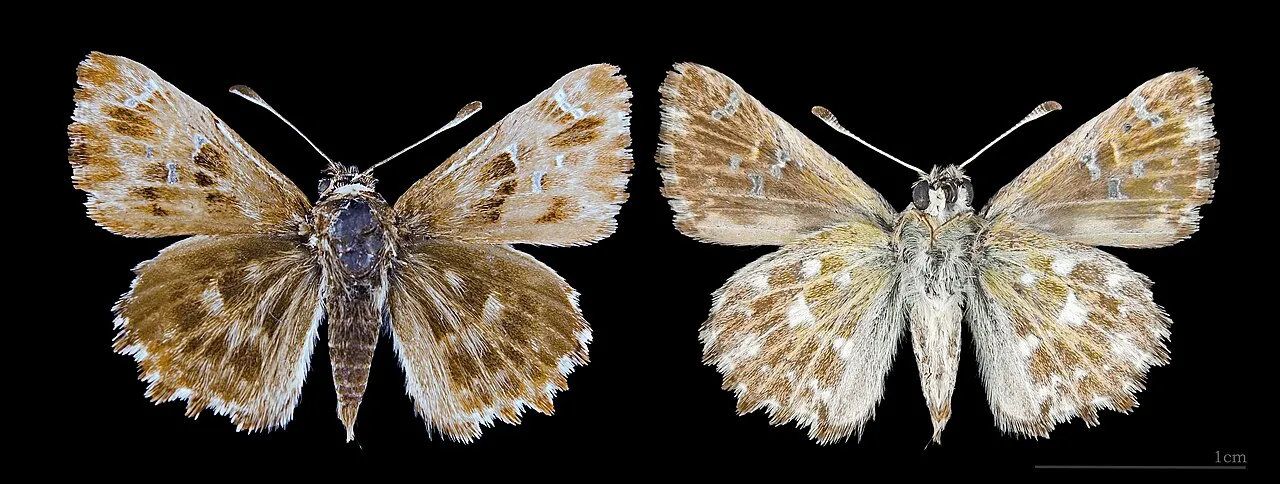
The dingy skipper has a wingspan of 27 to 34 mm, among the smaller of Europe’s skippers. The upperside is grey-brown, crossed by two oblique black bands edged with yellowish-grey, with a marginal row of small light dots and two apical dots, one of them transparent; the underside of the hindwing is typically plain black, without spots. Freshly emerged adults show a subtle pattern of browns and greys that can look quite beautiful, but the scales wear off quickly, leaving older individuals looking drab and lacklustre. The sexes look alike, and the species is often told apart from other small brown butterflies more by its resting posture than its colour: rather than holding its wings flat or folded along its back, it rests in a moth-like, roof-shaped pose with its wings wrapped around a flower head or spread tent-fashion over dead grass, a habit that makes it, in the words of one guide, the most moth-like of the butterflies it shares ground with.
Range and habitat
The dingy skipper favours open grassy habitats up to 2,000 m, among them chalk and limestone downland, open hillsides, woodland clearings, coastal dunes, cliffs, railway embankments and abandoned quarries, always with a preference for low or patchy vegetation and bare ground rather than tall, rank grassland. Bare earth matters because the adults are strongly sun-loving: they are warmth-loving insects that spend long periods basking on bare soil or on a stone warmed by the sun, and a site that has lost its open ground to encroaching scrub or ungrazed turf quickly stops supporting the species even where its host plants remain.
Life cycle and host plants
Caterpillars feed mainly on bird’s-foot trefoil (Lotus corniculatus) and horseshoe vetch (Hippocrepis comosa), with greater bird’s-foot trefoil (Lotus pedunculatus), crown vetch (Securigera varia), dragon’s teeth (Tetragonolobus maritimus) and Eryngium species used more locally. The eggs are laid on the upper surface of a host leaf close to the ground, and the caterpillars build themselves a shelter from the leaves of the plant and feed mostly at night. The species overwinters as a caterpillar, and there are one to two generations a year: two broods across most of the range, flying in May–June and again in July–August, but a single generation in northern areas and at high altitude.
Behaviour and flight period
Adults are on the wing from May to August, in two generations across most of the range, with a single generation further north and at altitude; UK records describe the main flight as concentrated in May and June, with a partial second brood possible in warm years. The flight itself is extremely fast and can be difficult to follow as the butterfly flits along close to the ground, with males patrolling low over the turf before dropping to settle. When not patrolling, adults nectar readily on yellow flowers, especially bird’s-foot trefoil and horseshoe vetch, as well as buttercup and hawkweeds, and in the late afternoon they settle into the roof-shaped roosting posture described above to wait out the cooler hours.
Conservation
The species’ status is shown in the facts box, drawn from its Wikidata record. Despite that global standing, the dingy skipper has declined in several European countries, including the UK and Armenia, a pattern tied to the loss of the open, sparsely vegetated grassland it depends on; recommended management on its remaining sites includes continued grazing on limestone grassland and avoiding overly intensive mowing.
Similar species
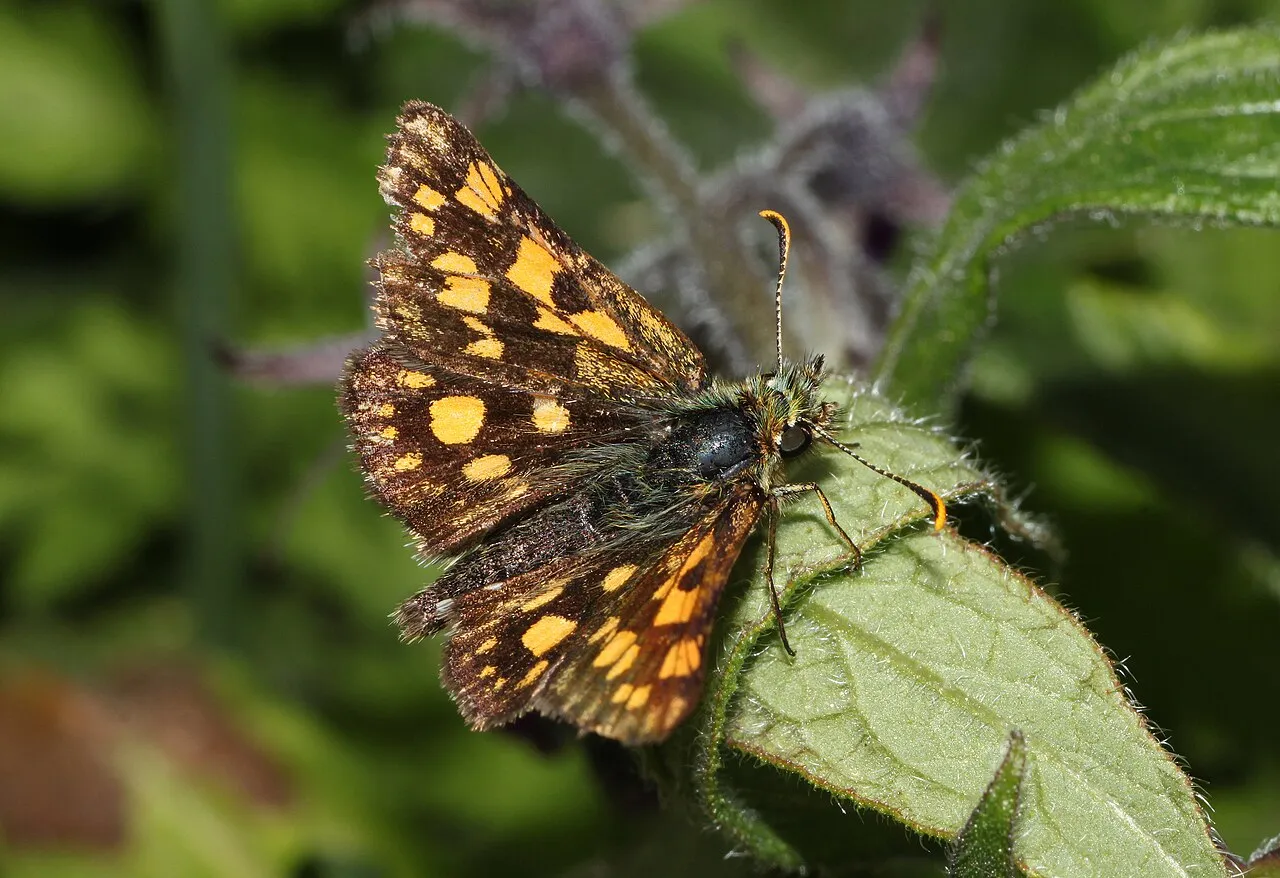
- Chequered skipper (Carterocephalus palaemon): another small, fast-flying skipper of the same family, but told apart at a glance by its checkerboard pattern of orange-yellow spots on a dark brown ground, quite unlike the plain grey-brown dingy skipper.
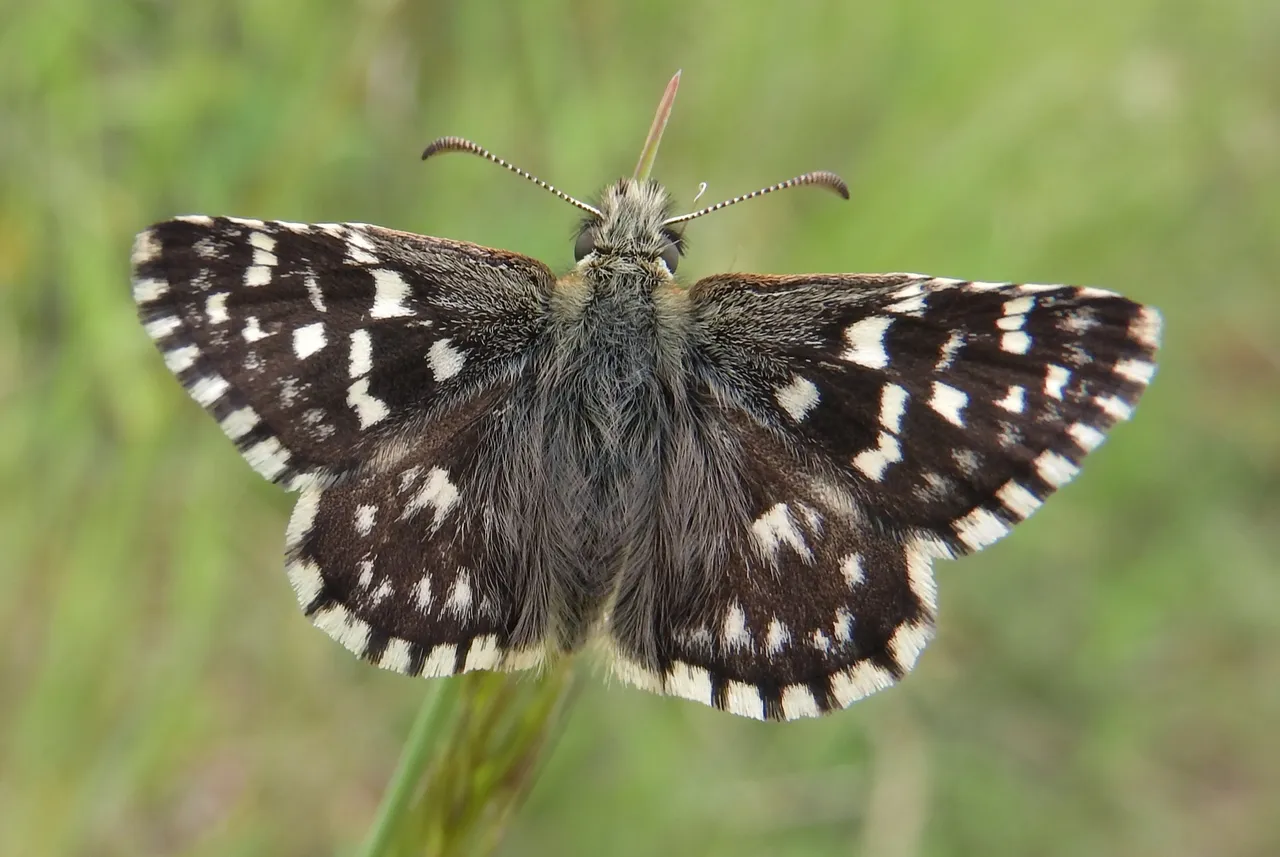
- Grizzled skipper (Pyrgus malvae): a similarly small, low-flying skipper that shares the dingy skipper’s grassland habitat and flight period, but shows a chequered black-and-white pattern rather than the dingy skipper’s uniform grey-brown wings.
_Z1PwpAL.webp)
_Thymelicus_lineola_-_St_Foy_d'Aigrefeuille_-_France_-_male_ZAC1oH.webp)
_Ochlodes_sylvanus_-_Foret_de_Bouconne__France_-_male_73F1g.webp)
_Thymelicus_sylvestris_-_Foret_de_Bouconne__France_-_male_Z1dCd98.webp)