Contents
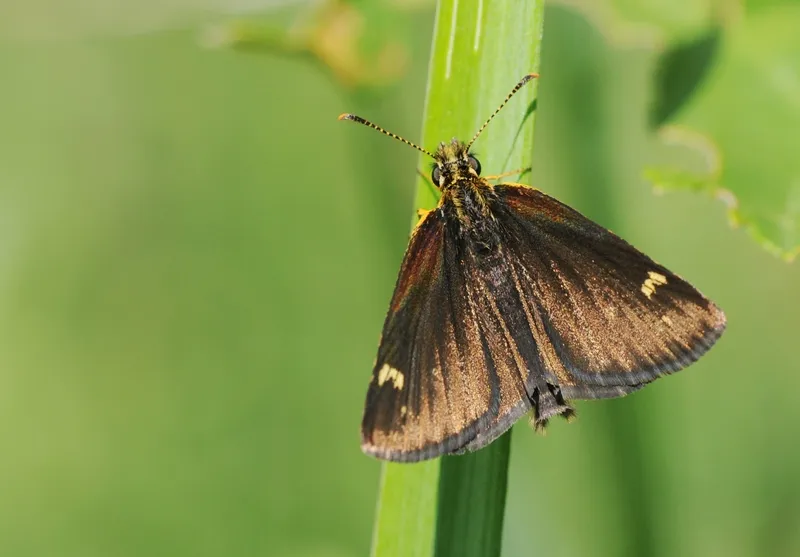
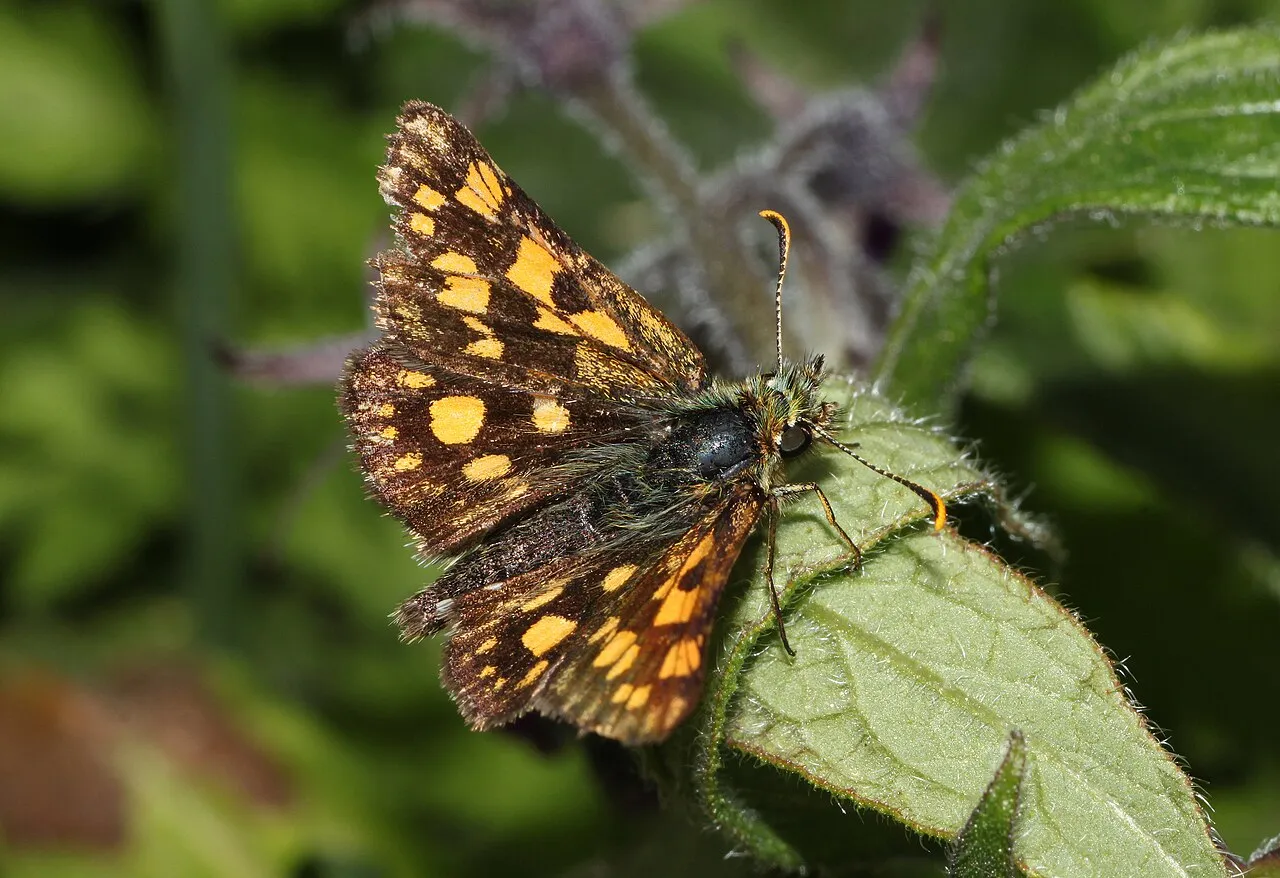
The chequered skipper, Carterocephalus palaemon, is a small, fast-flying butterfly of the family Hesperiidae, named for the checkerboard pattern of pale spots across its dark brown wings. It is found across Europe and the Palearctic as far as Japan, and in Great Britain is now confined to western Scotland; a related form, the arctic skipper, occupies northern coastal regions of North America south to central Alaska and central California. The British and North American ranges sit at opposite edges of a distribution that otherwise runs continuously through the temperate forests and grasslands of the Palearctic, making the Scottish colonies and the North American arctic skipper populations the outliers of a species whose core range lies in continental Europe and Asia.
Identification
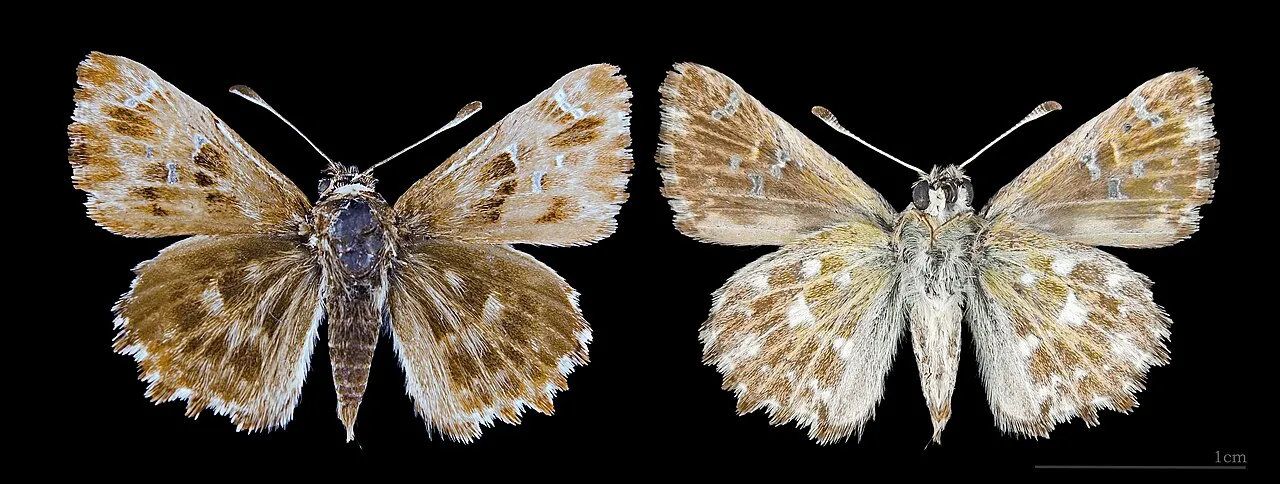
The chequered skipper is one of the smaller skippers, with a wingspan of 29 to 31 mm. Both the upperside and underside of the wings are dark brown broken up by rows of small, squarish orange-yellow spots, giving the chequered effect that names the species; the pattern is similar on the fore- and hindwings and on both sexes, unlike many other skippers that show a sexual brand. The head is relatively broad and the antennae short and hooked at the tip, typical of the family. Its flight is characteristically quick and low, in short darting bursts between perches, closer to the whirring flight of many skippers than to the gliding search pattern of larger butterflies, and the combination of small size, dark ground colour and chequered markings makes it a distinctive sight wherever it occurs.
Range and habitat
Outside Britain the species ranges widely through Europe and across temperate Asia to Japan; within Britain it survives only in a cluster of sites in western Scotland, having died out in its former English range. It favours damp woodland clearings and paths, bogs and stream edges, and in Scotland is found on sheltered, south-facing damp grassland that holds both the larval foodplant and nectar sources, often beside lochs or rivers. This reliance on a narrow combination of shelter, moisture and foodplant availability keeps Scottish colonies small and localised, so that even within its remaining Scottish stronghold the butterfly is patchily distributed rather than evenly spread across the available countryside: the sites that work for it are those that hold shelter, dampness and the foodplant together, not any one of the three alone.
Life cycle and host plants
The caterpillar’s principal foodplant is purple moor-grass (Molinia caerulea), the grass that dominates the damp Scottish sites where the butterfly now breeds. Where it formerly occurred in England the caterpillars fed on false brome (Brachypodium sylvaticum), and on the European mainland they also use various Bromus grasses. The species overwinters as a caterpillar rather than as an egg, chrysalis or adult, sheltering low in the grass tussocks through the cold months before resuming feeding and pupating in spring. It completes a single generation each year, so unlike butterflies with two or more broods, every stage of the chequered skipper’s year, egg, caterpillar, chrysalis and adult, happens once, leaving no later brood to make up for a poor breeding season. The shift from false brome in its former English range to purple moor-grass in Scotland and various Bromus grasses on the continent shows a caterpillar able to use more than one coarse grass, provided it grows in the sheltered, damp conditions the species needs.
Behaviour and flight period
Adults are on the wing for a short window each year. In Scotland the flight period runs from the third week of May to the third week of June, shifting earlier or later with the season. Males patrol low over the grass in search of females and both sexes visit nearby flowers for nectar, rarely straying far from the damp grassland that supports the caterpillars. Because the species has only one brood a year, a poor spring can compress or shift the entire flight period for a colony, making the butterfly easy to miss even where it is still present. Outside that short Scottish window, the species cannot be seen again until the following year, which makes the timing of the flight period, rather than its length, the detail that matters most for anyone hoping to find it.
Conservation
The species is assessed globally as shown in the facts box. In Britain, however, the picture is far more precarious than the global assessment suggests: the chequered skipper vanished from its English colonies and now survives only in its western Scottish stronghold, a pattern of retreat tied to the loss and fragmentation of the damp, sheltered grassland it depends on. Its continued presence in Scotland rests on the survival of a small number of sites that combine the right microclimate with an unbroken stand of purple moor-grass.
Similar species
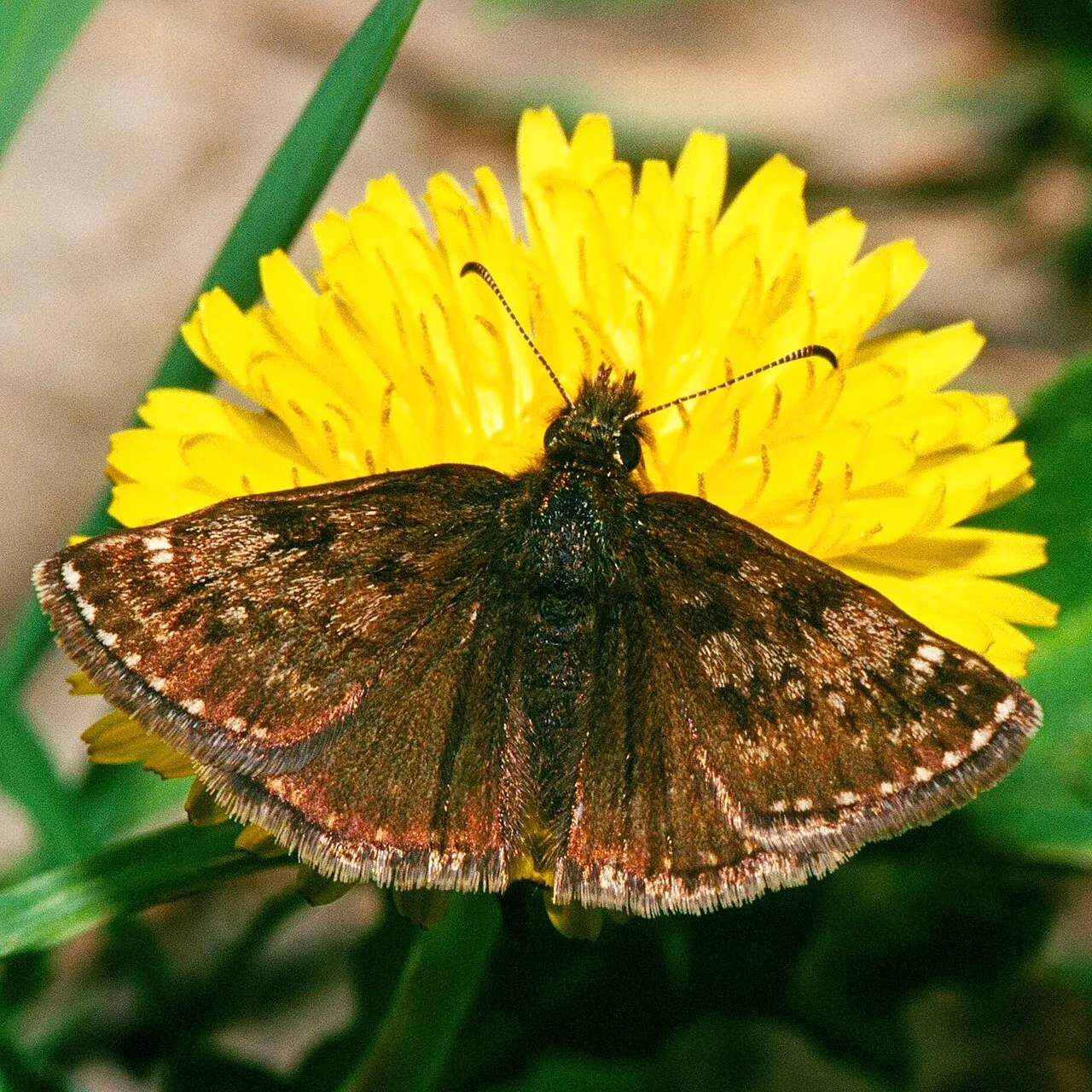
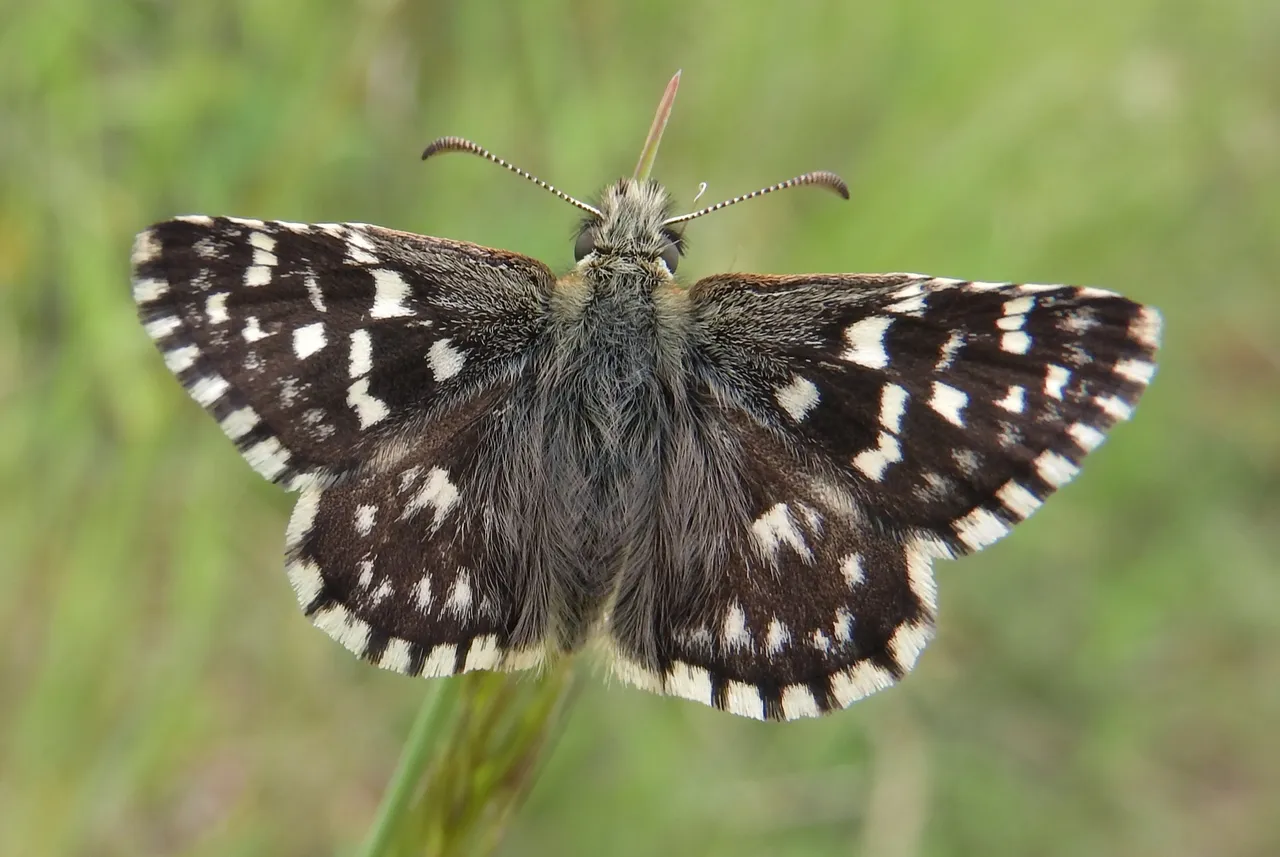
- Large skipper (Ochlodes sylvanus): a similarly fast, low-flying grass skipper, but larger and with a mottled rather than strongly chequered pattern on the upperside.
- Small skipper (Thymelicus sylvestris): plainer orange-brown above, lacking the chequered spotting, and found in open grassy habitats further south and east than the chequered skipper’s Scottish range.
_Z1PwpAL.webp)
_Thymelicus_lineola_-_St_Foy_d'Aigrefeuille_-_France_-_male_ZAC1oH.webp)
_Ochlodes_sylvanus_-_Foret_de_Bouconne__France_-_male_73F1g.webp)
_Thymelicus_sylvestris_-_Foret_de_Bouconne__France_-_male_Z1dCd98.webp)