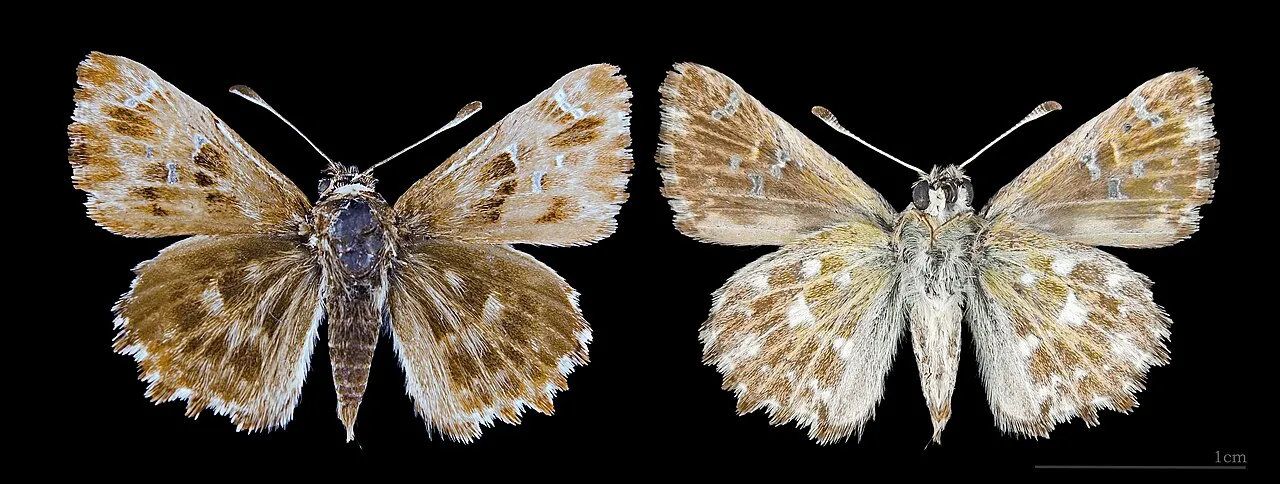
_Thymelicus_sylvestris_-_Foret_de_Bouconne__France_-_male_Z1dCd98.webp)
Contents
The small skipper, Thymelicus sylvestris, is a compact orange-brown butterfly of the family Hesperiidae, usually noticed as a quick dart between grass stems rather than a clear view of its wings. It ranges across much of Europe east to the Urals, including Britain, Ireland and Scandinavia, plus north Africa and the Middle East. Within that range it favours rough grassland with tall grasses: roadside verges, hedgerows, overgrown downland and woodland clearings, the kind of unkempt grassy corner that is easy to overlook but holds a surprising density of these butterflies once the summer brood is on the wing.
Identification
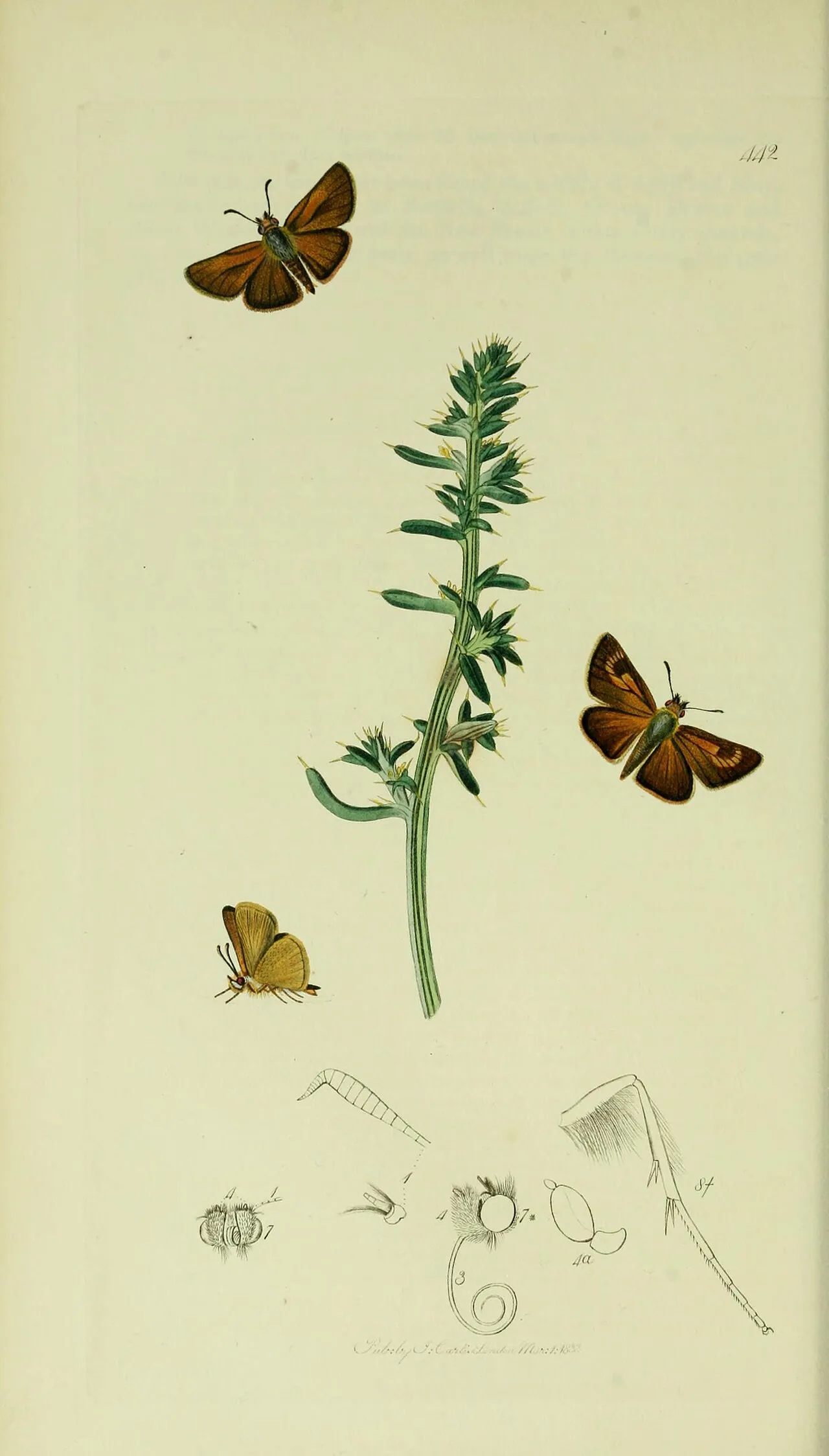
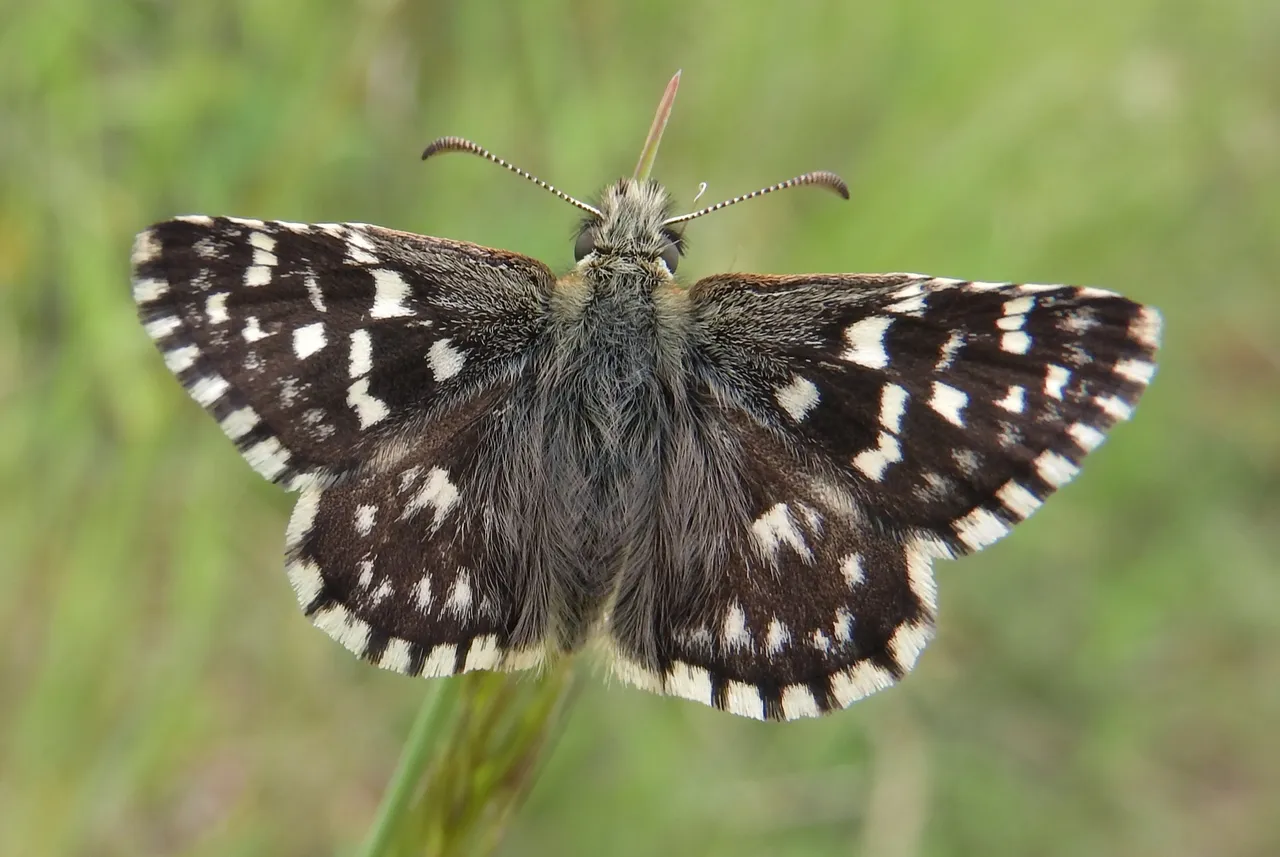
The wingspan runs from 27 to 34 mm, a touch larger on average than its near-twin the Essex skipper. Both sexes show the same warm golden-orange upperside typical of the golden skippers, held in the angled, moth-like stance the group takes at rest, wings swept back and only partly opened rather than held flat or fully closed. The small skipper is best told apart from the Essex skipper by the underside tip of the antenna: orange-brown rather than the inked black of its relative, a distinction worth checking closely since the two otherwise overlap almost completely in colour and size and fly in the same fields at the same time of year. The underside of the wings is a plainer, paler orange-buff than the upperside, offering little further help with identification beyond the antennal check.
Range and habitat
Its range stretches from the British Isles and Scandinavia in the north to north Africa and the Middle East in the south and east to the Urals, a spread that tracks the availability of rank, uncut grassland rather than any one climate zone. Suitable ground is rough grassland with tall grasses, from roadside verges and hedgerows to overgrown downland and woodland clearings, habitat that persists wherever grass is left to grow long rather than mown or grazed short. This tolerance of ordinary, lightly managed ground, rather than any rare or specialised habitat, helps explain why the species holds such a wide range across the continent.
Life cycle and host plants
Caterpillars feed mainly on Yorkshire-fog, and also on cock’s-foot, creeping soft-grass, false brome, meadow foxtail and timothy, all common grasses of the rough, unmown ground the adults favour. The species overwinters as a caterpillar, hibernating individually in a silk-sealed cocoon within a grass sheath, a shelter it spins for itself low down in the grass before the cold sets in. It flies as a single brood each year, so the whole population passes through egg, caterpillar, chrysalis and adult just once between one summer and the next.
Behaviour and flight period
Adults fly as a single brood, from late June through August in Britain, emerging about a week or two before the Essex skipper. That short gap between the two closely related species gives an early-season observer a rough clue to identity even before checking the antennal tip. Like other golden skippers, males hold territory low over the grass to intercept passing females, darting out from a favoured perch to investigate anything that flies past, and both sexes nectar at flowers growing among their grassy habitat.
Conservation
The species is assessed as shown in the facts box, taken from its Wikidata record. Across most of its range it remains a familiar sight in any patch of long grass left uncut through the summer, rather than a butterfly tied to a single scarce or threatened habitat.
Similar species
- Essex skipper (Thymelicus lineola): the closest look-alike, sharing the same grasses and much of the same range; separated chiefly by the antennal tip, black beneath in the Essex skipper and orange-brown in the small skipper.
- Large skipper (Ochlodes sylvanus): a bulkier relative found in similar grassy habitat, told apart by mottled markings on the upperside that the small skipper lacks.
_Thymelicus_lineola_-_St_Foy_d'Aigrefeuille_-_France_-_male_ZAC1oH.webp)
_Z1PwpAL.webp)
_Ochlodes_sylvanus_-_Foret_de_Bouconne__France_-_male_73F1g.webp)