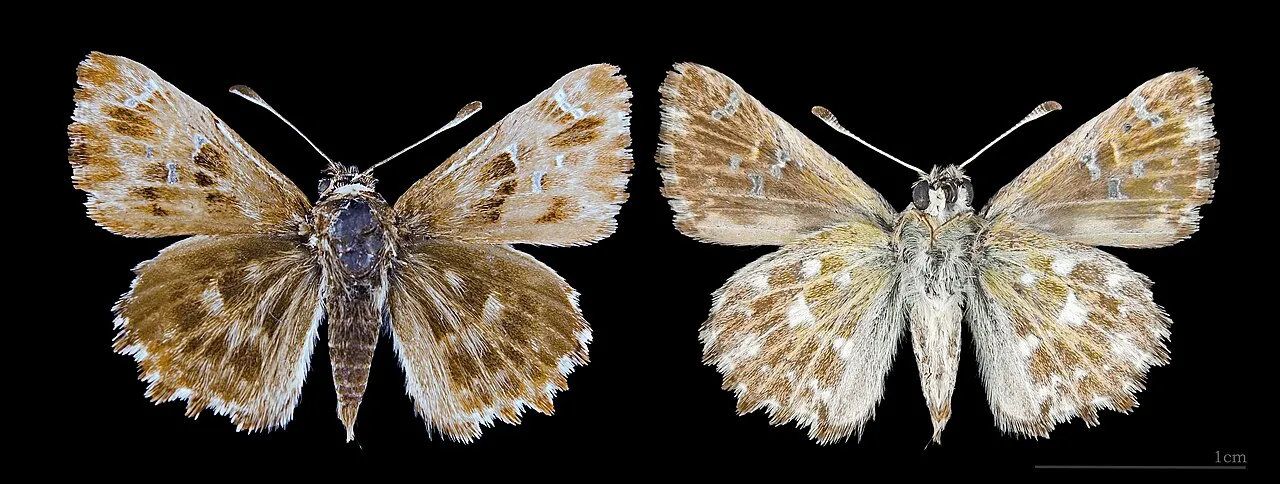
_Thymelicus_lineola_-_St_Foy_d'Aigrefeuille_-_France_-_male_ZAC1oH.webp)
Contents
The Essex skipper, Thymelicus lineola, is a small golden-orange butterfly of the family Hesperiidae, easily missed among grasses until it darts up and settles again. It ranges throughout much of the Palaearctic, from southern Scandinavia and the UK through Europe to North Africa and Central Asia, and was accidentally introduced to North America in 1910 near London, Ontario, from where it has spread widely across southern Canada and the northern United States.
Identification
The Essex skipper has a wingspan of 26–30 mm, making it close in size to its relatives among the skippers. Like other golden skippers, its wings are a warm orange-brown above, held in the moth-like triangular posture typical of the group at rest. The surest field mark separating it from the similar small skipper is the tip of the antenna: in the Essex skipper the underside of the antennal club is black, as if dipped in ink, rather than orange-brown.
Range and habitat
The species lives in rough grassland, including road verges, woodland rides, chalk grassland and embankments, wherever its grass host plants grow. Its wide Palaearctic range, from Scandinavia to Central Asia, together with its accidental foothold in North America, reflects a butterfly adapted to ordinary, unmanaged grassy ground rather than to any single rare habitat.
Life cycle and host plants
Caterpillars feed mainly on cock’s-foot, and also on common couch, creeping soft-grass, false brome, meadow foxtail, Timothy and tor-grass. The species overwinters as an egg, laid in the grass stems the previous summer, and completes one generation a year.
Behaviour and flight period
In the UK, adults fly as a single generation, on the wing from late June through July and August. Males patrol low over grass stems in search of females, and both sexes visit flowers for nectar, a habit typical of the golden skippers as a group.
Conservation
The species is assessed as shown in the facts box, taken from its Wikidata record.
Similar species
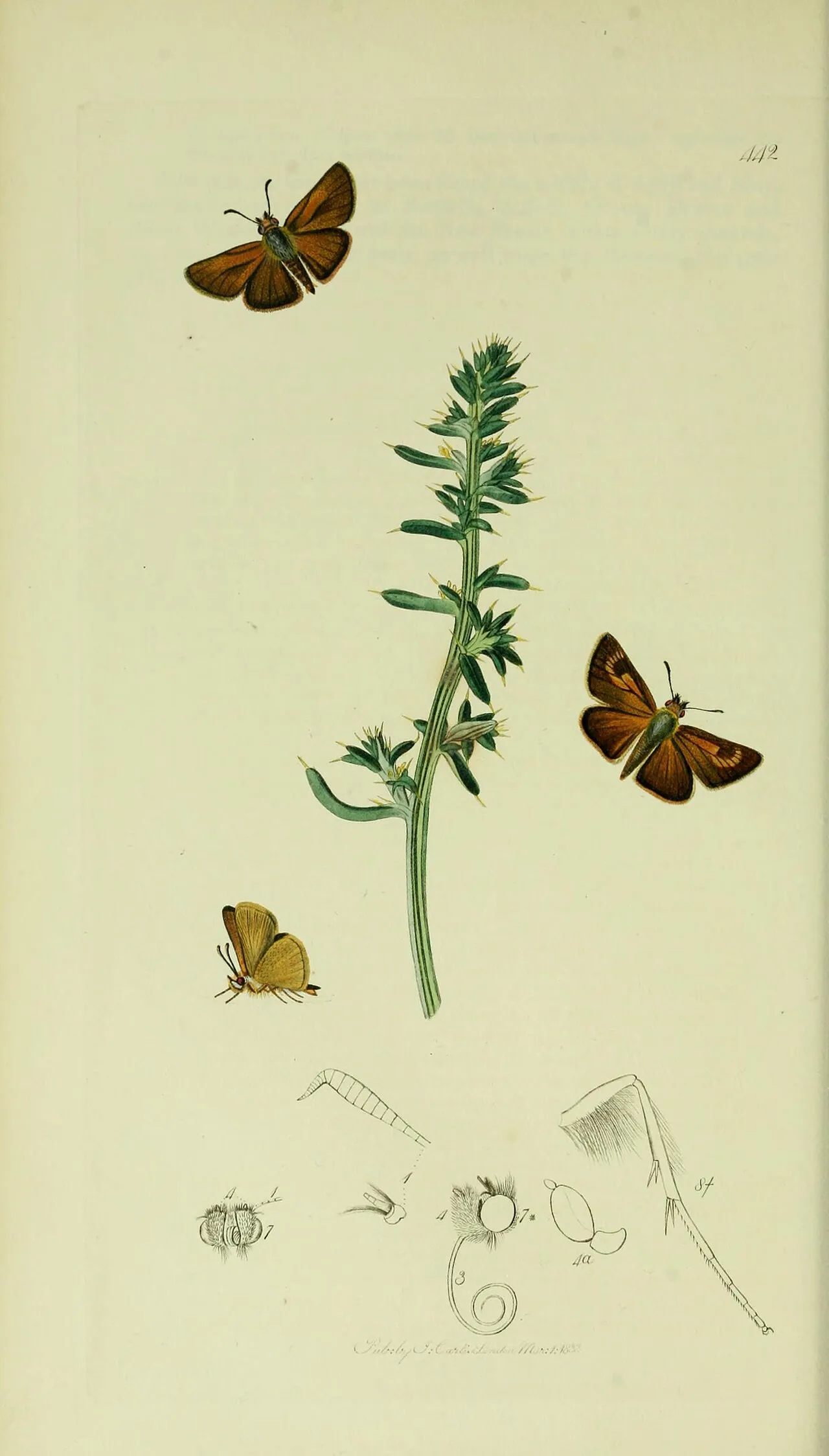
- Small skipper (Thymelicus sylvestris): the classic look-alike across most of Europe, told apart chiefly by the black underside of the antennal tip in the Essex skipper versus orange-brown in the small skipper.
- Lulworth skipper (Thymelicus acteon): a smaller, more localised relative sharing the same golden-brown colouring, told apart by a paler sunburst mark on the female’s forewing.
_Thymelicus_sylvestris_-_Foret_de_Bouconne__France_-_male_Z1dCd98.webp)
_Z1PwpAL.webp)
_Ochlodes_sylvanus_-_Foret_de_Bouconne__France_-_male_73F1g.webp)