Contents
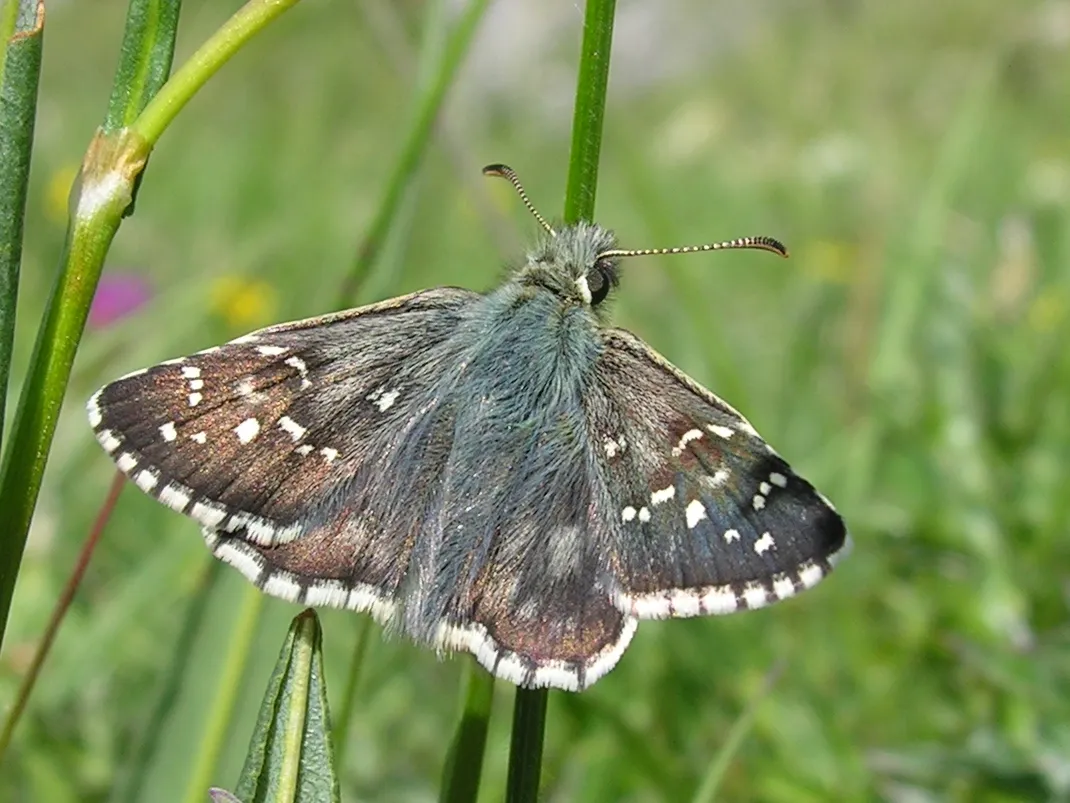
The olive skipper, Pyrgus serratulae, is a small butterfly of the family Hesperiidae, named for the olive-green ground colour of its hindwing underside. It belongs to a genus of similar-looking, chequered “pug” skippers, but wears a notably plainer pattern than most of its relatives. The species ranges from the mountains of southern Europe through western, central and eastern Europe and south-western Siberia to Mongolia and northern China, with outlying populations in Asia Minor, Transcaucasia, northwest Iran and northeast Iraq, but is absent from the British Isles and Scandinavia.
Identification
The olive skipper has a wingspan of 24–28 mm, placing it among the medium-sized members of its genus. Its upperside is plainer than that of related skippers, carrying only tiny white marks on the forewings and an almost unmarked hindwing, though alpine populations can show a stronger, more clearly marked pattern of bright spots. The underside is the more useful feature for identification: it is usually mostly olive-green with paler markings, including a well-developed oval basal spot on the underside of the hindwing. The sexes are not described as differing in pattern.
Because several Pyrgus species share this general look and fly in the same mountain grasslands, the olive skipper can be confused with members of the Pyrgus alveus complex, and safe separation between them is only possible by examining the genitalia.
Range and habitat
Across its range the olive skipper favours limestone or alpine grassland on shallow, often stony ground, rocky corridors on mostly alkaline rock, avalanche tracks, erosion channels and grassland dominated by mat-grass (Nardus stricta). It is a butterfly of sparse, vegetation-poor terrain rather than lush meadow, tracking the gritty or stony soils its host plants prefer. In Germany, where the species reaches some of its northern outposts, populations extend to East Westphalia and areas near the Baltic coast.
Life cycle and host plants
Caterpillars feed on Potentilla species, including P. tabernaemontani, P. heptaphylla, P. recta, P. aurea, P. crantzii and P. pusilla. Away from the Alps, the species group Potentilla verna agg. is the most important food plant, though locally other cinquefoils take over: in the Swabian Alb, for instance, Potentilla heptaphylla is preferred over P. verna.
Females lay their eggs singly on the underside of leaves, usually on individual Potentilla plants growing in gappy, vegetation-poor spots on or near rock, and the caterpillars spin the leaf bags typical of the genus Pyrgus. The species overwinters as a caterpillar; in northern Bavaria it overwinters in the penultimate instar and emerges as an adult by April. There is one generation a year (univoltine).
Behaviour and flight period
Adults fly mainly in July and August, though the timing shifts markedly with altitude. Alpine populations emerge from mid-June, peak in July and can occasionally still be seen into September, sometimes starting as early as the beginning of June in a warm spring. At lower elevations, such as in northern Bavaria, the whole season runs about a month earlier, with adults appearing from May, a peak in June and the last stragglers flying into late July.
Males gather to drink, or “puddle”, at damp ground and even at sweat, while both sexes are opportunistic at flowers, visiting a range of plant families and flower colours for nectar rather than specialising on a few species. Adults also orient visually towards rocks, rock edges, banks and other patches of bare, open ground, a habit that matches their liking for sparsely vegetated terrain.
Conservation
The species is assessed as Least Concern. Within the Alps the olive skipper is not considered to need special protective measures, but populations outside the Alps benefit from active management, such as clearing rock and keeping limestone grassland open through regular grazing or mowing, to stop it becoming overgrown.
Similar species
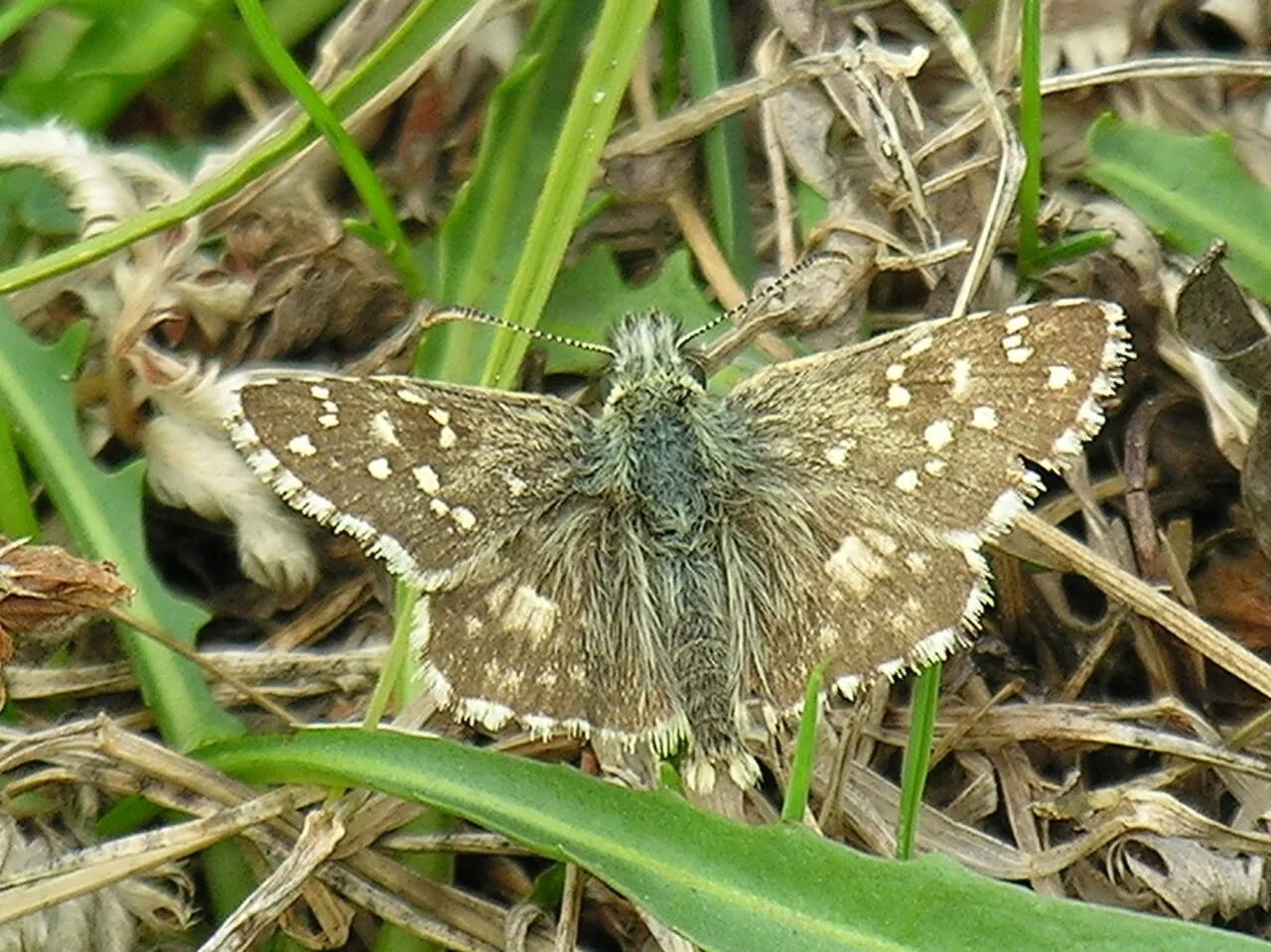
- Large grizzled skipper (Pyrgus alveus): the closest look-alike, sharing the same mountain grassland habitat and a similarly plain pattern; the two can only be told apart reliably by their genitalia.
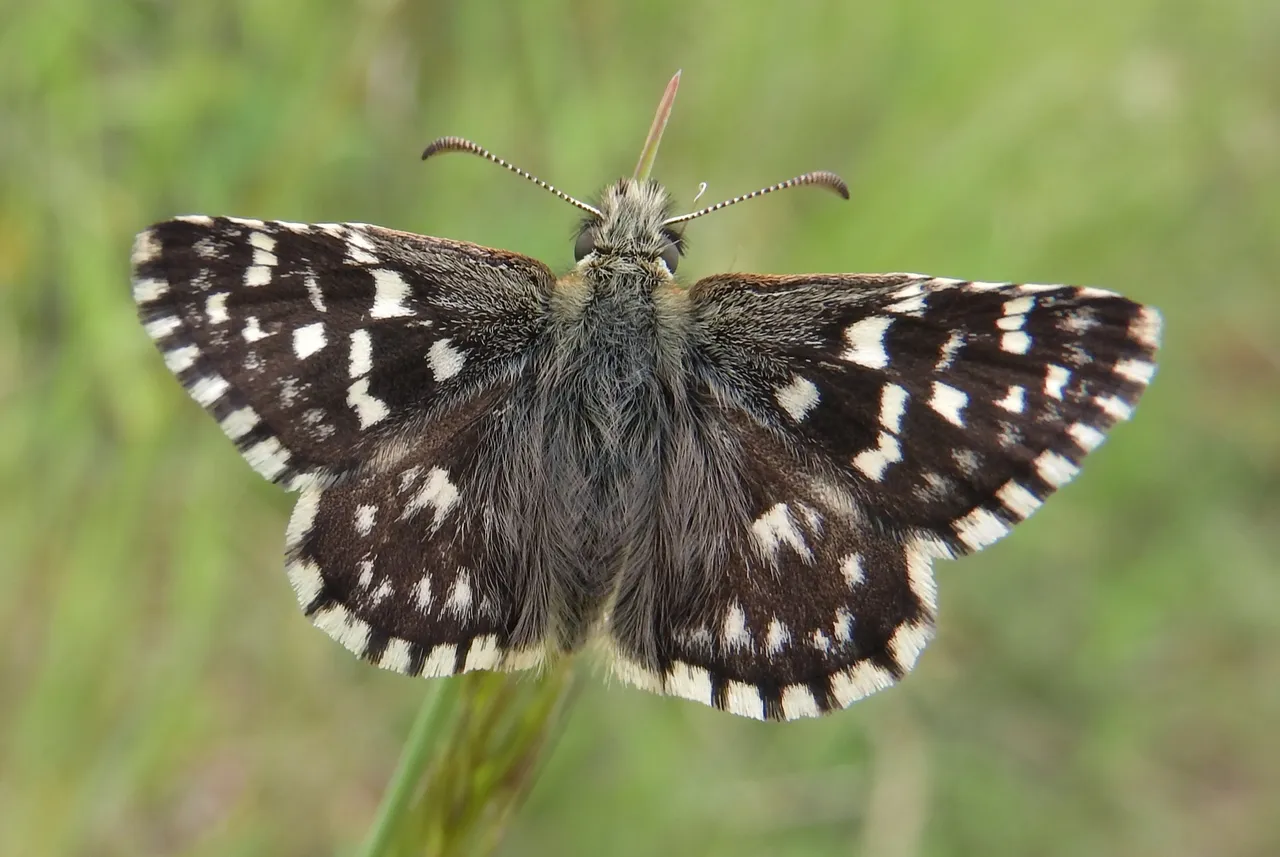
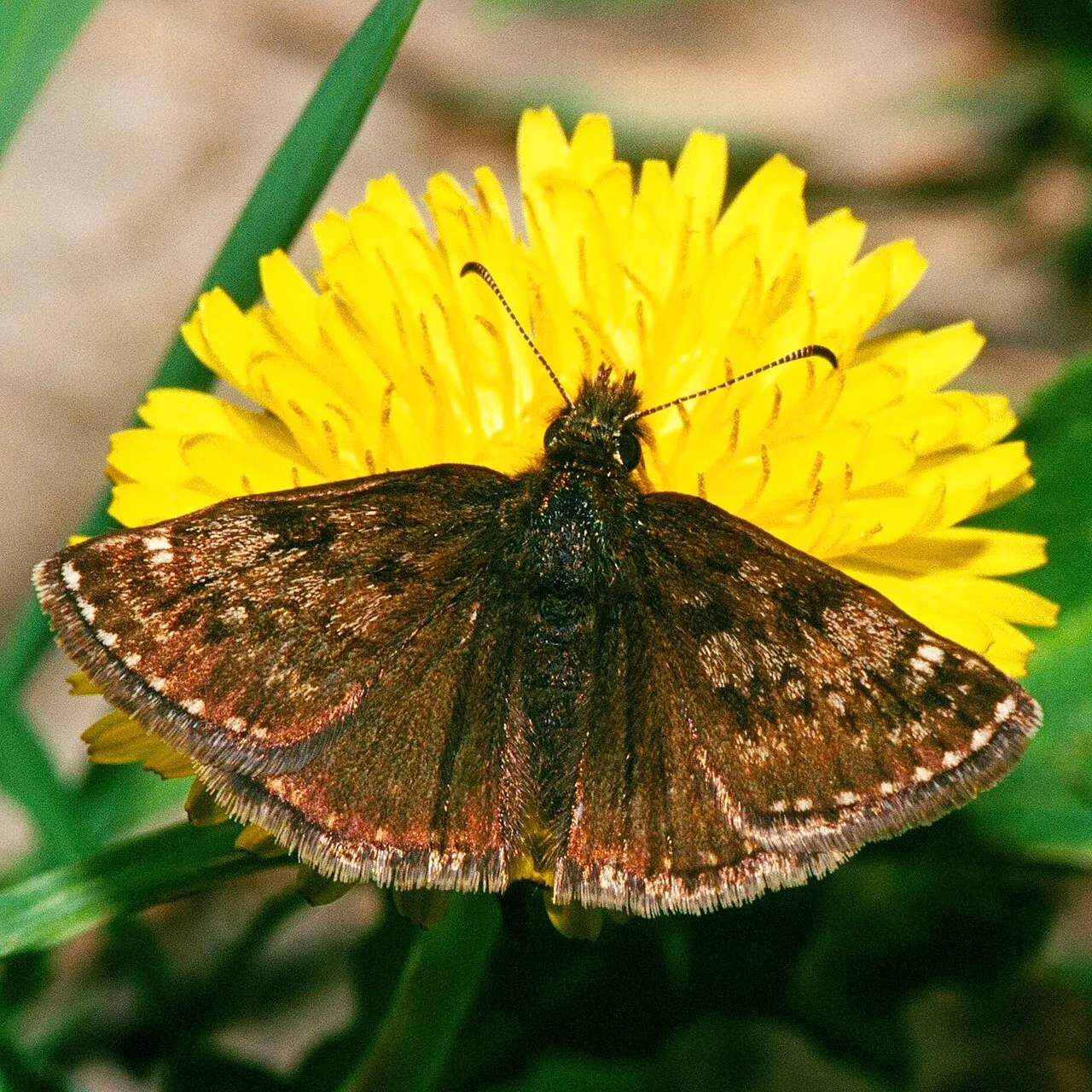
- Grizzled skipper (Pyrgus malvae): a smaller relative with a much bolder black-and-white chequered pattern on both wing surfaces, flying earlier in the season and favouring lowland chalk grassland rather than mountain slopes.
_Thymelicus_lineola_-_St_Foy_d'Aigrefeuille_-_France_-_male_ZAC1oH.webp)
_Ochlodes_sylvanus_-_Foret_de_Bouconne__France_-_male_73F1g.webp)