__Dahlem_ZP6IRJ.webp)
Contents
The pearly heath, Coenonympha arcania, is a small brown and orange butterfly of Europe’s sunny woodland edges and dry grasslands, named, fittingly for a butterfly that keeps to the shade of trees, from a Latin word meaning mysterious or secretive. It belongs to the family Nymphalidae, in the same genus as the small heath, and was first described by Linnaeus in 1761. The species ranges across central and southern Europe, from Scandinavia to the Mediterranean and from Spain and France east to the Black Sea and Armenia, and is absent from Great Britain.
Identification
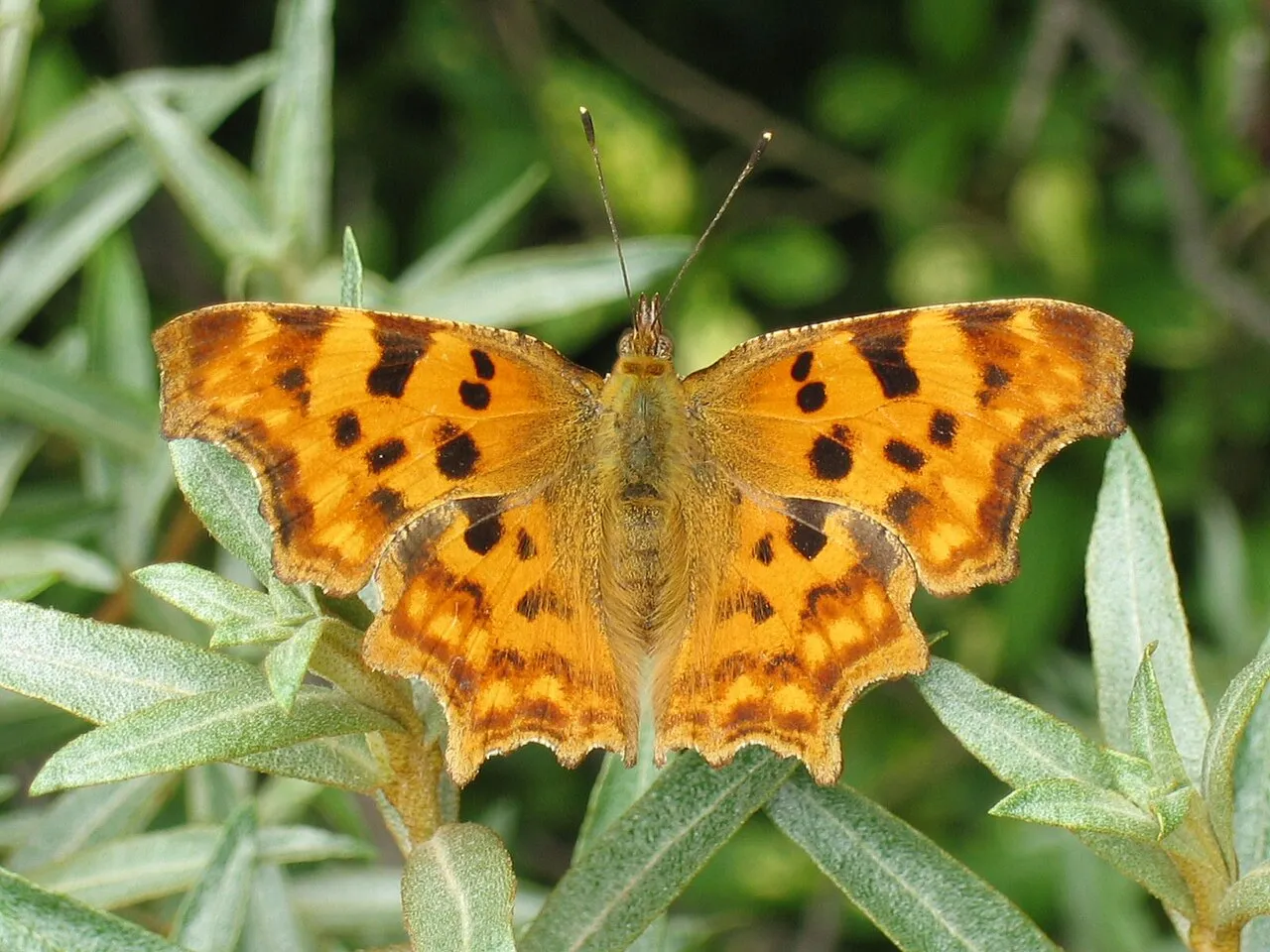
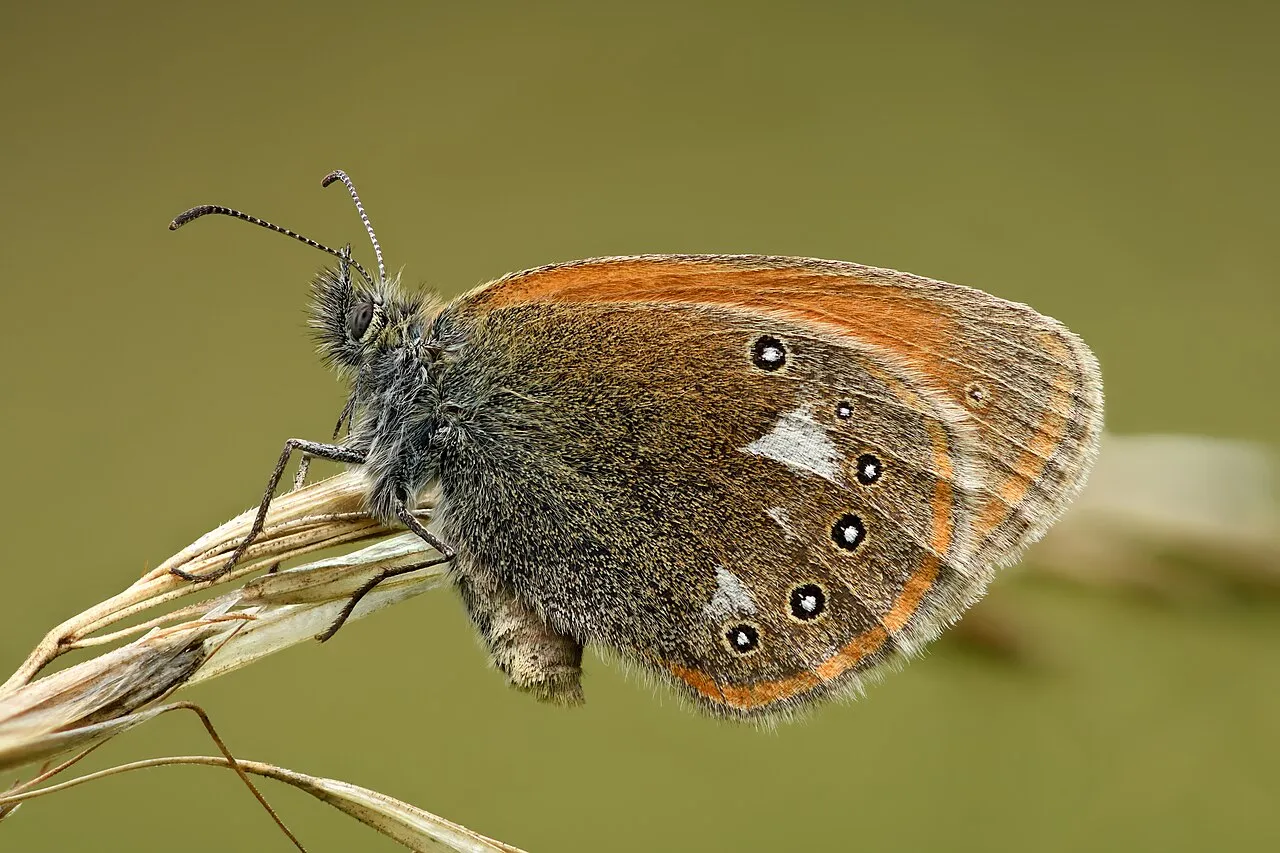
The upperside of the forewing is fiery reddish yellow with a black outer margin, while the hindwing is dark brown. The giveaway is underneath: the hindwing carries a broad white band across its outer section, which in the typical form cuts through the row of small eyespots below the forewing tip, so that one eyespot appears to sit inside the white band itself. Females are scarcer than males and fly later in the season. An aberrant form, ab. insubrica, shows a much broader black margin on the forewing and a narrower, slightly toothed white band underneath, and turns up through the range but more often in the south.
Range and habitat
The pearly heath favours sun-drenched, lightly wooded forests, forest edges and bushy, dry grasslands, up to about 1,800 m altitude. It turns up at the edge of woods with plenty of undergrowth, but also out in open country and on hillsides, and how high up the hillside it flies depends on local temperature.
Life cycle and host plants
Caterpillars feed on grasses, including Yorkshire fog (Holcus lanatus) and sheep’s fescue (Festuca ovina). Females lay their eggs singly or in small groups on the stems of these food plants. The caterpillar is green with a dark stripe down its back bordered in yellowish, a lighter stripe below that, and a pale yellow stripe along its side, with a blue-green head and a red mouth and anal fork. It overwinters while still young, spending the winter as a small caterpillar before resuming growth and eventually pupating in a brown chrysalis with whitish wing-cases edged in red.
Behaviour and flight period
There is one generation a year, on the wing from May to August and most common in June and July in Central Europe. Outside that window the species passes the year as an egg, caterpillar or chrysalis, with only the caterpillar stage carrying it through winter. Adults are sociable fliers: they are often seen flying together in large numbers. At rest they tend to perch on the tip of a low twig, only occasionally flying higher up, and when basking in the sun they usually sit in sunny spots with their wings held closed, showing off the patterned underside rather than the brighter upperside.
Similar species
- Small heath (Coenonympha pamphilus): a smaller relative in the same genus, widespread across similar grassy habitat.
- Coenonympha hero: the species the pearly heath most closely resembles, sharing the same general size and reddish-brown colouring, though it lacks the pearly heath’s unbroken white band across the hindwing underside.
_kkJaX.webp)
_2r3CXC.webp)