Contents
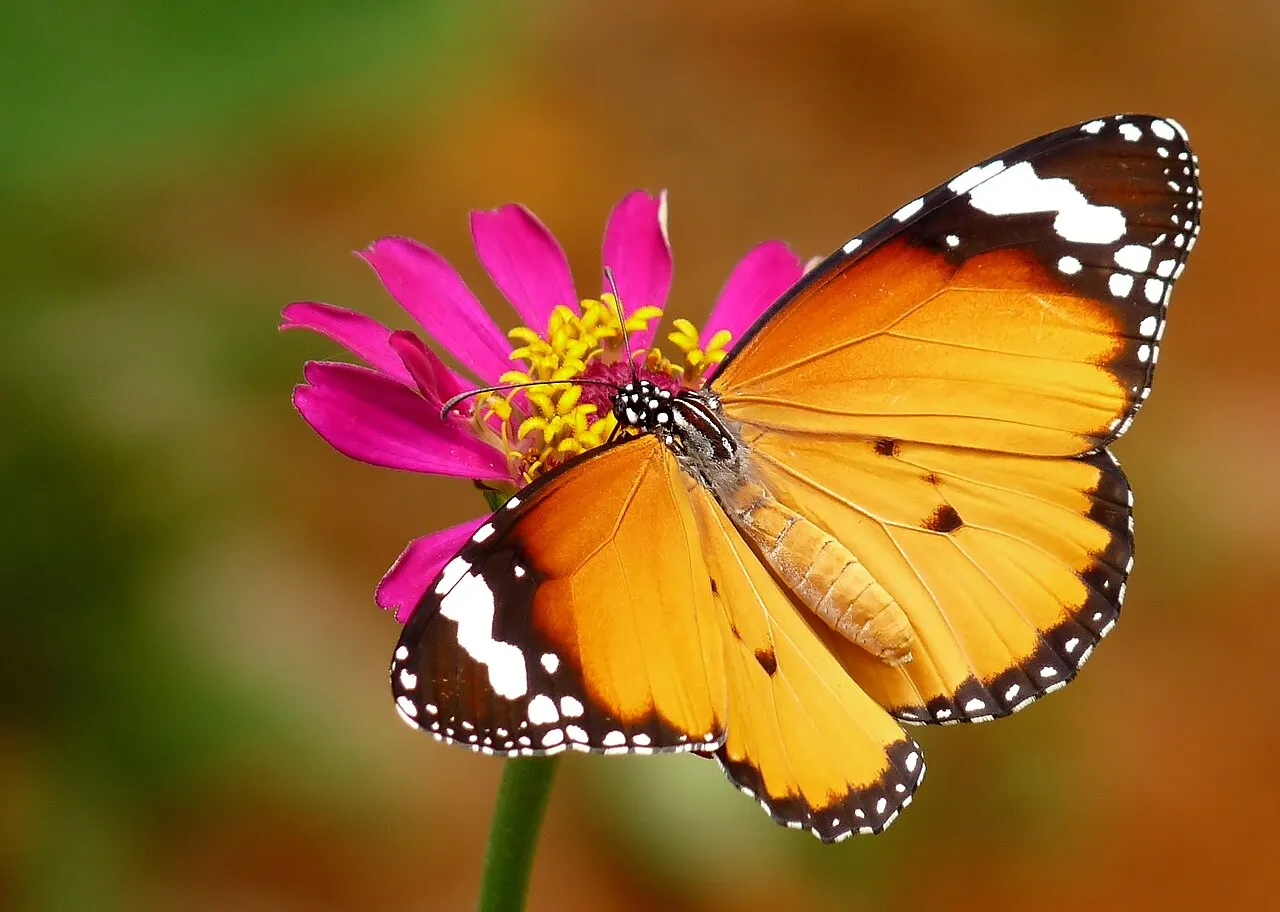
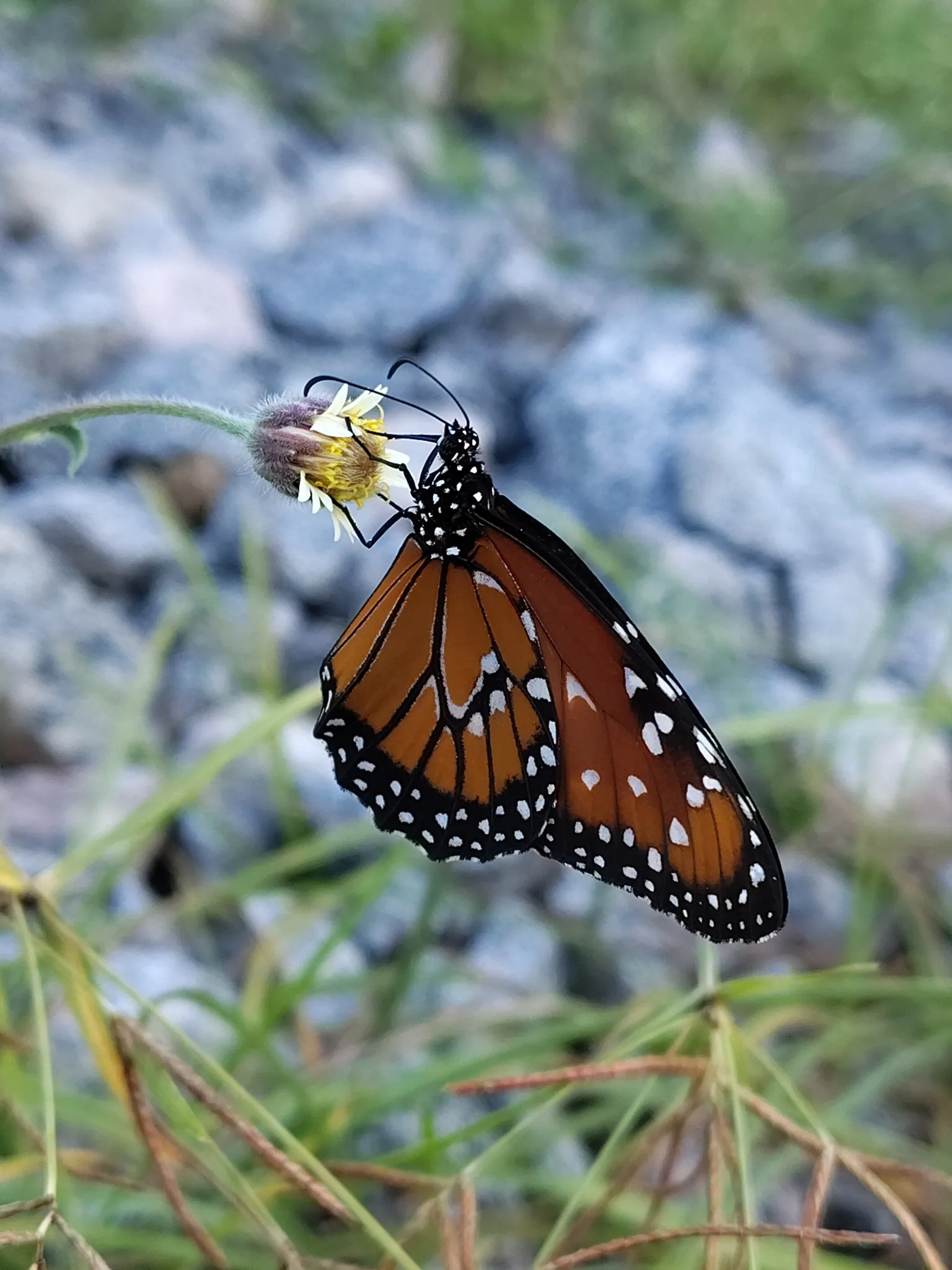
The queen, Danaus gilippus, is a North and South American butterfly1 of the family Nymphalidae, related to the monarch. It is resident from the extreme southern United States through the West Indies and Central America to Argentina2.
Identification
The wingspan is 6.7–9.8 cm, or 67–98 mm. The upperside is chestnut brown, and the black borders of the forewings carry two rows of white spots, with more white spots scattered at the forewing tip. Queens in the southwest, and sometimes in the southeast, have pale veins on the hindwing upperside2. The forewings are long, triangular in outline and drawn out at the tip3, while the hindwings are well rounded and smaller.
On the underside the hindwing has black veins2, and the black borders of both wings again carry two rows of white spots.
The male’s hindwing upperside has a black scale patch2, and males have pheromones that help in mating and attract females. Unlike the monarch, where males are often the larger sex, in queens the female is larger3.
The egg is usually pale green and ovate to conical. It hatches into a black caterpillar with white stripes and yellow spots, carrying three pairs of long black filaments; the mature caterpillar is nearly identical to that of the plain tiger. The pupa is pale green, rarely pale pink1, and often has golden spots.
Range and habitat
Beyond its resident range, the queen is a regular stray and sometime colonist in the plains2, and rarely reaches Massachusetts along the Atlantic coastal plain. Animal Diversity Web3 places it from Brazil to Florida and the Gulf Coast, and also in California, Texas, Arizona and southern New Mexico.
It lives in open, sunny areas2 such as fields, deserts, roadsides, pastures, dunes, washes and waterways. Queens stay mainly in warm climates year round3.
Life cycle and host plants
Females lay their eggs singly on leaves, stems and flower buds2, which the caterpillars then eat. The caterpillar goes through five instars before it pupates, and the adult emerges 7 to 10 days afterwards. There are multiple generations per year1.
The caterpillars feed on milkweeds and milkweed vines. Some of these milkweeds contain cardiac glycosides2, which are stored in the bodies of both the caterpillar and the adult and are distasteful and emetic to birds and other vertebrate predators. How distasteful a queen is to birds is highly variable1.
Adults take nectar from milkweeds, fogfruit and shepherd’s needle2, and also from blue mist. Male butterflies of the genus are known to get their sex scents from plants such as heliotrope and eupatorium3, which contain pyrrolizidine alkaloids.
Behaviour and flight period
Adults fly all year in Florida and South Texas2, and in July and August in the north.
To find females, males patrol all day, and adults roost communally2. The queen has a set courtship display: the male chases the female, overtakes her from above and brushes her antennae with his abdominal hairpencils, which spread scent, until she settles. After mating, post-nuptial flights follow, with the male pulling the female backwards through the air. Queens are known to migrate like the monarch, but to a lesser extent3.
When nectar flowers are scarce, queens in Texas have been seen probing the bases of grass flower heads3; what they gain from it is not known.
Conservation
The queen is listed as Least Concern in the IUCN Red List 2022.24. Its global conservation rank is G5, demonstrably secure globally2, though it may be quite rare in parts of its range, especially at the edges.
Similar species
- Soldier (Danaus eresimus): very similar, but the queen is browner with less defined veins on the upperside, and its hindwing underside lacks the band of pale spots2 the soldier has. The soldier’s upperside is more orange5, and its forewing upperside usually lacks larger white spots below the tip.
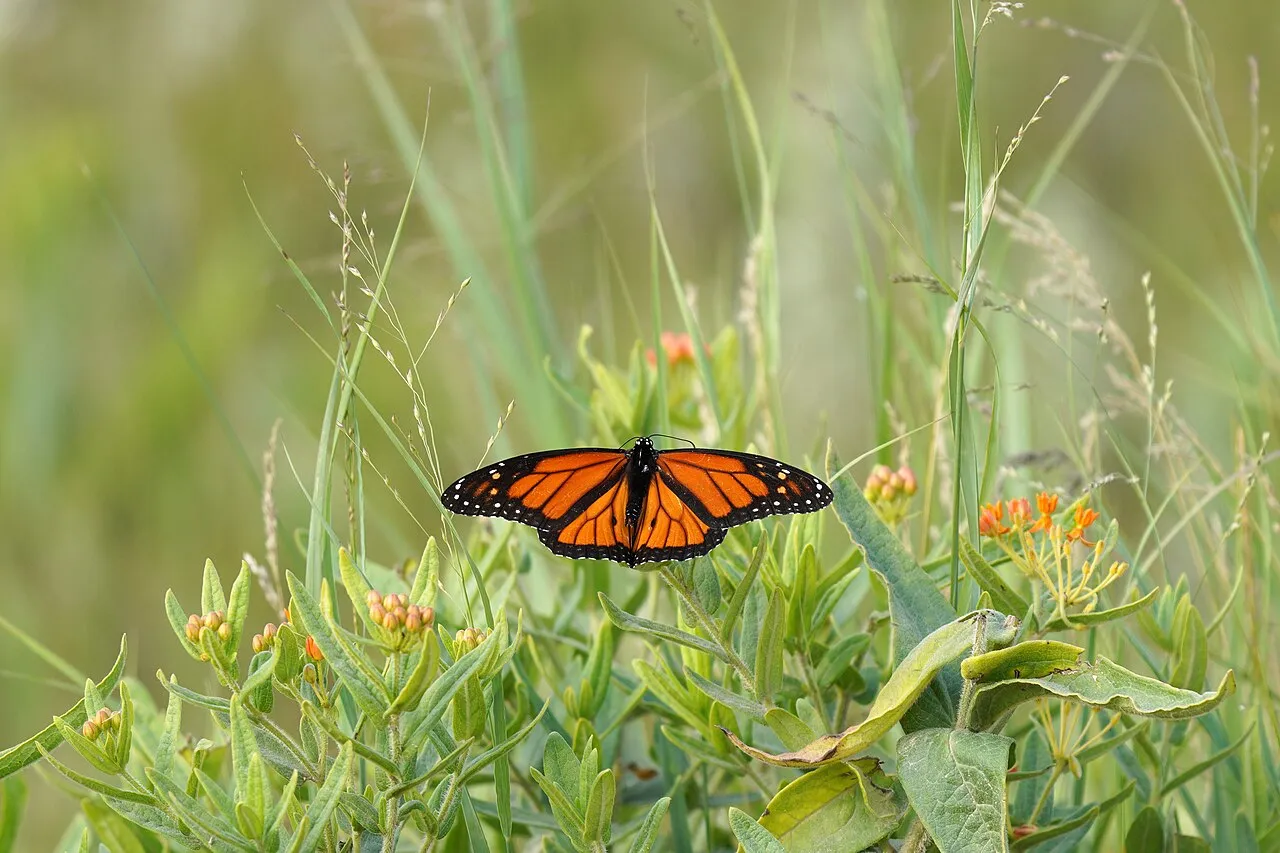
- Monarch (Danaus plexippus): a close relative that the queen resembles, but the queen is smaller, with a darker brown ground colour3, and its forewing lacks the monarch’s black border on the inner margin.
- Florida viceroy (Limenitis archippus floridensis), a subspecies of the viceroy that mimics the queen2. It has a black line across the hindwing6 and a single row of white dots in the black border. Experiments suggest Florida viceroys could be more unpalatable than queens1, and the two have been described as Müllerian co-mimics.