_Rakov_%C5%A0kocjan_ZbVxkC.webp)
Contents
The scarce fritillary, Euphydryas maturna, is a chequered orange, brown and cream butterfly of the family Nymphalidae. It is found in Austria, Bulgaria, the Czech Republic, Finland, France, Germany, Greece, Hungary, Kazakhstan, Lithuania, Luxembourg, Poland, Romania, Russia, Serbia and Montenegro, and Sweden, as well as across East and Central Europe, the Caucasus, the Ural Mountains, eastern Kazakhstan, southern and western Siberia, the Zabaykalsky Krai and Mongolia. Despite that broad span, it is a local and declining butterfly wherever it occurs, tied closely to a single caterpillar food plant.
Identification
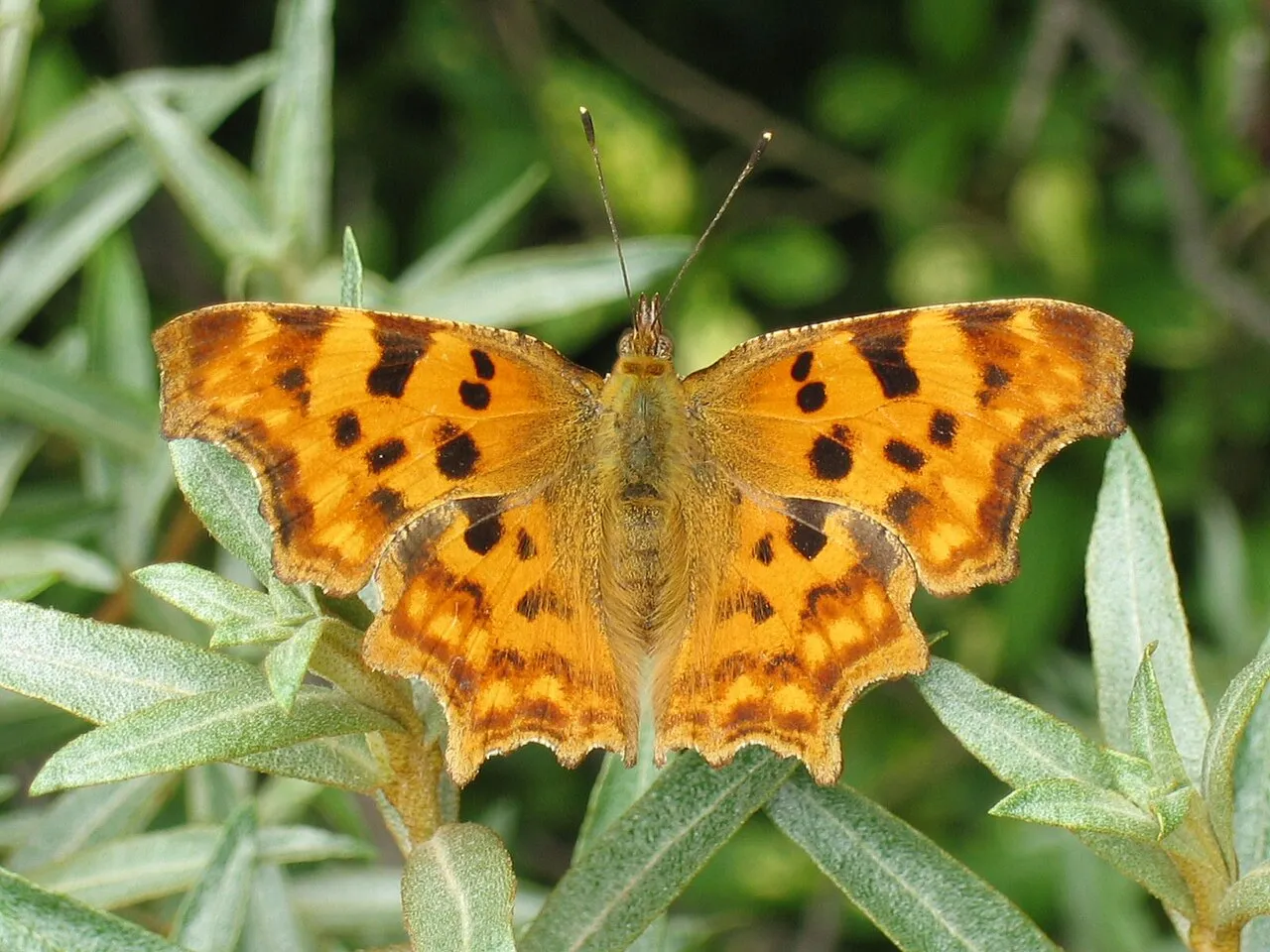
The scarce fritillary is a mid-sized fritillary, with a wingspan of 35–42 mm. Like its relatives in the genus Euphydryas, it carries the chequered pattern of orange, tawny and cream patches crossed by dark veins that gives the fritillaries their name, with rows of pale spots repeated on the underside. The name “scarce” reflects its patchy, thinning distribution rather than any unusual or washed-out marking: across most of its range it is simply a fritillary that has become hard to find.
Range and habitat
The species lives in moist, light woodland overgrown with ash trees and ash bushes, at altitudes of about 200 to 1,000 metres. That narrow habitat requirement, a damp woodland edge or clearing with young ash growth, limits it to pockets within its wide overall range, and populations have declined sharply in Central Europe as such woodland has been cleared, drained or allowed to mature past the stage the caterpillars need. Where ash stands remain open and damp enough, colonies can persist for decades; where the canopy closes over or the ground dries out, the butterfly disappears even if the wider forest survives.
Life cycle and host plants
Caterpillars feed first only on ash (Fraxinus excelsior), the plant that anchors the species to its woodland habitat. After hibernating, they broaden their diet to honeysuckle (Lonicera xylosteum), goat willow (Salix caprea), common aspen (Populus tremula) and a variety of forbs, feeding on whatever suitable low growth stands near the ash they hatched on. The species overwinters as a caterpillar, surviving the cold half-grown before resuming feeding on this wider range of plants and completing development the following season. That two-stage diet, a strict dependence on ash early on followed by a looser one later, means a site needs both ash for the young caterpillars and a mix of ground-level plants nearby for the species to breed successfully year after year.
Behaviour and flight period
The scarce fritillary stays close to the damp, ash-fringed clearings described above, rarely venturing far from the woodland edges that supply its early caterpillars with food. Beyond that attachment to habitat, no source open to this guide gives reliable flight months or brood counts for the species across its range, so neither is stated here rather than guessed.
Conservation
The species is assessed as shown in the facts box, taken from its Wikidata record. That Data Deficient rating sits oddly alongside the documented decline described above: Central European populations have fallen sharply even where the wider Palearctic range looks secure on a map, a pattern typical of a butterfly whose fortunes depend on a single, patchily managed type of woodland rather than on broad climate or range limits.
Similar species
- Marsh fritillary (Euphydryas aurinia): a close relative with the same chequered orange, brown and cream pattern, but tied to damp grassland and Devil’s-bit scabious rather than woodland and ash.
- Asian fritillary (Euphydryas intermedia): the species named alongside the scarce fritillary as a close relative, sharing the same chequered Euphydryas look.
_kkJaX.webp)
_2r3CXC.webp)
_2_rmr34.webp)