Contents
The Niobe fritillary, Fabriciana niobe, is a medium-sized orange butterfly of the family Nymphalidae, named after Niobe, daughter of Tantalus in Greek mythology. The species is common throughout Europe, but absent from the United Kingdom and Northern Europe, and is also found in Siberia, Russia, Iran, China and Korea. Thirteen subspecies are recognised across this range, among them the nominate F. n. niobe of central Europe and Western Siberia, F. n. gigantea of southern Europe and F. n. valesinoides of Korea, according to Wikipedia’s account of the species.
Identification
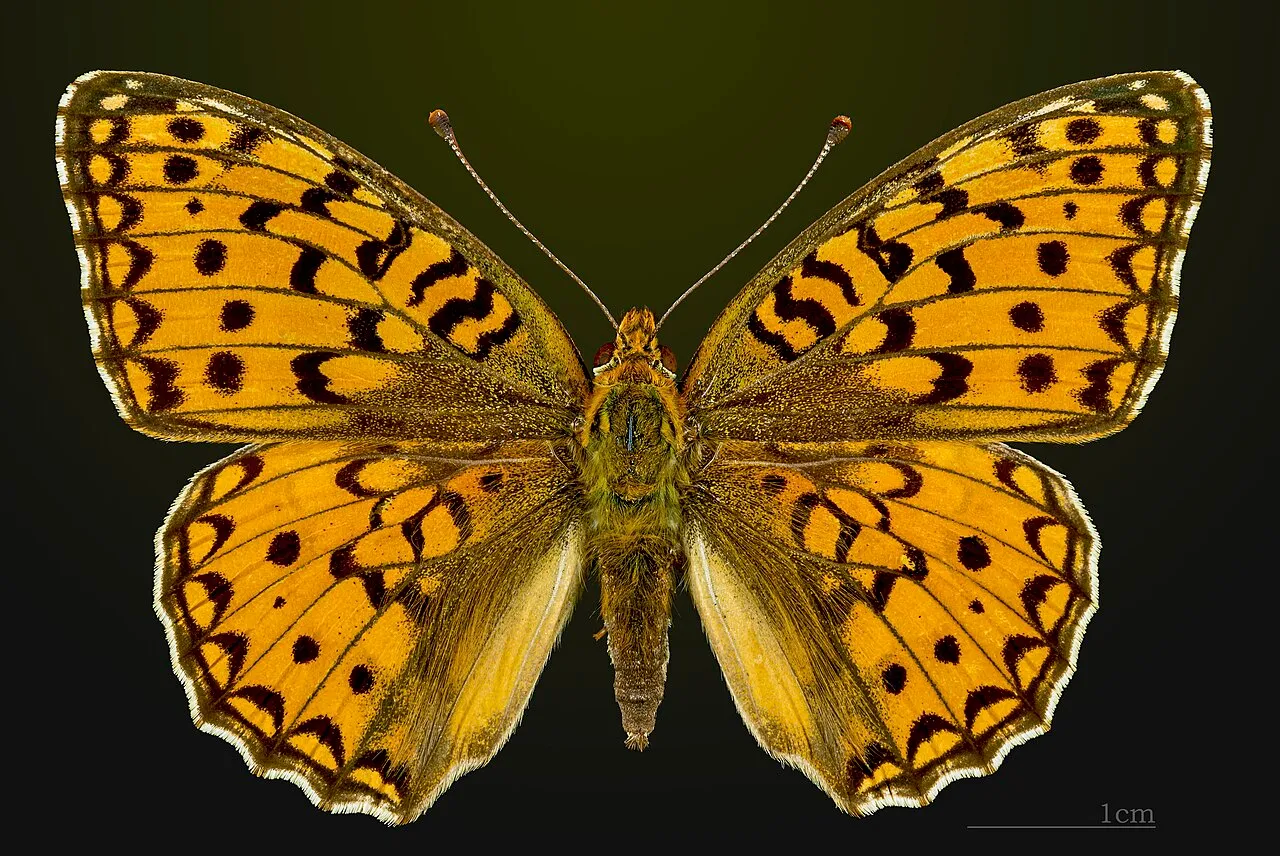
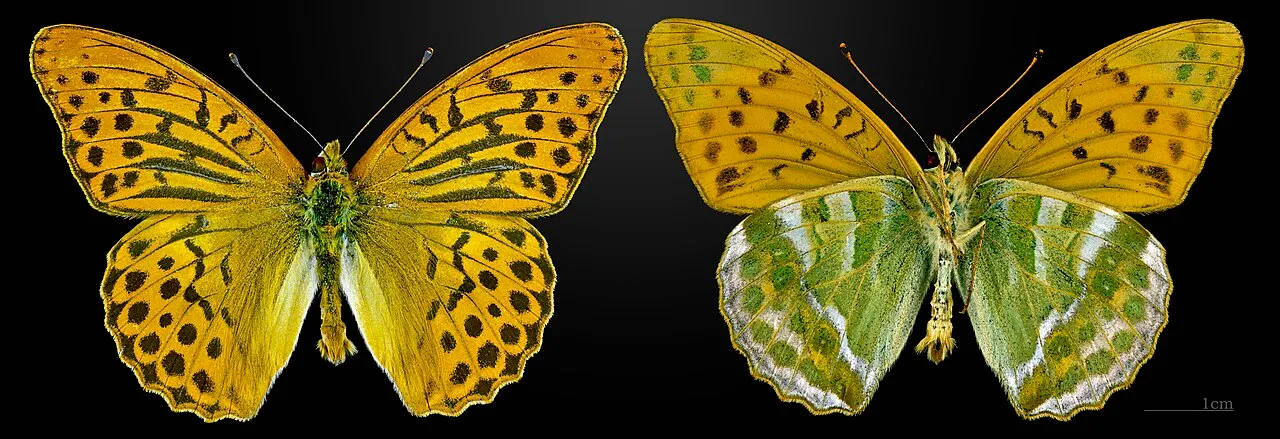
The butterfly has a wingspan of 46 to 60 mm. The upperside shows a bright brown-orange background with black dots and crossbands, and a line of submarginal triangular patches. The sexes differ in size and markings: females are rather bigger and have more heavily marked wings than males. On the underside, the hindwings usually carry small whitish-silvery spots, a black-pupilled yellow spot, and black-lined submarginal lunules and veins in the basal area.
The species can be confused with two close relatives, but it is noticeably smaller than both, and its silver-centred brown spots are smaller while its postdiscal silver markings are not continuous.
Range and habitat
The Niobe fritillary ranges across most of Europe and east through Siberia, Russia, Iran, China and Korea, though it is missing from the United Kingdom and the far north of Europe. It favours open grassy places, slopes, woodland and clearings, from sea level up to 2,400 m.
Britain has a handful of old records of the Niobe fritillary, from East Kent, South Hampshire, Suffolk, West Lancashire and West Sussex between 1851 and 1895, but these are believed to be the result of captive breeding, since the species was readily available through dealers at the time rather than evidence of a wild British population.
Life cycle and host plants
Caterpillars feed on several violets — Viola tricolor, V. canina, V. riviniana, V. odorata, V. hirta and V. palustris — as well as ribwort plantain, Plantago lanceolata. Females lay their eggs on the vegetation close to these host plants rather than directly on the leaves. The species overwinters as a caterpillar still inside the egg shell, and the larvae hatch in March and mature in June. It is univoltine, completing a single generation each year.
Behaviour and flight period
Adults are on the wing from May to late August. The single generation a year spends most of its life as an egg and caterpillar: the caterpillar stage begins the previous autumn, and the larvae hatch and feed up the following spring, ahead of the summer flight period.
Similar species
- Dark green fritillary (Speyeria aglaja): a close look-alike with an unbroken line of silver postdiscal markings on the underside, unlike the broken line shown by the Niobe fritillary.
- High brown fritillary (Argynnis adippe): the other species the Niobe fritillary is most often confused with; it too is larger, with bigger silver-centred spots and a continuous silver postdiscal line.
_kkJaX.webp)
_2r3CXC.webp)
_2_rmr34.webp)