_Z1PwpAL.webp)
Contents
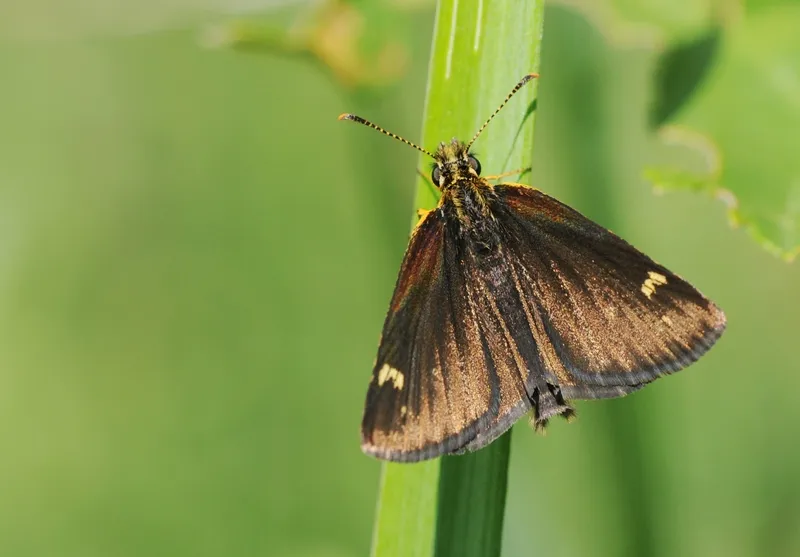
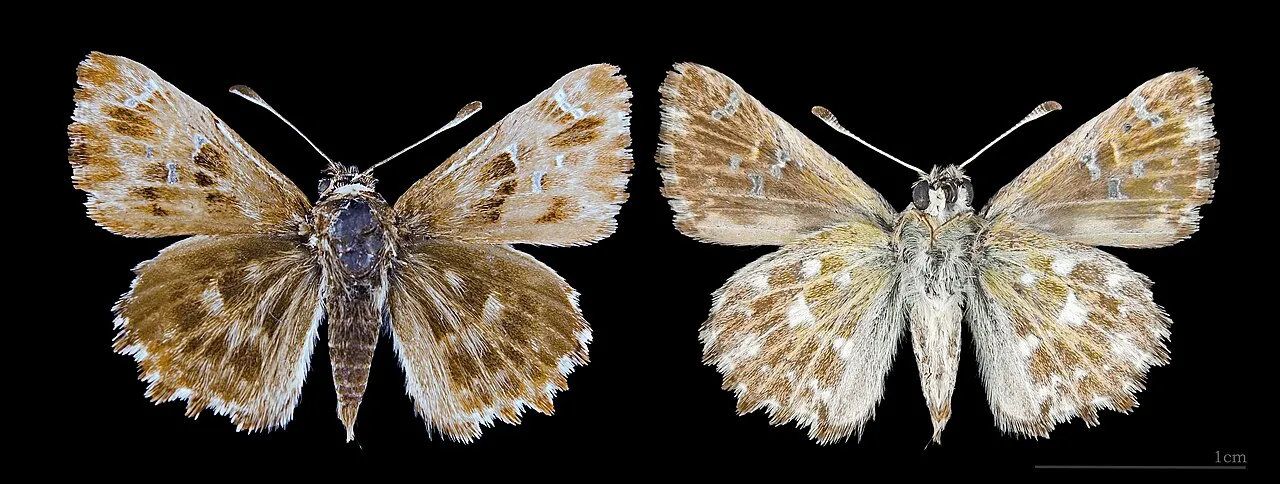
The silver-spotted skipper, Hesperia comma, is a small, fast-flying butterfly of the family Hesperiidae, named for the bright white spots on the underside of its hindwings. It belongs to the genus Hesperia, the “branded skippers”, a group whose males carry a scent-scale brand on the forewing. The species is found across Europe north to the Arctic, North Africa and temperate Asia as far as China and Japan, with further populations in western North America concentrated along the Pacific coast. Despite that wide range, it is a fussy butterfly at the scale of a single field, turning up only where the ground and the grazing suit it.
Identification
The upperside is golden-orange with dark brown wing edges, orange and dark brown markings along the wing borders typical of the “golden” skippers. The underside is distinctive: it is the only skipper found in the British Isles with white spots on the underside of the hindwings, which give the species its name. Wingspan runs 29–37 mm, with males at 29–34 mm and females, which run slightly larger, at 32–37 mm; the females’ white spots also show paler than the males’. Males carry a sex brand, a line of specialised scent scales, on the forewing, which females lack and are the sex more often seen in the field. The species is often confused with the large skipper, but has darker forewing tips and more yellow spots on the upperside.
Range and habitat
Beyond its broad European, North African and temperate Asian range, with outlying populations on the North American Pacific coast, the silver-spotted skipper is a specialist of warm, calcareous ground, especially chalk and limestone downland with short, sparse turf grazed closely enough to leave patches of bare earth. It favours the warmth of paths, rabbit scrapes and other bare patches baked by the sun, and sits out cooler, overcast spells rather than flying.
Life cycle and host plants
Caterpillars feed on sheep’s-fescue (Festuca ovina) and related fine-leaved fescues. Females seek out a suitable patch of bare ground, such as a rabbit scrape, and lay their eggs singly on grass tufts nearby; the pale cream or pearl-white eggs are laid in August and September and overwinter for around seven months before hatching the following March or April, the species’ overwintering stage. The caterpillar spins several blades of grass together into a tent-like shelter and feeds from within it, reaching about 25 mm when full-grown, with a black head, an olive body and black warts bearing amber spines; this tent lasts roughly 100 days before pupation. The species completes a single generation a year, flying from late July to mid-September in the UK and continental Europe; this one-brood rhythm, together with the long egg diapause over winter, means the whole life cycle from egg to egg takes close to a full year.
Behaviour and flight period
True to its skipper family, this is a fast-flying species that stays low to the ground and is hard to follow in flight, hovering with sharp, sudden changes of direction and frequent stops. Adults spend much of their time basking or feeding, with males resting on a sunlit perch to watch for passing females and favouring low-growing thistles. Activity falls off below about 20°C, and in the UK and continental Europe adults are on the wing from late July to mid-September, in a single generation each year; males tend to emerge and fly before females.
Conservation
The species is assessed as shown in the facts box, a category drawn from its Wikidata record. That broad, favourable assessment reflects its wide geographic range; locally, as a specialist of warm chalk and limestone downland, it still depends on continued grazing to keep its turf short and open.
Similar species
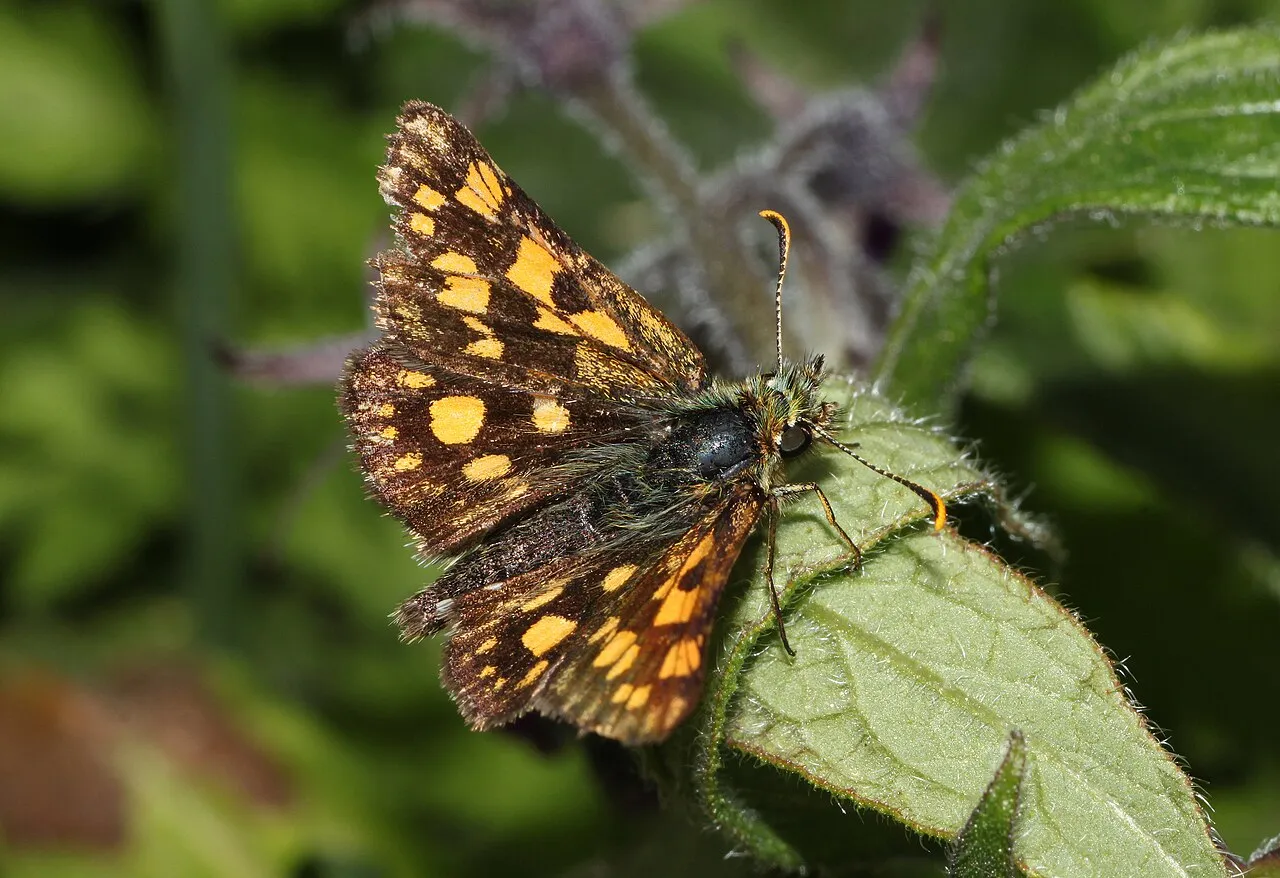
- Chequered skipper (Carterocephalus palaemon): another small skipper of the same family, told apart by its checkerboard pattern of orange and brown rather than the silver-spotted skipper’s plain golden upperside and white-spotted underside.
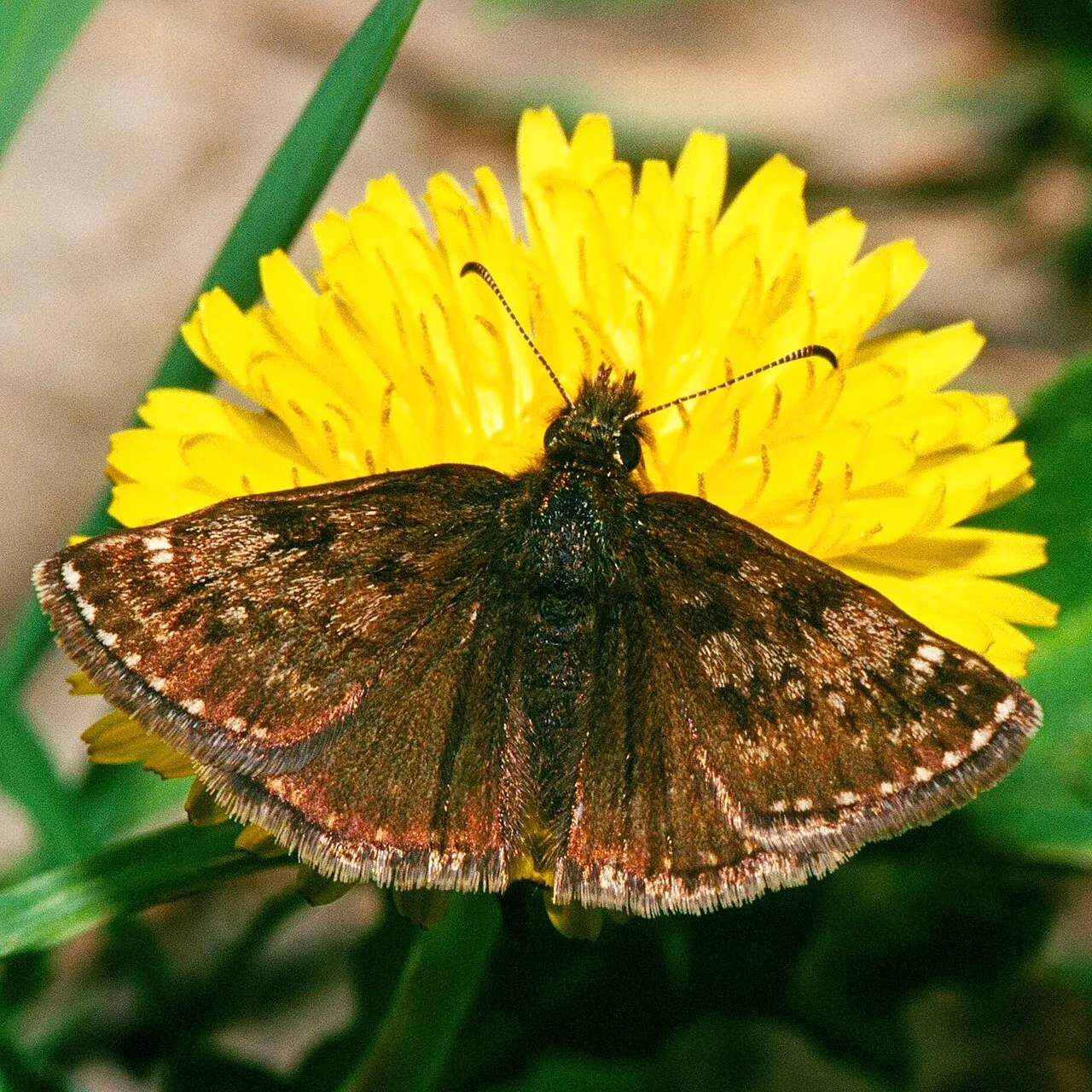
- Large skipper (Ochlodes sylvanus): the classic look-alike, separated by its paler forewing tips and fewer, less defined yellow spots on the upperside.
_Thymelicus_lineola_-_St_Foy_d'Aigrefeuille_-_France_-_male_ZAC1oH.webp)
_Ochlodes_sylvanus_-_Foret_de_Bouconne__France_-_male_73F1g.webp)
_Thymelicus_sylvestris_-_Foret_de_Bouconne__France_-_male_Z1dCd98.webp)