Contents
The Poplar Admiral, Limenitis populi, is a large woodland butterfly of continental Europe and temperate Asia, found from Denmark south to northern Italy and Greece, and east across Russia to Japan and China. It belongs to the family Nymphalidae, and its caterpillars feed on poplars rather than on flowering plants. The species lives in deciduous forests and forest edges where aspen (Populus tremula) or black poplar (Populus nigra) grow.
Identification
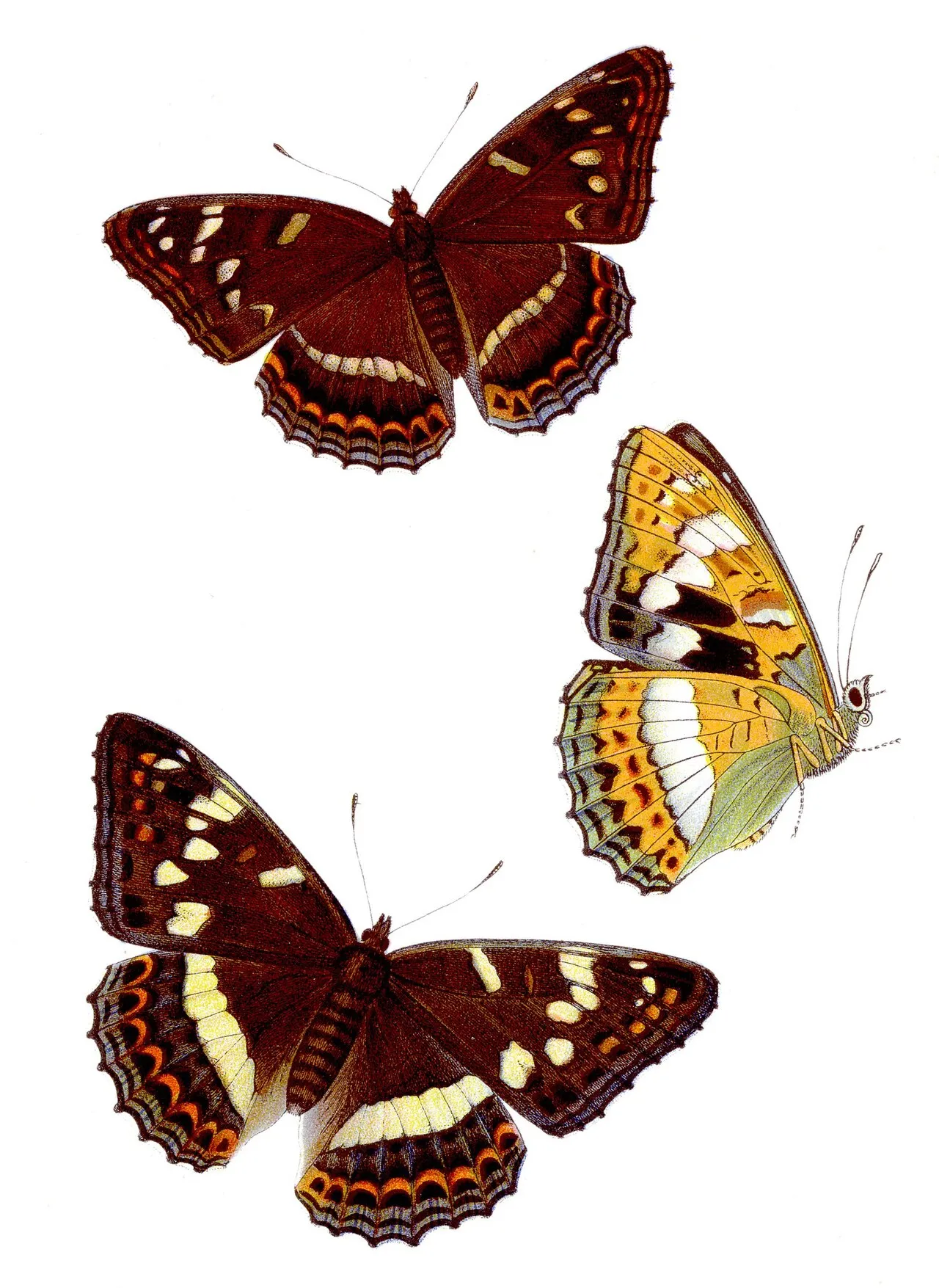
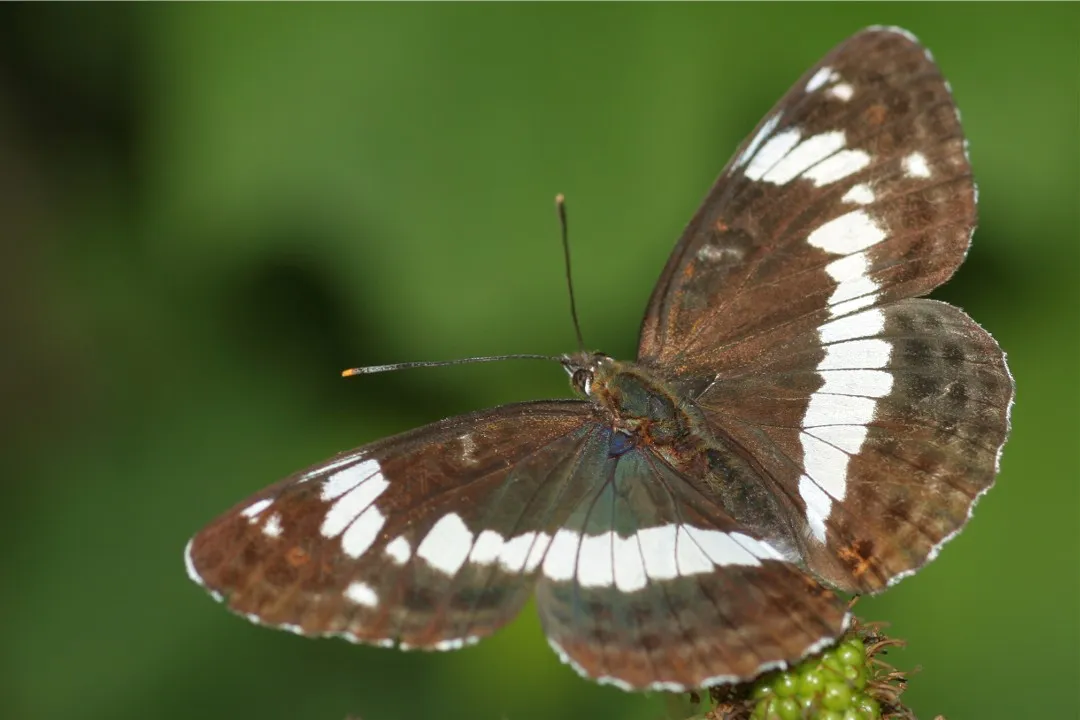
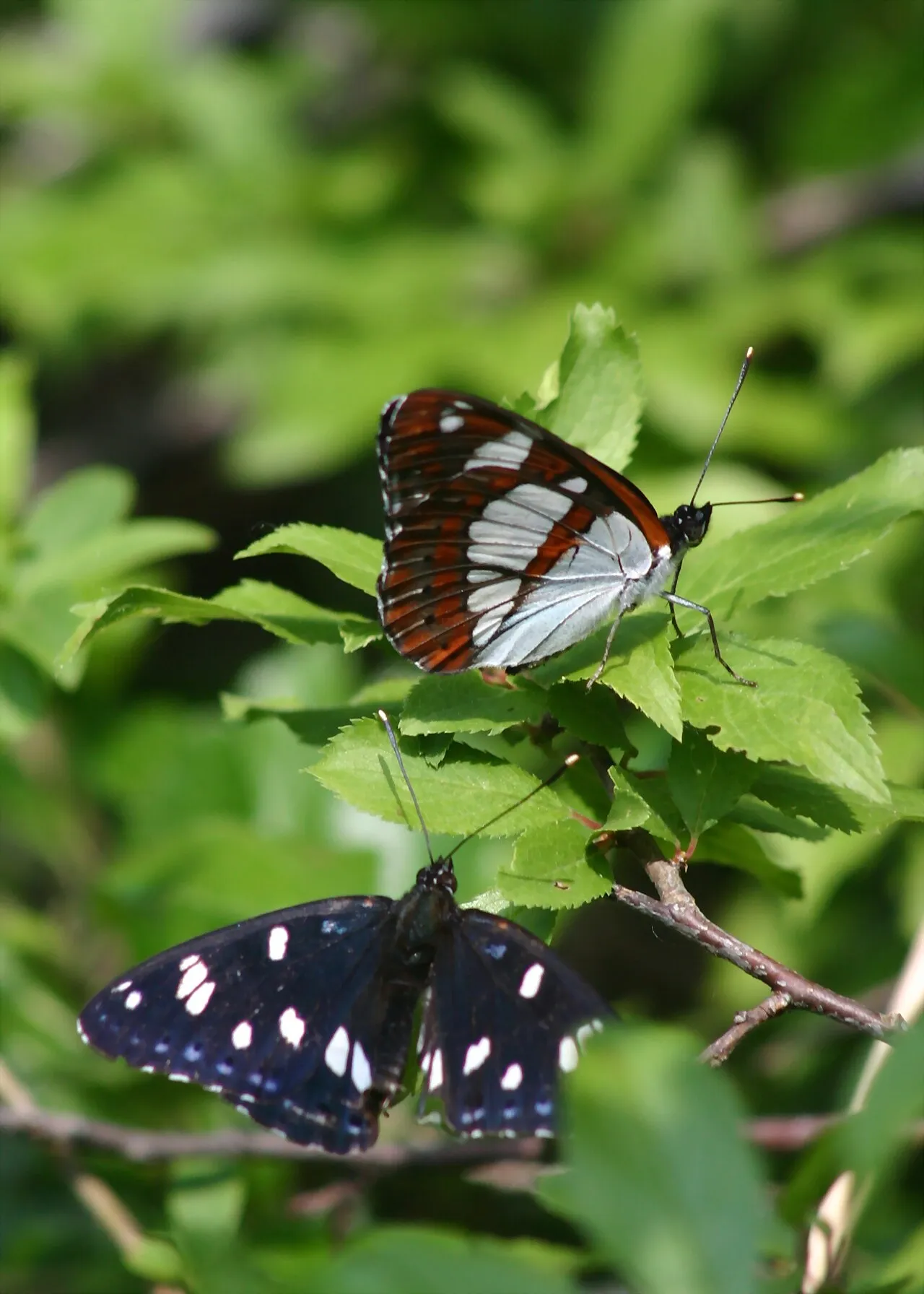
This is a large butterfly, with a wingspan of 66 to 77 mm in males and 82 to 85 mm in females. The upper surface is dark brown with white spots, and a white stripe runs across the wing, bordered by orange and blue. The underside is orange, in contrast to the dark upperside. How bold that white stripe is differs between the sexes, since females carry distinct, broad white lines across the hindwings, while males show narrower, fainter lines that can be absent altogether. The size difference between the sexes is also marked, with females running noticeably larger than males, a gap wide enough that the two can often be told apart on size alone before the wing pattern is even checked.
Range and habitat
The Poplar Admiral’s range stretches across continental Europe and temperate Asia, from Denmark south to northern Italy and Greece, east across Russia to Japan and China. Within that range it keeps to deciduous forests and forest edges with aspen or black poplar, since its caterpillars eat nothing else. Females in particular stay in the canopy and rarely come down to ground level, which makes the species easier to encounter as a fast-flying male than as an egg-laying female. That dependence on two poplar species also makes the butterfly vulnerable: it is now rare and protected in parts of its range, chiefly because of the clearing of the forests that hold the trees it must feed on.
Life cycle and host plants
Caterpillars feed on aspen (Populus tremula) and black poplar (Populus nigra) in Europe, and on Populus maximowiczii in Japan; in captivity, Japanese stock has also been reared on willow. Eggs are laid on the upper surface of a host leaf and hatch after about seven days; each egg is covered with a pattern of hollow polygons, typical of this butterfly family. The caterpillar that emerges is green with black and brown shading and a reddish-brown head. The species overwinters as a caterpillar, which in August cuts out and rolls up a leaf to make a cocoon and spends the winter inside it, emerging again before its host tree comes into leaf the following spring. There is one generation a year, with adults on the wing from late June to mid-July across most of Europe, though records from France span late May to mid-August; males typically emerge before females, so a patrolling male is often the first sign of the flight season in a given wood.
Behaviour and flight period
The two sexes fly quite differently: males fly rapidly, while females glide slowly, consistent with their habit of staying high in the canopy. Unlike most butterflies in this guide, the Poplar Admiral has little interest in flowers. Adults are drawn to foul smells such as carrion and dung, and take minerals from tree sap and damp soil through the proboscis rather than nectar.
Similar species
- White admiral (Limenitis camilla): a smaller relative in the same genus, with a similar dark ground colour and white banding, but a slimmer build overall.
- Southern white admiral (Limenitis reducta): another Palearctic Limenitis with dark wings crossed by white bands, generally found further south than the Poplar Admiral.
_kkJaX.webp)
_2r3CXC.webp)