Contents
The Southern white admiral, Limenitis reducta, is a woodland butterfly of brown-black wings crossed by a broad white band, found across central and southern Europe, from northern Iberia and southern and eastern France through Italy, the Balkans and the Alps, and east into western Asia, including Syria, the Caucasus and Iran. It belongs to the family Nymphalidae, and its caterpillars feed almost entirely on honeysuckle. The species was described by Otto Staudinger in 1901, and two subspecies are recognised today, the nominate form and L. reducta herculeana.
Identification
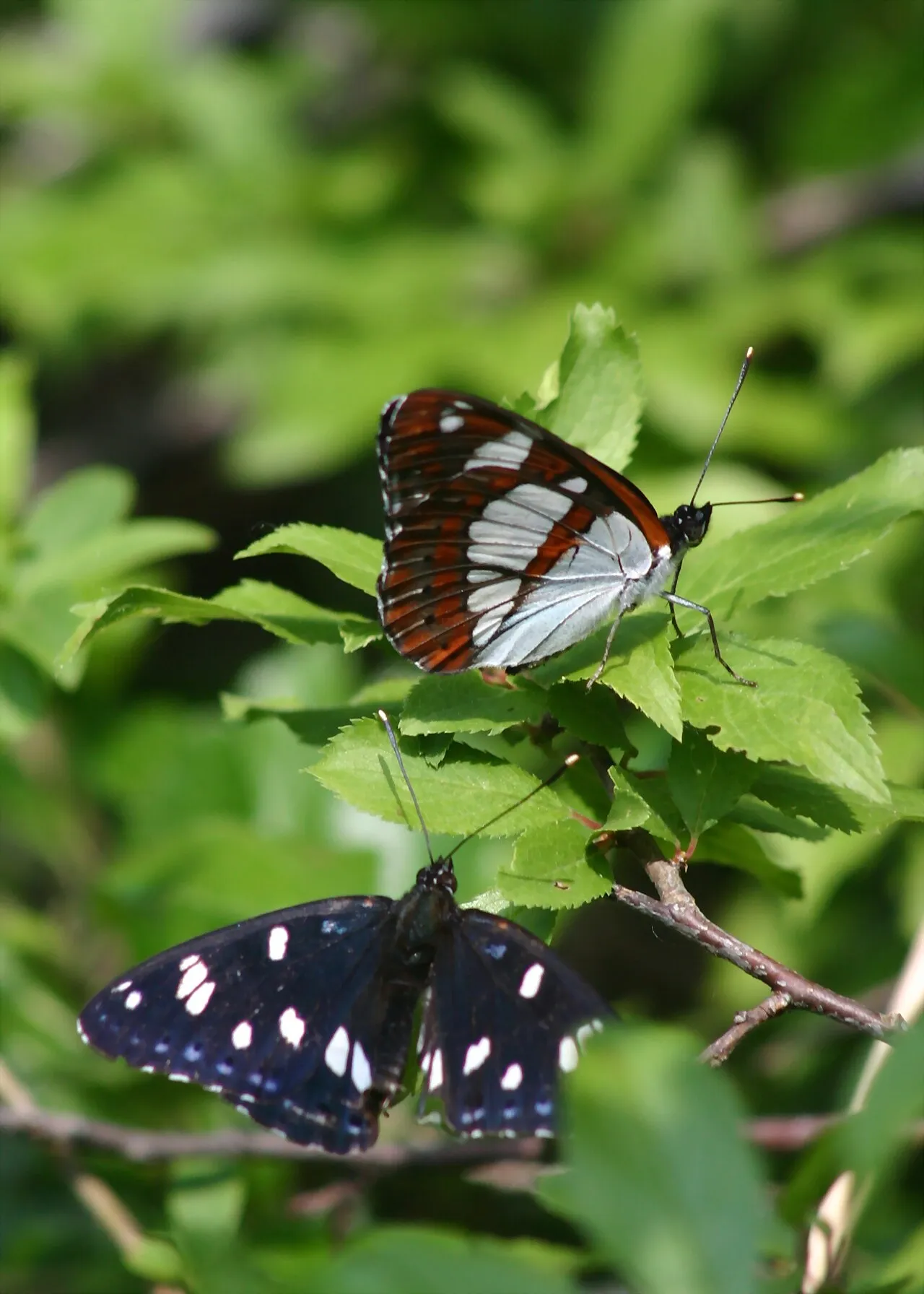
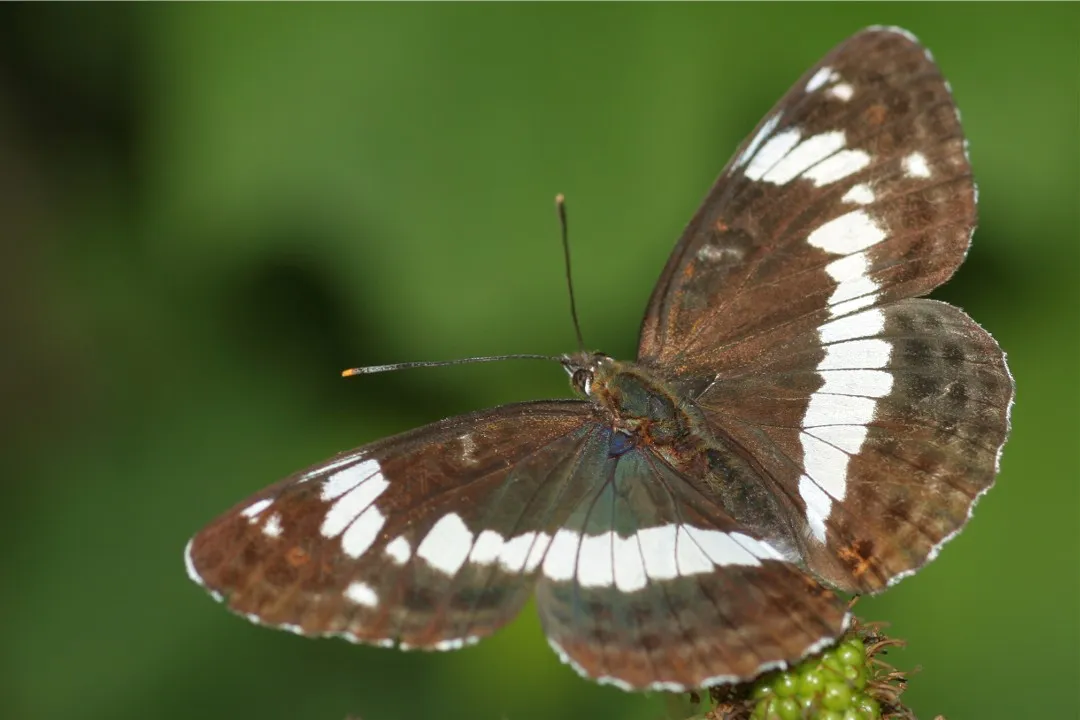
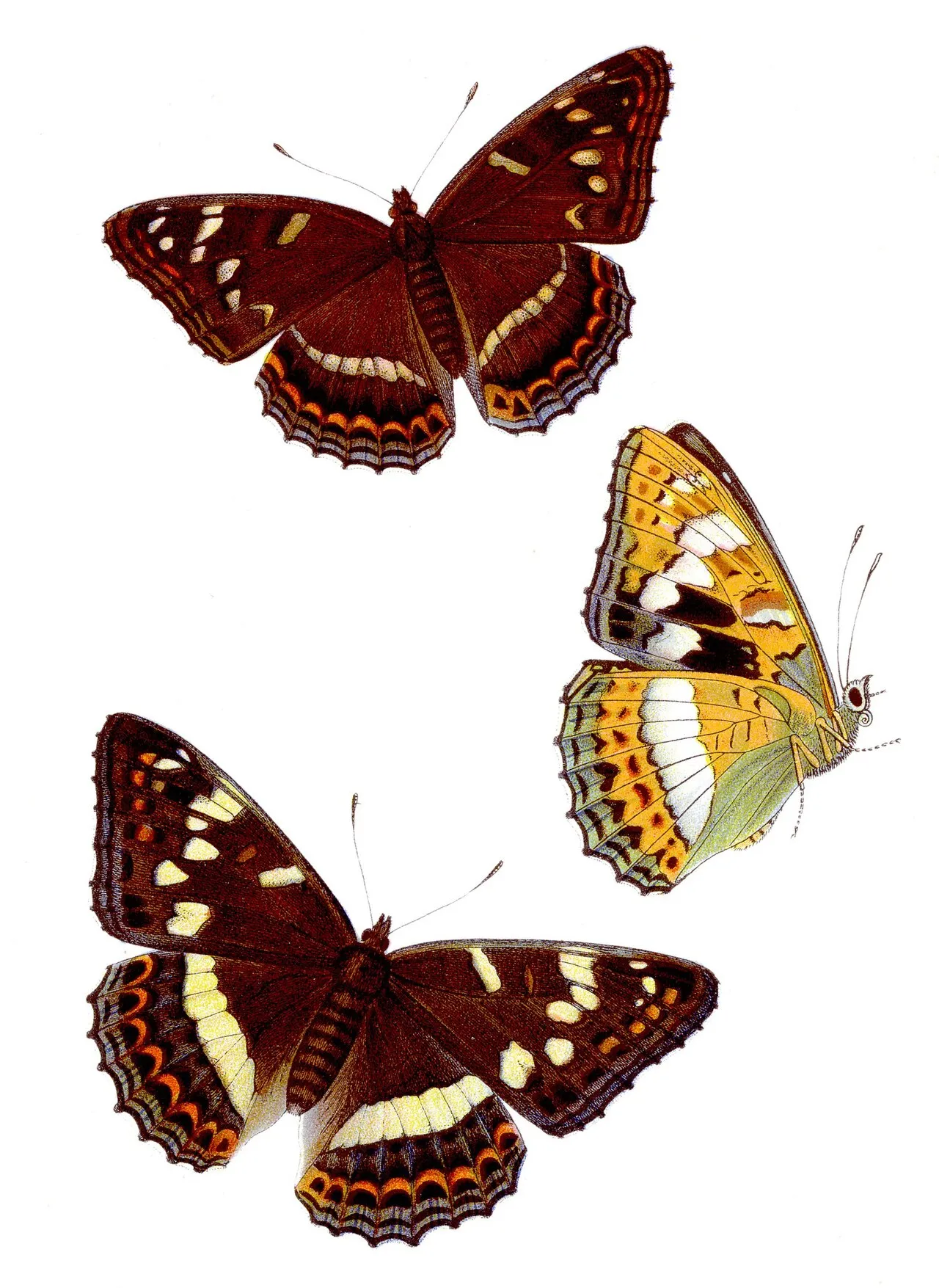
This is a medium-sized butterfly, with a wingspan of 46 to 54 mm. The upperside is brown-black with a metallic blue sheen, crossed by a broad transversal band of white markings and a submarginal line of small blue dots; the blue iridescence shifts with the viewing angle, so a resting butterfly can look plain black-and-white one moment and faintly blue the next. The underside of the hindwing is reddish, with a silvery base, a row of white markings and a row of black spots, while the forewing underside carries white spots in the wing cell. The caterpillar, which grows to about 27 mm, is light green to dull green above and reddish-brown below, armed with numerous brown thorn-like spines.
Range and habitat
The species lives in light woodland, woodland glades and forest edges, from sea level up to about 1,650 m. That elevation span, from coastal scrub to mid-altitude mountain slopes, mirrors how widely its honeysuckle host plants themselves grow across the Mediterranean basin and the hills further east. Within that broad range the butterfly tends to follow its host plant, turning up wherever honeysuckle grows along sunny woodland rides and scrubby edges rather than deep inside closed forest.
Life cycle and host plants
Caterpillars feed on honeysuckles (Lonicera), including L. periclymenum, L. etrusca, L. implexa, L. xylosteum, L. alpigena and L. caprifolium. The species has one or more generations a year, depending on location, with southern populations able to fit in extra broods where the season runs longer.
Behaviour and flight period
Adults are on the wing from May to August, depending on location. Rather than visiting garden flowers in the way many butterflies do, this species feeds on nectar from a wide range of herbaceous and woody flowers, but also from fallen fruit, dung, aphid honeydew and mineral-rich moisture on damp ground. That taste for dung and overripe fruit alongside flowers is typical of admirals, and it is often the easiest way to spot one settled low over a woodland path rather than up among the blossoms.
Similar species
- White admiral (Limenitis camilla): the closest match in pattern, a black-and-white woodland admiral with a similar banded wing, though it lacks the Southern white admiral’s blue sheen and keeps to cooler, more northerly woodland.
- Map butterfly, summer form (Araschnia levana f. prorsa): a smaller butterfly whose dark summer brood can recall the white-banded pattern at a glance, though its wings are more angular and the white band breaks into smaller patches.
- Hungarian glider (Neptis rivularis): a third white-banded woodland species that can cause confusion on the wing.
_kkJaX.webp)
_2r3CXC.webp)