Contents
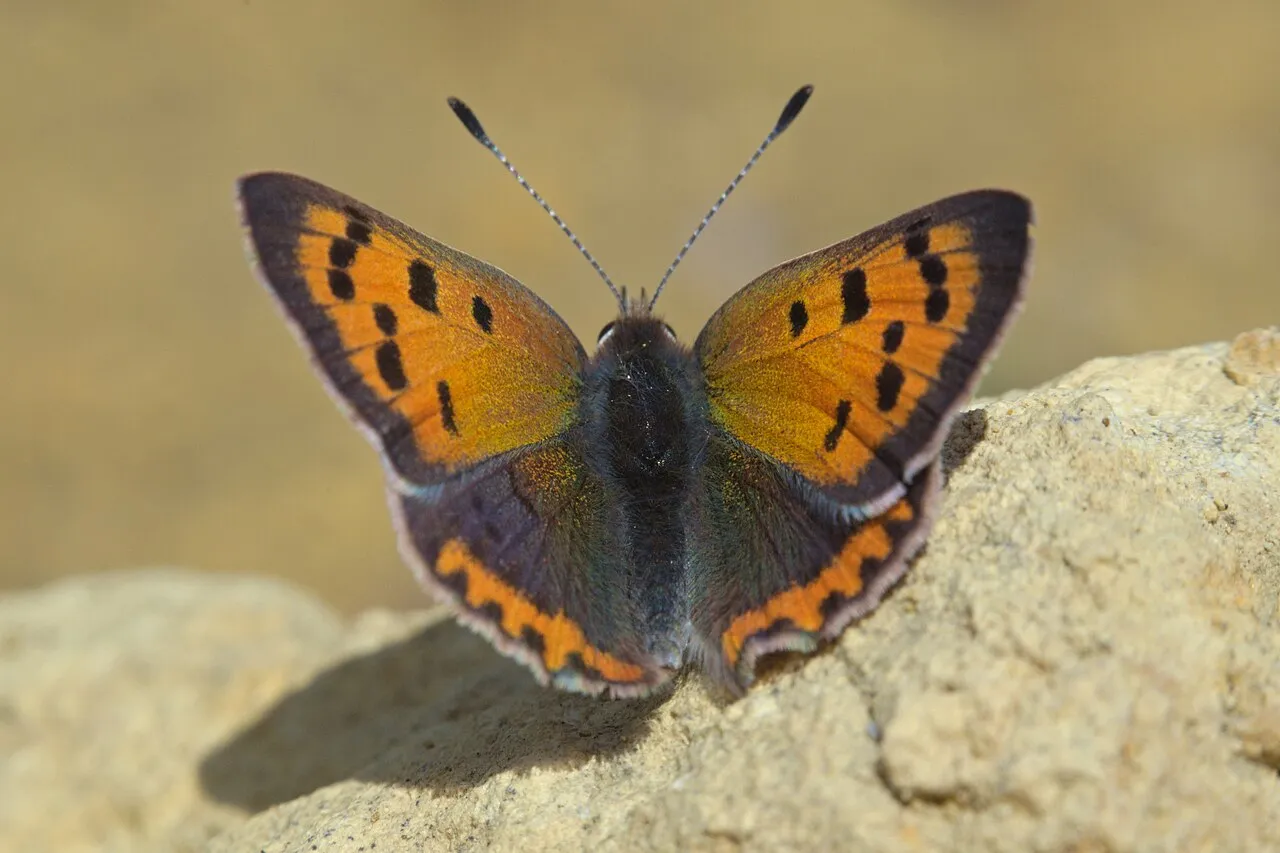
The small copper, Lycaena phlaeas, is a small, fast-flying butterfly of the family Lycaenidae, named for the bright copper sheen of its forewings. It is one of the most widespread and common butterflies across Europe and Asia, through North Africa to Ethiopia, and in North America. Despite that range, it is easy to overlook: a single small copper often holds a patch of bare ground or low vegetation as a territory and is gone in a blur of orange the moment it is disturbed.
Identification
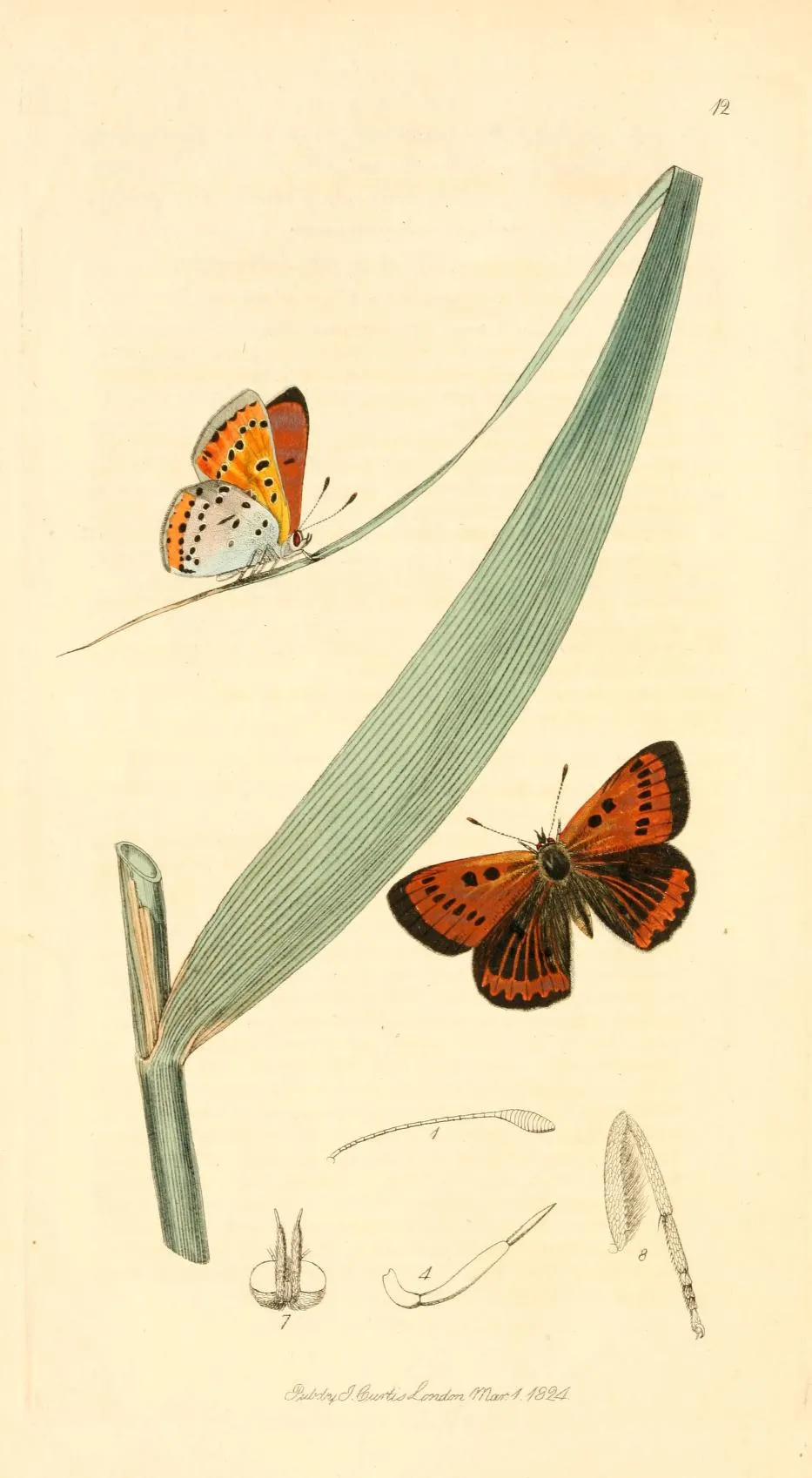
The small copper has a wingspan of 26–36 mm, making it one of the smaller butterflies on the wing in its range. The upperside is bright orange with dark borders and eight or nine black spots on the forewings, while the hindwings are dark with an orange edging. The underside is paler, grey-brown with yellow-outlined spots, and shows a red marginal band on the hindwing.
The sexes are similar, but some females show extra blue spots along the hindwing border, a form known as caeruleopunctata, while males otherwise tend to look slightly brighter and smaller. In Britain and Ireland two subtly different populations are recognised: the mainland British form has narrower copper hindwing bands and a browner underside, while the Irish form has broader copper bands and a greyer underside with a brighter, more conspicuous red marginal band.
Range and habitat
The small copper is widespread and common across Europe and Asia, through North Africa to Ethiopia, and in North America. It is a butterfly of open, often disused ground: grassland, wasteland, heathland, chalk downland, old quarries, embankments, road verges and woodland rides, including churchyards and waste ground in cities, wherever nectar sources and its foodplants grow. This tolerance of poor and disturbed ground is part of why the species turns up in places many other butterflies avoid, from motorway verges to post-industrial brownfield sites.
Life cycle and host plants
Caterpillars feed mainly on common sorrel (Rumex acetosa) and sheep’s sorrel (Rumex acetosella), with broad-leaved dock also used. The species overwinters as a caterpillar, sheltering low down on the foodplant through the colder months before resuming feeding and growth in spring.
Across its range the small copper produces two to three generations a year, fewer further north, with up to four broods in exceptionally favourable years. In Britain and Ireland, adults are on the wing from mid-April or early May through to October, occasionally into early November, with each successive brood overlapping the last so that fresh adults can appear almost continuously through the summer.
Behaviour and flight period
Male small coppers are notably territorial. A male will set up a small territory on a patch of ground and fly up to intercept any passing insect, chasing off rivals and investigating anything that moves nearby, including the shadows cast by passing birds. The species is strongly sun-loving, frequently resting on bare ground or low vegetation to bask, wings angled to catch the maximum warmth, and it flies fast and low when active. Adults nectar readily at low-growing flowers such as fleabane, buttercups and thistles.
Similar species
- Sooty copper (Lycaena tityrus): a close relative found across much of continental Europe, with males a darker black-brown with a greenish sheen above (rather than the small copper’s bright orange) and females a paler yellow-orange than small copper females; it favours similar open grassland but is absent from Britain and Ireland, per Wikipedia.
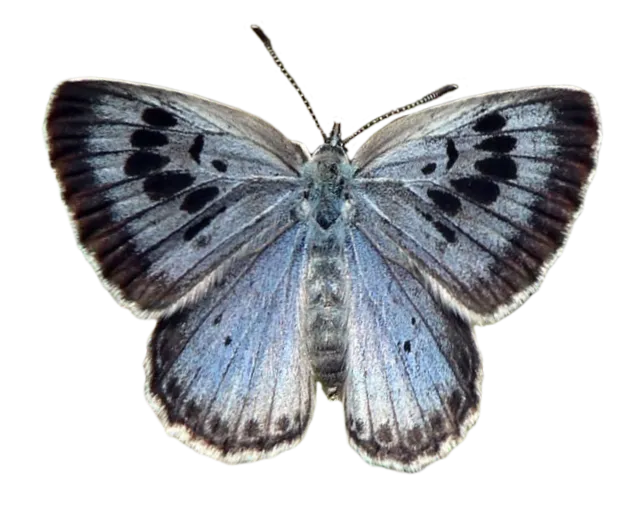
- Large copper (Lycaena dispar): a bigger, brighter relative that needs wetland habitat with its own dock foodplants, and is far more local and declining than the small copper across much of its range.
_Lycaena_virgaureae_-_Radawa_Poland_-_male_Z25L2d2.webp)
_2_XOluD.webp)
_Lycaena_hippothoe_-_Ja%C5%9Bliska__Poland_-_male_Z2dknjB.webp)
_(cropped)_ZsqovX.webp)
_%E2%99%82__Holzwarchetal_bei_M%C3%BCrringen__Ostbelgien_-_Flickr_-_Frank.Vassen_Z2eXhn5.webp)
_male_Turna_Ewa2f.webp)