_2_XOluD.webp)
Contents
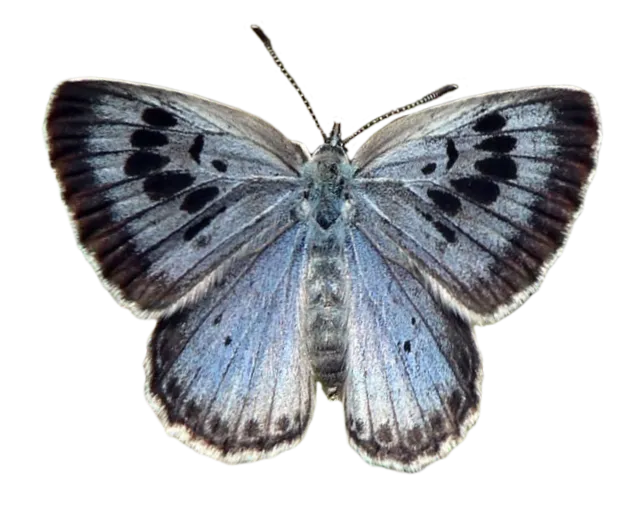
The sooty copper, Lycaena tityrus, is a small butterfly of the family Lycaenidae, named for the dark, sombre upperside of the male rather than the bright copper sheen typical of its relatives. The species is found throughout Europe from Spain to Russia, except Great Britain, and also in Asia Minor. Three subspecies are recognised across that range: the nominate form found across most of the continent, a high-altitude alpine form restricted to the mountains, and a third form confined to the northwest of the Iberian Peninsula and western France.
Identification
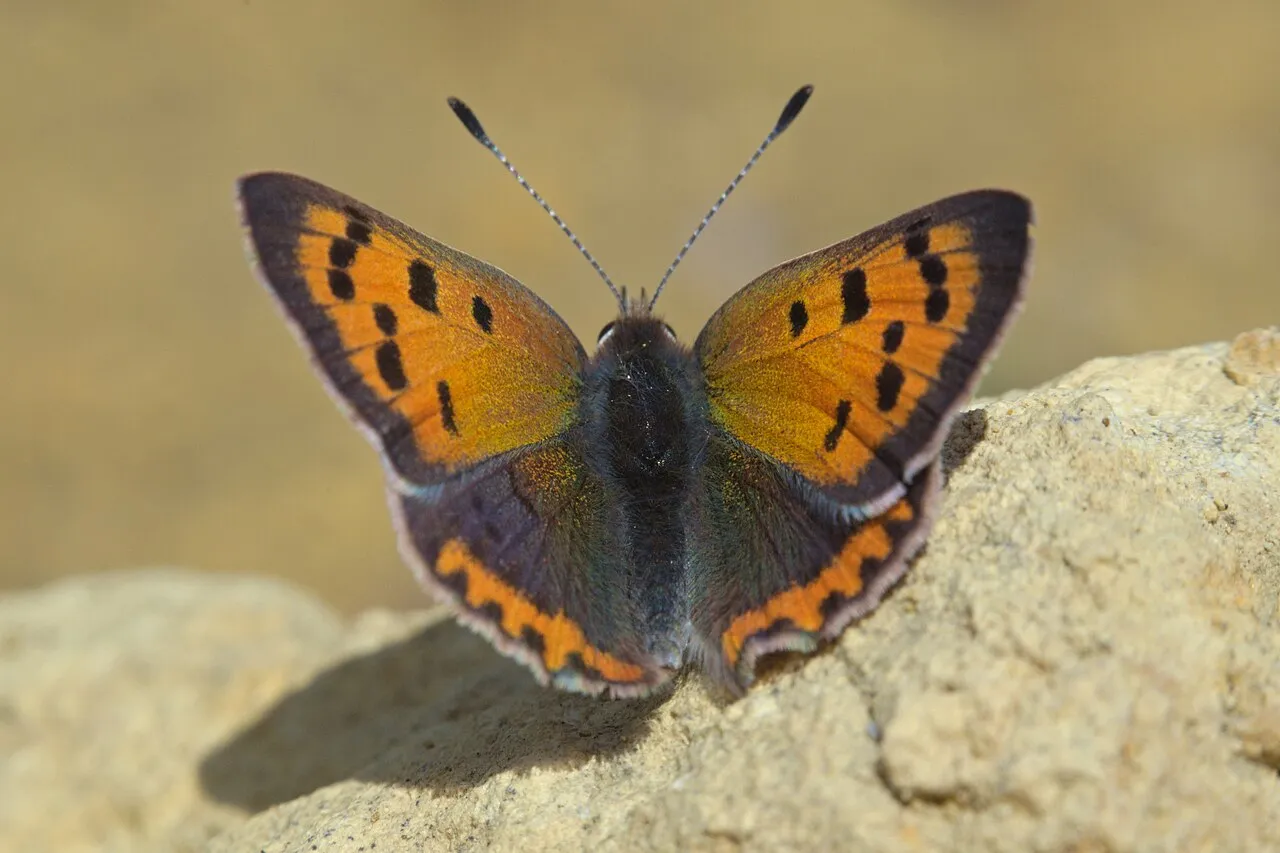
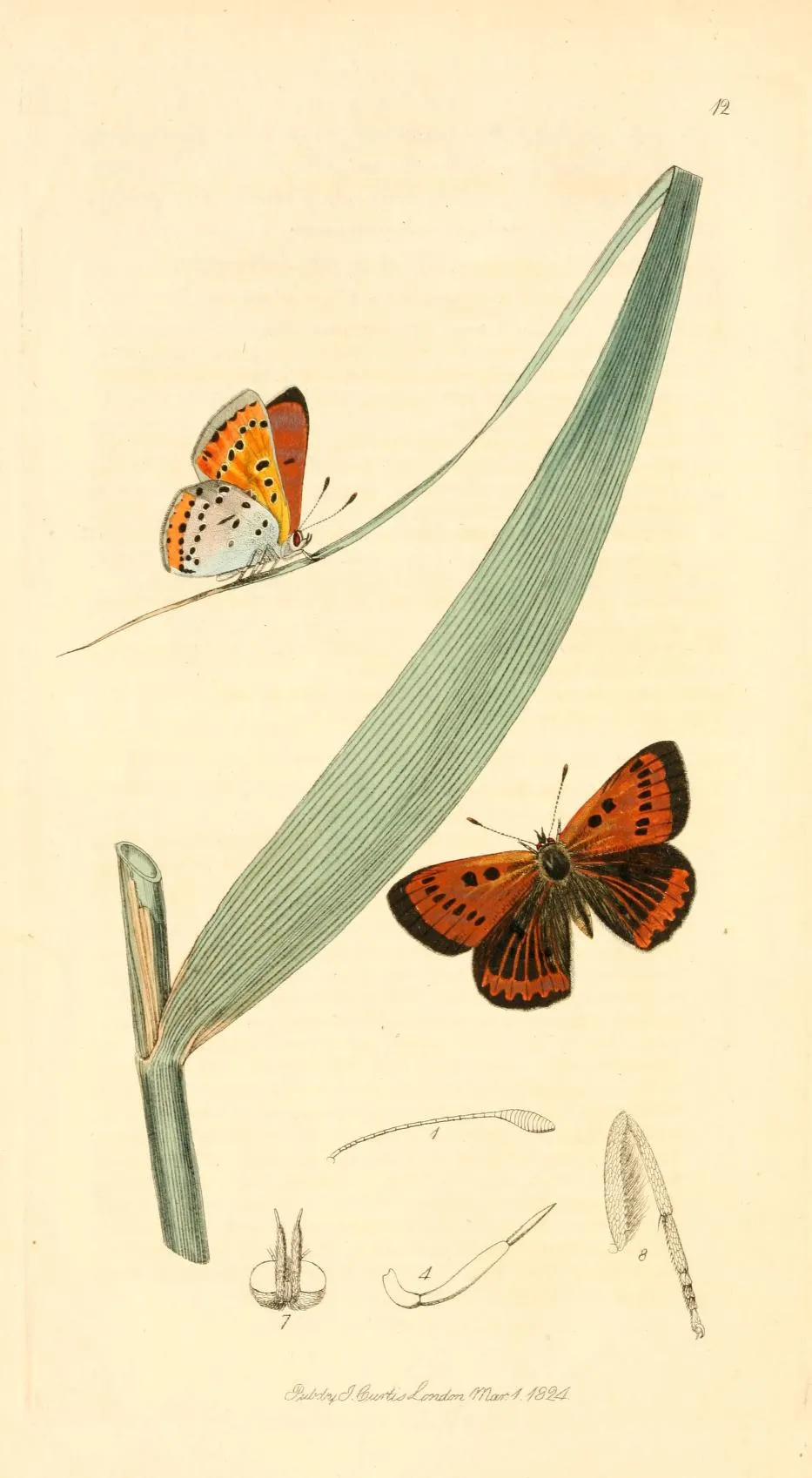
The sooty copper has a wingspan of 28–30 mm, one of the smaller coppers on the wing in Europe. The sexes look quite different above. The male’s upperside is black-brown with a metallic green gloss when freshly emerged, carrying black spots that echo those of the underside and a very thin reddish, crescent-shaped line near the margin of the hindwing. The female’s upperside resembles that of the small copper but is paler yellow, with only a very thin black edge where the male shows a broad black marginal band. The underside in both sexes is yellowish grey, patterned with numerous small black eyespots and a row of small russet-red spots before the margin; the alpine subspecies L. t. subalpina shows a more plumbeous-grey underside with the red spots reduced.
Range and habitat
Within its European and Asia Minor range, the species favours roadsides among fields and sunny forest tracks, the kind of open, flower-rich edge habitat that suits a small, sun-loving butterfly whose caterpillars need sorrels growing in reach of sunlight. The alpine subspecies, L. t. subalpina, departs from that lowland pattern and occurs at considerable elevation, separated from the nominate form by both altitude and appearance, and it is this high mountain population that keeps to a single short flight period rather than the long overlapping season of the lowlands.
Life cycle and host plants
Caterpillars feed on docks and sorrels, Rumex acetosa and Rumex acetosella. The species overwinters as a caterpillar, resuming feeding on its host plants the following spring. The number of broods varies sharply across the range: populations produce multiple, overlapping generations in the south, while alpine populations fly as a single generation a year.
Behaviour and flight period
Adults are on the wing from April to October depending on location and subspecies, a long season built from the overlapping broods of lowland populations further south. The alpine subspecies keeps to a narrower calendar: L. t. subalpina is univoltine and flies in July, timed to the short mountain summer.
Conservation
The species is assessed as shown in the facts box, a category drawn from its Wikidata record. Its broad range across ordinary roadside and field-edge habitat sets it apart from range-restricted relatives such as the Large Copper, though the alpine subspecies remains confined to a narrower band of high-elevation habitat than the widespread nominate form.
Similar species
- Small copper (Lycaena phlaeas): the female sooty copper closely resembles this species above, but shows a thin black marginal edge rather than the small copper’s broad black band.
- Large Copper (Lycaena dispar): a noticeably bigger, brighter copper of wetland habitats, lacking the sooty copper’s dark male upperside.
- Scarce copper (Lycaena virgaureae): shares the genus’s iridescent-orange-male, duller-female pattern, but flies a single generation and lacks the sooty copper’s black-brown male ground colour.
_Lycaena_virgaureae_-_Radawa_Poland_-_male_Z25L2d2.webp)
_Lycaena_hippothoe_-_Ja%C5%9Bliska__Poland_-_male_Z2dknjB.webp)
_(cropped)_ZsqovX.webp)
_%E2%99%82__Holzwarchetal_bei_M%C3%BCrringen__Ostbelgien_-_Flickr_-_Frank.Vassen_Z2eXhn5.webp)
_male_Turna_Ewa2f.webp)