Contents
The knapweed fritillary, Melitaea phoebe, is an orange-brown butterfly of the family Nymphalidae, named for the knapweeds its caterpillars favour. It ranges across most of Europe, though it is absent from England, Ireland, northern France, Germany, Poland, the Netherlands, Belgium and Scandinavia, and beyond Europe it is found in North Africa, Turkey, Siberia, Mongolia and northern China. The concept of the species has narrowed over time: it previously included Melitaea telona, which has since been revalidated as a distinct cryptic species, so older records covering the two under one name should be read with care.
Identification
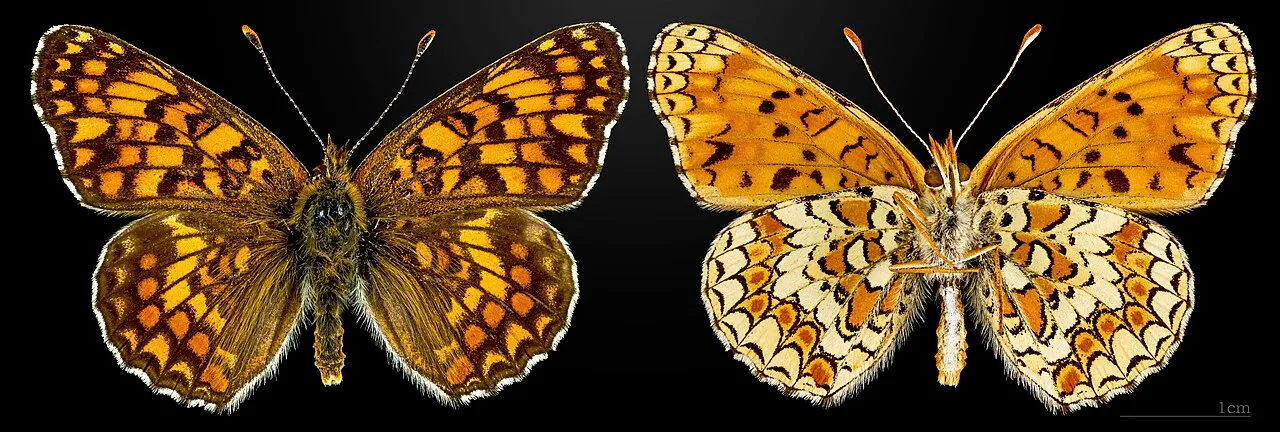
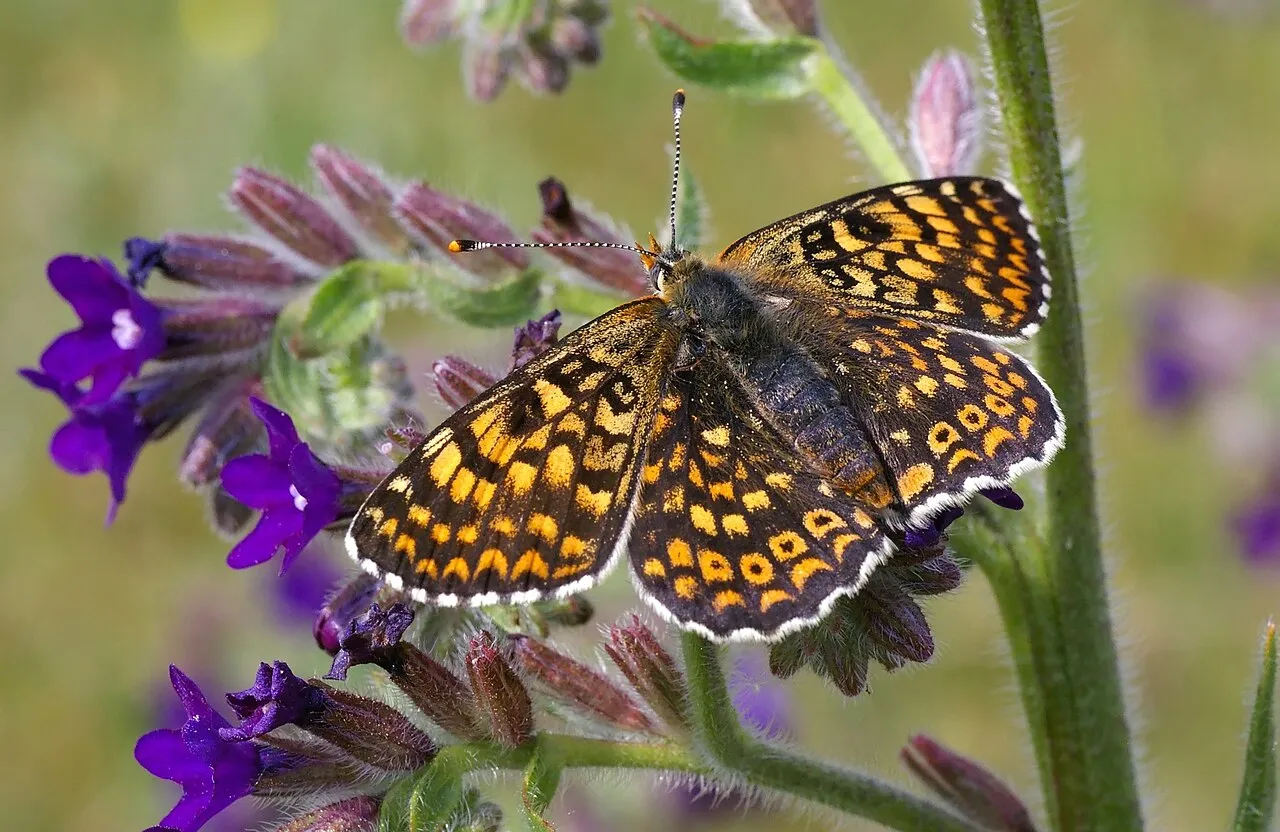
The knapweed fritillary has a wingspan of 34 to 50 mm. The upperside carries black markings that are variable from one individual to the next: usually joined into bands, but sometimes covering most of the wing or very little of it. A feature that helps tell it apart from similar fritillaries is a reddish-yellow, crescent-shaped spot sitting between the two median veins on both the forewing and the hindwing. Its forewings are more pointed than those of the eastern knapweed fritillary (Melitaea telona), though equally variable in colour and markings.
Range and habitat
Within this wide range the butterfly favours flowery meadows and plains, as well as stonier ground such as rocky hillsides.
Life cycle and host plants
Caterpillars feed on Plantago and Centaurea species, including brown knapweed (Centaurea jacea), the plant that gives the species its common name. The larva is grey with a black head, soft red-brown branched thorns, blackish lines along the back and numerous small white dots, and it pupates into a chrysalis of a dull yellow-brown colour, marked with dark yellow and black.
Behaviour and flight period
Adults are on the wing from April to September, the exact timing varying by location across the species’ range: an earlier start in the warmer south and a shorter, later season further north and at altitude.
Similar species
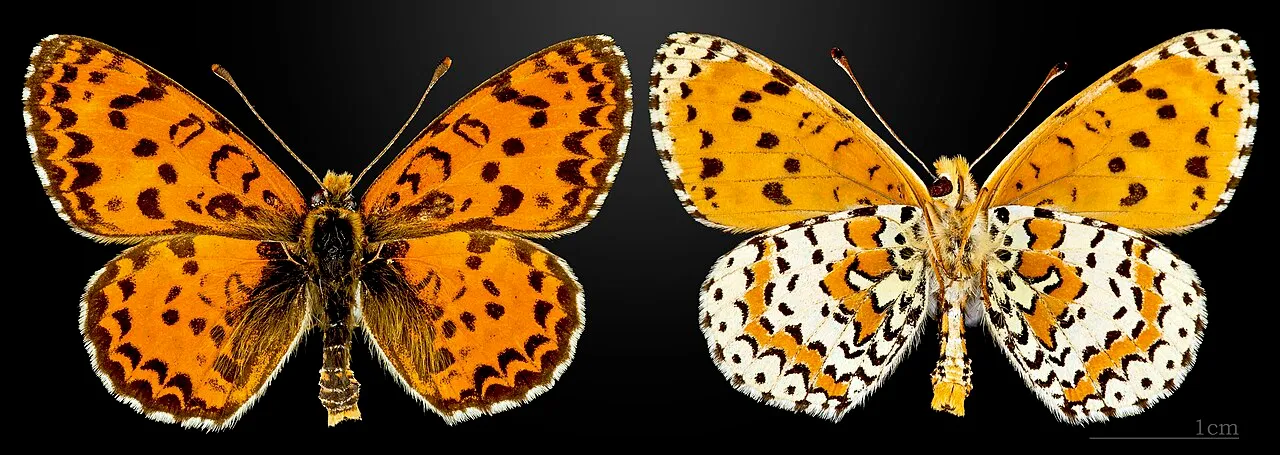
- Spotted fritillary (Melitaea didyma): flies alongside the knapweed fritillary over large parts of Europe, North Africa and Asia, and shares both its orange-brown colouring and its taste for knapweed as a caterpillar.
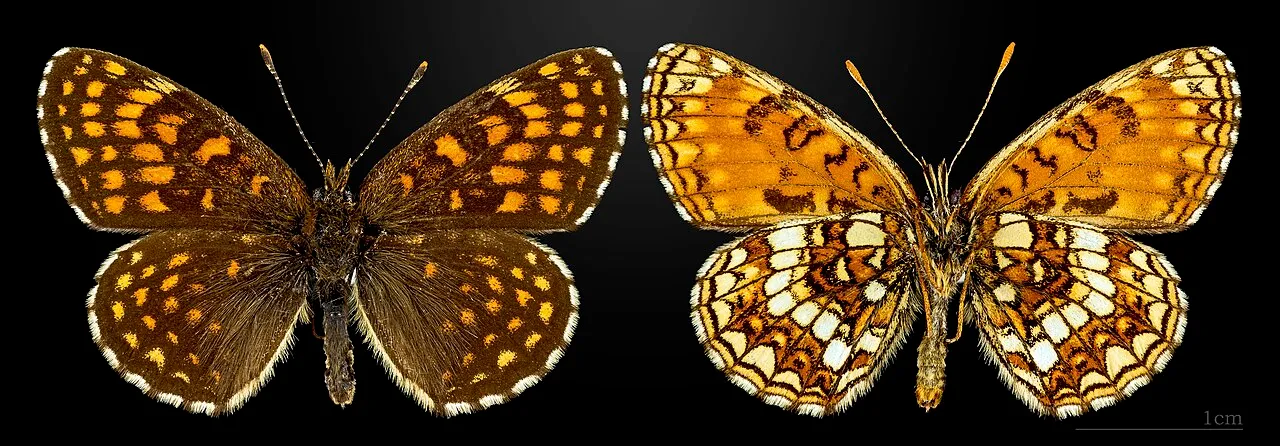
- Heath fritillary (Melitaea athalia): another Palaearctic fritillary with chequered, similarly patterned wings, though its black markings tend to form a more even, duller network than the knapweed fritillary’s variable bands.
_kkJaX.webp)
_2r3CXC.webp)