Contents
The painted lady, Vanessa cardui, is an orange, black and white butterfly of the family Nymphalidae and one of the most widely distributed butterflies on Earth. It is a powerful migrant, and its caterpillars feed on thistles and a long list of other plants rather than on any single host. The species is found on every continent except Antarctica and Australia, native across the Nearctic, Palearctic, Oriental, Ethiopian and Neotropical regions, with populations throughout North America, Europe, Asia and Africa.
Identification
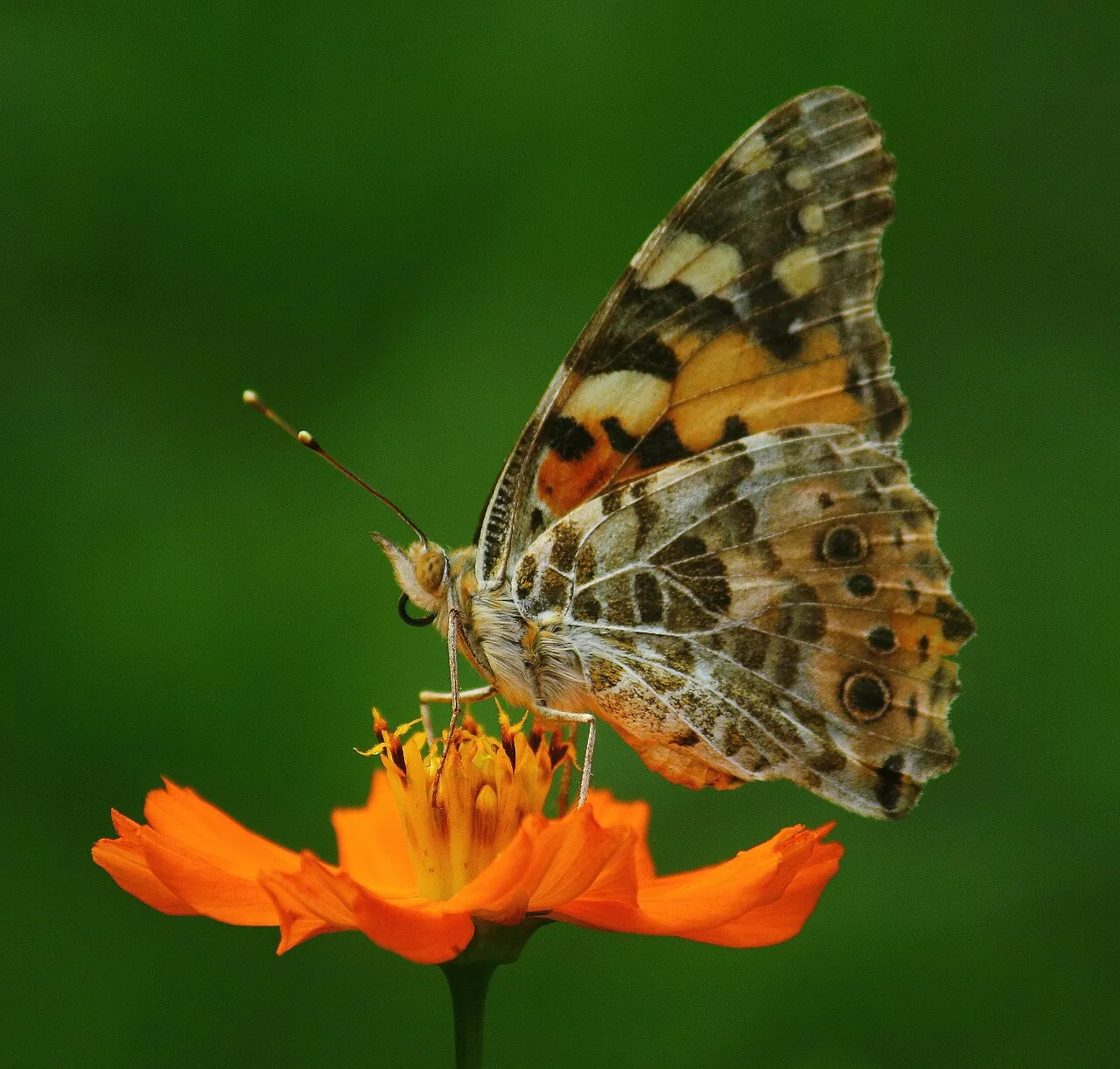
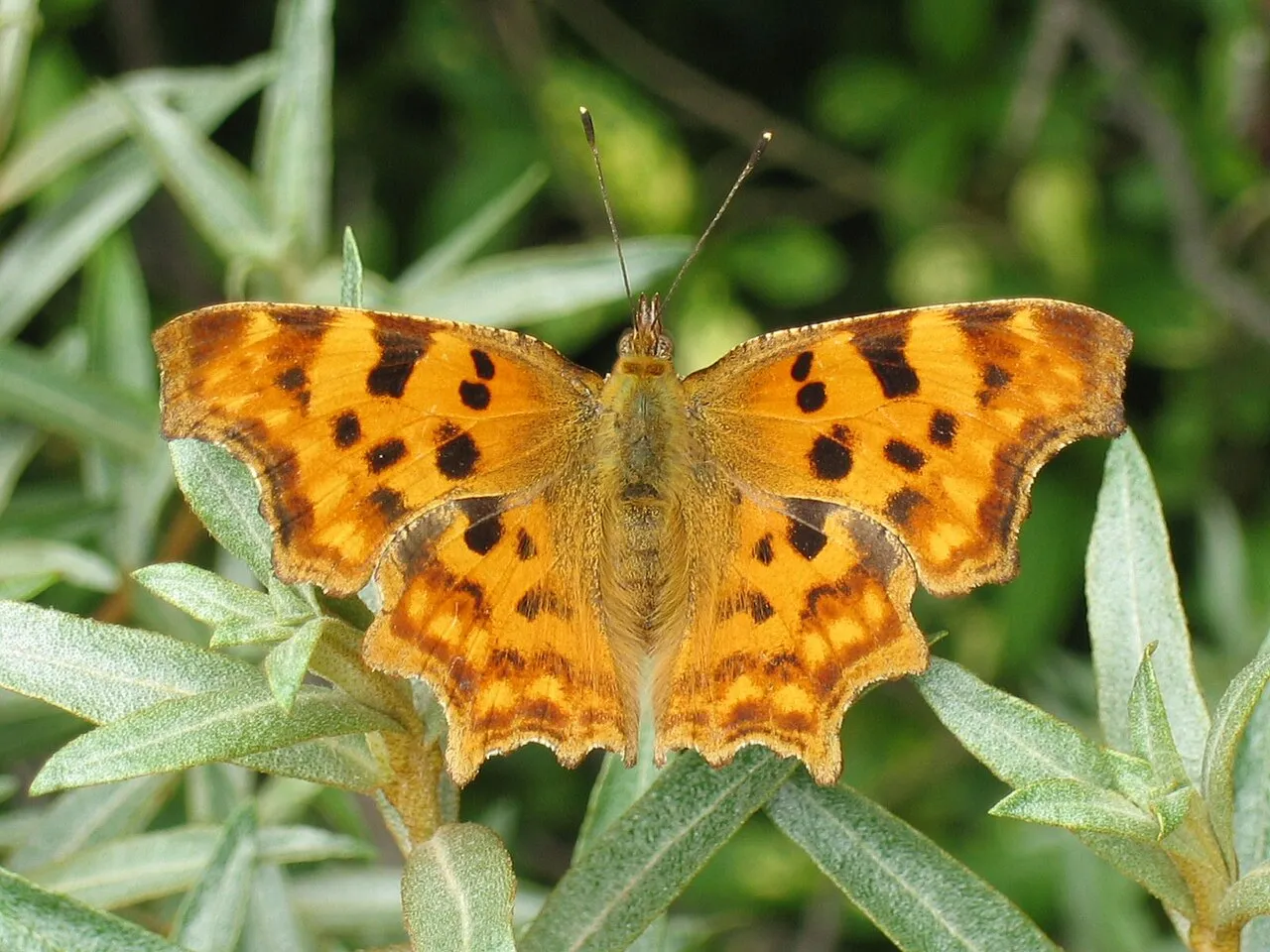
The painted lady has a wingspan of 51 to 73 mm. The upperside is orange-brown with black markings and a cluster of black spots near the hindwing margin, with white spots on an otherwise black forewing tip; the underside of the hindwing is a mottled network of brown, grey and cream, patterned to break up the butterfly’s outline when it rests with its wings closed. The sexes look alike, and the species is usually told apart from other orange-and-black butterflies by the combination of the mottled underside and the black-tipped, white-spotted forewings.
Range and habitat
The painted lady favours open, flower-rich ground such as fields, meadows and gardens, but it is highly adaptable and also turns up in deserts, forests, mountains, swamps and urban areas, from the seashore to mountain tops, a tolerance for almost any open habitat that the species shares across its enormous range. That flexibility, together with its strong flight, is a large part of why it has reached nearly every landmass except Antarctica and Australia.
Life cycle and host plants
Caterpillars are not fussy eaters: the species has over 100 recorded host plants, with thistles (Carduus and Cirsium) preferred, along with mallows, burdock, common nettle, viper’s-bugloss, lupine and other members of the daisy family (Compositae). That broad diet lets the caterpillars develop wherever the adults happen to arrive, rather than tying the species to one plant family.
The number of generations a year varies with climate: the painted lady can produce up to 8 generations under laboratory conditions, each taking 33 to 44 days in subtropical climates and over 60 days in cooler regions, while in Britain the number of broods depends on the weather and on continuing immigration from the continent.
A female lays around 500 eggs in a season, pale green with 14 to 19 vertical ribs, depositing each one singly on a host plant. The caterpillar that hatches is greyish brown, darker at both ends, with a yellow stripe down its back and spikes following the curve of its body; it spins a silken tent over its feeding site on the host plant and shelters there between bouts of feeding, moulting several times as it grows. The chrysalis that follows is variable in colour, metallic green, brown or bluish-white. From egg to death the whole cycle runs to about a year, though an adult that emerges from the chrysalis typically lives only 10 to 24 days under laboratory conditions.
Behaviour and flight period
The painted lady is active year-round in warm climates, but in temperate regions its flight period is driven by migration: northward spring migrants arrive from March to April, with a return migration south from late August through October. In Britain, migrants from North Africa first appear in late March, peak in May and June, and produce a second generation that peaks in early August. That annual round trip, repeated across several generations, is what carries the species from the edge of the Sahara to well inside the Arctic Circle in a single year.
Adults reach sexual maturity five to seven days after emerging, and males hold a territory and wait there for a female to approach rather than searching for one; a male will mate with several females in a season. Against predators that include birds, bats, ants, wasps and spiders, the adult’s main defences are its cryptic underside and a fast, erratic flight, since no larval defence against predators has been established.
Conservation
The species is assessed by the IUCN under the category shown in the facts box, taken from its Wikidata record. Its vast range, broad diet and powerful migratory flight mean it faces no identified threat at the species level; its numbers instead swing from year to year with the weather on both ends of its migration routes.
Similar species
- Red admiral (Vanessa atalanta): a close relative in the same genus, black-based with a straight red-orange band rather than the painted lady’s mottled, orange-brown pattern.
- American lady (Vanessa virginiensis): another Vanessa species, orange and black like the painted lady but with two large eyespots on the underside of each hindwing instead of a mottled network.
_kkJaX.webp)
_2r3CXC.webp)
_2_rmr34.webp)
_Melanargia_galathea_-_Foret_de_Bouconne__France_-_male_ZVEkr8.webp)