Contents
The Queen of Spain fritillary, Issoria lathonia, is a small, fast-flying fritillary named for the large, mirror-like silver spots on its hindwing underside. It belongs to the family Nymphalidae, and despite its name it is not confined to Spain: the species ranges across most of Europe, North Africa and the Canary Islands, and east through Central Asia to the Himalayas, Baluchistan and western China. It is a strong disperser, turning up well outside its usual breeding range in years when numbers build up further south.
Identification
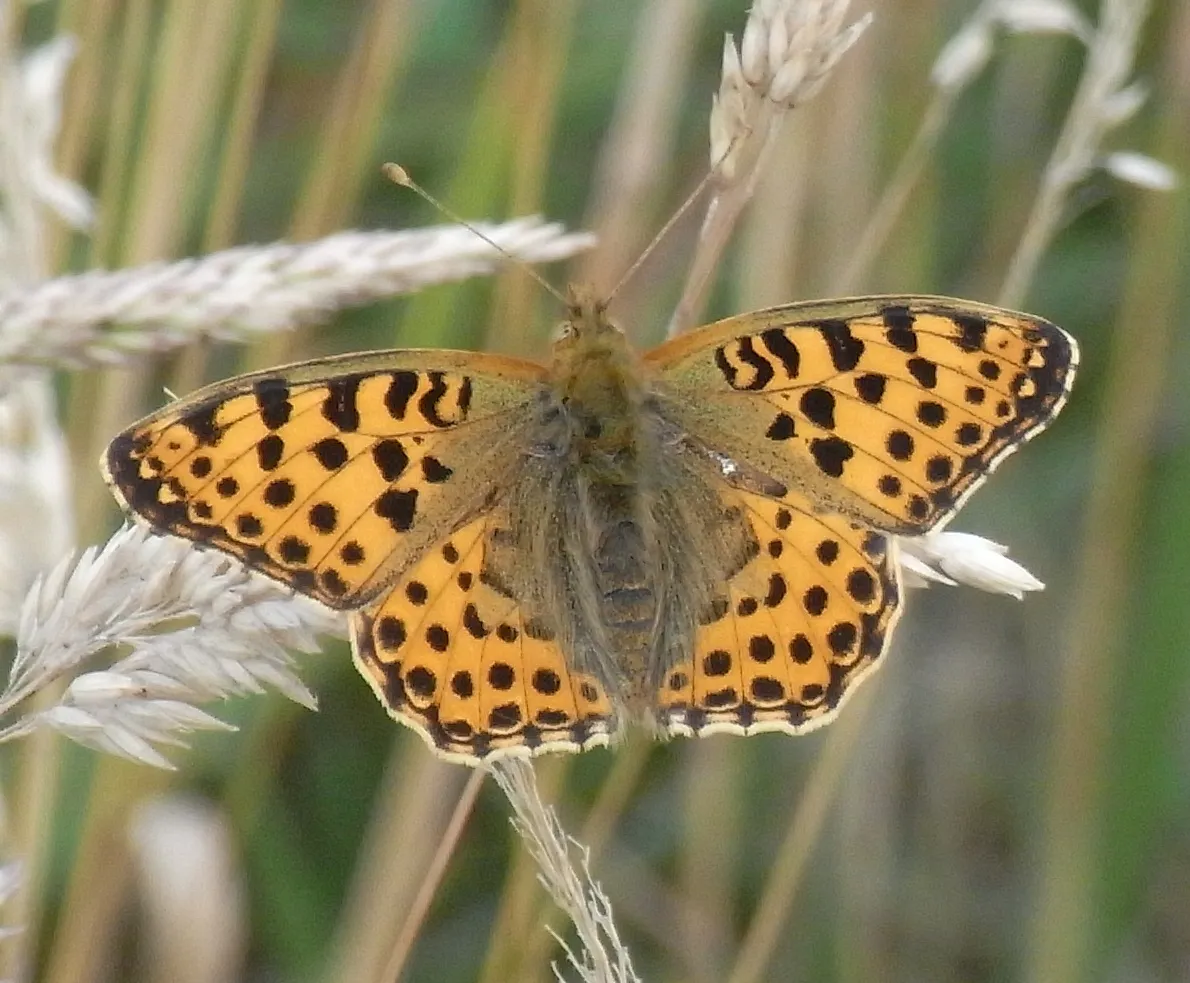
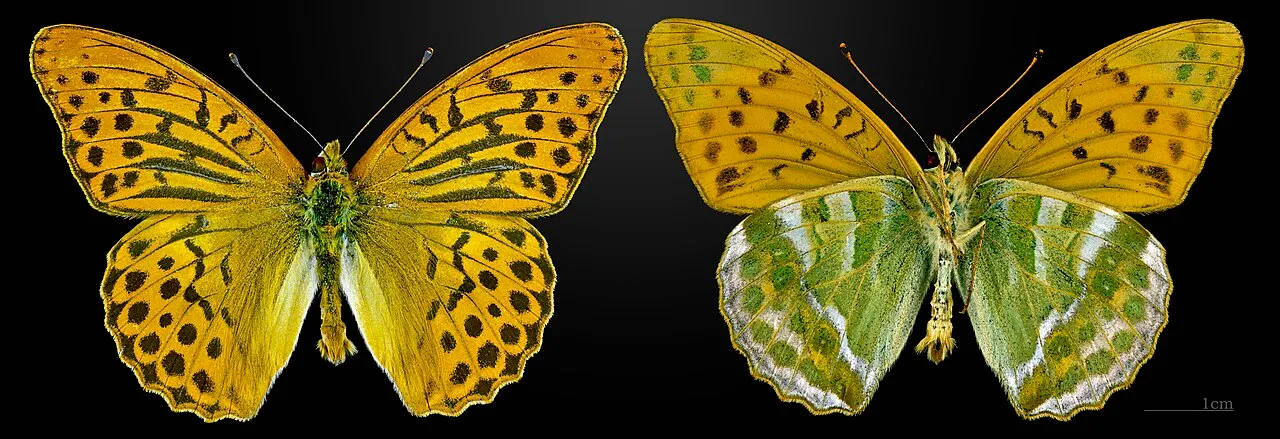
The Queen of Spain fritillary is on the small side for a fritillary, with a wingspan of 38 to 46 mm. Like other fritillaries its upperside is orange-brown chequered with black spots, but it is told apart by the underside of the hindwing, which carries unusually large, metallic silver patches rather than the small silver flecks typical of most related species. The wings are also more angular than in many fritillaries, with a slightly scalloped outer edge.
Range and habitat
The species favours open, dry ground, including dry grassland, agricultural wasteland and extensive crop fields, from sea level up to about 2,700 m. This tolerance of altitude and disturbed farmland, combined with its mobility, lets it colonise temporarily suitable habitat far from where it normally breeds, including northern areas it cannot survive the winter in.
Life cycle and host plants
Caterpillars feed mainly on violets, including wild pansy and field pansy and other Viola species, with lucerne, borage, Anchusa, Rubus and Onobrychis also used. The species overwinters as a caterpillar, which may enter winter at any larval stage rather than at one fixed point in its development. Where conditions allow, it completes three to four generations a year, far more than most of its northern relatives manage, which helps explain both its rapid population swings and its habit of spreading into new ground within a single season.
Behaviour and flight period
Adults are on the wing from March to October across most of the range, with adults present in nearly all months where overlapping generations keep the population flying. This long flight period, stacked across several broods, is part of why the species can appear suddenly in large numbers and then push outward into areas where it cannot normally persist.
Similar species
- Silver-washed fritillary (Argynnis paphia): much larger, with a green-washed underside rather than large silver mirrors, and a woodland rather than open-ground habit.
- High brown fritillary (Fabriciana adippe): similarly orange-brown above, but lacks the Queen of Spain’s oversized silver underside patches and does not share its wandering habit.
_kkJaX.webp)
_2r3CXC.webp)
_2_rmr34.webp)