Contents
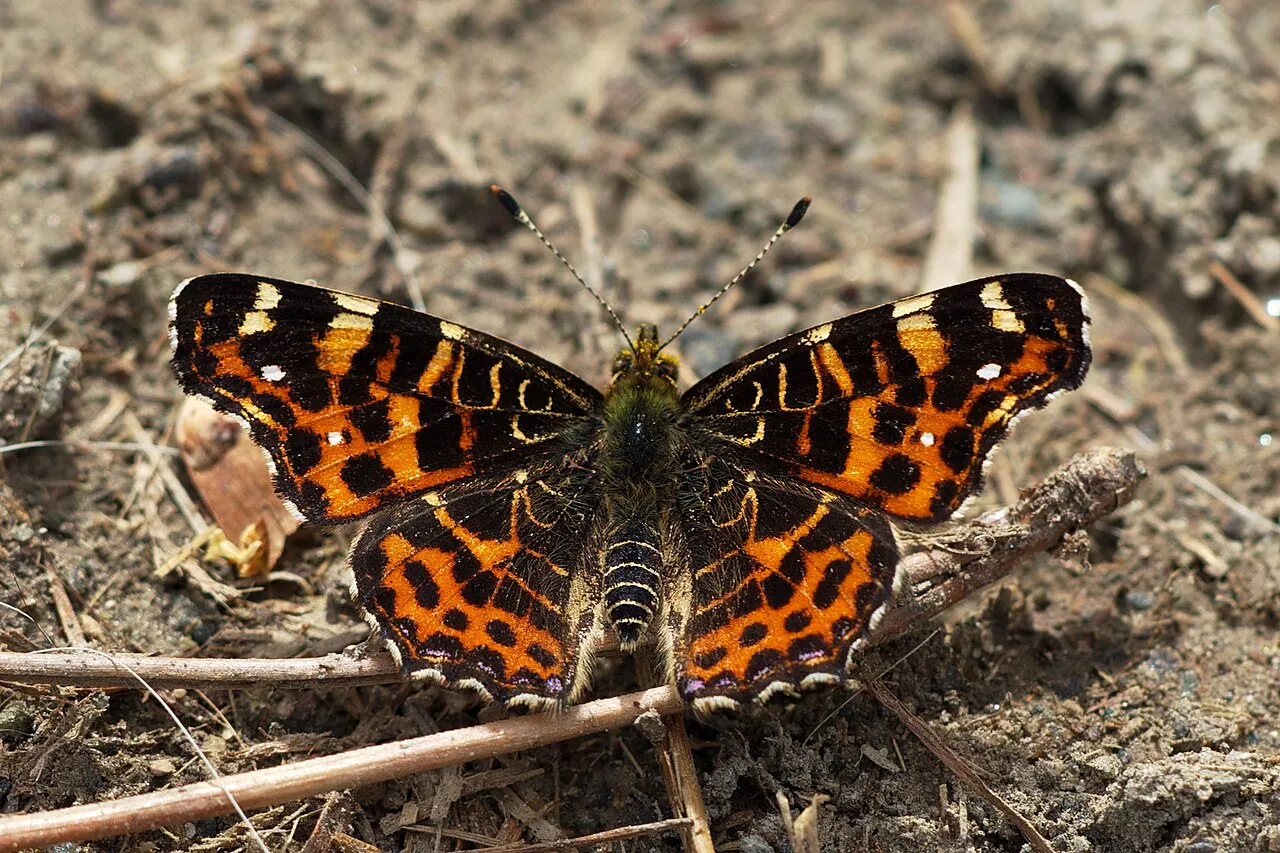
The Map, Araschnia levana, is a butterfly of the family Nymphalidae, found from Spain through Europe and the Palearctic to Korea and Japan. This little butterfly is best known for its two forms, levana and prorsa2, which belong to the spring and summer broods. Before the butterfly was fully understood, the two were thought to be different species1, with the summer form classified as A. prorsa. One European species account calls it common almost everywhere in Central Europe, and adds that it was probably much more local 100 years ago3.
Identification
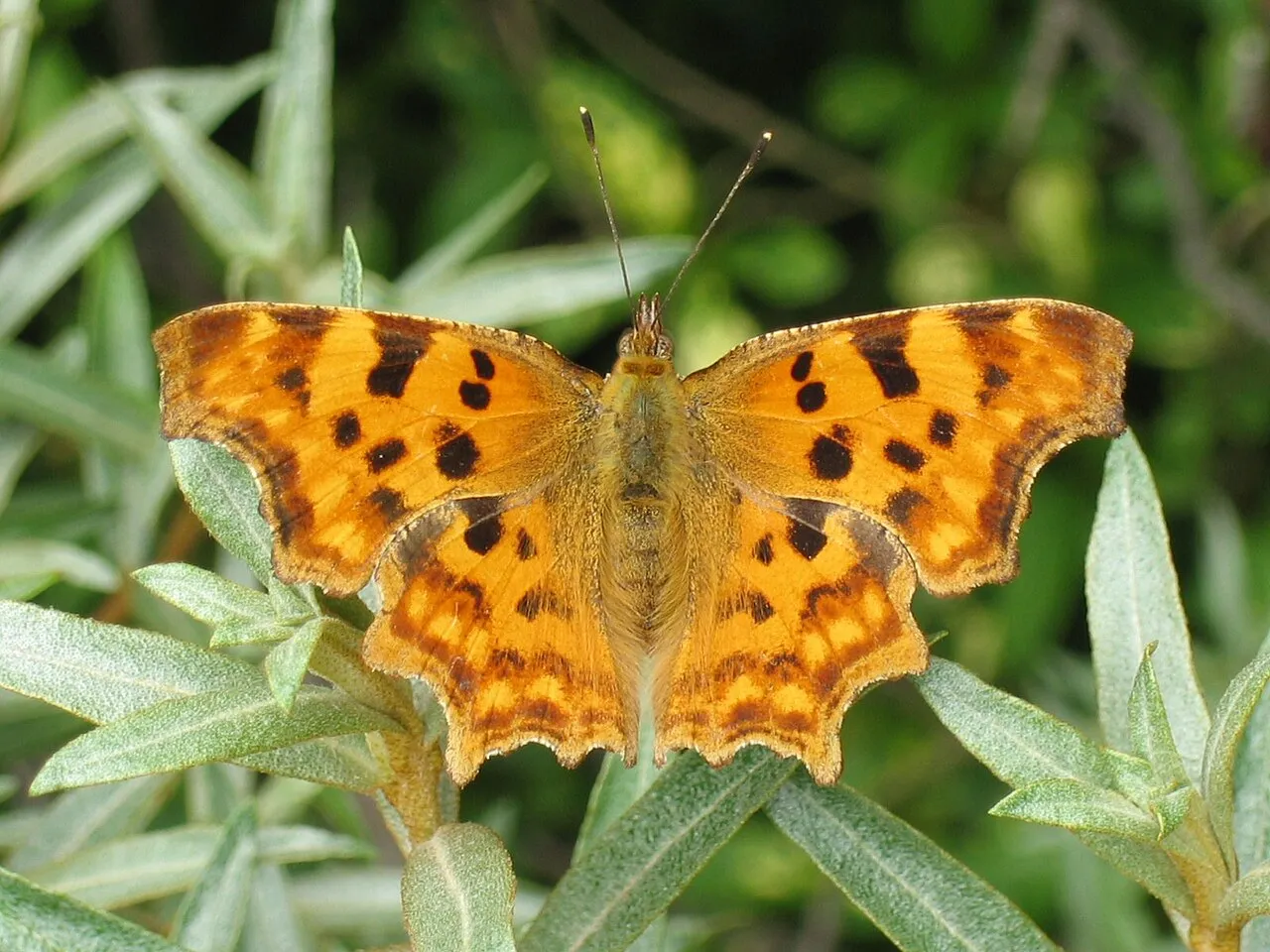
The spring brood, form levana, has a reddish ochreous ground with a pattern of spots, some whitish spots near the tip and margin of the forewing, and a row of blue bars near the outer edge of the hindwing. Seen in the field it is primarily orange, like a small fritillary2. Beneath, the forewing has violet dusting near the tip and sharp white lines1 on a paler ground, while the hindwing is mostly red-brown with a pale band across the centre.
The summer brood, form prorsa, is black, with white spots on the forewing1 and a white band across the hindwing, and mostly red-brown underneath with whitish lines and bands. It is primarily black, like a very small White Admiral2.
Which form appears depends on whether its larva grows in the summer or the winter; the winter form, adapted for diapause, has red wings. Another account traces the difference to temperature and day length during larval development3. Prorsa, considered the more recent form, can be changed by the application of cold into levana1, the ancestral form, but the reverse does not happen.
UK Butterflies gives a wingspan of 24–38 mm for males and 40–50 mm for females2. A German species account says it is mostly not rare where it occurs4.
Range and habitat
The Map prefers moist habitats with stinging nettles, such as open forest, forest edges and transitional moors, and lives in lowland and hilly country, rarely rising above 1000 meters1. A second account lists forests, parks and bushy to wooded wetlands, with adults usually visiting open areas such as limestone grassland only to take nectar. Its caterpillars live on partly to fully shaded nettles3.
In Europe the species has shown a general increase for more than 100 years, despite temporary declines in some regions. It was already in Jutland, Denmark, by 1881, reached Sweden in the 1970s, and was first found in Finland on 30 May 19731, at Lauritsala.
In Britain a deliberate introduction became established in 1912 in the Forest of Dean and at Symond’s Yat. The entomologist Farn, opposed to releasing a foreign species, collected and destroyed every individual he could find in 1914, though other, unknown factors are believed to have ended the colonies. Single Maps turned up in Surrey on 21 May 1982, in Oxfordshire in 1995 (a suspected release) and in East Kent on 5 August 19952, possibly a genuine vagrant from north-east France.
Life cycle and host plants
Eggs are laid in long strings, one on top of the other1, on the underside of stinging nettle leaves, and it is thought that these strings mimic the nettle’s flowers and so evade predators. Laying eggs in towers is a speciality among Central European butterflies3. Each egg is ovate, flattened on top, ribbed and greenish.
The caterpillars eat only nettle (Urtica)4 and feed together on common nettle (Urtica dioica); they are black or pale brown with black stripes, sometimes with a reddish side-line, and carry short branched thorns. After the spring flight, caterpillars are found mostly in June3, and the next generation’s larvae from mid-July to mid-October. The pupa is brown, spotted with blackish, with blunt projections on the head and back and sometimes metallic spots. The pupa of the last brood hibernates1.
Behaviour and flight period
In Central Europe the Map is on the wing in two or three generations a year. Adults appear in April and May, the second generation flies between late June and August, and a third flies partly in August and September in warm years3. The German account notes a partial third generation in very warm years such as 2003. In Japan the species apparently flies in 3 broods1. Like many butterflies, adults also suck at animal droppings4.
Similar species
On a close look, and above all from the underside, the Map is unmistakable4.
- White admiral (Limenitis camilla): the summer form shares its black and white pattern, but the Map looks like a very small White Admiral2.
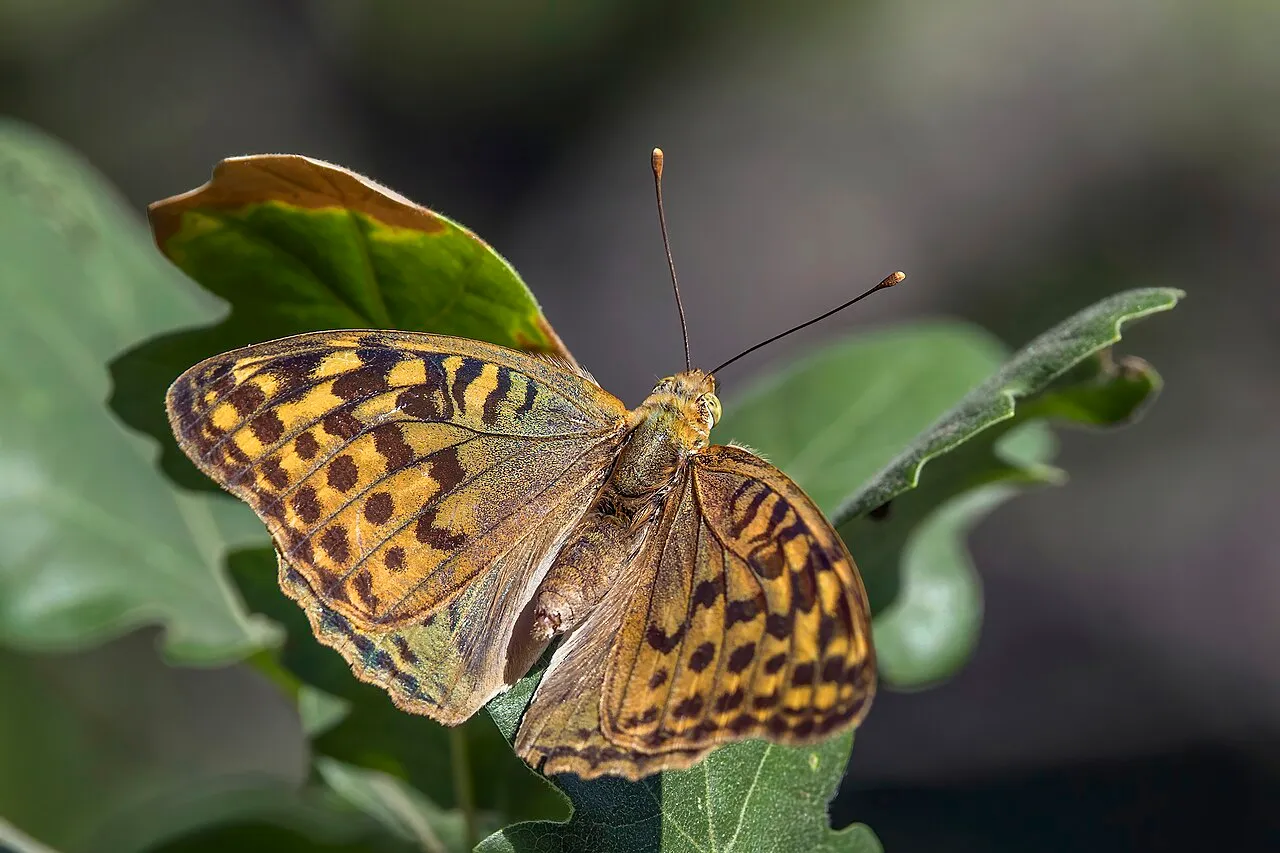
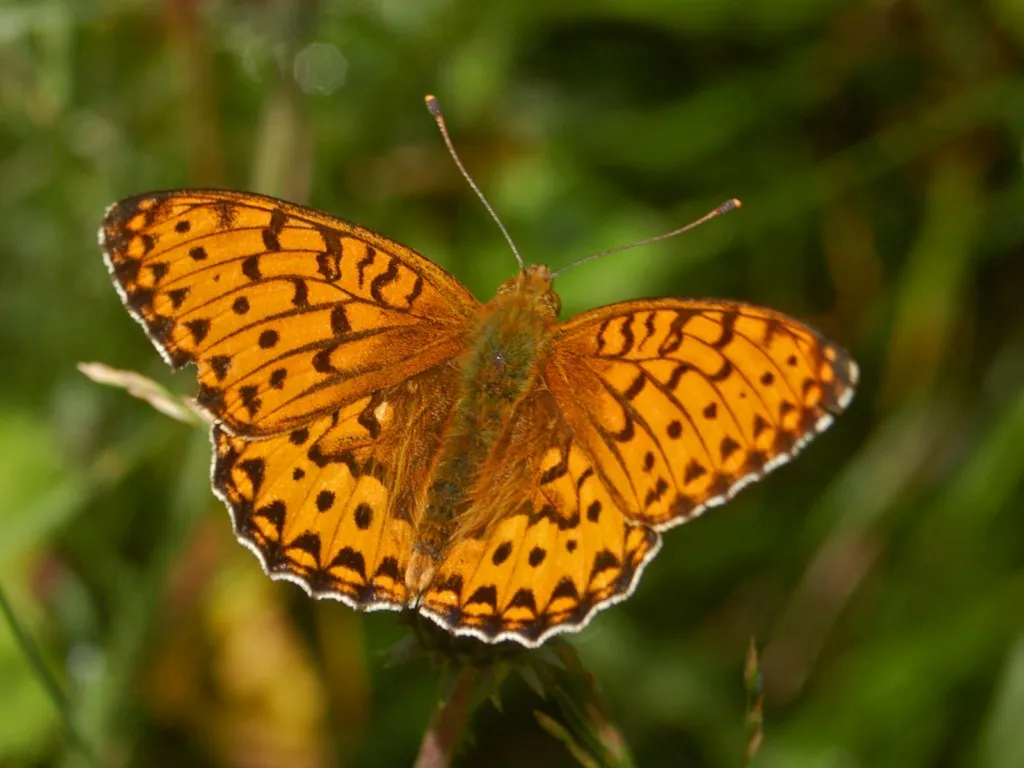
- Queen of Spain fritillary (Issoria lathonia): the orange spring form recalls a small fritillary, but the Queen of Spain is most easily recognised by large silver spangles5 under the hindwing, where the spring Map is red-brown with a pale band.
- Peacock (Aglais io), as a caterpillar: the dark Map caterpillar is told apart by its spines, above all those on the head capsule4.